Parkinson's Disease Research
Parkinson's disease (PD) is a degenerative disease of the central nervous system that often impairs motor skills, speech, and other functions. Symptoms of the disease include resting tremor, bradykinesia and rigidity. The primary symptoms are the result of decreased stimulation of the motor cortex by the basal ganglia, normally caused by the insufficient formation and action of dopamine, which is produced in the dopaminergic neurons of the brain. Symptoms of the disease appear once 50-80% of dopamine neurons have died. Parkinson's disease is both chronic and progressive.
Parkinson's Disease Research Products Targets
- Adenosine A2B Receptor (7)
- Adenosine A2A Receptor (11)
- Caspase (9)
- Bcl-2 Family (13)
- Voltage-gated Calcium Channel (CaV) (38)
- GABAB Receptor (28)
- Others (23)
- Cyclooxygenase (24)
- D4 Receptor (12)
- STIM-Orai Channel (4)
- Ryanodine Receptor (6)
- Hsp90 (10)
- Hsp70 (4)
- 5-HT7 Receptor (11)
- 5-HT6 Receptor (14)
- 5-ht5 Receptor (2)
- 5-HT4 Receptor (17)
- Glutamate (Metabotropic) Group III Receptor (26)
- Glutamate (Metabotropic) Group II Receptor (33)
- Glutamate (Metabotropic) Group I Receptor (54)
- AMPA Receptor (45)
- GABAA-ρ Receptor (8)
- GABAA Receptor (66)
- Nicotinic (α7) Receptor (25)
- Nicotinic (α4β2) Receptor (14)
- D3 Receptor (12)
- LRRK2 (4)
- Catechol O-Methyltransferase (3)
- Vesicular Monoamine Transporter (4)
- NMDA Receptor (87)
- Kainate Receptor (22)
- IP3 Receptor (2)
- D2 Receptor (14)
- D1 and D5 Receptor (16)
- Trk Receptor (13)
- Trace Amine 1 Receptor (2)
- Adenosine A3 Receptor (8)
- Adenosine A1 Receptor (12)
- Monoamine Oxidase (10)
- M5 Receptor (2)
- M4 Receptor (3)
- M3 Receptor (4)
- M2 Receptor (5)
- M1 Receptor (8)
- Adrenergic α2 Receptor (33)
- Adrenergic α1 Receptor (22)
- Adrenergic β3 Receptor (12)
- Adrenergic β2 Receptor (6)
- Adrenergic β1 Receptor (7)
- Protein Arginine Methyltransferase (2)
Products for Parkinson's Disease Research - Page 38
- Cat.No. Product Name Information/Activity
-
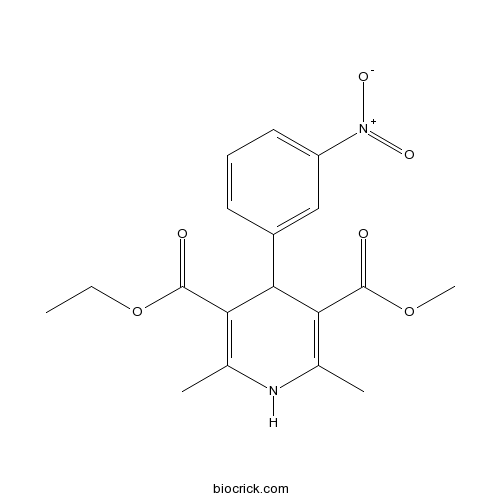
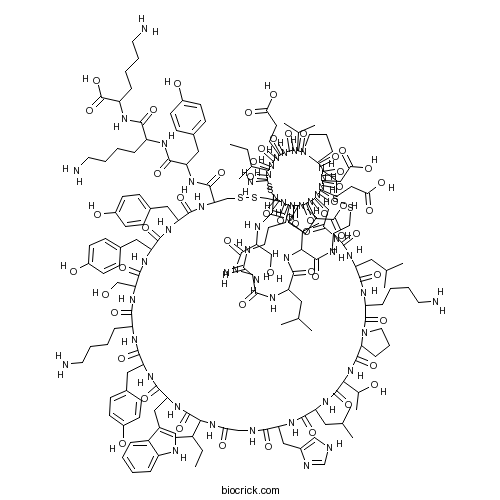
BCC8041
Huwentoxin XVI
Potent and reversible N-type Ca<sup>2+</sup> channel blocker
-
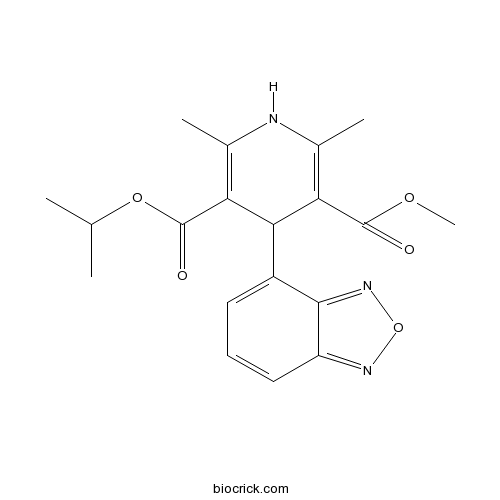
BCC3797
Isradipine (Dynacirc)
Isradipine(Dynacirc) is a calcium channel blocker with an IC50 of 34±8 μM.
-
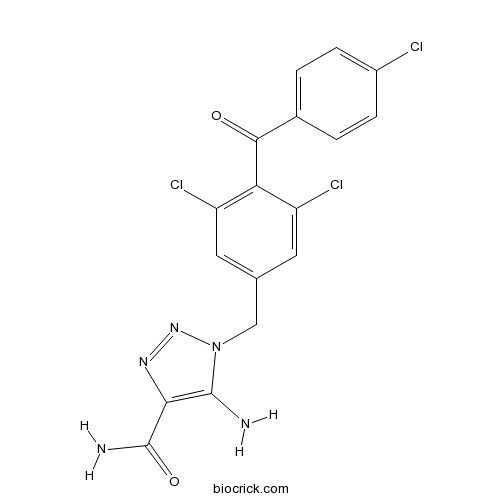
BCC7561
L-651,582
Carboxyamidotriazole (L-651582) is a cytostatic inhibitor of nonvoltage-operated calcium channels and calcium channel-mediated signaling pathways. Carboxyamidotriazole shows anti-tumor, anti-inflammatory and antiangiogenic effects.
-
BCC5238
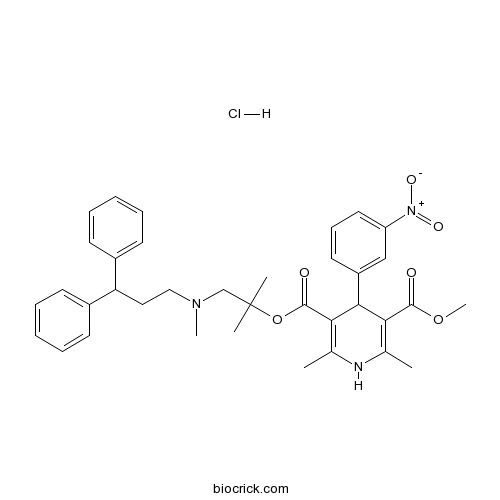
Lercanidipine hydrochloride
Lercanidipine hydrochloride is a calcium channel blocker of the dihydropyridine class.
-
BCC4380
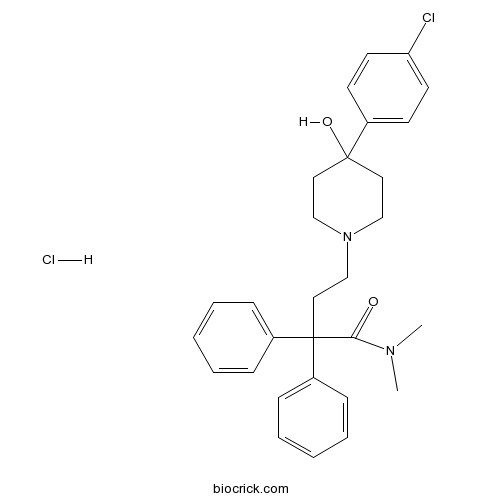
Loperamide HCl
Loperamide (hydrochloride) (R-18553 (hydrochloride)) is an opioid receptor agonist. Loperamide hydrochloride is a selective and competitive
-
BCC1749
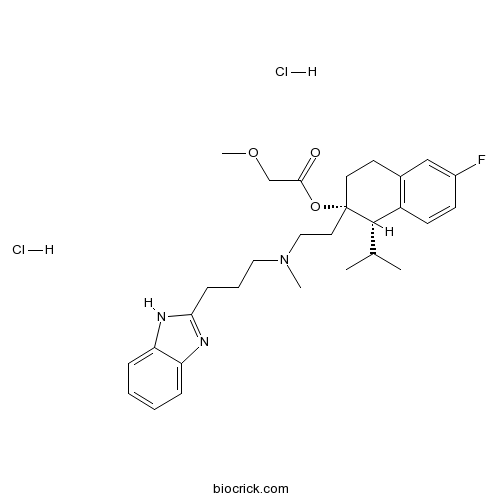
Mibefradil dihydrochloride
Mibefradil dihydrochloride (Ro 40-5967 dihydrochloride) is a calcium channel blocker with moderate selectivity for T-type Ca2+ channels displaying IC50s of 2.7 μM and 18.6 μM for T-type and L-type currents, respectively.
-
BCC4808
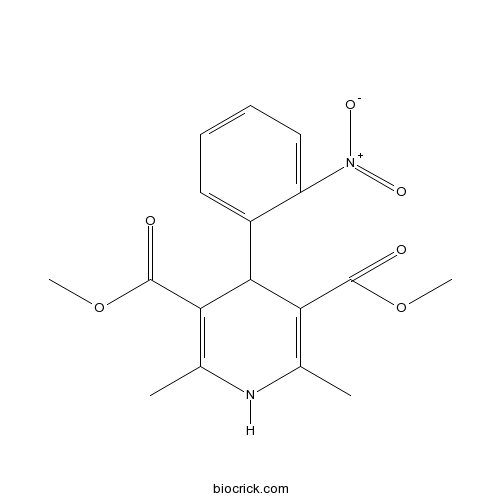
Nifedipine
Nifedipine (BAY-a-1040) is a potent calcium channel blocker and drug of choice for cardiac insufficiencies.
-
BCC3799
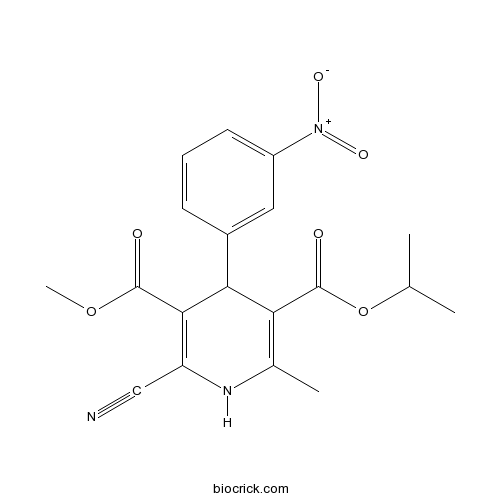
Nilvadipine
Nilvadipine is a potent calcium channel antagonist, and the IC50 value is around 0.1 nM.
-
BCC3823
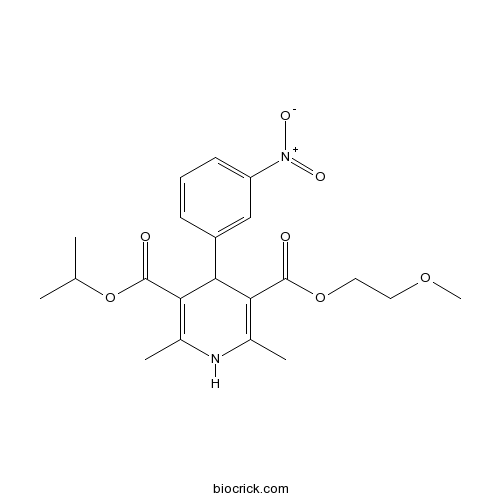
Nimodipine
Nimodipine(Nimotop) is a dihydropyridine derivative and an analogue of the calcium channel blocker nifedipine, with antihypertensive activity.
-
BCC4381
Nitrendipine
Nitrendipine is a calcium channel blocker with marked vasodilator action.