Parkinson's Disease Research
Parkinson's disease (PD) is a degenerative disease of the central nervous system that often impairs motor skills, speech, and other functions. Symptoms of the disease include resting tremor, bradykinesia and rigidity. The primary symptoms are the result of decreased stimulation of the motor cortex by the basal ganglia, normally caused by the insufficient formation and action of dopamine, which is produced in the dopaminergic neurons of the brain. Symptoms of the disease appear once 50-80% of dopamine neurons have died. Parkinson's disease is both chronic and progressive.
Parkinson's Disease Research Products Targets
- Adenosine A2B Receptor (7)
- Adenosine A2A Receptor (11)
- Caspase (9)
- Bcl-2 Family (13)
- Voltage-gated Calcium Channel (CaV) (38)
- GABAB Receptor (28)
- Others (23)
- Cyclooxygenase (24)
- D4 Receptor (12)
- STIM-Orai Channel (4)
- Ryanodine Receptor (6)
- Hsp90 (10)
- Hsp70 (4)
- 5-HT7 Receptor (11)
- 5-HT6 Receptor (14)
- 5-ht5 Receptor (2)
- 5-HT4 Receptor (17)
- Glutamate (Metabotropic) Group III Receptor (26)
- Glutamate (Metabotropic) Group II Receptor (33)
- Glutamate (Metabotropic) Group I Receptor (54)
- AMPA Receptor (45)
- GABAA-ρ Receptor (8)
- GABAA Receptor (66)
- Nicotinic (α7) Receptor (25)
- Nicotinic (α4β2) Receptor (14)
- D3 Receptor (12)
- LRRK2 (4)
- Catechol O-Methyltransferase (3)
- Vesicular Monoamine Transporter (4)
- NMDA Receptor (87)
- Kainate Receptor (22)
- IP3 Receptor (2)
- D2 Receptor (14)
- D1 and D5 Receptor (16)
- Trk Receptor (13)
- Trace Amine 1 Receptor (2)
- Adenosine A3 Receptor (8)
- Adenosine A1 Receptor (12)
- Monoamine Oxidase (10)
- M5 Receptor (2)
- M4 Receptor (3)
- M3 Receptor (4)
- M2 Receptor (5)
- M1 Receptor (8)
- Adrenergic α2 Receptor (33)
- Adrenergic α1 Receptor (22)
- Adrenergic β3 Receptor (12)
- Adrenergic β2 Receptor (6)
- Adrenergic β1 Receptor (7)
- Protein Arginine Methyltransferase (2)
Products for Parkinson's Disease Research - Page 35
- Cat.No. Product Name Information/Activity
-
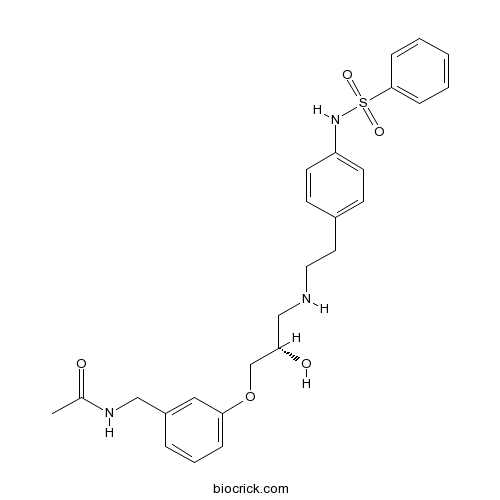
BCC7475
L-748,337
244192-94-7
-
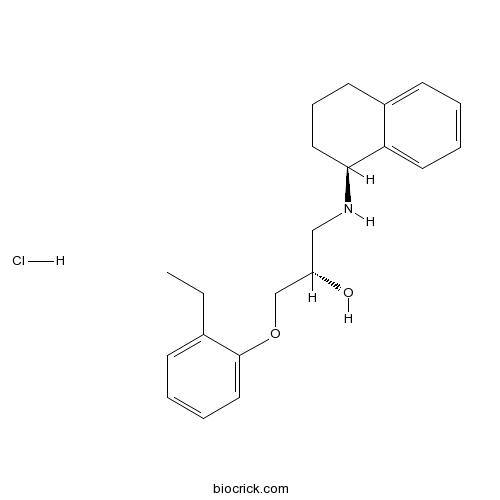
BCC7094
SR 59230A hydrochloride
SR59230A hydrochloride is a potent, selective, and blood-brain barrier penetrating β3-adrenergic receptor antagonist with IC50s of 40, 408, and 648 nM for β3, β1, and β2 receptors, respectively.
-
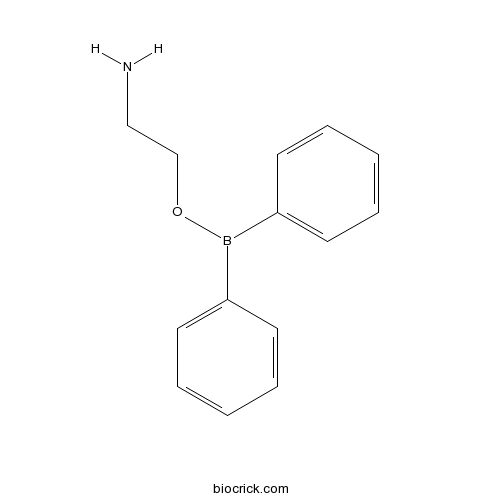
BCC6978
2-APB
2-Aminoethyl diphenylborinate (2-APB) is a cell-permeable inhibitor of IP3R. 2-Aminoethyl diphenylborinate also inhibits the store-operated Ca2+ (SOC) channel and activates some TRP channels (V1, V2 and V3).
-
BCC7002
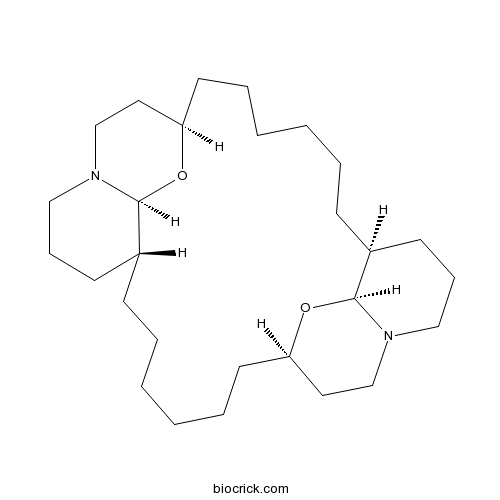
(-)-Xestospongin C
88903-69-9
-
BCN5807
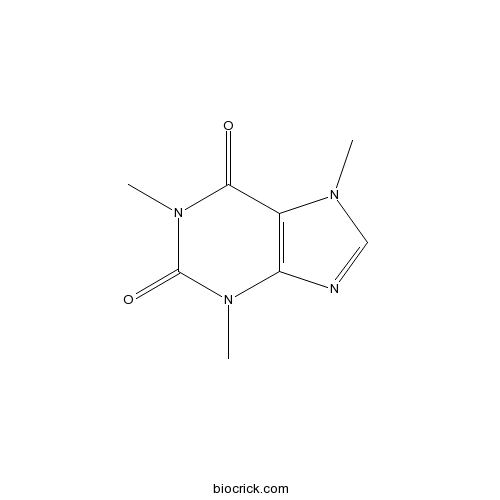
Caffeine
58-08-2
-
BCC7808
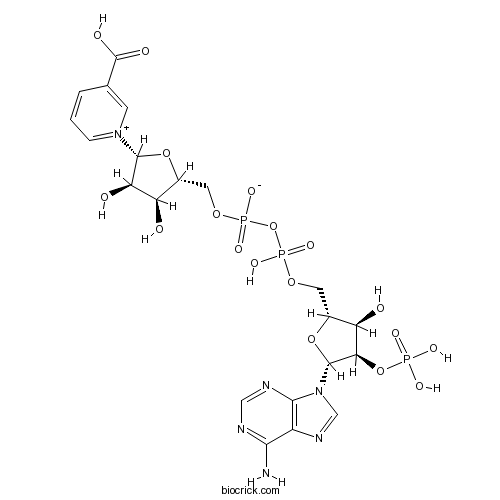
NAADP tetrasodium salt
5502-96-5
-
BCC7079
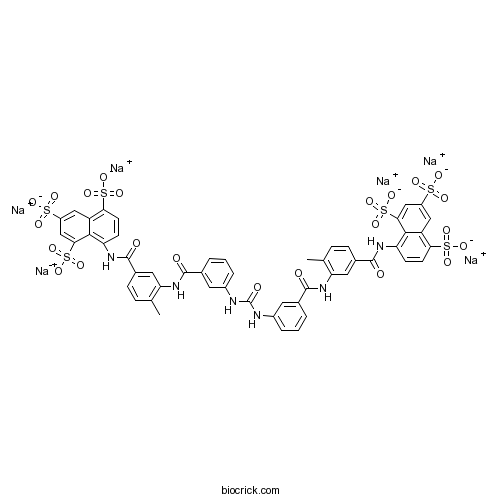
Suramin hexasodium salt
Suramin sodium salt (Suramin hexasodium salt) is a reversible and competitive protein-tyrosine phosphatases (PTPases) inhibitor. Suramin sodium salt is a potent inhibitor of sirtuins: SirT1 (IC50=297 nM), SirT2 (IC50=1.15 μM), and SirT5 (IC50=22 μM). Suramin sodium salt is a competitive inhibitor of reverse transcriptase (DNA topoisomerase II: IC50=5 μM). Suramin sodium salt is an antitrypanosomal, anti-neoplastic and anti-angiogenic agent.
-
BCC6673
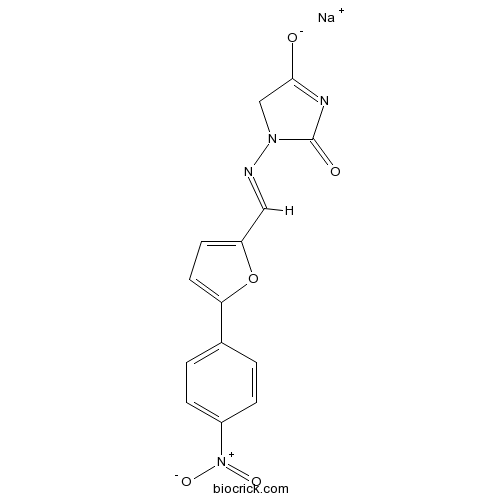
Dantrolene, sodium salt
14663-23-1
-
BCC7067
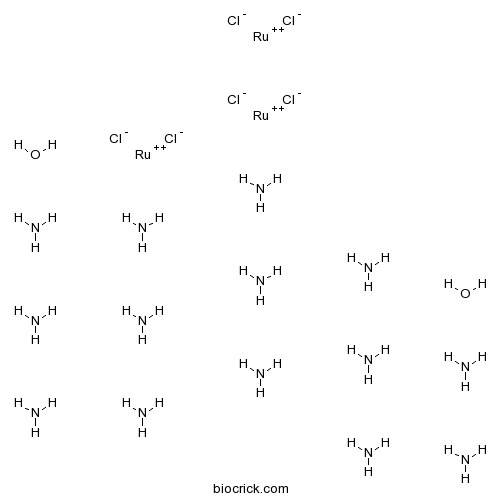
Ruthenium Red
11103-72-3
-
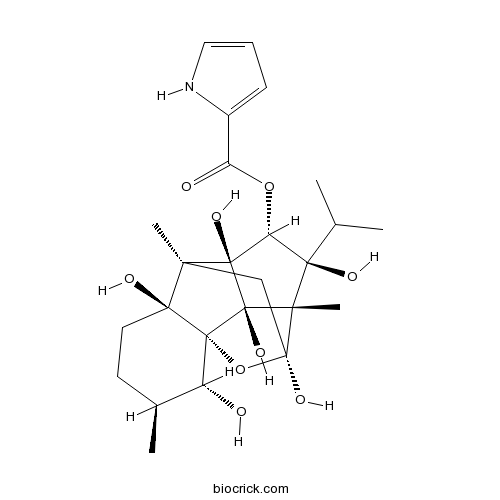
BCC5742
Ryanodine
Ryanodine is a cell permeant ryanodine receptor modulator. Ryanodine can either stimulate or inhibit Ryanodine-mediated Ca2+ release depending on its concentrations. Poisonous diterpenoid found in Ryania speciosa.