Parkinson's Disease Research
Parkinson's disease (PD) is a degenerative disease of the central nervous system that often impairs motor skills, speech, and other functions. Symptoms of the disease include resting tremor, bradykinesia and rigidity. The primary symptoms are the result of decreased stimulation of the motor cortex by the basal ganglia, normally caused by the insufficient formation and action of dopamine, which is produced in the dopaminergic neurons of the brain. Symptoms of the disease appear once 50-80% of dopamine neurons have died. Parkinson's disease is both chronic and progressive.
Parkinson's Disease Research Products Targets
- Adenosine A2B Receptor (7)
- Adenosine A2A Receptor (11)
- Caspase (9)
- Bcl-2 Family (13)
- Voltage-gated Calcium Channel (CaV) (38)
- GABAB Receptor (28)
- Others (23)
- Cyclooxygenase (24)
- D4 Receptor (12)
- STIM-Orai Channel (4)
- Ryanodine Receptor (6)
- Hsp90 (10)
- Hsp70 (4)
- 5-HT7 Receptor (11)
- 5-HT6 Receptor (14)
- 5-ht5 Receptor (2)
- 5-HT4 Receptor (17)
- Glutamate (Metabotropic) Group III Receptor (26)
- Glutamate (Metabotropic) Group II Receptor (33)
- Glutamate (Metabotropic) Group I Receptor (54)
- AMPA Receptor (45)
- GABAA-ρ Receptor (8)
- GABAA Receptor (66)
- Nicotinic (α7) Receptor (25)
- Nicotinic (α4β2) Receptor (14)
- D3 Receptor (12)
- LRRK2 (4)
- Catechol O-Methyltransferase (3)
- Vesicular Monoamine Transporter (4)
- NMDA Receptor (87)
- Kainate Receptor (22)
- IP3 Receptor (2)
- D2 Receptor (14)
- D1 and D5 Receptor (16)
- Trk Receptor (13)
- Trace Amine 1 Receptor (2)
- Adenosine A3 Receptor (8)
- Adenosine A1 Receptor (12)
- Monoamine Oxidase (10)
- M5 Receptor (2)
- M4 Receptor (3)
- M3 Receptor (4)
- M2 Receptor (5)
- M1 Receptor (8)
- Adrenergic α2 Receptor (33)
- Adrenergic α1 Receptor (22)
- Adrenergic β3 Receptor (12)
- Adrenergic β2 Receptor (6)
- Adrenergic β1 Receptor (7)
- Protein Arginine Methyltransferase (2)
Products for Parkinson's Disease Research - Page 29
- Cat.No. Product Name Information/Activity
-
BCC7628
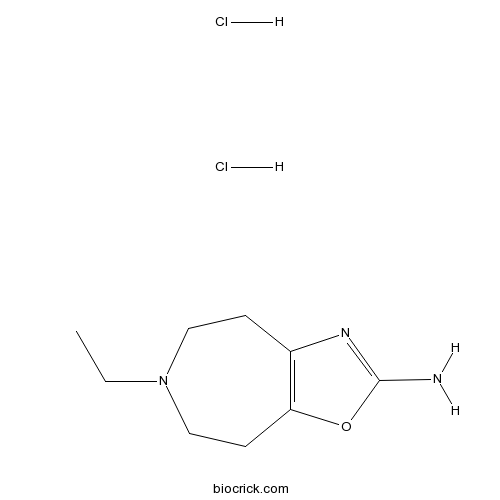
Rec 15/2615 dihydrochloride
173059-17-1
-
BCC5741
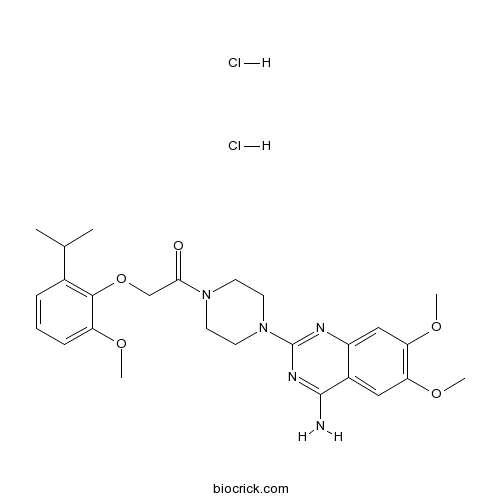
RS 100329 hydrochloride
1215654-26-4
-
BCC6874
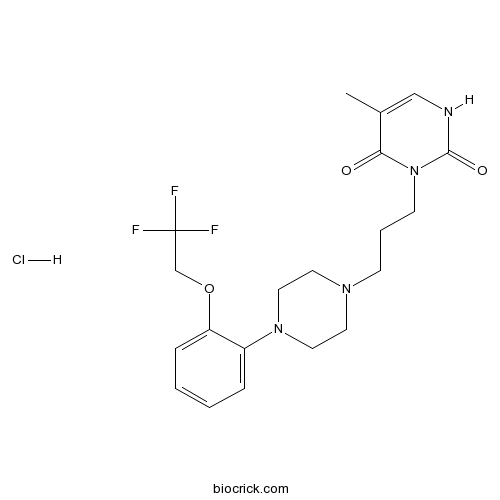
RS 17053 hydrochloride
RS 17053 hydrochloride is a potent and selective α1A adrenoceptor antagonist, with a pKi value of 9.1 in native cell membrane and a pA2 value of 9.8 in functional assays.
-
BCC7350
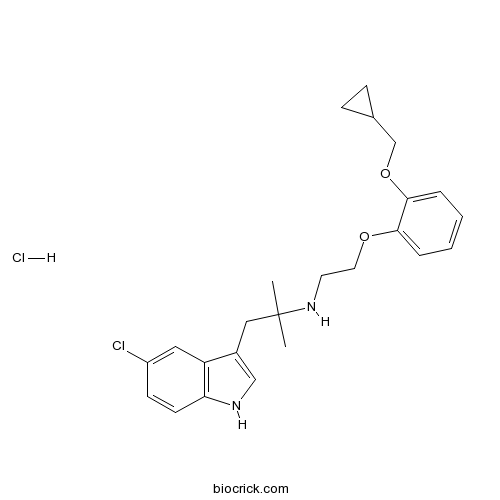
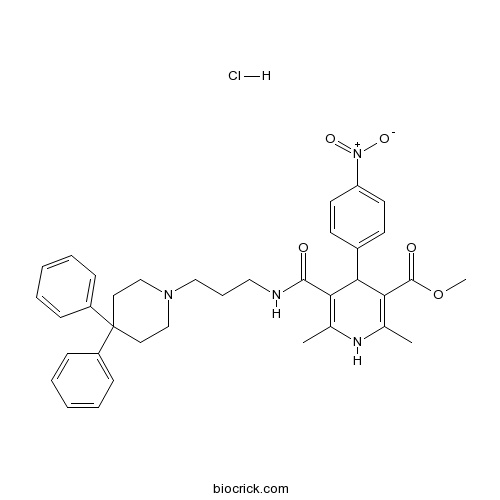
SNAP 5089
157066-77-8
-
BCC5044
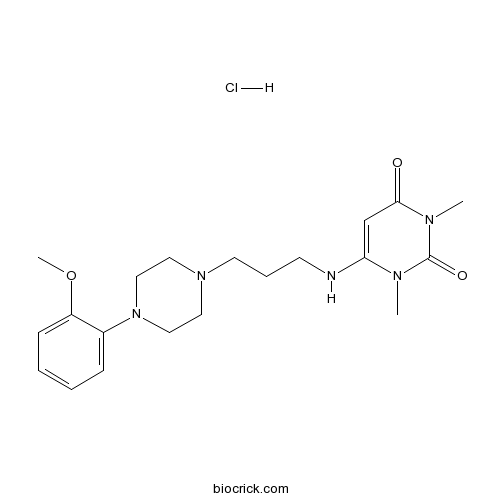
Urapidil HCl
Urapidil HCl is an α1-adrenoceptor antagonist and 5-HT1A receptor agonist.
-
BCC6858
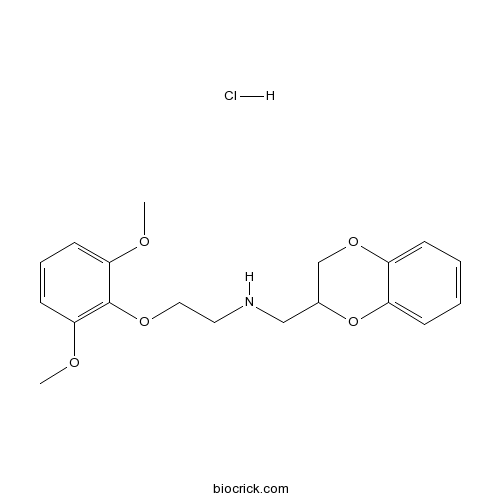
WB 4101 hydrochloride
2170-58-3
-
BCC6883
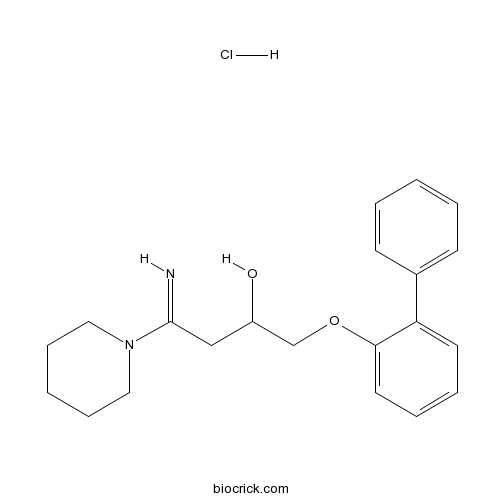
AH 11110 hydrochloride
179388-65-9
-
BCC6705
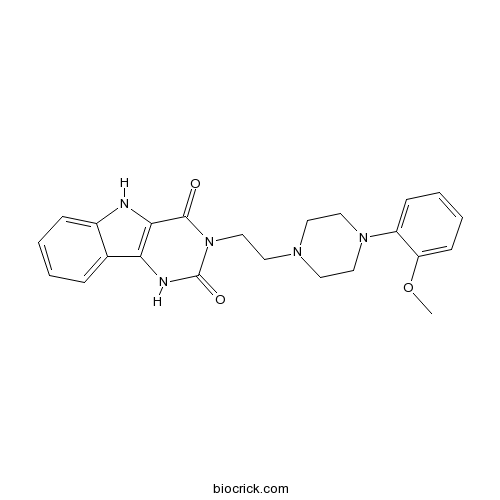
3-MPPI
133399-65-2
-
BCC1417
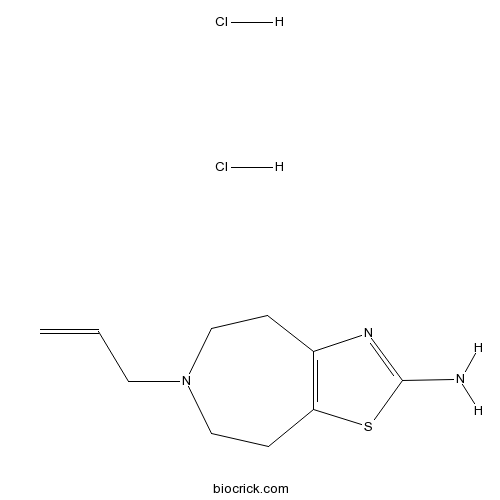
B-HT 920
Talipexole dihydrochloride (B-HT 920 dihydrochloride) is a dopamine D2 receptor agonist, α2-adrenoceptor agonist and 5-HT3 receptor antagonist, which displays antiParkinsonian activity.
-
BCC7474
B-HT 933 dihydrochloride
36067-72-8