Arrhythmia Research
An arrhythmia (also known as cardiac dysrhythmia) is defined as an irregular heartbeat, and results from abnormal electrical activity in the heart. There are various different types of arrhythmia, often resulting in a heartbeat that is too fast (tachycardia) or too slow (bradycardia). Atrial and ventricular fibrillation, which are the most common cardiac arrhythmias, account for 10-20% of all deaths among adults in the Western world. The incidence of atrial fibrillation increases with age; it not only affects cardiac function, but also increases the risk of stroke and may worsen heart failure.
Arrhythmia Research Products Targets
- Voltage-gated Sodium (NaV) Channel (30)
- Voltage-gated Potassium (KV) Channel (38)
- Voltage-gated Calcium Channel (CaV) (38)
- Epithelial Sodium Channel (3)
- STIM-Orai Channel (4)
- Ryanodine Receptor (6)
- IP3 Receptor (2)
- Acid-Sensing Ion Channel (3)
- Calcium-Activated Potassium (KCa) Channel (19)
- Inward Rectifier Potassium (Kir) Channel (21)
- HCN Channel (4)
- Adrenergic β3 Receptor (12)
- Adrenergic β2 Receptor (6)
- Adrenergic β1 Receptor (7)
Products for Arrhythmia Research - Page 17
- Cat.No. Product Name Information/Activity
-
BCC4378
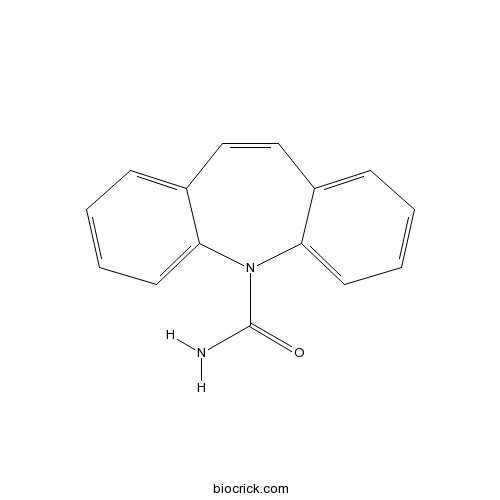
Carbamazepine
Carbamazepine, a sodium channel blocker, is an anticonvulsant drug.
-
BCC7439
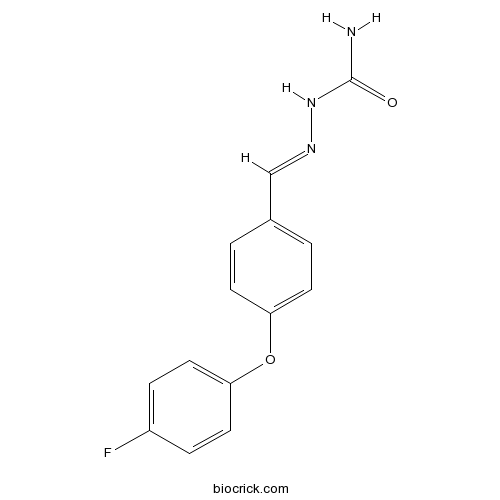
Co 102862
181144-66-1
-
BCC1578
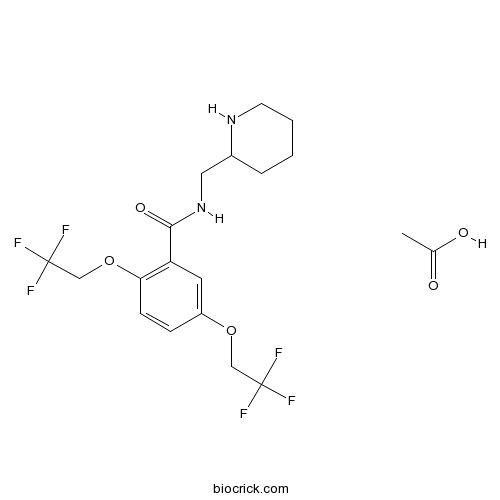
Flecainide acetate
Flecainide acetate (R-818) is a class 1C antiarrhythmic drug especially used for the management of supraventricular arrhythmia; works by blocking the Nav1.5 sodium channel in the heart, causing prolongation of the cardiac action potential.
-
BCC6270
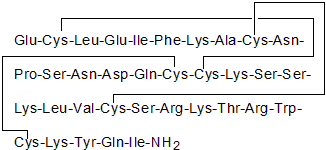
Huwentoxin IV
526224-73-7
-
BCC6358
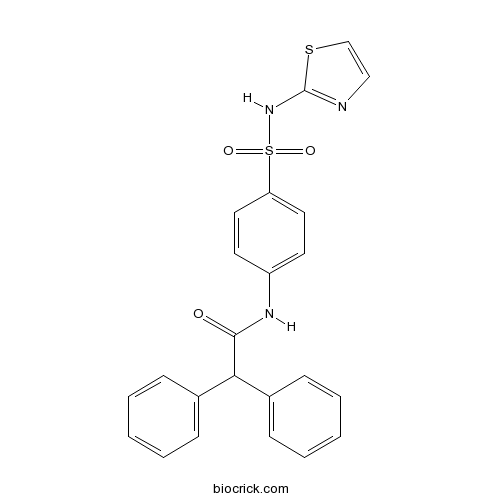
ICA 121431
ICA-121431 is a nanomolar potent and broad-spectrum voltage-gated sodium channel (Nav) blocker, shows equipotent selectivity for human Nav1.1 and Nav1.3 subtypes with IC50 values of 13 nM and 23 nM, respectively. ICA-121431 shows less potent inhibition of Nav1.2 (IC50=240 nM) and 1,000 fold selectivity against Nav1.4, Nav1.6, and the TTX-resistant human Nav1.5 and Nav1.8 channels (IC50s >10 µM).
-
BCC6327
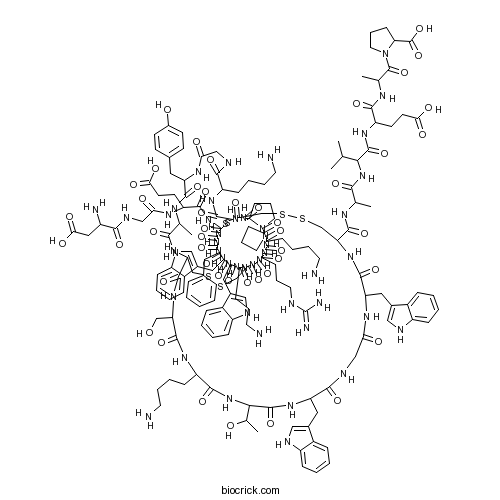
Jingzhaotoxin III
925463-91-8
-
BCC7618
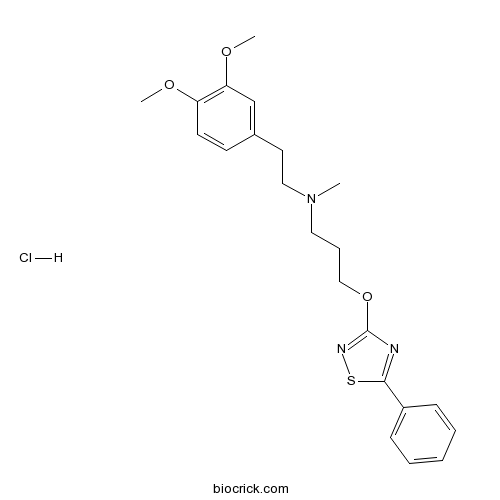
KC 12291 hydrochloride
181936-98-1
-
BCC7794
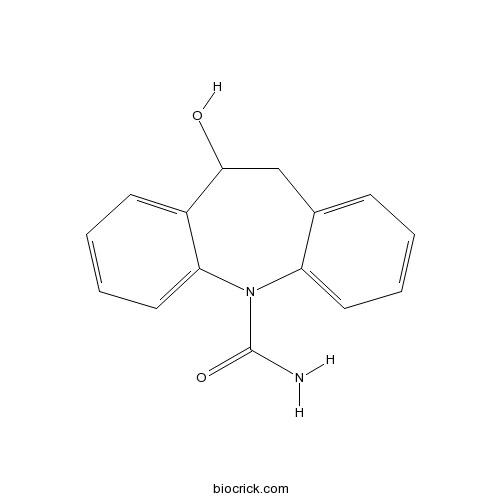
Licarbazepine
29331-92-8
-
BCC4677
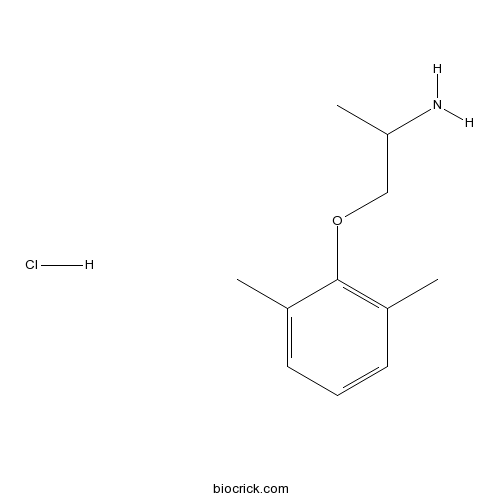
Mexiletine HCl
Mexiletine hydrochloride (KOE-1173 hydrochloride), a Class IB antianhythmic, is a non-selective voltage-gated sodium channel blocker.
-
BCC5077
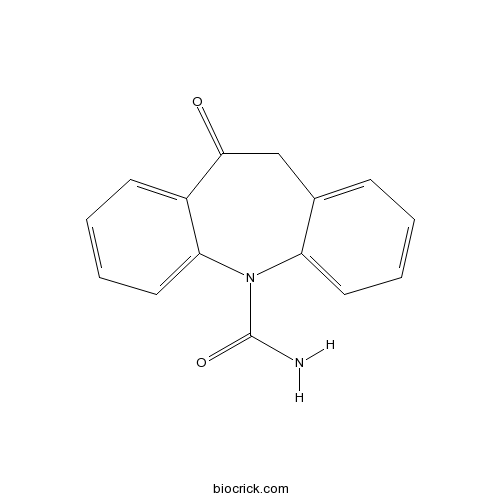
Oxcarbazepine
Oxcarbazepine (GP 47680) inhibits the binding of [3H]BTX to sodium channels with IC50 of 160 μM and also inhibits the influx of 22Na+ into rat brain synaptosomes with IC50 about 100 μM.