Arrhythmia Research
An arrhythmia (also known as cardiac dysrhythmia) is defined as an irregular heartbeat, and results from abnormal electrical activity in the heart. There are various different types of arrhythmia, often resulting in a heartbeat that is too fast (tachycardia) or too slow (bradycardia). Atrial and ventricular fibrillation, which are the most common cardiac arrhythmias, account for 10-20% of all deaths among adults in the Western world. The incidence of atrial fibrillation increases with age; it not only affects cardiac function, but also increases the risk of stroke and may worsen heart failure.
Arrhythmia Research Products Targets
- Voltage-gated Sodium (NaV) Channel (30)
- Voltage-gated Potassium (KV) Channel (38)
- Voltage-gated Calcium Channel (CaV) (38)
- Epithelial Sodium Channel (3)
- STIM-Orai Channel (4)
- Ryanodine Receptor (6)
- IP3 Receptor (2)
- Acid-Sensing Ion Channel (3)
- Calcium-Activated Potassium (KCa) Channel (19)
- Inward Rectifier Potassium (Kir) Channel (21)
- HCN Channel (4)
- Adrenergic β3 Receptor (12)
- Adrenergic β2 Receptor (6)
- Adrenergic β1 Receptor (7)
Products for Arrhythmia Research - Page 19
- Cat.No. Product Name Information/Activity
-
BCN2609
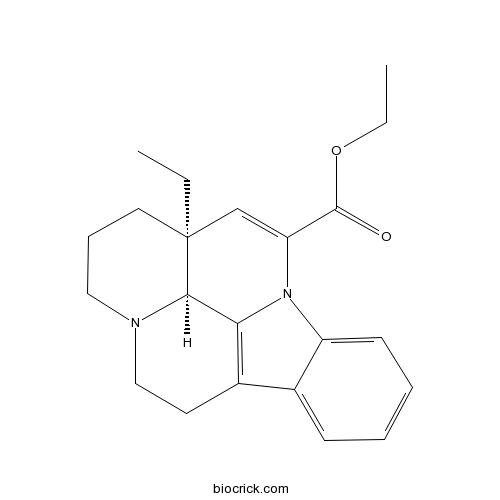
Vinpocetine
Vinpocetine (Ethyl apovincaminate) is a derivative of the alkaloid Vincamine that blocks voltage-gated Na+ channels. The IC50 value of Vinpocetine on direct IKK inhibition in the cell-free system is 17.17 μM. Vinpocetine is a phosphodiesterase (PDE) inhibitor and inhibits NF-κB-dependent inflammatory responses by directly targeting IκB kinase complex (IKK), and has been widely used for the treatment of cerebrovascular disorders.
-
BCC1048
β-Pompilidotoxin
Slows neuronal Na<sup>+</sup> channel inactivation

-
BCC5078
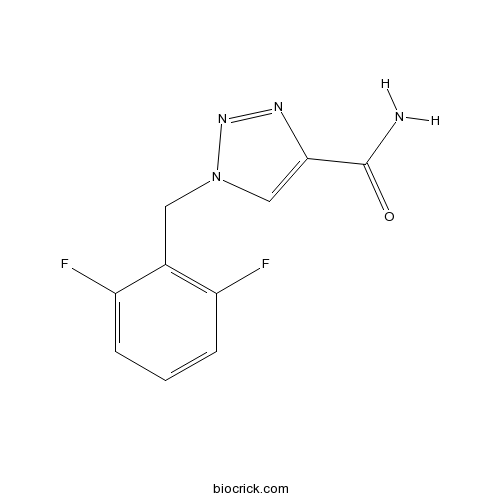
Rufinamide
Rufinamide(E 2080; CGP 33101; RUF 331) is a new antiepileptic agent that differs structurally from other antiepileptic drugs and is approved as adjunctive therapy for Lennox-Gastaut syndrome (LGS).