Parkinson's Disease Research
Parkinson's disease (PD) is a degenerative disease of the central nervous system that often impairs motor skills, speech, and other functions. Symptoms of the disease include resting tremor, bradykinesia and rigidity. The primary symptoms are the result of decreased stimulation of the motor cortex by the basal ganglia, normally caused by the insufficient formation and action of dopamine, which is produced in the dopaminergic neurons of the brain. Symptoms of the disease appear once 50-80% of dopamine neurons have died. Parkinson's disease is both chronic and progressive.
Parkinson's Disease Research Products Targets
- Adenosine A2B Receptor (7)
- Adenosine A2A Receptor (11)
- Caspase (9)
- Bcl-2 Family (13)
- Voltage-gated Calcium Channel (CaV) (38)
- GABAB Receptor (28)
- Others (23)
- Cyclooxygenase (24)
- D4 Receptor (12)
- STIM-Orai Channel (4)
- Ryanodine Receptor (6)
- Hsp90 (10)
- Hsp70 (4)
- 5-HT7 Receptor (11)
- 5-HT6 Receptor (14)
- 5-ht5 Receptor (2)
- 5-HT4 Receptor (17)
- Glutamate (Metabotropic) Group III Receptor (26)
- Glutamate (Metabotropic) Group II Receptor (33)
- Glutamate (Metabotropic) Group I Receptor (54)
- AMPA Receptor (45)
- GABAA-ρ Receptor (8)
- GABAA Receptor (66)
- Nicotinic (α7) Receptor (25)
- Nicotinic (α4β2) Receptor (14)
- D3 Receptor (12)
- LRRK2 (4)
- Catechol O-Methyltransferase (3)
- Vesicular Monoamine Transporter (4)
- NMDA Receptor (87)
- Kainate Receptor (22)
- IP3 Receptor (2)
- D2 Receptor (14)
- D1 and D5 Receptor (16)
- Trk Receptor (13)
- Trace Amine 1 Receptor (2)
- Adenosine A3 Receptor (8)
- Adenosine A1 Receptor (12)
- Monoamine Oxidase (10)
- M5 Receptor (2)
- M4 Receptor (3)
- M3 Receptor (4)
- M2 Receptor (5)
- M1 Receptor (8)
- Adrenergic α2 Receptor (33)
- Adrenergic α1 Receptor (22)
- Adrenergic β3 Receptor (12)
- Adrenergic β2 Receptor (6)
- Adrenergic β1 Receptor (7)
- Protein Arginine Methyltransferase (2)
Products for Parkinson's Disease Research - Page 74
- Cat.No. Product Name Information/Activity
-
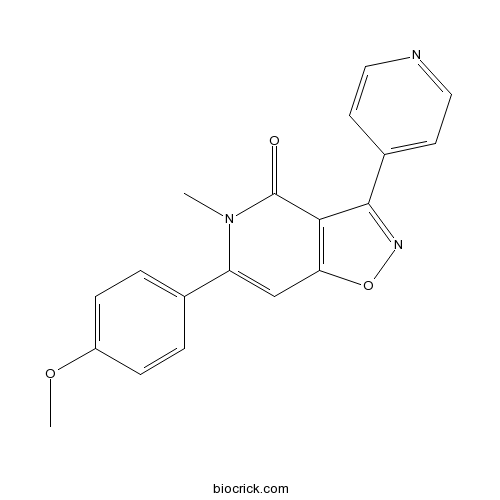
BCC7528
MMPIP hydrochloride
479077-02-6
-
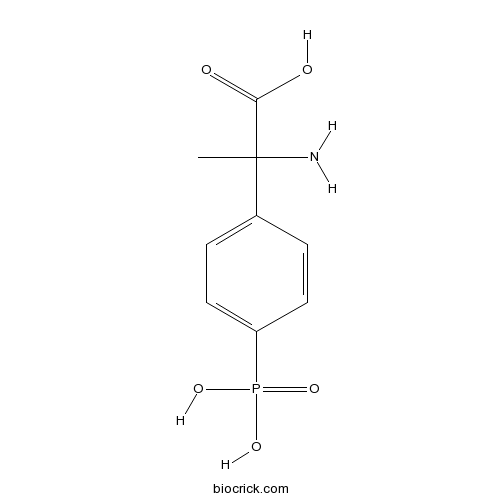
BCC6818
MPPG
169209-65-8
-
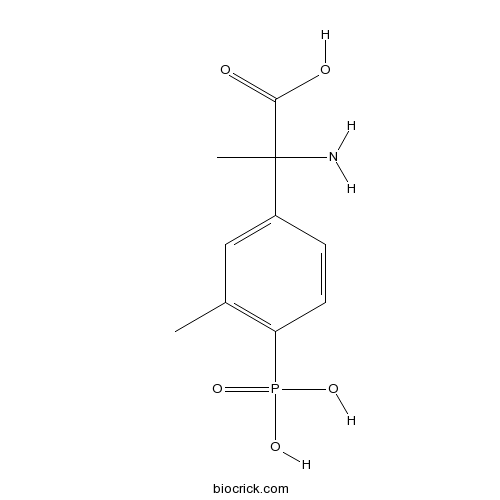
BCC7033
UBP1112
339526-74-8
-
BCC6150
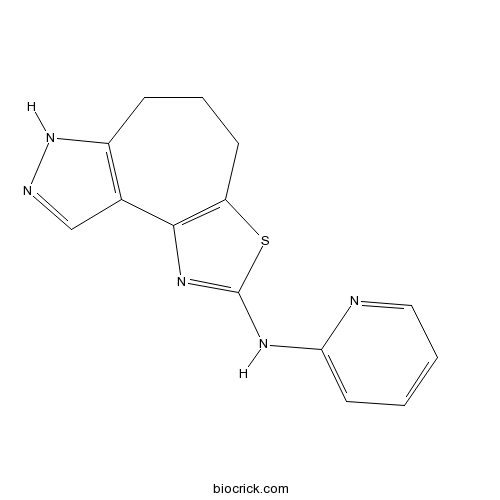
TC-N 22A
1314140-00-5
-
BCC7901
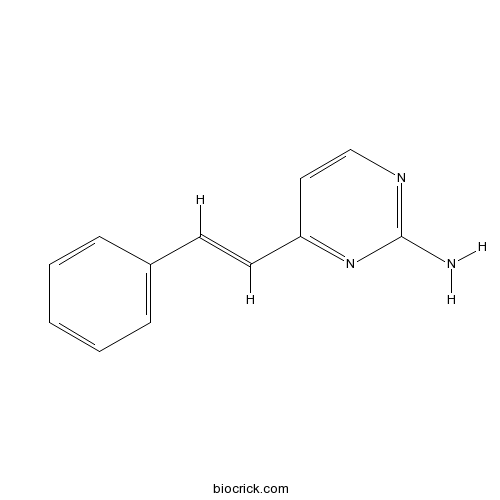
TCN 238
TCN238 is a positive allosteric mGlu4 receptor modulator with an EC50 of 1 μM.
-
BCC4596
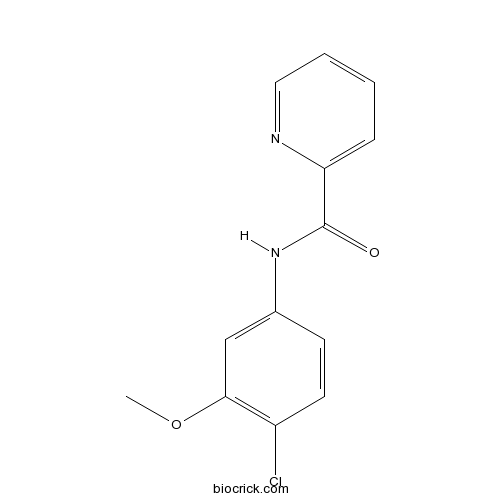
VU 0361737
VU 0361737 is a selective positive allosteric modulator (PAM) for mGlu4 receptor with EC50 of 240 nM and 110 nM at human and rat receptors, respectively, displays weak activity at mGlu5 and mGlu8 receptors, is inactive at mGlu1, mGlu2, mGlu3, mGlu6 and mGlu7 receptors.
-
BCC1239
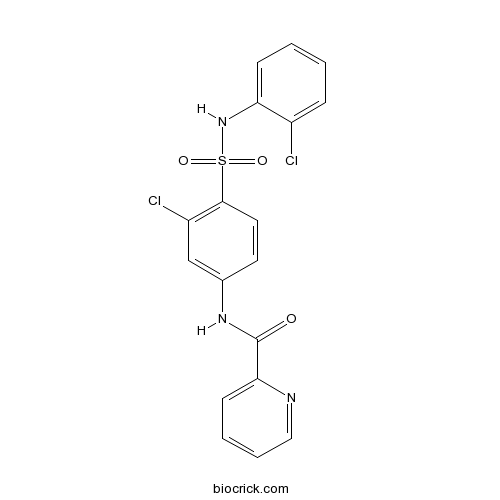
VU 0364439
VU 0364439 is a mGlu4 positive allosteric modulator (PAM), with EC50 of 19.8 nM.
-
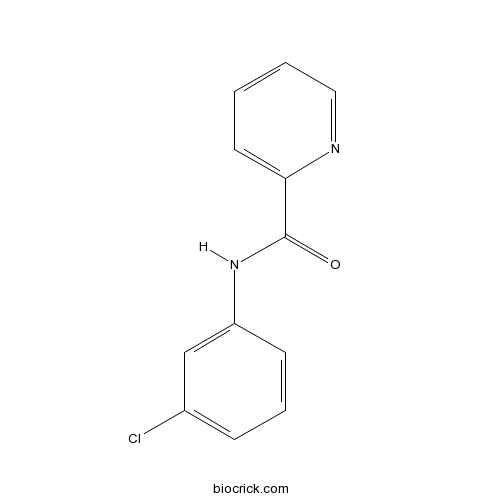
BCC4597
VU 0364770
VU0364770 is a selective and potent positive allosteric modulator (PAM) of mGlu4. VU0346770 exhibits EC50s of 290 nM and 1.1 μM at rat mGlu4 and human mGlu4 receptor, respectively. VU0364770 exhibits antagonist activity at mGlu5 with a potency of 17.9 μM and PAM activity at mGlu6 with a potency of 6.8 μM. VU0364770 also possesses activity at MAO with Ki values of 8.5 and 0.72 μM for human MAO-A and human MAO-B, respectively.
-
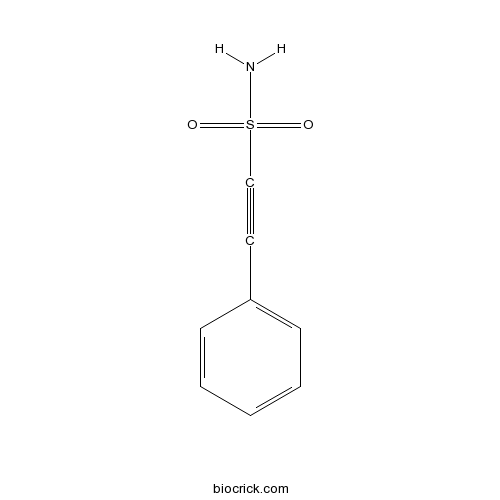
BCC2412
Pifithrin-μ
Pifithrin-μ is an inhibitor of p53 and HSP70, with antitumor and neuroprotective activity.
-
BCC2338
VER 155008
VER-155008 is an inhibitor of Hsp70, with IC50s of 0.5 μM, 2.6 μM, and 2.6 μM for Hsp70, Hsc70 and Grp7, respectively, and with a Kd of 0.3 μM for Hsp70.