Depression Research
Major depressive disorder, often referred to as major depression, is a heterogenous condition with complex and diverse neurobiological etiologies. Depression is characterized by a triad of symptoms: low or depressed mood, anhedonia and low energy or fatigue. Approximately 15% of the population in developed countries has been affected by depression in their lifetime and the chance of developing depression is twice as high in women. 40-50% of depressive causes are inheritable (genes as yet unidentified) and the remaining 50-60% of causes are caused by environmental stressors.
Depression Research Products Targets
- FGFR (5)
- Voltage-gated Calcium Channel (CaV) (38)
- Others (13)
- Glucocorticoid Receptor (9)
- Nucleoside Transporter (5)
- Glycine Transporter (6)
- GABA (10)
- Cannabinoid Transporter (10)
- Acetylcholine Transporter (1)
- D4 Receptor (12)
- 5-HT7 Receptor (11)
- 5-HT6 Receptor (14)
- 5-ht5 Receptor (2)
- 5-HT4 Receptor (17)
- NK2 Receptor (7)
- NK1 Receptor (15)
- Glutamate (Metabotropic) Group III Receptor (26)
- Glutamate (Metabotropic) Group II Receptor (33)
- Glutamate (Metabotropic) Group I Receptor (54)
- AMPA Receptor (45)
- D3 Receptor (12)
- NK3 Receptor (5)
- Vesicular Monoamine Transporter (4)
- NMDA Receptor (87)
- Kainate Receptor (22)
- D2 Receptor (14)
- D1 and D5 Receptor (16)
- Trk Receptor (13)
- Trace Amine 1 Receptor (2)
- Glutamate Transporter (18)
- Dopamine Transporter (20)
- CRF2 Receptor (3)
- CRF1 Receptor (5)
- Adrenergic Transporter (23)
- 5-HT Transporter (30)
- Vasopressin Receptor (6)
- Monoamine Oxidase (10)
- Adrenergic α2 Receptor (33)
- Adrenergic α1 Receptor (22)
- Adrenergic β3 Receptor (12)
- Adrenergic β2 Receptor (6)
- Adrenergic β1 Receptor (7)
Products for Depression Research - Page 57
- Cat.No. Product Name Information/Activity
-
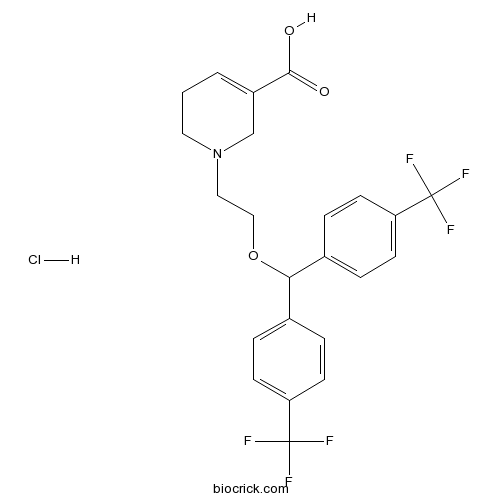
BCC6845
3-CPMT
14008-79-8
-
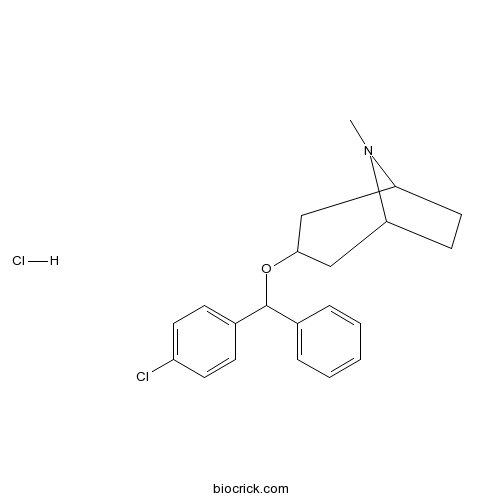
BCC6676
GBR 12783 dihydrochloride
GBR 12783 dihydrochloride is a specific, potent and selective dopamine uptake inhibitor that inhibits the [3H]dopamine uptake by rat and mice striatal synaptosomes with IC50s of 1.8 nM and 1.2 nM, respectively. GBR 12783 dihydrochloride can improve memory performance and increase hippocampal acetylcholine release in rats.
-
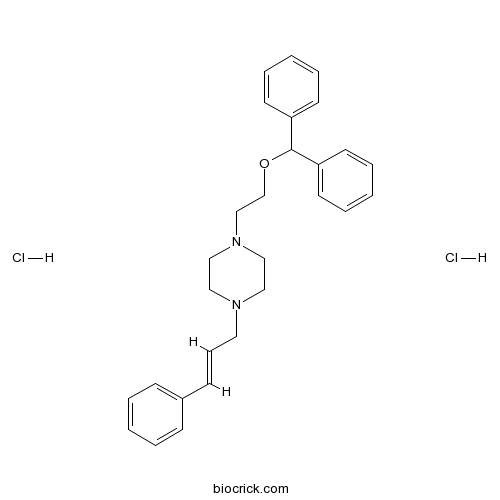
BCC5129
Vanoxerine dihydrochloride
Vanoxerine dihydrochloride (GBR-12909 dihydrochloride) is a competitive, potent, and highly selective dopamine reuptake inhibitor (Ki=1 nM). Vanoxerine dihydrochloride (GBR-12909 dihydrochloride) binds to the target site on the dopamine transporter (DAT).
-
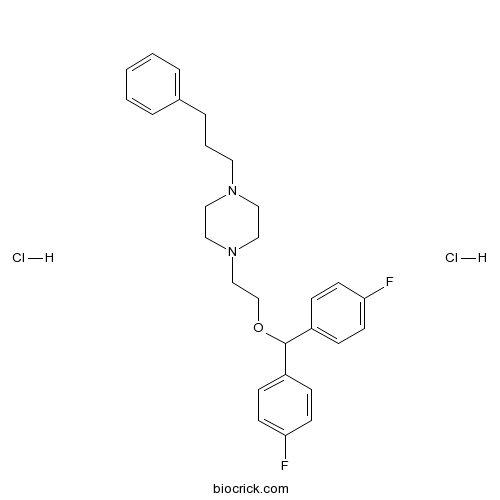
BCC5380
GBR 12935 dihydrochloride
GBR 12935 dihydrochloride is a potent, and selective dopamine reuptake inhibitor.
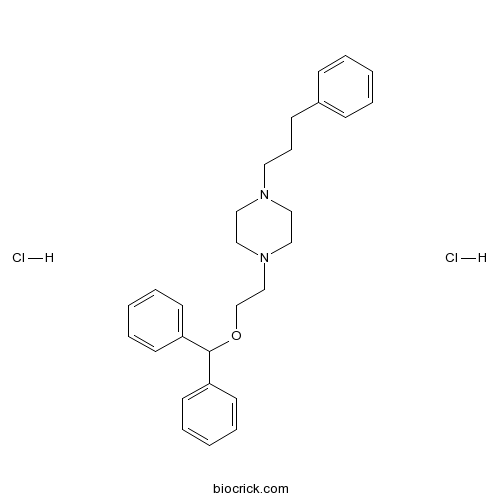
-
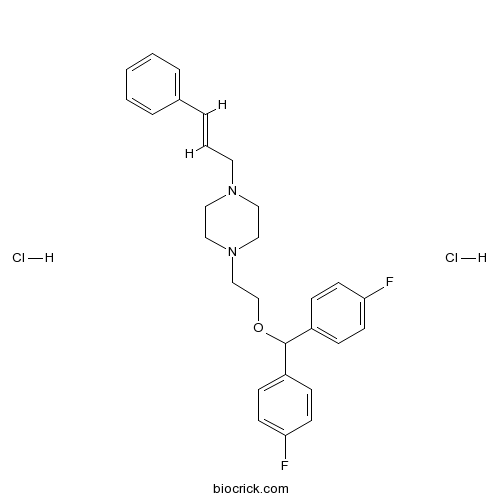
BCC6640
GBR 13069 dihydrochloride
67469-45-8
-
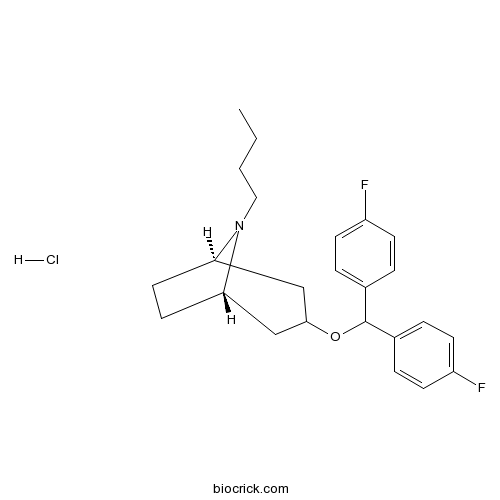
BCC7923
JHW 007 hydrochloride
202645-74-7
-
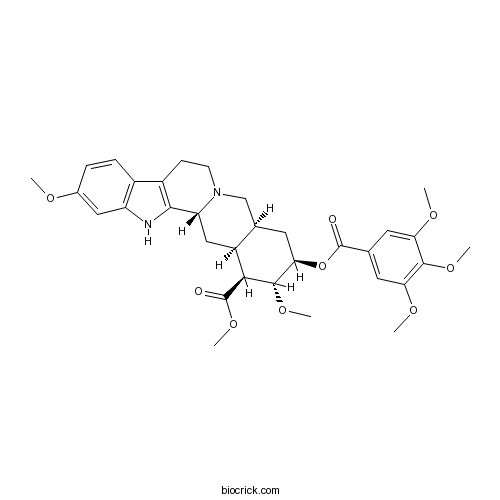
BCN4960
Reserpine
Evacetrapib is a potent and selective of CETP inhibitor, which inhibits human recombinant CETP protein (IC50 5.5 nM) and CETP activity in human plasma (IC50 36 nM) in vitro.
-
BCC7090
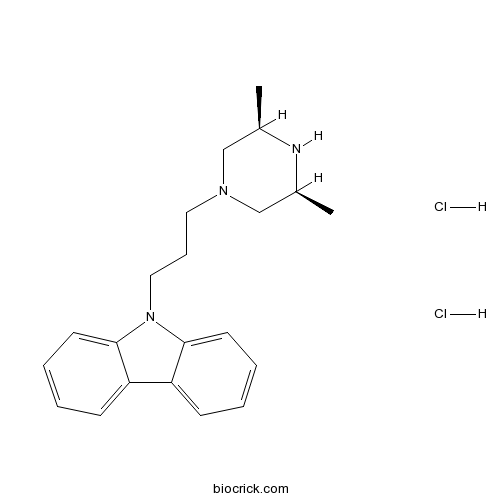
Rimcazole dihydrochloride
75859-03-9
-
BCC2851
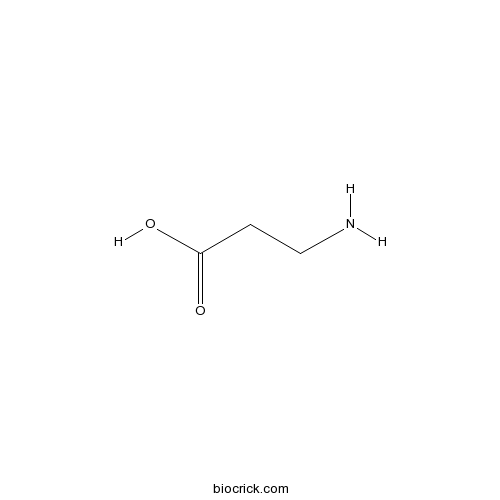
H-ß-Ala-OH
β-Alanine is a non-essential amino acid that is shown to be metabolized into carnosine, which functions as an intracellular buffer.
-
BCC7010
CI 966 hydrochloride
110283-66-4