Arrhythmia Research
An arrhythmia (also known as cardiac dysrhythmia) is defined as an irregular heartbeat, and results from abnormal electrical activity in the heart. There are various different types of arrhythmia, often resulting in a heartbeat that is too fast (tachycardia) or too slow (bradycardia). Atrial and ventricular fibrillation, which are the most common cardiac arrhythmias, account for 10-20% of all deaths among adults in the Western world. The incidence of atrial fibrillation increases with age; it not only affects cardiac function, but also increases the risk of stroke and may worsen heart failure.
Arrhythmia Research Products Targets
- Voltage-gated Sodium (NaV) Channel (30)
- Voltage-gated Potassium (KV) Channel (38)
- Voltage-gated Calcium Channel (CaV) (38)
- Epithelial Sodium Channel (3)
- STIM-Orai Channel (4)
- Ryanodine Receptor (6)
- IP3 Receptor (2)
- Acid-Sensing Ion Channel (3)
- Calcium-Activated Potassium (KCa) Channel (19)
- Inward Rectifier Potassium (Kir) Channel (21)
- HCN Channel (4)
- Adrenergic β3 Receptor (12)
- Adrenergic β2 Receptor (6)
- Adrenergic β1 Receptor (7)
Products for Arrhythmia Research - Page 4
- Cat.No. Product Name Information/Activity
-
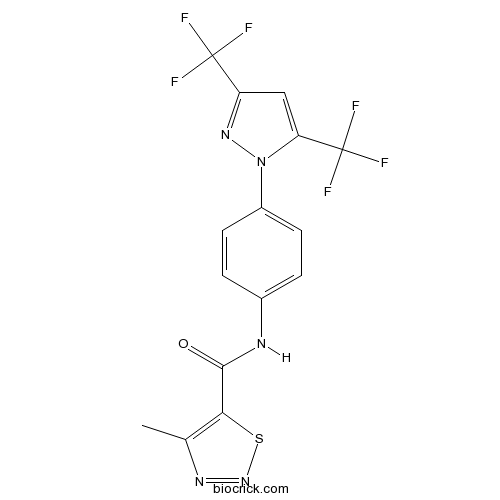
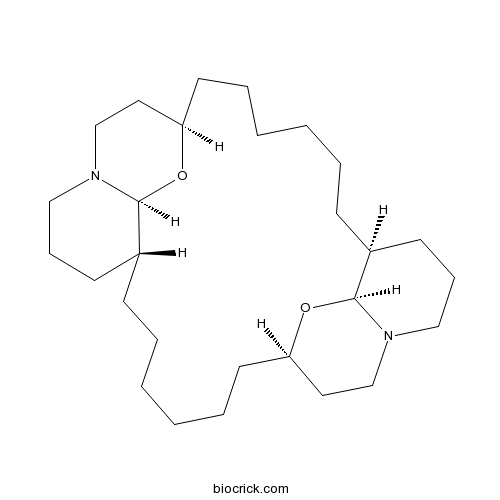
BCC7002
(-)-Xestospongin C
88903-69-9
-
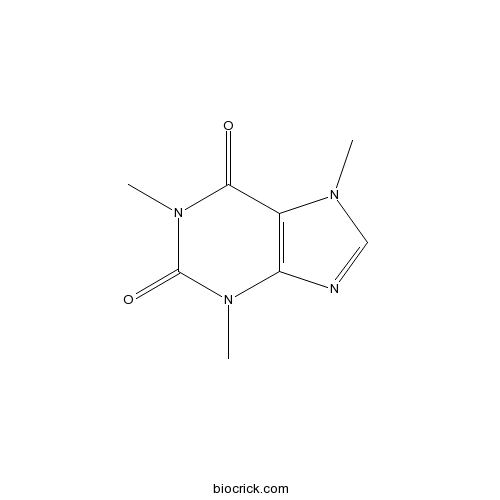
BCN5807
Caffeine
58-08-2
-
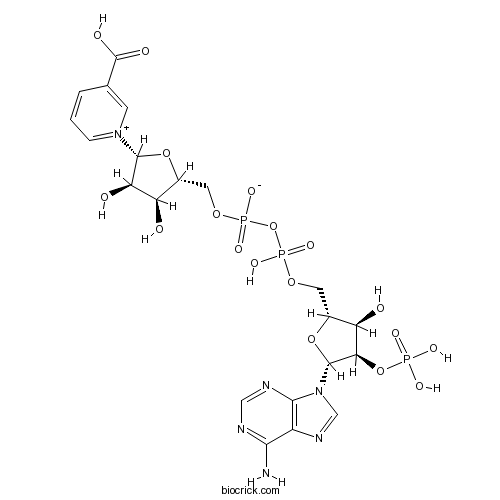
BCC7808
NAADP tetrasodium salt
5502-96-5
-
BCC7079
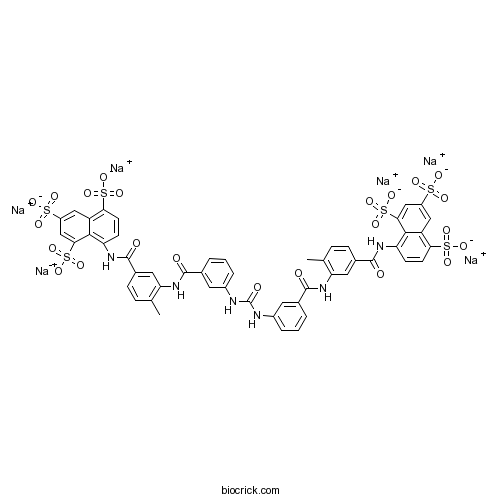
Suramin hexasodium salt
Suramin sodium salt (Suramin hexasodium salt) is a reversible and competitive protein-tyrosine phosphatases (PTPases) inhibitor. Suramin sodium salt is a potent inhibitor of sirtuins: SirT1 (IC50=297 nM), SirT2 (IC50=1.15 μM), and SirT5 (IC50=22 μM). Suramin sodium salt is a competitive inhibitor of reverse transcriptase (DNA topoisomerase II: IC50=5 μM). Suramin sodium salt is an antitrypanosomal, anti-neoplastic and anti-angiogenic agent.
-
BCC6673
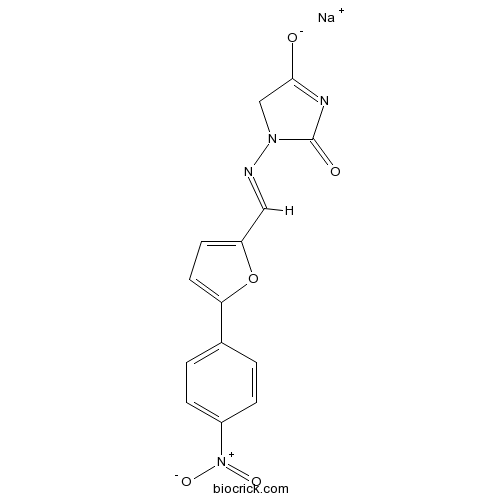
Dantrolene, sodium salt
14663-23-1
-
BCC7067
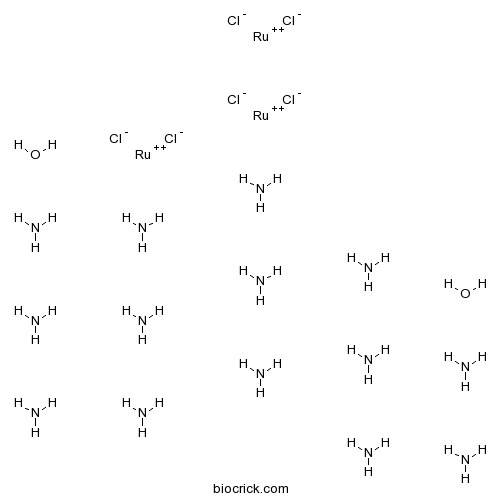
Ruthenium Red
11103-72-3
-
BCC5742
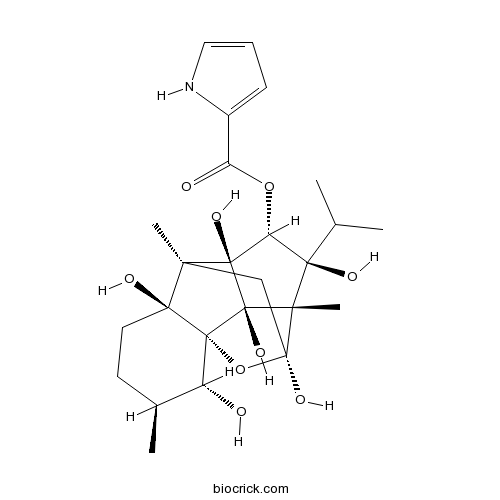
Ryanodine
Ryanodine is a cell permeant ryanodine receptor modulator. Ryanodine can either stimulate or inhibit Ryanodine-mediated Ca2+ release depending on its concentrations. Poisonous diterpenoid found in Ryania speciosa.
-
BCC6644
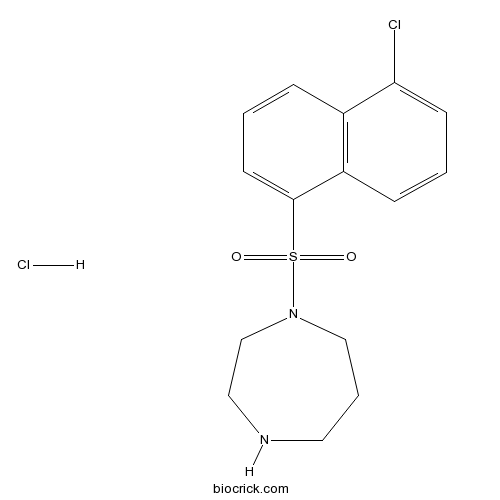
ML 9 hydrochloride
ML-9 is a selective and potent inhibitor of Akt kinase, inhibits myosin light-chain kinase (MLCK) and stromal interaction molecule 1 (STIM1) activity. ML-9 inhibits inhibits MLCK, PKA and PKC activity with Ki values of 4, 32 and 54 μM, respectively. ML-9 induces autophagy by stimulating autophagosome formation and inhibiting their degradation.
-
BCC6953
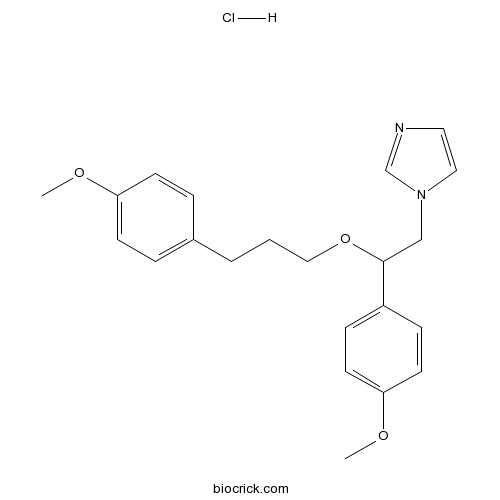
SKF 96365 hydrochloride
SKF-96365 hydrochloride is a non-selective TRP Channel blocker.
-
BCC7817
YM 58483
YM-58483 is the first selective and potent inhibitor of CRAC channels and subsequent Ca2+ signals.