Schizophrenia Research
Schizophrenia is a chronic, debilitating mental disorder affecting 1-2% of the global population. Symptoms are split into two types; 'positive' symptoms, including delusions and hallucinations, and 'negative' symptoms, including anhedonia and lack of motivation. Studies suggest that genetics, early environment, neurobiology, psychological and social processes are important contributory factors; some recreational and prescription drugs appear to cause or worsen symptoms. Several neurobiological alterations in brain structure, physiology and neurochemistry have been documented, along with an ever-increasing list of susceptibility genes.
Schizophrenia Research Products Targets
- Others (13)
- Sigma2 Receptor (4)
- Sigma1 Receptor (16)
- D4 Receptor (12)
- 5-HT7 Receptor (11)
- 5-HT6 Receptor (14)
- 5-ht5 Receptor (2)
- 5-HT4 Receptor (17)
- Glutamate (Metabotropic) Group III Receptor (26)
- Glutamate (Metabotropic) Group II Receptor (33)
- Glutamate (Metabotropic) Group I Receptor (54)
- AMPA Receptor (45)
- GABAA-ρ Receptor (8)
- GABAA Receptor (66)
- GPR55 (8)
- CB2 Receptor (6)
- CB1 Receptor (17)
- Nicotinic (α7) Receptor (25)
- Nicotinic (α4β2) Receptor (14)
- D3 Receptor (12)
- NK3 Receptor (5)
- Carboxypeptidase (1)
- NMDA Receptor (87)
- Kainate Receptor (22)
- D2 Receptor (14)
- D1 and D5 Receptor (16)
- Trace Amine 1 Receptor (2)
- Glutamate Transporter (18)
- Histamine H3 Receptor (22)
- Neurotensin Receptor (7)
- Monoamine Oxidase (10)
- iNOS (11)
- M5 Receptor (2)
- M4 Receptor (3)
- M3 Receptor (4)
- M2 Receptor (5)
- M1 Receptor (8)
- Adrenergic α2 Receptor (33)
- Adrenergic α1 Receptor (22)
- Adrenergic β3 Receptor (12)
- Adrenergic β2 Receptor (6)
- Adrenergic β1 Receptor (7)
- Protein serine and threonine phosphatase (16)
- Protein Arginine Methyltransferase (2)
- Phosphodiesterase (34)
Products for Schizophrenia Research - Page 42
- Cat.No. Product Name Information/Activity
-
BCC7560
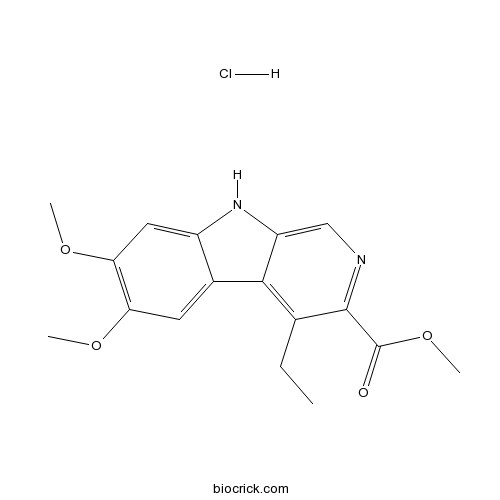
DMCM hydrochloride
DMCM hydrochloride is a nonselective full inverse agonist of benzodiazepine. DMCM shows bnding afinity at human recombinant GABAA αxβ3γ2 receptor subtypes with Kis of 10 nM, 13 nM, 7.5 nM, 2.2 nM for α1, α2, α3, and α5 receptors, respectively.
-
BCC6694
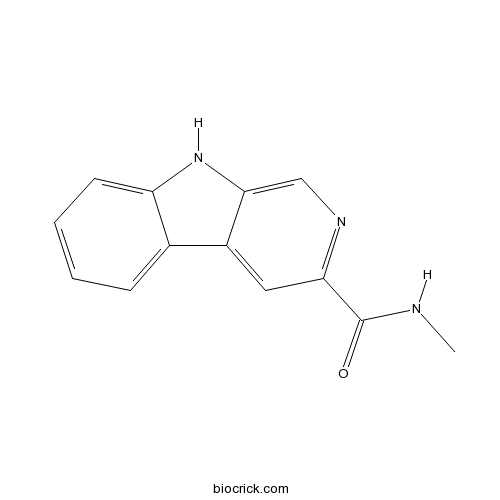
FG 7142
FG 7142 (ZK 39106; LSU-65), a non-selectively benzodiazepine inverse agonist, has high affinity for the α1 subunit-containing GABAA receptor (Ki=91 nM). FG 7142 (ZK 39106; LSU-65) also modulates GABA-induced chloride flux at GABAA receptors expressing the α1 subunit (EC50= 137 nM). FG 7142 (ZK 39106; LSU-65) can increase tyrosine hydroxylation and cause upregulation of β-adrenoceptors in mouse cerebral cortex.
-
BCC6738
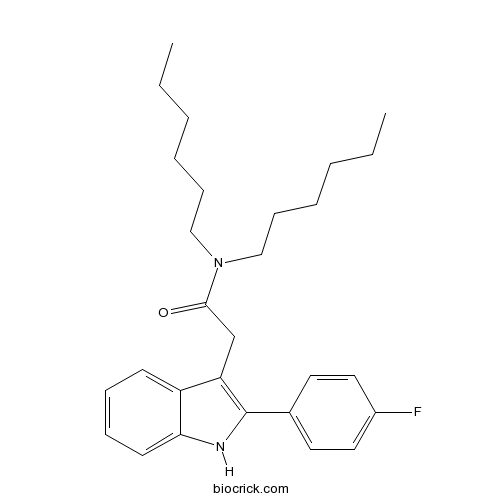
FGIN-1-27
142720-24-9
-
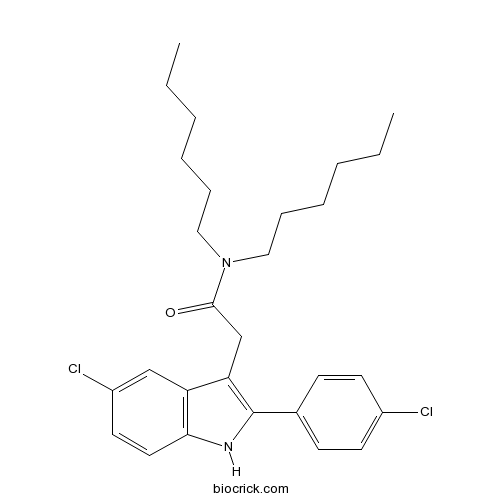
BCC6739
FGIN-1-43
145040-29-5
-
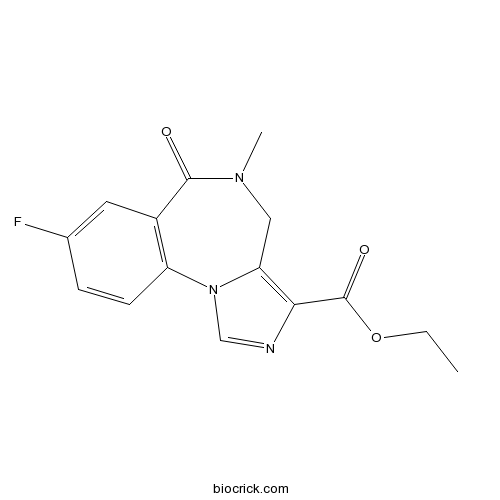
BCC1259
Flumazenil
Flumazenil is a competitive GABAA receptor antagonist, used in the treatment of benzodiazepine overdoses.
-
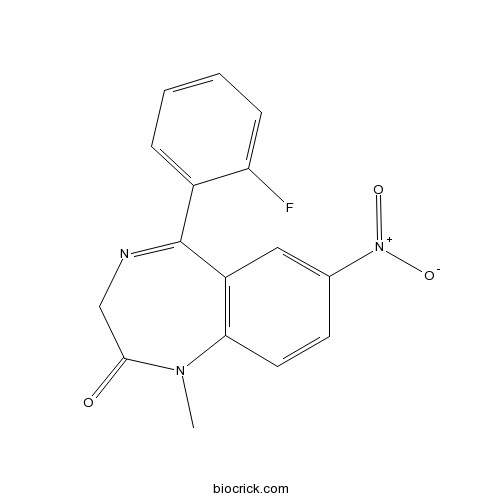
BCC6107
Flunitrazepam
1622-62-4
-
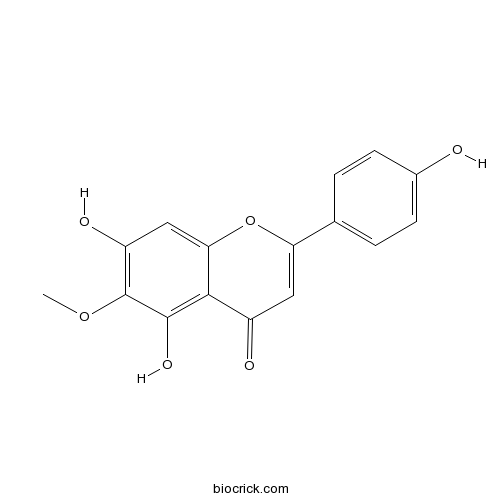
BCN6250
Hispidulin
Hispidulin is a natural flavone with a broad spectrum of biological activities. Hispidulin is a Pim-1 inhibitor with an IC50 of 2.71 μM.
-
BCC5970
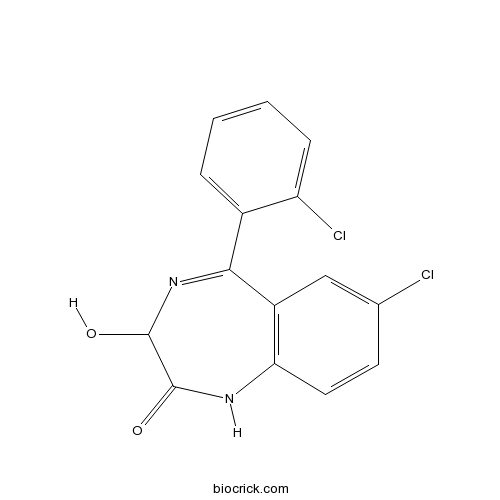
Lorazepam
846-49-1
-
BCC6745
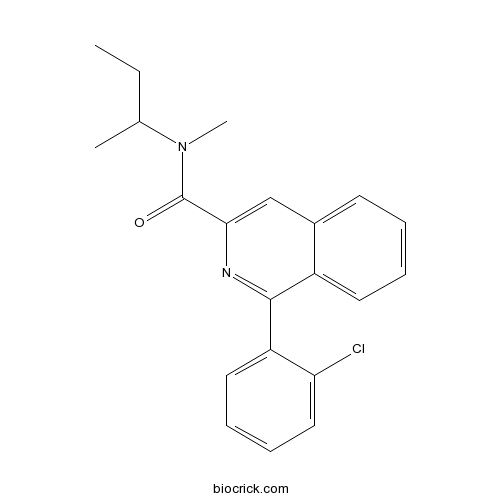
PK 11195
PK 11195 (RP 52028) is a ligand of translocator protein (TSPO), which targets Leishmania chemotherapy, with IC50s of 14.2 μM, 8.2 μM, 3.5 μM for L. amazonensis, L. major and L. braziliensis, respectively.
-
BCC7230
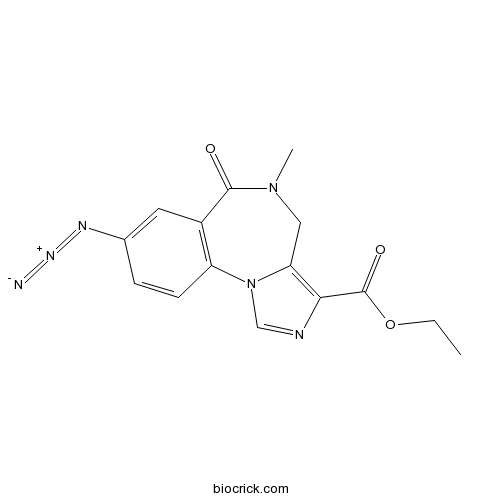
Ro 15-4513
Ro15-4513, imidazobenzodiazepinone derivative, is a partial inverse agonist of benzodiazepine receptor (BZR). Ro15-4513 is a potent ethanol antagonist. Ro15-4513 has anti-anxiety effect.