Huntington's Disease Research
Huntington's disease is a neurodegenerative disease characterized by cognitive decline and motor dysfunction. It is a genetic disorder which results in the production of mutant huntingtin protein (mHtt). This protein aggregates in the cell cytoplasm and nucleus, affecting cellular function.
Huntington's Disease Research Products Targets
- Adenosine A2A Receptor (11)
- Caspase (9)
- Ubiquitin-activating Enzyme E1 (3)
- Ubiquitin E2 Conjugating Enzyme (3)
- Ubiquitin E3 Ligase (10)
- Deubiquitinating Enzyme (12)
- Hsp90 (10)
- Hsp70 (4)
- Glutamate (Metabotropic) Group III Receptor (26)
- Glutamate (Metabotropic) Group II Receptor (33)
- Glutamate (Metabotropic) Group I Receptor (54)
- Vesicular Monoamine Transporter (4)
- Sir 2-like Family Deacetylase (9)
- Post-Translational Modification (11)
- NMDA Receptor (87)
- Kainate Receptor (22)
- IP3 Receptor (2)
- ERK (6)
- D2 Receptor (14)
- D1 and D5 Receptor (16)
- Calpain (7)
- Trk Receptor (13)
- Autophagy (44)
- Antioxidant (19)
- Glutamate Transporter (18)
- Dopamine Transporter (20)
- Cathepsin (9)
- Mitochondrial Permeability Transition Pore (3)
- Proteasome (5)
- Histone Deacetylase (19)
- Histone Acetyltransferase (4)
Products for Huntington's Disease Research - Page 6
- Cat.No. Product Name Information/Activity
-
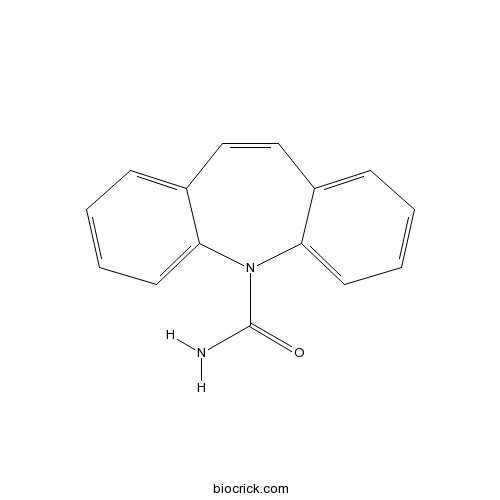
BCC4378
Carbamazepine
Carbamazepine, a sodium channel blocker, is an anticonvulsant drug.
-
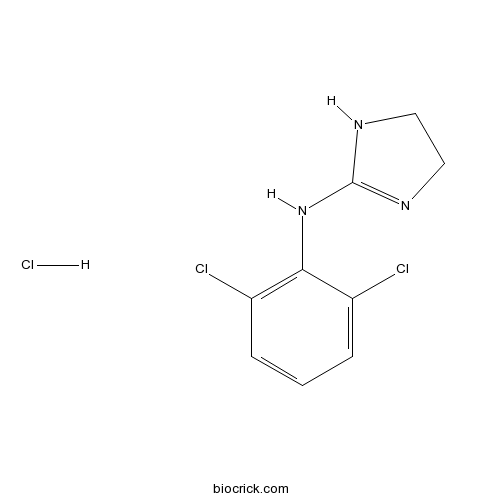
BCC4325
Clonidine HCl
Clonidine hydrochloride is an agonist of α2-adrenoceptor and potent antihypertensive agent.
-
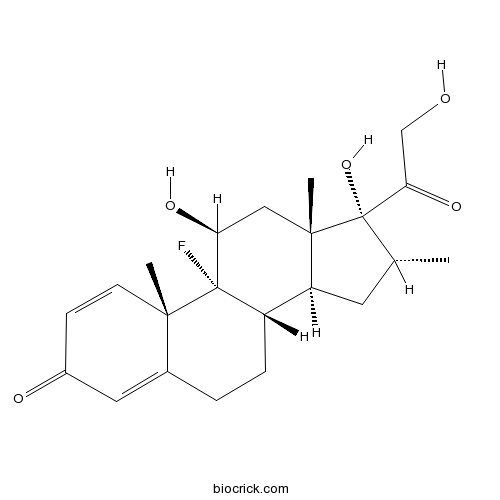
BCC1184
Dexamethasone (DHAP)
Dexamethasone (Hexadecadrol) is a glucocorticoid receptor agonist. Dexamethasone also significantly decreases CD11b, CD18, and CD62L expression on neutrophils, and CD11b and CD18L expression on monocytes.
-
BCC4361
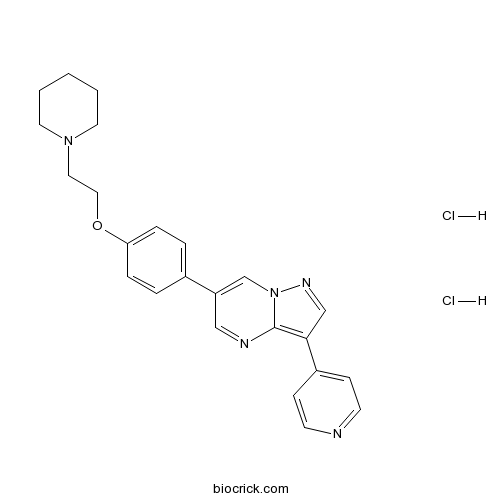
Dorsomorphin 2HCl
Dorsomorphin dihydrochloride (Compound C dihydrochloride) is a potent, selective and ATP-competitive AMPK inhibitor, with a Ki of 109 nM. Dorsomorphin dihydrochloride inhibits BMP pathway by targeting the type I receptors ALK2, ALK3, and ALK6. Dorsomorphin dihydrochloride induces autophagy.
-
BCC1944
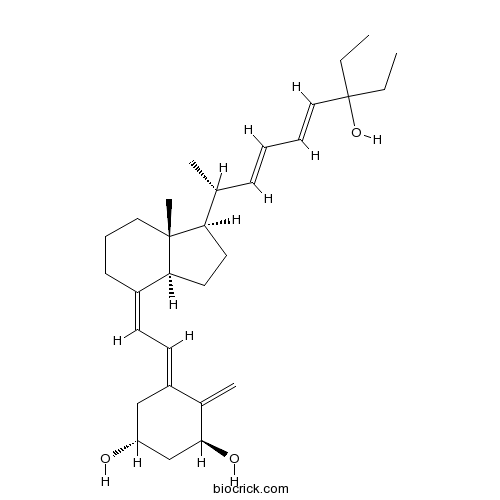
Seocalcitol
Seocalcitol is a vitamin D analog, binds vitamin D receptor protein from human osteosarcoma MG-63 cells with Kd of 0.27 nM.
-
BCC3704
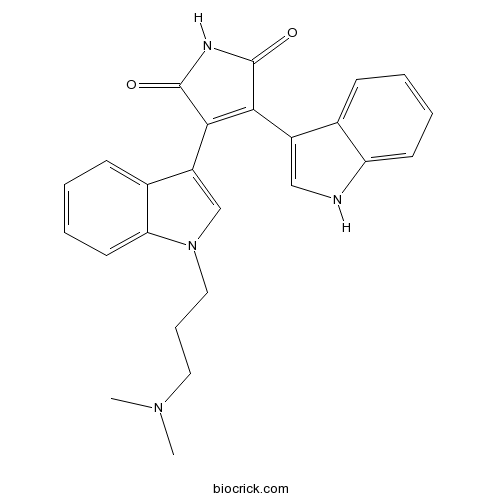
GF 109203X
Bisindolylmaleimide I (GF109203X) is a highly selective, cell-permeable, and reversible protein kinase C (PKC) inhibitor with a Ki of 14 nM.
-
BCC5666
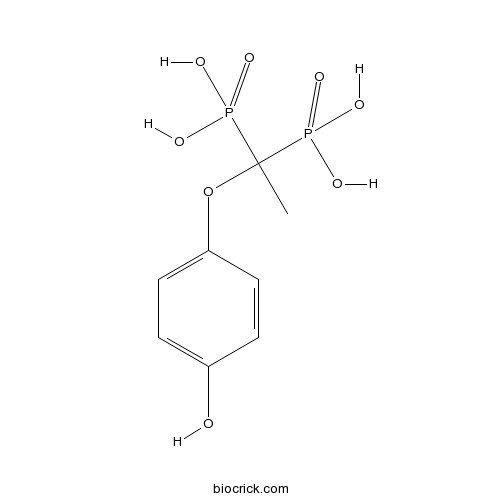
L-690,330
L-690330 is a competitive inhibitor of inositol monophosphatase (IMPase) with Kis of 0.27 and 0.19 μM for recombinant human and bovine IMPase, 0.30 and 0.42 μM for human and bovine frontal cortex IMPase, respectively. L-690330 exhibits 10-fold more sensitive than mouse and rat IMPase.
-
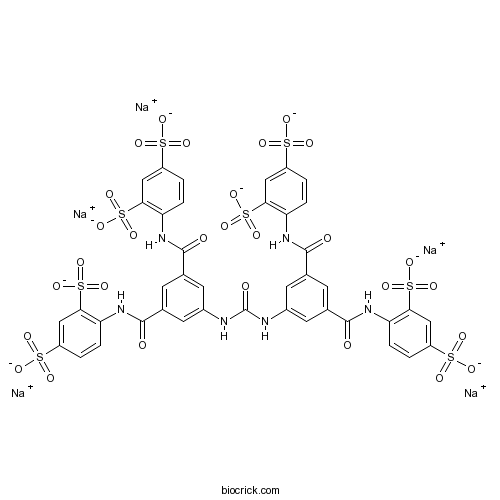
BCC7043
NF 449
Highly selective P2X<sub>1</sub> antagonist
-
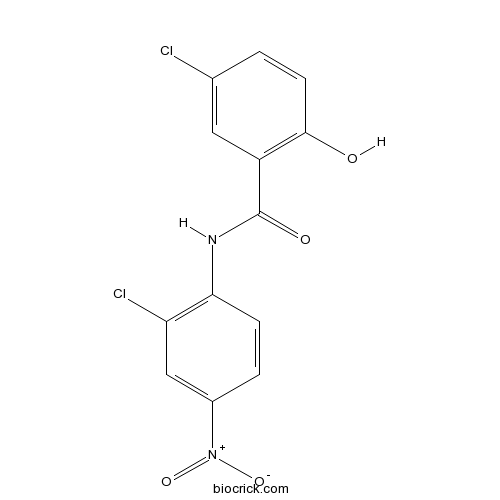
BCC5081
Niclosamide
Niclosamide (BAY2353) is an orally bioavailable chlorinated salicylanilide, with anthelmintic and potential antineoplastic activity. Niclosamide (BAY2353) inhibits STAT3 with IC50 of 0.25 μM in HeLa cells and inhibits DNA replication in a cell-free assay.
-
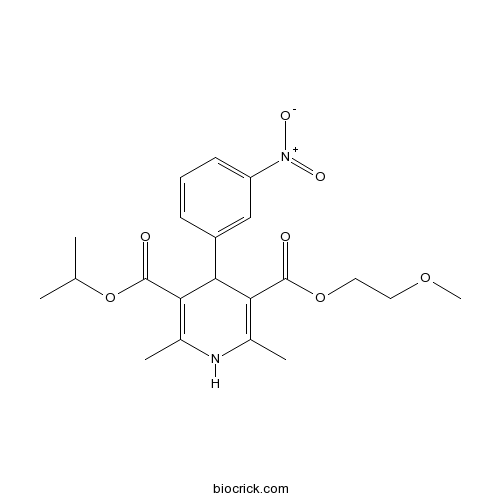
BCC3823
Nimodipine
Nimodipine(Nimotop) is a dihydropyridine derivative and an analogue of the calcium channel blocker nifedipine, with antihypertensive activity.