Huntington's Disease Research
Huntington's disease is a neurodegenerative disease characterized by cognitive decline and motor dysfunction. It is a genetic disorder which results in the production of mutant huntingtin protein (mHtt). This protein aggregates in the cell cytoplasm and nucleus, affecting cellular function.
Huntington's Disease Research Products Targets
- Adenosine A2A Receptor (11)
- Caspase (9)
- Ubiquitin-activating Enzyme E1 (3)
- Ubiquitin E2 Conjugating Enzyme (3)
- Ubiquitin E3 Ligase (10)
- Deubiquitinating Enzyme (12)
- Hsp90 (10)
- Hsp70 (4)
- Glutamate (Metabotropic) Group III Receptor (26)
- Glutamate (Metabotropic) Group II Receptor (33)
- Glutamate (Metabotropic) Group I Receptor (54)
- Vesicular Monoamine Transporter (4)
- Sir 2-like Family Deacetylase (9)
- Post-Translational Modification (11)
- NMDA Receptor (87)
- Kainate Receptor (22)
- IP3 Receptor (2)
- ERK (6)
- D2 Receptor (14)
- D1 and D5 Receptor (16)
- Calpain (7)
- Trk Receptor (13)
- Autophagy (44)
- Antioxidant (19)
- Glutamate Transporter (18)
- Dopamine Transporter (20)
- Cathepsin (9)
- Mitochondrial Permeability Transition Pore (3)
- Proteasome (5)
- Histone Deacetylase (19)
- Histone Acetyltransferase (4)
Products for Huntington's Disease Research - Page 15
- Cat.No. Product Name Information/Activity
-
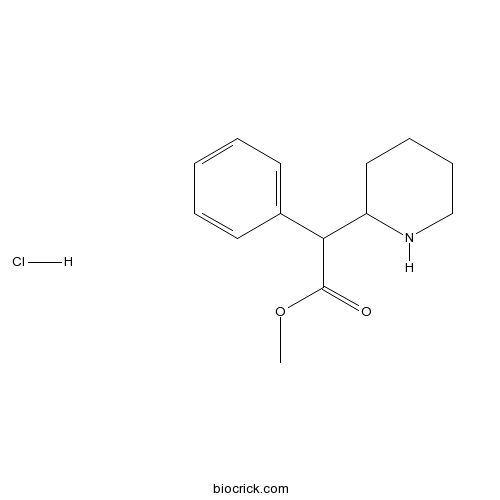
BCC5818
Threo-methylphenidate hydrochloride
298-59-9
-
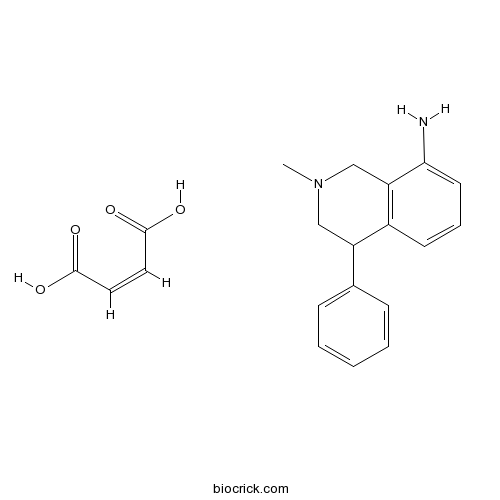
BCC7226
Nomifensine
Nomifensine maleate is a selective inhibitor of dopamine uptake, used in adult attention deficit disorder.
-
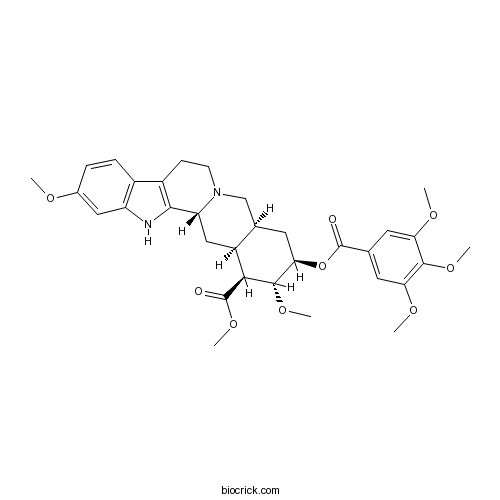
BCN4960
Reserpine
Evacetrapib is a potent and selective of CETP inhibitor, which inhibits human recombinant CETP protein (IC50 5.5 nM) and CETP activity in human plasma (IC50 36 nM) in vitro.
-
BCC7090
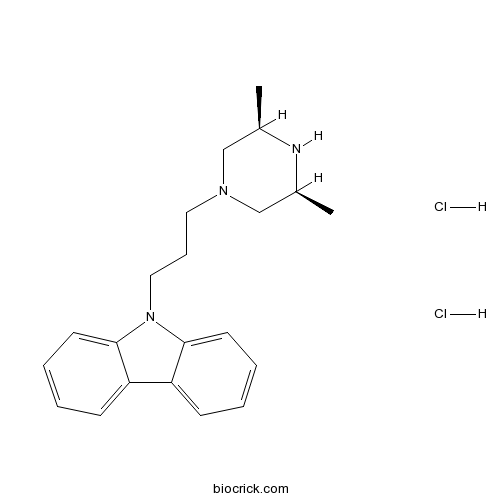
Rimcazole dihydrochloride
75859-03-9
-
BCC5277
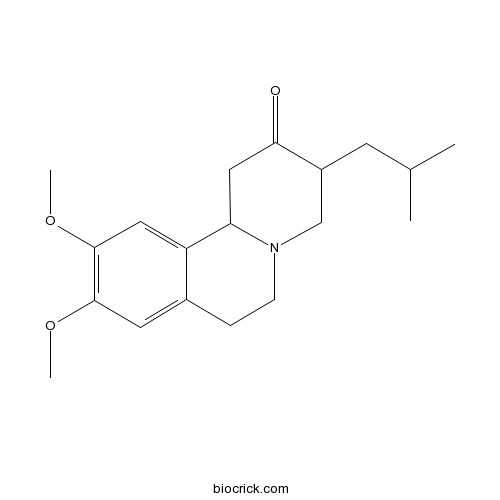
Tetrabenazine
Tetrabenazine is a VMAT-inhibitor used for treatment of hyperkinetic movement disorder.
-
BCC2061
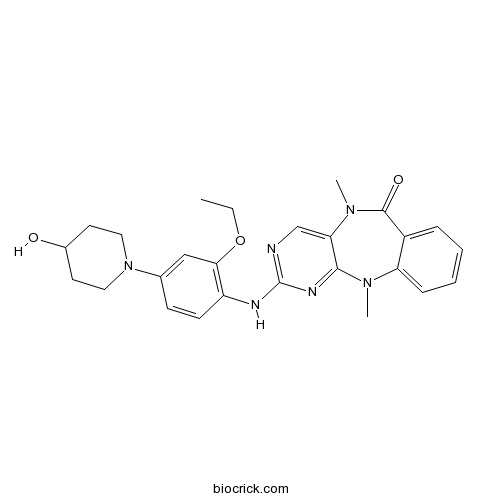
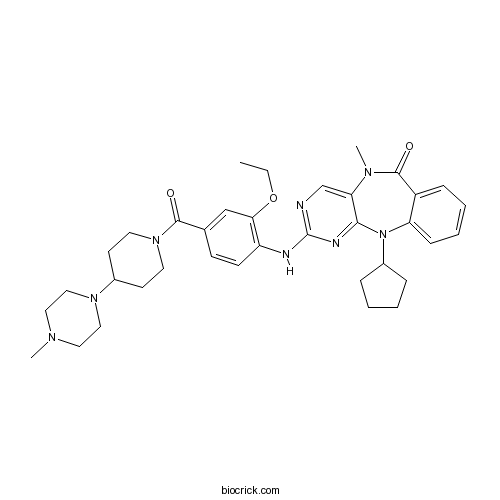
XMD17-109
XMD17-109 is a novel, specific ERK-5 inhibitor, with an IC50 of 162 nM.
-
BCC3669
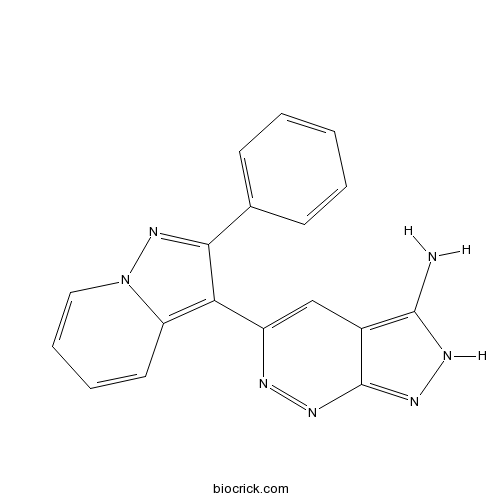
FR 180204
FR 180204 is an ATP-competitive and selective ERK inhibitor. FR 180204 inhibits ERK1 and ERK2 with IC50s of 0.51 μM (Ki=0.31 μM) and 0.33 μM (Ki=0.14 μM), respectively.
-
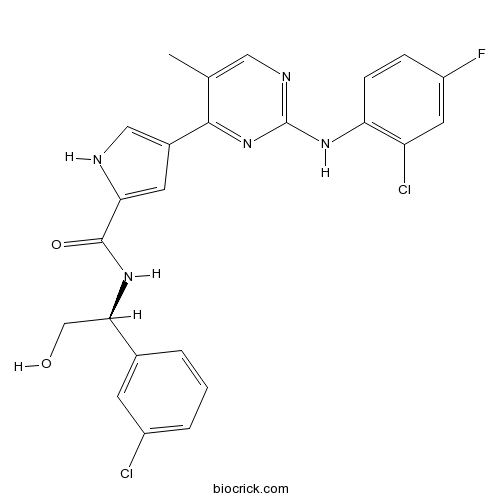
BCC2051
VX-11e
VX-11e is a potent, selective, and orally bioavailable inhibitor of ERK with Ki < 2 nM.
-
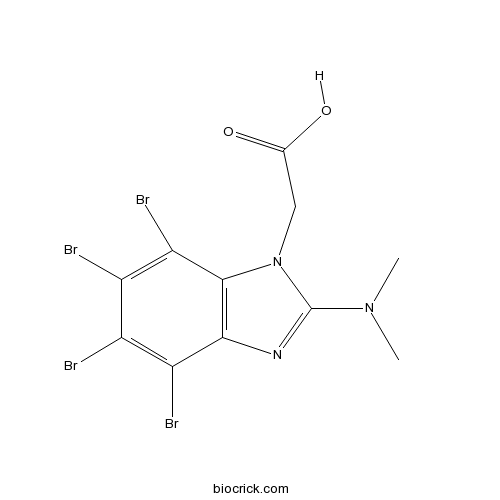
BCC7745
TMCB
905105-89-7
-
BCC2062
XMD8-92
XMD8-92 is a highly selective ERK5/BMK1 inhibitor with dissociation constant (Kd) value of 80 nM.