Huntington's Disease Research
Huntington's disease is a neurodegenerative disease characterized by cognitive decline and motor dysfunction. It is a genetic disorder which results in the production of mutant huntingtin protein (mHtt). This protein aggregates in the cell cytoplasm and nucleus, affecting cellular function.
Huntington's Disease Research Products Targets
- Adenosine A2A Receptor (11)
- Caspase (9)
- Ubiquitin-activating Enzyme E1 (3)
- Ubiquitin E2 Conjugating Enzyme (3)
- Ubiquitin E3 Ligase (10)
- Deubiquitinating Enzyme (12)
- Hsp90 (10)
- Hsp70 (4)
- Glutamate (Metabotropic) Group III Receptor (26)
- Glutamate (Metabotropic) Group II Receptor (33)
- Glutamate (Metabotropic) Group I Receptor (54)
- Vesicular Monoamine Transporter (4)
- Sir 2-like Family Deacetylase (9)
- Post-Translational Modification (11)
- NMDA Receptor (87)
- Kainate Receptor (22)
- IP3 Receptor (2)
- ERK (6)
- D2 Receptor (14)
- D1 and D5 Receptor (16)
- Calpain (7)
- Trk Receptor (13)
- Autophagy (44)
- Antioxidant (19)
- Glutamate Transporter (18)
- Dopamine Transporter (20)
- Cathepsin (9)
- Mitochondrial Permeability Transition Pore (3)
- Proteasome (5)
- Histone Deacetylase (19)
- Histone Acetyltransferase (4)
Products for Huntington's Disease Research - Page 47
- Cat.No. Product Name Information/Activity
-
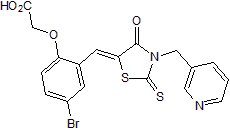
BCC6298
Skp2 Inhibitor C1
Skp2 Inhibitor C1(SKPin C1) is a specific small molecule inhibitor of Skp2-mediated p27 degradation, selectively inhibited Skp2-mediated p27 degradation by reducing p27 binding through key compound-receptor contacts.
-
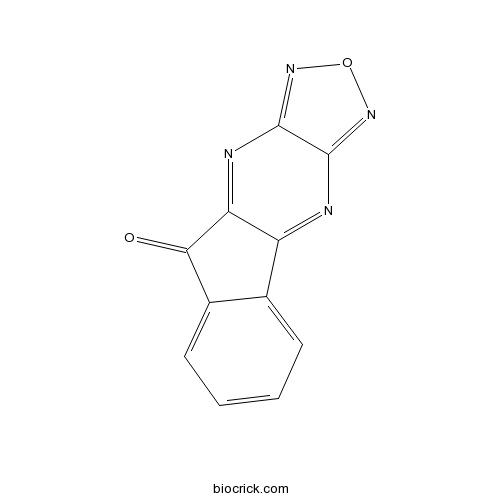
BCC6152
SMER 3
67200-34-4
-
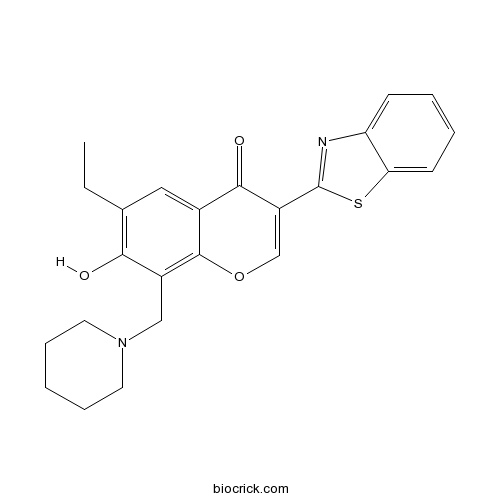
BCC8004
SZL P1-41
SZL P1-41 is a specific Skp2 inhibitor, binds to the F-box domain of Skp2 to prevent Skp1 association and Skp2 SCF complex formation. SZL P1-41, like Skp2 deficiency, augments p27-mediated apoptosis/senescence, while it impairs Akt-driven glycolysis. Anti-tumor activities.
-
BCC2874
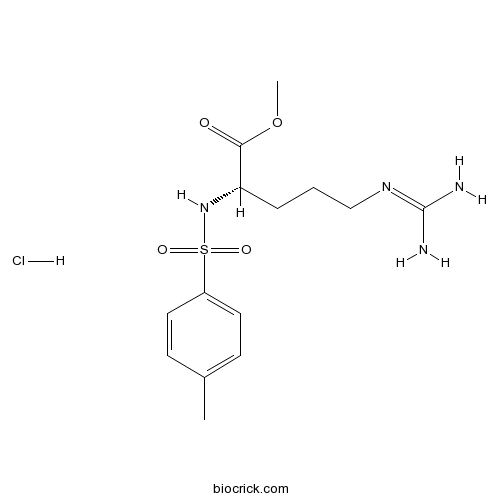
Tos-Arg-OMe.HCl
TAME hydrochloride is an inhibitor of anaphase-promoting complex/cyclosome (APC/C or APC), which binds to APC/C and prevents its activation by Cdc20 and Cdh1, produces mitotic arrest.
-
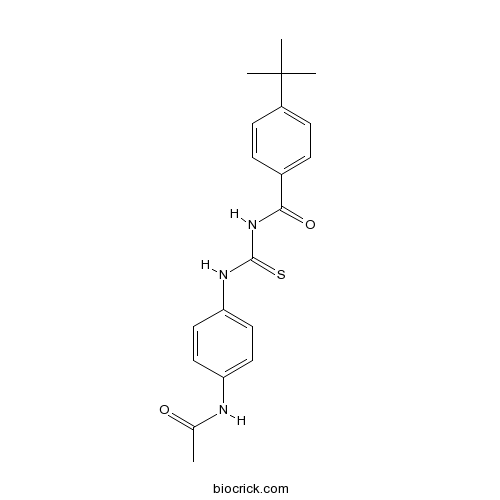
BCC2239
Tenovin-1
Tenovin-1 is an inhibitor of sirtuin 1 and sirtuin 2, an activator of p53 and may have potential in the management of cancer.