Huntington's Disease Research
Huntington's disease is a neurodegenerative disease characterized by cognitive decline and motor dysfunction. It is a genetic disorder which results in the production of mutant huntingtin protein (mHtt). This protein aggregates in the cell cytoplasm and nucleus, affecting cellular function.
Huntington's Disease Research Products Targets
- Adenosine A2A Receptor (11)
- Caspase (9)
- Ubiquitin-activating Enzyme E1 (3)
- Ubiquitin E2 Conjugating Enzyme (3)
- Ubiquitin E3 Ligase (10)
- Deubiquitinating Enzyme (12)
- Hsp90 (10)
- Hsp70 (4)
- Glutamate (Metabotropic) Group III Receptor (26)
- Glutamate (Metabotropic) Group II Receptor (33)
- Glutamate (Metabotropic) Group I Receptor (54)
- Vesicular Monoamine Transporter (4)
- Sir 2-like Family Deacetylase (9)
- Post-Translational Modification (11)
- NMDA Receptor (87)
- Kainate Receptor (22)
- IP3 Receptor (2)
- ERK (6)
- D2 Receptor (14)
- D1 and D5 Receptor (16)
- Calpain (7)
- Trk Receptor (13)
- Autophagy (44)
- Antioxidant (19)
- Glutamate Transporter (18)
- Dopamine Transporter (20)
- Cathepsin (9)
- Mitochondrial Permeability Transition Pore (3)
- Proteasome (5)
- Histone Deacetylase (19)
- Histone Acetyltransferase (4)
Products for Huntington's Disease Research - Page 19
- Cat.No. Product Name Information/Activity
-
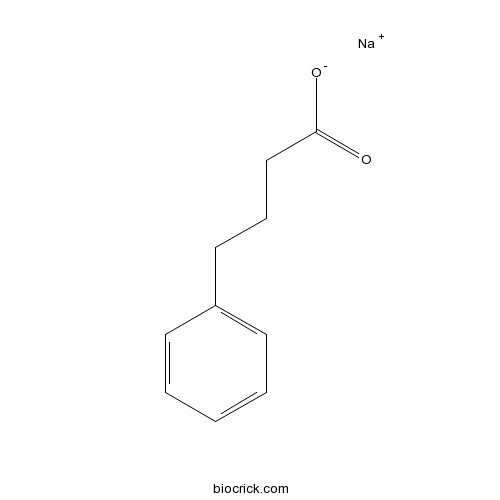
BCC2164
Sodium Phenylbutyrate
Benzenebutyric acid sodium (4-Phenylbutyric acid sodium) is an inhibitor of HDAC and endoplasmic reticulum (ER) stress, used in cancer and infection research.
-
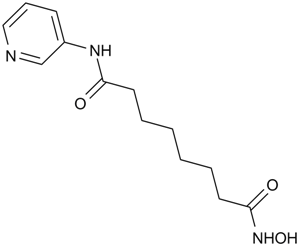
BCC2424
Pyroxamide
Pyroxamide is a potent inhibitor of histone deacetylase 1 (HDAC1) with an ID50 of 100 nM. Pyroxamide can induce apoptosis and cell cycle arrest in leukemia.
-
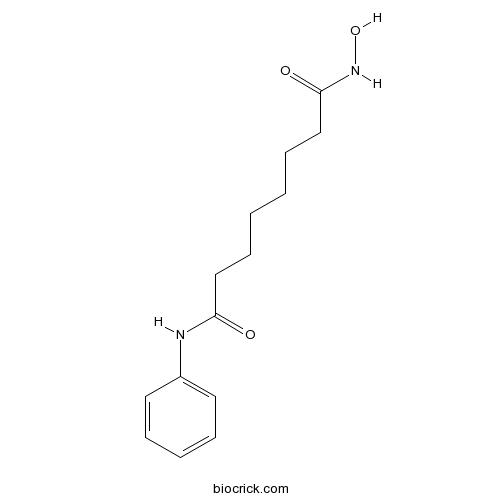
BCC2145
Vorinostat (SAHA, MK0683)
Vorinostat (SAHA) is a potent and orally active pan-inhibitor of HDAC1, HDAC2 and HDAC3 (Class I), HDAC7 (Class II) and HDAC11 (Class IV), with ID50 values of 10 nM and 20 nM for HDAC1 and HDAC3, respectively. Vorinostat induces cell apoptosis. Vorinostat is also an effective inhibitor of human papillomaviruse (HPV)-18 DNA amplification.
-
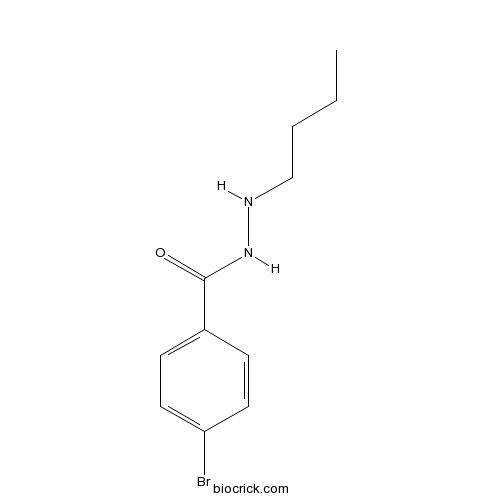
BCC2425
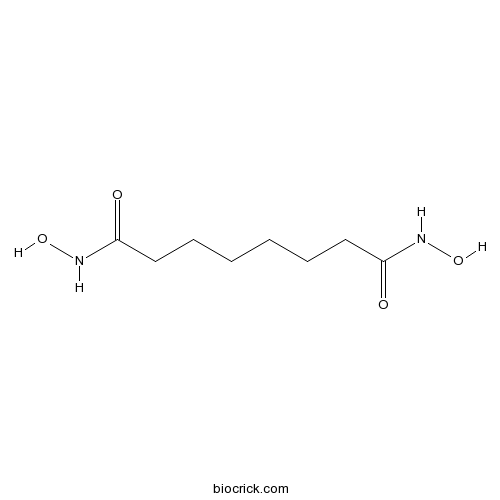
SBHA
Histone deacetylase inhibitor
-
BCC2163
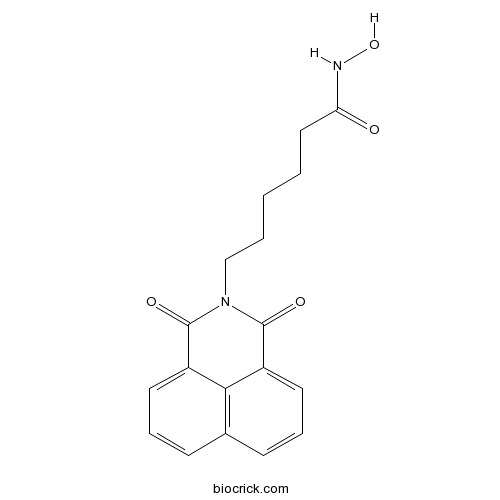
Scriptaid
Scriptaid is a potent histone deacetylase (HDAC) inhibitor, used in cancer research. Scriptaid is also a sensitizer to antivirals and has potential for epstein-barr virus (EBV)-associated lymphomas treatment.
-
BCC4720
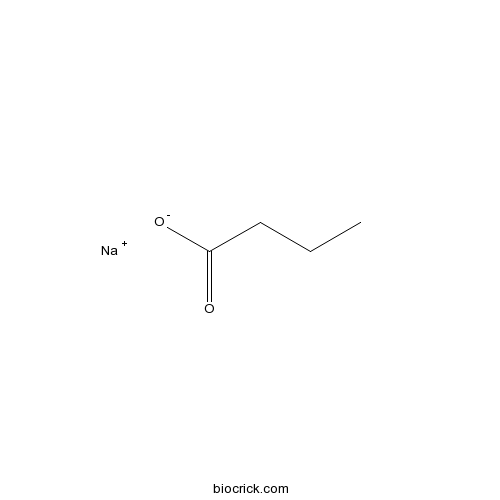
Sodium butyrate
Sodium Butyrate (Butanoic acid sodium salt) is a histone deacetylase (HDAC) inhibitor, with anti-tumor effects in several cancers.
-
BCC2426
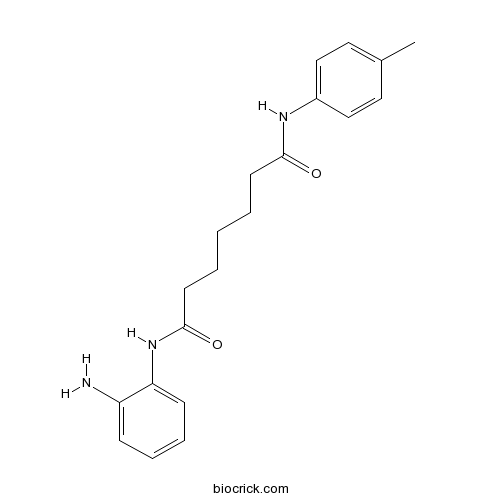
TC-H 106
Pimelic Diphenylamide 106 is a slow, tight-binding inhibitor of class I HDAC (HDAC 1, 2, and 3, with IC50 values of 150 nM , 760nM, and 370 nM, respectively), demonstrating no activity against class II HDACs.
-
BCC2427
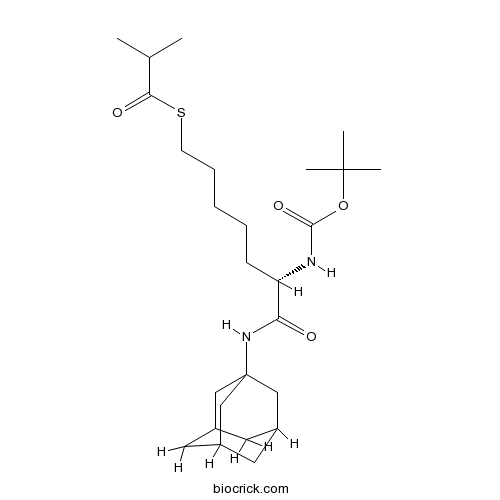
TCS HDAC6 20b
Selective HDAC6 inhibitor
-
BCC3605
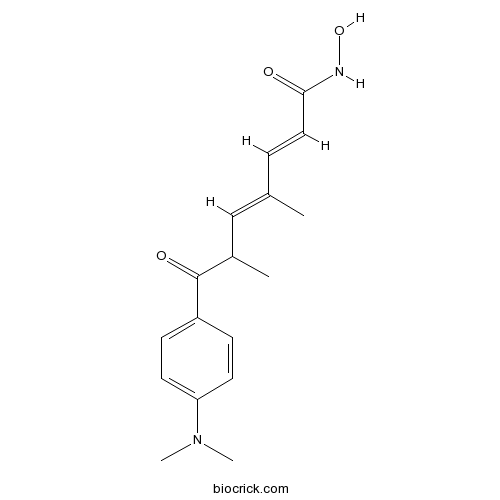
Trichostatin A (TSA)
Trichostatin A (TSA) is a potent and specific inhibitor of HDAC class I/II, with an IC50 value of 1.8 nM for HDAC.
-
BCC6478
UF 010
UF010 is a potent and selective HDAC inhibitor with IC50 ~0.06 μM, 0.1 μM, 0.5 μM and 1.5 μM for HDACs 3, 2, 1 and 8, respectively.