Intracellular Signaling
Cell signaling (cell signalling in British English) is part of any communication process that governs basic activities of cells and coordinates all cell actions. The ability of cells to perceive and correctly respond to their microenvironment is the basis of development, tissue repair, and immunity, as well as normal tissue homeostasis. Errors in signaling interactions and cellular information processing are responsible for diseases such as cancer, autoimmunity, and diabetes. By understanding cell signaling, diseases may be treated more effectively and, theoretically, artificial tissues may be created.
Intracellular Signaling Products Targets
- Cdc25 Phosphatase (2)
- STAT (10)
- PI 3-kinase (22)
- JAK (10)
- PFKFB3 (3)
- Hexokinases (1)
- Protein Kinase G (3)
- NFKB and IKB (30)
- Others (3)
- Cyclooxygenase (24)
- IRAK (1)
- PORCN (4)
- beta-catenin (13)
- PPARγ (16)
- PPARδ (5)
- PPARα (7)
- Inositol Phosphatase (3)
- MYC (1)
- Sphingosine Kinase (2)
- RSK (4)
- Protein Kinase D (3)
- Polo-like Kinase (5)
- Pim Kinase (4)
- PERK (2)
- Phosphoinositide-dependent Kinase 1 (5)
- P21-activated Kinases (2)
- Myosin Light Chain Kinase (4)
- mTOR (14)
- Monopolar Spindle 1 Kinase (2)
- Mnk (2)
- MK2 (2)
- MEK (9)
- LIMK (3)
- Focal Adhesion Kinase (4)
- DNA-Dependent Protein Kinase (6)
- Diacylglycerol Kinase (2)
- Death-Associated Protein Kinase (1)
- Checkpoint Kinase (3)
- Casein Kinase 2 (3)
- Casein Kinase 1 (7)
- Bruton's Tyrosine Kinase (3)
- ATM and ATR Kinase (3)
- Akt (Protein Kinase B) (11)
- Adeonsine Kinase (2)
- Abl Kinase (9)
- Hsp90 (10)
- Hsp70 (4)
- Protein Kinase A (9)
- Protein Kinase C (29)
- Calmodulin-Dependent Kinase (8)
- LRRK2 (4)
- ERK (6)
- DYRK (3)
- Estrogen and Related Receptor (33)
- Tankyrase (5)
- ITK (2)
- ASK1 (2)
- Syk Kinase (4)
- Src Kinase (21)
- Raf Kinase (7)
- IαB Kinase (6)
- p38 MAPK (16)
- Janus N-terminal Kinase (12)
- Androgen Receptor (11)
- Glycogen Synthase Kinase 3 (20)
- AMPK (7)
- Rho-Kinases (9)
- AP-1 (2)
- SREBP (2)
- NUAK (2)
- Telomerase (3)
- Retinoid X Receptor (13)
- Retinoic Acid Receptor (22)
- Proteasome (5)
- Phospholipase (16)
- Lipase (4)
- G Protein (Small) (23)
- Hedgehog Signaling (15)
- DNA Topoisomerase (12)
- DNA, RNA and Protein Synthesis (46)
- Protein Tyrosine Phosphatases (5)
- Protein serine and threonine phosphatase (16)
- Histone Deacetylase (19)
- Aurora Kinase (9)
- Cyclin-Dependent Protein Kinase (21)
Products for Intracellular Signaling - Page 30
- Cat.No. Product Name Information/Activity
-
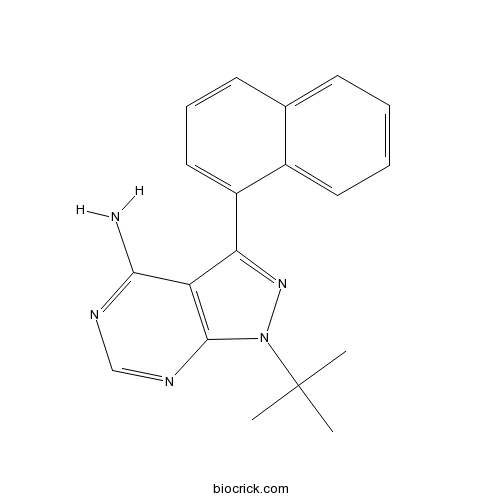
BCC3893
1-Naphthyl PP1
1-Naphthyl PP1(1-NA-PP 1) is a selective inhibitor of src family kinases v-Src and c-Fyn as well as the tyrosine kinase c-Abl (IC50 values are 1.0, 0.6, 0.6, 18 and 22 μM for v-Src, c-Fyn, c-Abl, CDK2 and CAMK II respectively).
-
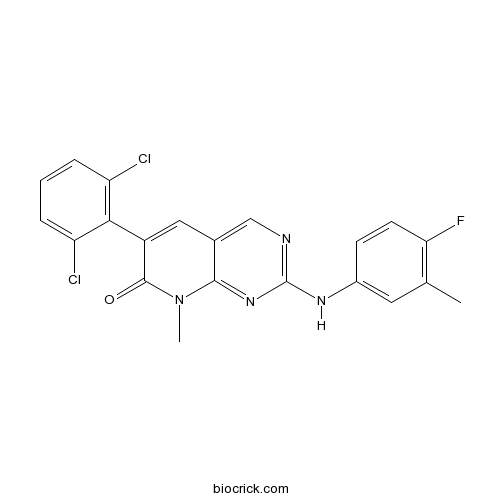
BCC3894
PD 180970
p210<sup>Bcr/Abl</sup> kinase inhibitor; also inhibits c-Src and KIT
-
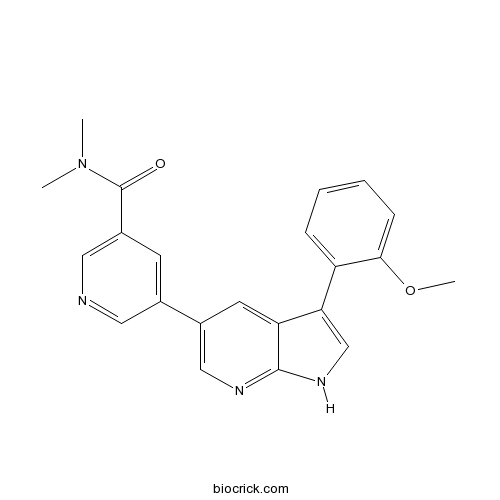
BCC3895
PPY A
Potent inhibitor of Abl T315l mutant and wild-type Abl kinases
-
BCC5905
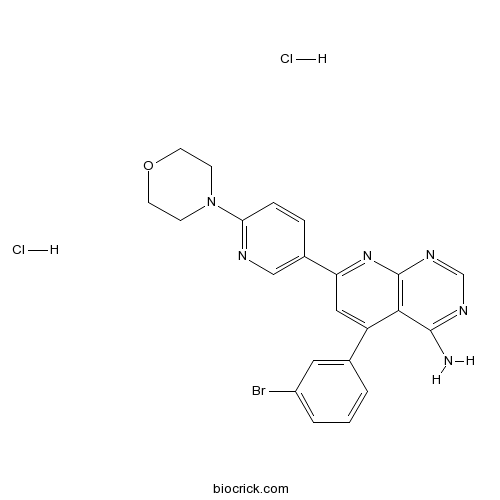
ABT 702 dihydrochloride
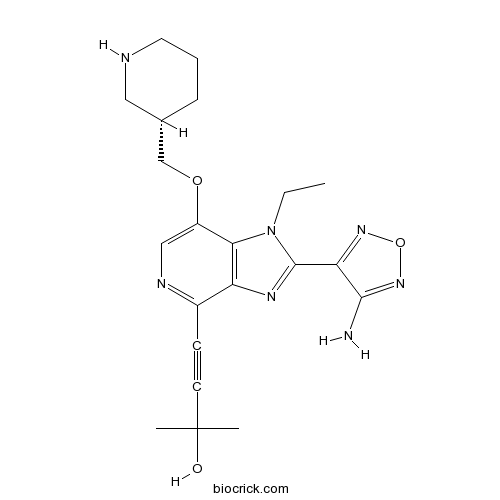
ABT-702 dihydrochloride is a potent adenosine kinase (AK) inhibitor (IC50=1.7 nM).
-
BCC1312
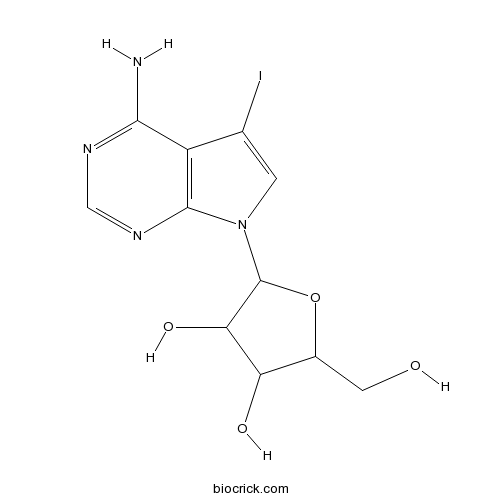
5-Iodotubercidin
5-Iodotubercidin (NSC 113939), an ATP mimetic, is a potent adenosine kinase inhibitor with an IC50 of 26 nM. 5-Iodotubercidin (NSC 113939) initiates glycogen synthesis in isolated hepatocytes by causing inactivation of phosphorylase and activation of glycogen synthase. 5-Iodotubercidin (NSC 113939) also inhibits CK1, insulin receptor tyrosine kinase, phosphorylase kinase, PKA, CK2, PKC and Haspin.
-
BCC1334
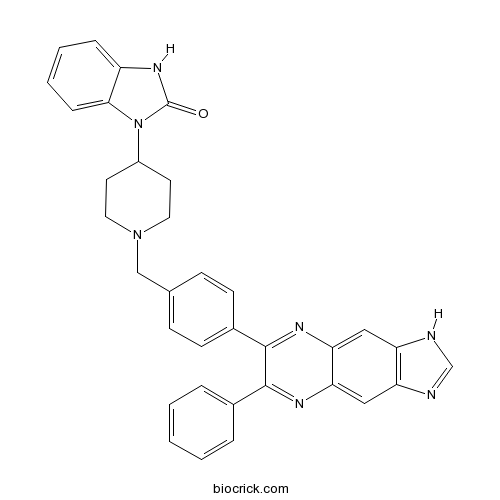
AKT inhibitor VIII
AKT inhibitor VIII (AKTi-1/2) is a cell-permeable quinoxaline compound that has been shown to potently, selectively, allosterically, and reversibly inhibit Akt1, Akt2, and Akt3 activity with IC50s of 58 nM, 210 nM, and 2119 nM, respectively.
-
BCC3872
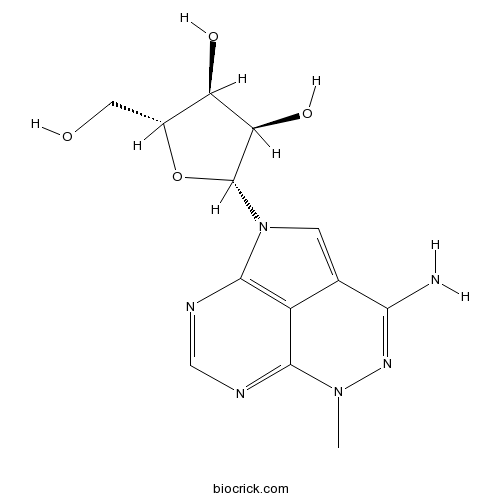
Triciribine
Triciribine is a DNA synthesis inhibitor, also inhibits Akt and HIV-1/2 with IC50 of 130 nM, and 0.02-0.46 μM, respectively.
-
BCC7409
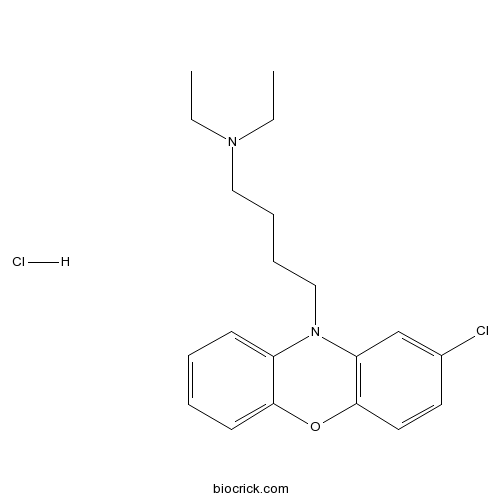
10-DEBC hydrochloride
Selective Akt/PKB inhibitor
-
BCC7518
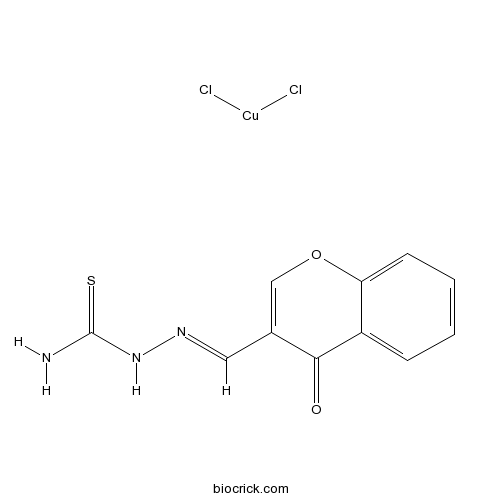
FPA 124
FPA-124, a cell-permeable copper complex, is a selective Akt inhibitor with an IC50 of 0.1 μM. FPA-124 interacts with both the pleckstrin homology (PH) and the kinase domains of Akt. FPA-124 induces apoptosis.
-
BCC2483
GSK690693
GSK-690693 is an ATP-competitive pan-Akt inhibitor with IC50s of 2, 13, 9 nM for Akt1, Akt2 and Akt3, respectively. GSK-690693, an AMP-activated protein kinase (AMPK) inhibitor, affects Unc-51-like autophagy activating kinase 1 (ULK1) activity and robustly inhibits STING-dependent IRF3 activation.