
cis-MelilotosideCAS# 2446-60-8 |
| Cas No. | 2446-60-8 | SDF | File under preparation. |
| PubChem ID | 5316113 | Appearance | Powder |
| Formula | C15H18O8 | M.Wt | 326.3 |
| Type of Compound | Phenols | Storage | Desiccate at -20°C |
| Solubility | Soluble in Chloroform,Dichloromethane,Ethyl Acetate,DMSO,Acetone,etc. | ||
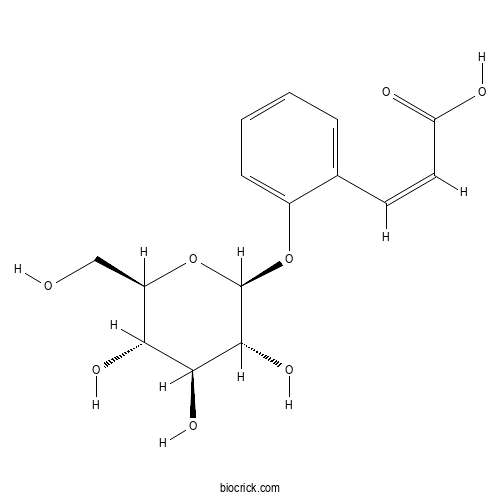
| Chemical Name | (Z)-3-[2-[(2S,3R,4S,5S,6R)-3,4,5-trihydroxy-6-(hydroxymethyl)oxan-2-yl]oxyphenyl]prop-2-enoic acid | ||
| SMILES | C1=CC=C(C(=C1)C=CC(=O)O)OC2C(C(C(C(O2)CO)O)O)O | ||
| Standard InChIKey | GVRIYIMNJGULCZ-QLFWQTQQSA-N | ||
| Standard InChI | InChI=1S/C15H18O8/c16-7-10-12(19)13(20)14(21)15(23-10)22-9-4-2-1-3-8(9)5-6-11(17)18/h1-6,10,12-16,19-21H,7H2,(H,17,18)/b6-5-/t10-,12-,13+,14-,15-/m1/s1 | ||
| General tips | For obtaining a higher solubility , please warm the tube at 37 ℃ and shake it in the ultrasonic bath for a while.Stock solution can be stored below -20℃ for several months. We recommend that you prepare and use the solution on the same day. However, if the test schedule requires, the stock solutions can be prepared in advance, and the stock solution must be sealed and stored below -20℃. In general, the stock solution can be kept for several months. Before use, we recommend that you leave the vial at room temperature for at least an hour before opening it. |
||
| About Packaging | 1. The packaging of the product may be reversed during transportation, cause the high purity compounds to adhere to the neck or cap of the vial.Take the vail out of its packaging and shake gently until the compounds fall to the bottom of the vial. 2. For liquid products, please centrifuge at 500xg to gather the liquid to the bottom of the vial. 3. Try to avoid loss or contamination during the experiment. |
||
| Shipping Condition | Packaging according to customer requirements(5mg, 10mg, 20mg and more). Ship via FedEx, DHL, UPS, EMS or other couriers with RT, or blue ice upon request. | ||
Quality Control & MSDS
3D structure
Package In Stock
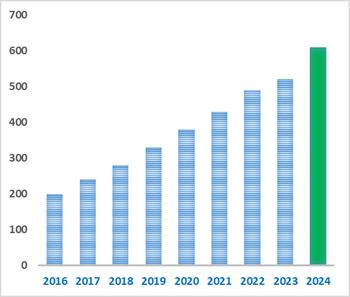
Number of papers citing our products

cis-Melilotoside Dilution Calculator
cis-Melilotoside Molarity Calculator
-
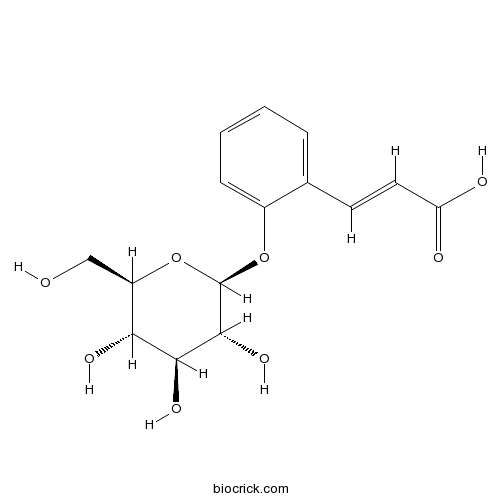 Trans-MelilotosideCatalog No.: BCC8364CAS No.: 618-67-7
 -
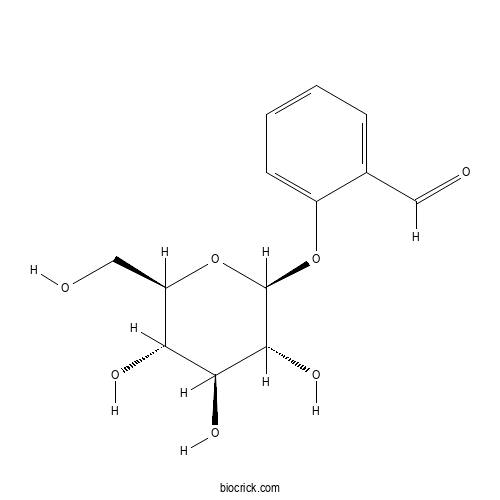 2-(Beta-D-Glucopyranosyloxy)benzaldehydeCatalog No.: BCN9923CAS No.: 618-65-5
 -
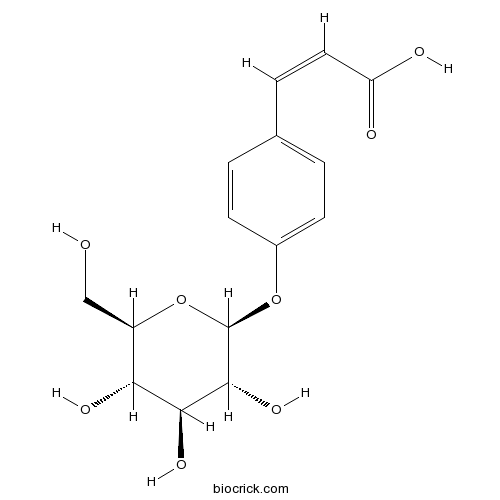 4-O-beta-Glucopyranosyl-cis-coumaric acidCatalog No.: BCN1608CAS No.: 117405-48-8
 -
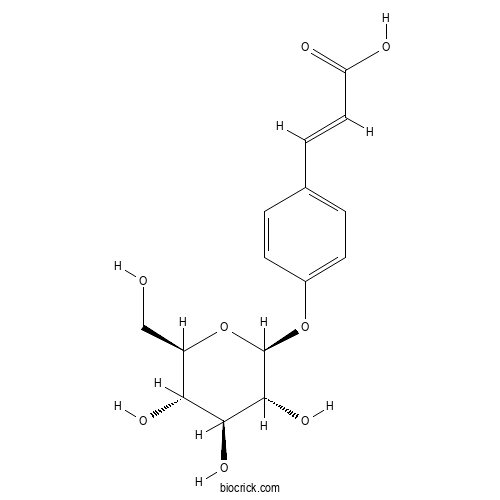 trans-p-Coumaric acid 4-O-β-D-glucopyranosideCatalog No.: BCX1068CAS No.: 117405-49-9
 -
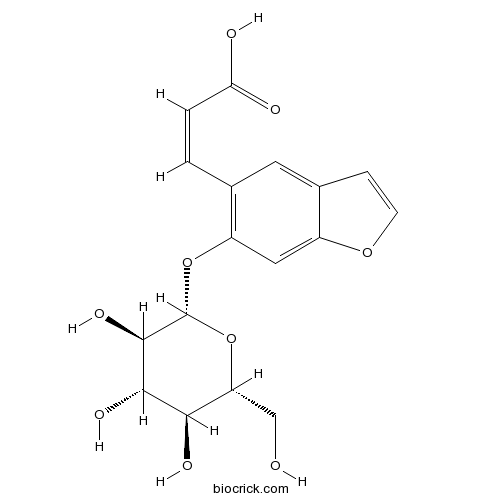 PsoralenosideCatalog No.: BCN3196CAS No.: 905954-17-8
 -
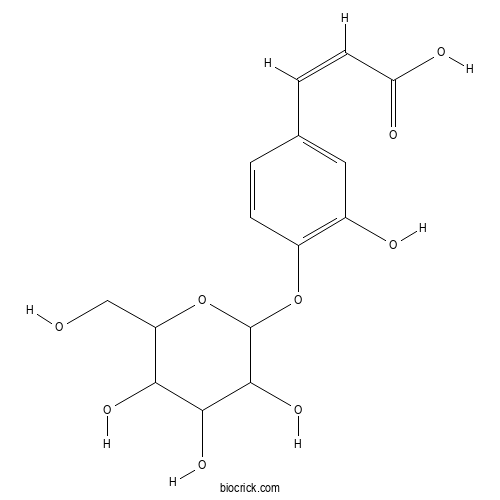 Caffeic acid 4-O-glucopyranosideCatalog No.: BCX0984CAS No.: 17093-82-2
 -
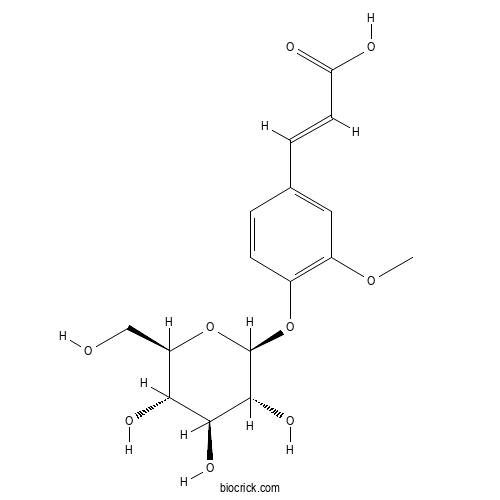 trans-Ferulic acid-4-β-glucosideCatalog No.: BCX1247CAS No.: 117405-51-3
 -
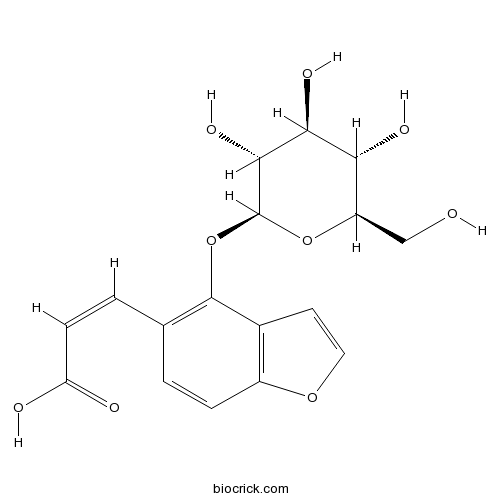 IsopsoralenosideCatalog No.: BCN3197CAS No.: 905954-18-9
| 1 mg | 5 mg | 10 mg | 20 mg | 25 mg | |
| 1 mM | 3.0647 mL | 15.3233 mL | 30.6466 mL | 61.2933 mL | 76.6166 mL |
| 5 mM | 0.6129 mL | 3.0647 mL | 6.1293 mL | 12.2587 mL | 15.3233 mL |
| 10 mM | 0.3065 mL | 1.5323 mL | 3.0647 mL | 6.1293 mL | 7.6617 mL |
| 50 mM | 0.0613 mL | 0.3065 mL | 0.6129 mL | 1.2259 mL | 1.5323 mL |
| 100 mM | 0.0306 mL | 0.1532 mL | 0.3065 mL | 0.6129 mL | 0.7662 mL |
| * Note: If you are in the process of experiment, it's necessary to make the dilution ratios of the samples. The dilution data above is only for reference. Normally, it's can get a better solubility within lower of Concentrations. | |||||
- Batatasin III-3-O-beta-D-glucoside
Catalog No.:BCX2213
CAS No.:189302-75-8
- Methyl gymnoside I
Catalog No.:BCX2212
CAS No.:1454585-33-1
- Cronupapin
Catalog No.:BCX2211
CAS No.:143572-66-1
- 5-Epikarelinine
Catalog No.:BCX2210
CAS No.:2102716-91-4
- Pleionoside G
Catalog No.:BCX2209
CAS No.:2292159-78-3
- Tricin 4'-O-(threo-beta-guaiacylglyceryl)ether
Catalog No.:BCX2208
CAS No.:369390-51-2
- Gymnoside II
Catalog No.:BCX2207
CAS No.:899430-02-5
- Isoswertisin 2''-O-(2'''-methylbutyrate)
Catalog No.:BCX2206
CAS No.:681152-39-6
- 2'-Methoxymeranzin hydrate
Catalog No.:BCX2205
CAS No.:76996-30-0
- Tenacissoside D
Catalog No.:BCX2204
CAS No.:107343-57-9
- L-Tryptophan methyl ester
Catalog No.:BCX2203
CAS No.:4299-70-1
- Orientin 2''-O-(2'''-methylbutyrate)
Catalog No.:BCX2202
CAS No.:681152-44-3
- 8-Acetyl-9-hydroxy-3-methoxy-7-methyl-1-phenalenon
Catalog No.:BCX2215
CAS No.:2193052-99-0
- Euphorbia factor L11
Catalog No.:BCX2216
CAS No.:850560-45-1
- Vernodalin
Catalog No.:BCX2217
CAS No.:21871-10-3
- Isoswertisin
Catalog No.:BCX2218
CAS No.:6980-40-1
- Puerarin 6''-O-glucoside
Catalog No.:BCX2219
CAS No.:168060-90-0
- Higenamine 4'-O-beta-D-glucoside
Catalog No.:BCX2220
CAS No.:1440545-91-4
- 15R-Kirenol (ent-2alpha,15R,16,19-tetrahydroxypimar-8(14)-ene)
Catalog No.:BCX2221
CAS No.:1622876-96-3
- 14-Acetoxy-12-senecioyloxytetradeca-2E,8E,10E-trien-4,6-diyn-1-ol
Catalog No.:BCX2222
CAS No.:113269-37-7
- 9S,12S,13S-Trihydroxy-10E-octadecenoate
Catalog No.:BCX2223
CAS No.:97134-11-7
- (S)-7-O-Methylpeucedanol 3'-O-beta-D-glucopyranoside
Catalog No.:BCX2224
CAS No.:214627-06-2
- Hopantenic acid (Dexpanthenol Impurity 4)
Catalog No.:BCX2225
CAS No.:49831-65-4
- Leptodactylone
Catalog No.:BCX2226
CAS No.:61899-44-3
Comprehensive analysis of natural products of Galium odoratum (Rubiaceae), focusing on the formation of coumarin during the drying process.[Pubmed:40122276]
Phytochemistry. 2025 Aug;236:114485.
Changes in the contents of coumarin and its precursors were monitored during the post-harvest drying process of Galium odoratum (L.) Scop. (Rubiaceae) to get scientific support for the traditional preparation of "Maibowle" (an alcoholic beverage made of white wine, sparkling wine, and G. odoratum shoots and sometimes additional ingredients) in Germany, which involves pre-drying of the freshly harvested herb for two to 24 h. The contents of coumarin, cis-Melilotoside, and trans-melilotoside in G. odoratum were determined over a period of 72 h after harvesting using quantitative UHPLC-DAD analysis. The drying process was finished after 48 h, and afterwards no further weight loss of the plant material was detectable. During this 48-h-period, trans-melilotoside seemed to isomerize gradually to cis-Melilotoside. For the first time, we demonstrated that coumarin decreases during drying due to sublimation, which supports the use of fresh or minimally air-dried material in traditional recipes with specific drying times. Moreover, we demonstrated for the first time that reduction in coumarin during prolonged periods of drying is explained by sublimation of coumarin. Flavonoid glycosides, quercetin 3-O-[alpha-l-rhamnosyl-(1 -->6)-beta-d-glucosyl]-7-O-beta-D-glucoside 12 and kaempferol 3-O-[alpha-l-rhamnosyl-(1-->6)-beta-d-glucosyl]-7-O-beta-D-glucoside 13 as well as coumarin precursors cis-Melilotoside 9 and trans-melilotoside 10 were for the first time isolated from G. odoratum. Moreover, monotropein 1, geniposidic acid 2, scandoside 3, asperulosidic acid 4, deacetylasperuloside 5, asperuloside 6, 3-O-caffeoylquinic acid (neochlorogenic acid) 7, and 5-O-caffeoylquinic acid (chlorogenic acid) 8, which were already known from this source species, were isolated from a methanolic extract of G. odoratum.
Anti-tyrosinase and antimelanogenic effect of cinnamic acid derivatives from Prunus mahaleb L.: Phenolic composition, isolation, identification and inhibitory activity.[Pubmed:36924865]
J Ethnopharmacol. 2023 Jun 28;310:116378.
ETHNOPHARMACOLOGICAL RELEVANCE: The traditional use of Prunus species against skin diseases and especially for skin lightning cosmeceutical purposes is widespread in many cultures. Prunus mahaleb L. is a well known food plant and used in the baking industry for flavoring. The fruit kernels (endocarp) are used in India for hyperpigmentation. AIM OF THE STUDY: To investigate the chemical composition with the antimelanogenesis effect of P. mahaleb seed and kernel extracts and isolated compounds. MATERIALS AND METHODS: Isolation studies performed from the methanol extracts obtained from kernels and structures were determined using NMR and MS analysis. Antimelanogenesis effect was determined by mushroom tyrosinase assay, cellular tyrosinase assay and melanin content assay using B16F10 murine melanoma cells. RESULTS: Five cinnamic acid derivatives were isolated and their structures (2-O-beta-glucopyranosyloxy-4-methoxy-hydrocinnamic acid (1), cis-Melilotoside (2), dihydromelilotoside (3), trans-melilotoside (4), 2-O-beta-glucosyloxy-4-methoxy trans-cinnamic acid (5)) were elucidated using advanced spectroscopic methods. Mushroom tyrosinase enzyme inhibition of extracts, fractions and pure compounds obtained from P. mahaleb kernels were investigated and structure-activity relationship revealed. According to a detailed, comprehensive and validated LC-MS/MS technique analysis, vanilic acid (41.407 mg/g), protocatechuic acid (8.992 mg/g) and ferulic acid (4.962 mg/g) in the kernel ethylacetate fraction; quinic acid (14.183 mg/g), fumaric acid (8.349 mg/g) and aconitic acid (5.574 mg/g) were found as major phenolic compounds in the water fraction. The correlation of trace element copper content in extracts and fractions with mushroom enzyme activity was determined. By examining the enzyme kinetics of the compounds with effective cinnamic acid derivatives, inhibition types and enzyme binding constants K(i) were calculated. Compounds 1,3 and 5 exhibited high noncompetitive tyrosinase inhibitory activity against L-tyrosine substrates, with IC(50) values of 0.22, 0.31 and 0.37 mM respectively. In addition compounds 1, 3 and 5 showed dose-dependent inhibitory effects on intracellular tyrosinase and melanin levels in alpha-melanocyte-stimulating hormone (alpha-MSH)-induced B16F10 melanoma cells. CONCLUSIONS: Potent tyrosinase inhibitory compounds and extracts of P. mahaleb kernels suggest that it could be a new, non-toxic and inexpensive resource for the cosmeceutical industry and in skin diseases associated with hyperpigmentation.
Evaluation of in vitro antiprotozoal activity of Ajuga laxmannii and its secondary metabolites.[Pubmed:26734766]
Pharm Biol. 2016 Sep;54(9):1808-14.
Context Some Ajuga L. (Lamiaceae) species are traditionally used for the treatment of malaria, as well as fever, which is a common symptom of many parasitic diseases. Objective In the continuation of our studies on the identification of antiprotozoal secondary metabolites of Turkish Lamiaceae species, we have investigated the aerial parts of Ajuga laxmannii. Materials and methods The aerial parts of A. laxmannii were extracted with MeOH. The H2O subextract was subjected to polyamide, C18-MPLC and SiO2 CCs to yield eight metabolites. The structures of the isolates were elucidated by NMR spectroscopy and MS analyses. The extract, subextracts as well as the isolates were tested for their in vitro antiprotozoal activities against Plasmodium falciparum, Trypanasoma brucei rhodesiense, T. cruzi and Leishmania donovani at concentrations of 90-0.123 mug/mL. Results Two iridoid glycosides harpagide (1) and 8-O-acetylharpagide (2), three o-coumaric acid derivatives cis-Melilotoside (3), trans-melilotoside (4) and dihydromelilotoside (5), two phenylethanoid glycosides verbascoside (6) and galactosylmartynoside (7) and a flavone-C-glycoside, isoorientin (8) were isolated. Many compounds showed moderate to good antiparasitic activity, with isoorientin (8) displaying the most significant antimalarial potential (an IC50 value of 9.7 mug/mL). Discussion and conclusion This is the first report on the antiprotozoal evaluation of A. laxmannii extracts and isolates. Furthermore, isoorientin and dihydromelilotoside are being reported for the first time from the genus Ajuga.
Major constituents and cytotoxic effects of Ajuga chamaecistus ssp. tomentella.[Pubmed:22888532]
Z Naturforsch C J Biosci. 2012 May-Jun;67(5-6):275-81.
The n-butanolic fraction of a methanolic extract (80%) from aerial parts of Ajuga chamaecistus ssp. tomentella was analysed using different chromatographic methods. Column (CC) and high-performance liquid chromatography (HPLC) were used for isolation and purification. 13C, H NMR, H-H COSY, HSQC, HMBC, and ESI-MS were employed for identification of the compounds isolated from this fraction. The structures of the compounds were determined to be cis-Melilotoside (1), trans-melilotoside (2), lavandulifolioside (3), 20-hydroxyecdysone (4), leonoside B (5), martynoside (6), ajugalactone (7), makisterone A (8), and 24-dehydroprecyasterone (9). This is the first report on the presence of cis- and trans-melilotoside in Ajuga species. Cytotoxic evaluation of the n-butanolic fraction, cis- and trans-melilotoside against cancer (T47D, HT-29, and Caco-2) and normal (NIH 3T3) cell lines by the mitochondrial tetrazolium test (MTT) showed no cytotoxic effects up to 400 microg/mL. The results of this study suggest that melilotoside, phenylethyl glycosides, and phytoecdysteroids are the main constituents of the n-butanolic fraction of Ajuga chamaecistus ssp. tomentella.
[Chemical constituents of Phymatopteris hastate and their antioxidant activity].[Pubmed:22860450]
Zhongguo Zhong Yao Za Zhi. 2012 May;37(10):1402-7.
OBJECTIVE: To study chemical constituents contained in Phymatopteris hastate and their antioxidant activity. METHOD: Chemical constituents were separated and purified from P. hastate by using such methods as silica gel, Toyopearl HW-40C and HPLC preparative chromatography. Their structures were identified by spectroscopic methods such as NMR. Furthermore, 1, 1-diphenyl-2-picryl-hydrazyl(DPPH) method was used to assess the antioxidant activity of each compound. RESULT: Fourteen compounds were separated and identified as 4-O-beta-D-glucopyranosyl-ethyl-trans-caffeicate (1), kaempferlo-7-O-alpha-L-rhamnopyranside (2), kaempferol-3, 7-di-O-alpha-L-rhamnopyranoside (3), kaempferol-3-O-alpha-L-arabinofuranosyl-7-O-alpha-L-rhamnopyranoside (4), juglanin (5), naringin (6), naringenin-7-O-beta-D-glucopyranoside (7), trans-caffeic acid (8), trans-caffeic acid-3-O-beta-D-glucopyranoside (9), trans-cinnamic acid-4-O-beta-D- glucopyranoside (10), trans-melilotoside (11), cis-Melilotoside (12), ethyl chlorogenate (13), protocatechuic acid (14). The antioxidation experiment showed an obvious antioxidant activity in compounds 1-9, 13-14. CONCLUSION: All of the compounds were separated from this genus for the first time. Among them, compound 1 was not seen in literature reports and assumed to be a new artifact derived from compound 9 and ethanol. Compounds 1-9, 13-14 showed a remarkable antioxidant activity.
High-performance liquid chromatography-diode array detection/electrospray ionization mass spectrometry for the simultaneous analysis of cis-, trans- and dihydro-2-glucosyloxycinnamic acid derivatives from Dendrobium medicinal plants.[Pubmed:17497625]
Rapid Commun Mass Spectrom. 2007;21(12):1833-40.
Sensitive, selective and reliable high-performance liquid chromatography (HPLC)-diode array detection (DAD)/electrospray ionization multi-stage mass spectrometry (ESI-MSn) methods have been developed for the characterization of nine 2-glucosyloxycinnamic acid derivatives and quantitative analysis of three of the major 2-glucosyloxycinnamic acids, cis-Melilotoside, trans-melilotoside and dihydromelilotoside, present in Dendrobium medicinal plants. The identities of the latter three major 2-glucosyloxycinnamic acids were confirmed by comparing their retention times, UV and mass spectra with those of the reference standards. The characteristic ESI-MSn fragmentation patterns of the remaining six 2-glucosyloxycinnamic acid derivatives, which are similar to the three major compounds, have allowed the putative elucidation of their structures. The concentrations of the cis-, trans- and dihydromelilotosides were simultaneously determined by HPLC/ESI-MS2 using the multiple reaction monitoring (MRM) mode in extracts of Dendrobium species. The method was validated with respect to the overall intra- and inter-day variation (RSD less than 8%) and the limits of quantification for the cis-, trans- and dihydromelilotosides were 0.09, 0.09 and 0.01 microg/mL, respectively.
Bio-guided isolation of antioxidants from the stems of Dendrobium aurantiacum var. denneanum.[Pubmed:17421059]
Phytother Res. 2007 Jul;21(7):696-8.
Bio-guided fractionation of the stems of Dendrobium aurantiacum var. denneanum using a 1,1-diphenyl-2-picryl-hydrazyl (DPPH) radical scavenging assay, led to the isolation of three 2-glucosyloxycinnamic acid derivates, namely, cis-Melilotoside, trans-melilotoside and dihydromelilotoside, respectively. Their structures were elucidated through the analysis of uni- and bi-dimensional NMR, UV, IR and MS data. All these three compounds were first reported from the genus Dendrobium and exhibited potent antioxidant activities.

Calcutta University

University of Minnesota

University of Maryland School of Medicine

University of Illinois at Chicago

The Ohio State University

University of Zurich

Harvard University

Colorado State University

Auburn University

Yale University

Worcester Polytechnic Institute

Washington State University

Stanford University

University of Leipzig

Universidade da Beira Interior

The Institute of Cancer Research

Heidelberg University

University of Amsterdam

University of Auckland

TsingHua University

The University of Michigan

Miami University

DRURY University

Jilin University

Fudan University

Wuhan University

Sun Yat-sen University

Universite de Paris

Deemed University

Auckland University

The University of Tokyo

Korea University