Pain and Inflammation Research
Although separate conditions, pain and inflammation are nearly always associated with each other. Pain is defined by the International Association for the Study of Pain (IASP) as 'an unpleasant sensory and emotional experience associated with actual or potential tissue damage, or described in terms of such damage'. Inflammation is the tissue's immunologic response to injury, characterized by mobilization of white blood cells and antibodies, swelling, and fluid accumulation.
Pain and Inflammation Research Products Areas
Products for Pain and Inflammation Research - Page 30
- Cat.No. Product Name Information/Activity
-
BCC1578
Flecainide acetate
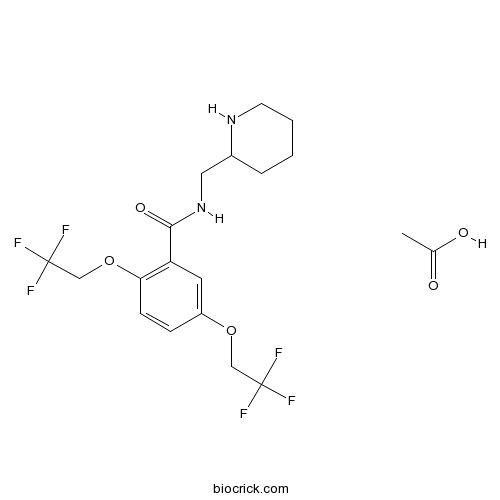
Flecainide acetate (R-818) is a class 1C antiarrhythmic drug especially used for the management of supraventricular arrhythmia; works by blocking the Nav1.5 sodium channel in the heart, causing prolongation of the cardiac action potential.
-
BCC6270
Huwentoxin IV
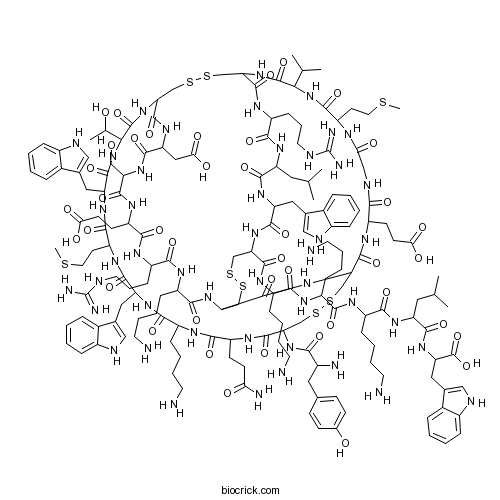
526224-73-7
-
BCC6358
ICA 121431
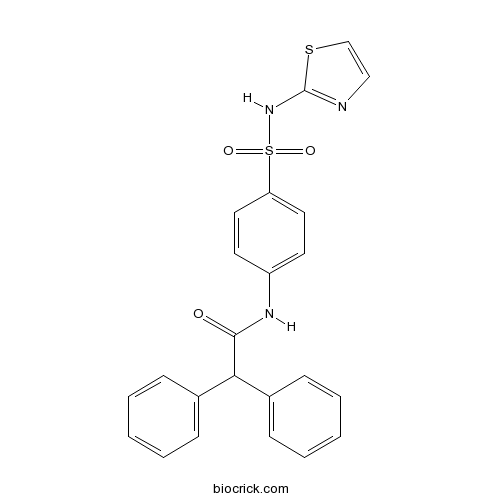
ICA-121431 is a nanomolar potent and broad-spectrum voltage-gated sodium channel (Nav) blocker, shows equipotent selectivity for human Nav1.1 and Nav1.3 subtypes with IC50 values of 13 nM and 23 nM, respectively. ICA-121431 shows less potent inhibition of Nav1.2 (IC50=240 nM) and 1,000 fold selectivity against Nav1.4, Nav1.6, and the TTX-resistant human Nav1.5 and Nav1.8 channels (IC50s >10 µM).
-
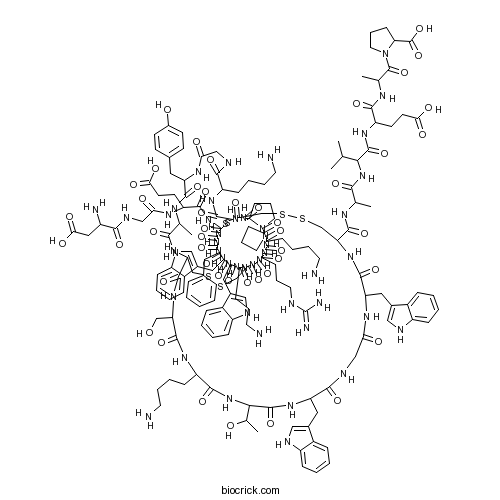
BCC6327
Jingzhaotoxin III
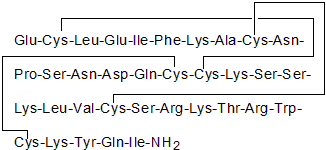
925463-91-8
-
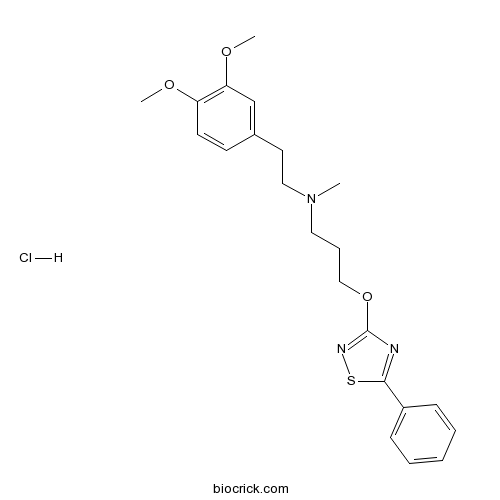
BCC7618
KC 12291 hydrochloride
181936-98-1
-
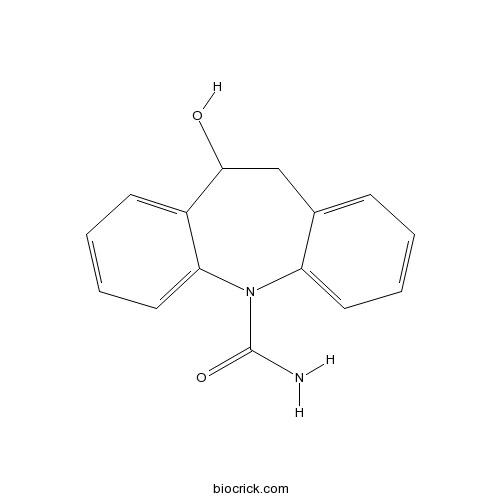
BCC7794
Licarbazepine
29331-92-8
-
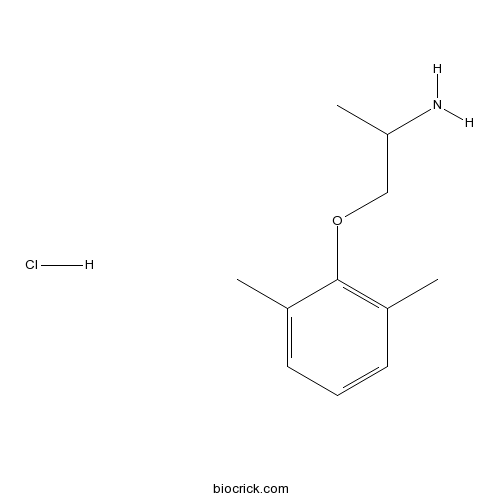
BCC4677
Mexiletine HCl
Mexiletine hydrochloride (KOE-1173 hydrochloride), a Class IB antianhythmic, is a non-selective voltage-gated sodium channel blocker.
-
BCC5077
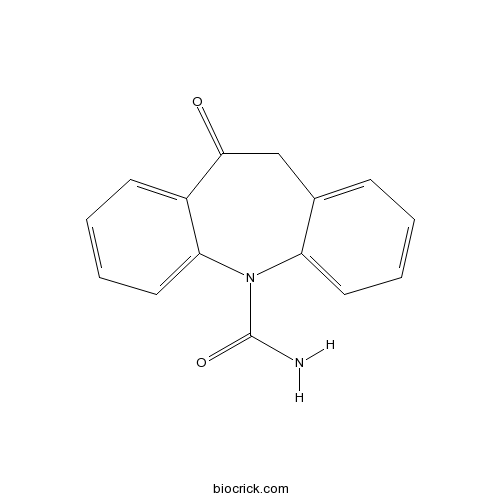
Oxcarbazepine
Oxcarbazepine (GP 47680) inhibits the binding of [3H]BTX to sodium channels with IC50 of 160 μM and also inhibits the influx of 22Na+ into rat brain synaptosomes with IC50 about 100 μM.
-
BCC6328
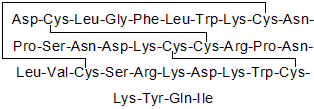
Phrixotoxin 3
880886-00-0
-
BCC6103
ProTx II
ProTx II is a selective blocker of Nav1.7 sodium channels with an IC50 of 0.3 nM, and is at least 100-fold selective for Nav1.7 over other sodium channel subtypes. ProTx-II inhibits sodium channels by decreasing channel conductance and shifting activation to more positive potentials and blocks action potential propagation in nociceptors.