Parkinson's Disease Research
Parkinson's disease (PD) is a degenerative disease of the central nervous system that often impairs motor skills, speech, and other functions. Symptoms of the disease include resting tremor, bradykinesia and rigidity. The primary symptoms are the result of decreased stimulation of the motor cortex by the basal ganglia, normally caused by the insufficient formation and action of dopamine, which is produced in the dopaminergic neurons of the brain. Symptoms of the disease appear once 50-80% of dopamine neurons have died. Parkinson's disease is both chronic and progressive.
Parkinson's Disease Research Products Targets
- Adenosine A2B Receptor (7)
- Adenosine A2A Receptor (11)
- Caspase (9)
- Bcl-2 Family (13)
- Voltage-gated Calcium Channel (CaV) (38)
- GABAB Receptor (28)
- Others (23)
- Cyclooxygenase (24)
- D4 Receptor (12)
- STIM-Orai Channel (4)
- Ryanodine Receptor (6)
- Hsp90 (10)
- Hsp70 (4)
- 5-HT7 Receptor (11)
- 5-HT6 Receptor (14)
- 5-ht5 Receptor (2)
- 5-HT4 Receptor (17)
- Glutamate (Metabotropic) Group III Receptor (26)
- Glutamate (Metabotropic) Group II Receptor (33)
- Glutamate (Metabotropic) Group I Receptor (54)
- AMPA Receptor (45)
- GABAA-ρ Receptor (8)
- GABAA Receptor (66)
- Nicotinic (α7) Receptor (25)
- Nicotinic (α4β2) Receptor (14)
- D3 Receptor (12)
- LRRK2 (4)
- Catechol O-Methyltransferase (3)
- Vesicular Monoamine Transporter (4)
- NMDA Receptor (87)
- Kainate Receptor (22)
- IP3 Receptor (2)
- D2 Receptor (14)
- D1 and D5 Receptor (16)
- Trk Receptor (13)
- Trace Amine 1 Receptor (2)
- Adenosine A3 Receptor (8)
- Adenosine A1 Receptor (12)
- Monoamine Oxidase (10)
- M5 Receptor (2)
- M4 Receptor (3)
- M3 Receptor (4)
- M2 Receptor (5)
- M1 Receptor (8)
- Adrenergic α2 Receptor (33)
- Adrenergic α1 Receptor (22)
- Adrenergic β3 Receptor (12)
- Adrenergic β2 Receptor (6)
- Adrenergic β1 Receptor (7)
- Protein Arginine Methyltransferase (2)
Products for Parkinson's Disease Research - Page 13
- Cat.No. Product Name Information/Activity
-
BCC4514
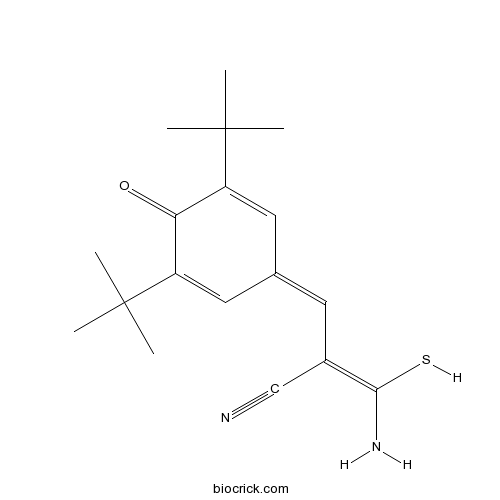
Tyrphostin AG 879
Tyrphostin AG 879 (AG 879) is a tyrosine kinase inhibitor that inhibits TrKA phosphorylation (IC50 of 10 μM), but not TrKB and TrKC. Tyrphostin AG 879 is also a selective ErbB2 tyrosine kinase inhibitor with an IC50 of 1 μM, and has at least 500-fold higher selectivity to ErbB2 than EGFR. Tyrphostin AG 879 has anticancer activity.
-
BCC3668
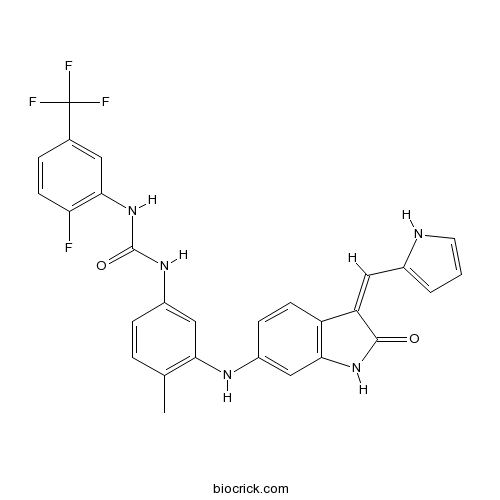
GNF-5837
GNF-5837 is a potent, selective, and orally bioavailable pan-tropomyosin receptor kinase (TRK) inhibitor which display antiproliferative effects in cellular Ba/F3 assays ( IC50 values of 7 nM, 9 nM and 11 nM for cells containing the fusion proteins Tel-TrkC, Tel-TrkB and Tel-TrkA, respectively) .
-
BCC5093
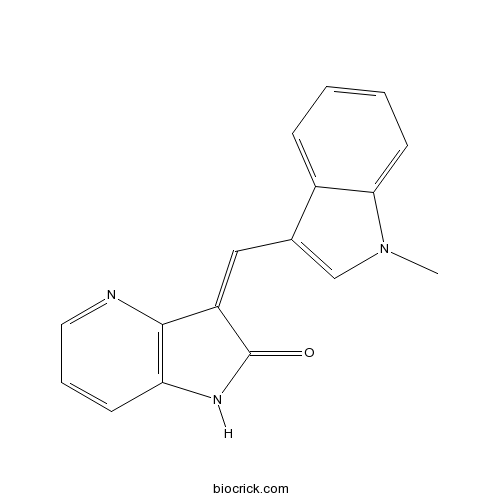
GW441756
GW 441756 is a specific Tropomyosin-related kinase A (TrkA) inhibitor with an IC50 value of 2 nM; little activity to c-Raf1 and CDK2.
-
BCC7189
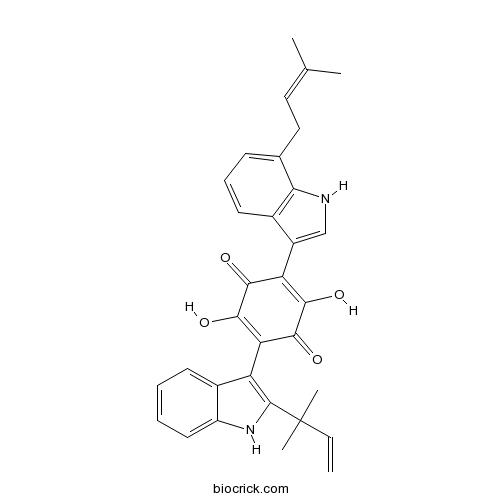
Demethylasterriquinone B1
78860-34-1
-
BCC5872
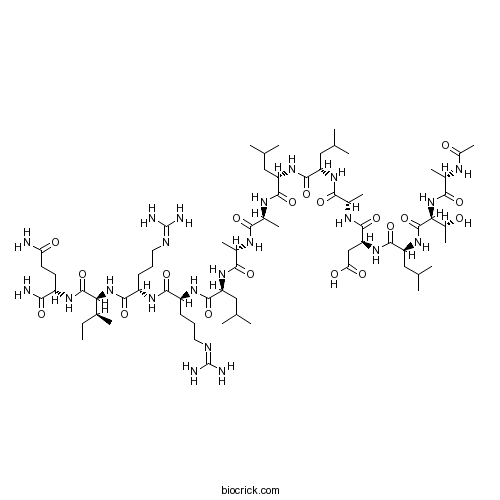
NTR 368
197230-90-3
-
BCC7307
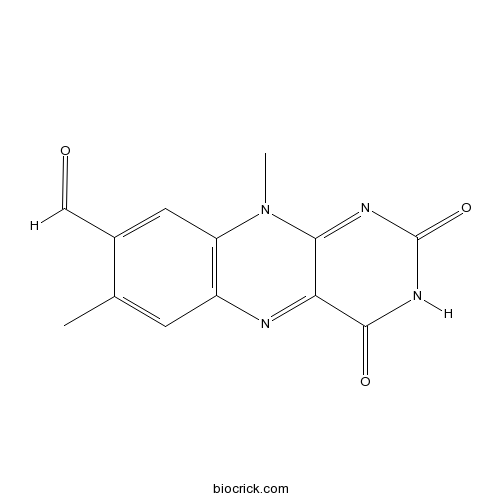
Ro 08-2750
Ro 08-2750 is a non-peptide and reversible nerve growth factor (NGF) inhibitor which binds to NGF, and with an IC50 of ~ 1 µM. Ro 08-2750 inhibits NGF binding to p75NTR selectively over TRKA. Ro 08-2750 is a selective MSI RNA-binding activity inhibitor, with an IC50 of 2.7 μM.
-
BCC2405
TLQP 21
869988-94-3

-
BCN4960
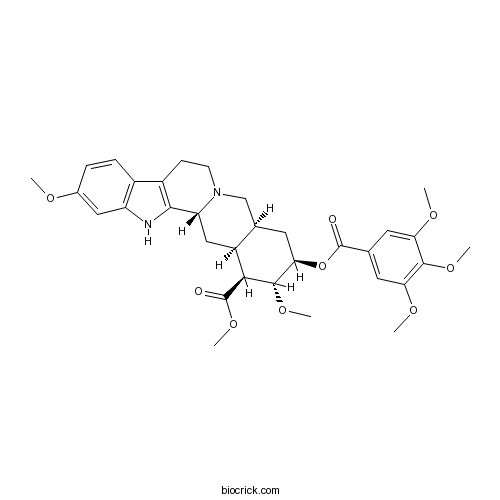
Reserpine
Evacetrapib is a potent and selective of CETP inhibitor, which inhibits human recombinant CETP protein (IC50 5.5 nM) and CETP activity in human plasma (IC50 36 nM) in vitro.
-
BCC8024
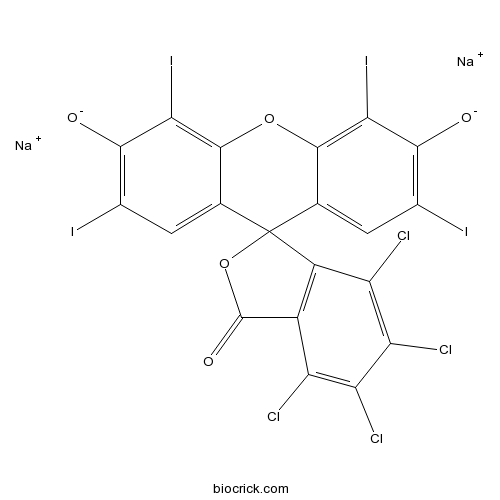
Rose Bengal
Potent VGlut and VMAT inhibitor; cell permeable
-
BCC5277
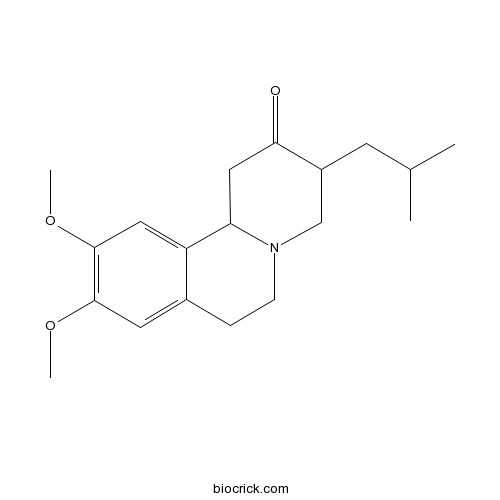
Tetrabenazine
Tetrabenazine is a VMAT-inhibitor used for treatment of hyperkinetic movement disorder.