Heart Failure Research
Heart failure, also known as congestive heart failure or CHF, is an inability of the heart to pump sufficient blood around the body.Heart failure typically occurs secondary to an existing pathology that alters cardiac function. Examples of syndromes that can precede heart failure include myocardial infarction, arrhythmia or infection. These can also cause dilated cardiomyopathy, a condition which accounts for approximately one third of all cases of heart failure. The pathogenesis of heart failure is cyclical and progressive; endogenous mechanisms, which are activated during heart failure in an attempt to counteract the symptoms, actually worsen cardiac function. Cardiac dysfunction, either systolic or diastolic, triggers a decrease in stroke volume and a resultant increase in cardiac output. In healthy individuals the body responds to decreases in cardiac output by initiating the renin-angiotensin-aldosterone system (RAAS) to promote fluid retention, and also by activating the sympathetic nervous system to cause peripheral vasoconstriction. Under normal circumstances this counteracts the imbalance in stroke volume, restoring cardiac output to normal levels. In patients with heart failure the increase in blood volume, together with the heightened peripheral resistance and elevated levels of circulating catecholamines, causes an increased load on the already weakened ventricles with each contraction, and the stroke volume does not return to normal levels. Repeated cycles of this process further weaken the ventricle walls, prompting ventricular hypertrophy and a decreased force of contraction.
Heart Failure Research Products Targets
- PI 3-kinase (22)
- Others (7)
- Mineralocorticoid Receptor (7)
- Angiotensin-Converting Enzyme (8)
- NO donors and precursors (9)
- nNOS (5)
- iNOS (11)
- eNOS (1)
- Angiotensin AT2 Receptor (3)
- Angiotensin AT1 Receptor (9)
- NKCC (2)
- Adrenergic α2 Receptor (33)
- Adrenergic α1 Receptor (22)
- Adrenergic β2 Receptor (6)
- Adrenergic β1 Receptor (7)
Products for Heart Failure Research
- Cat.No. Product Name Information/Activity
-
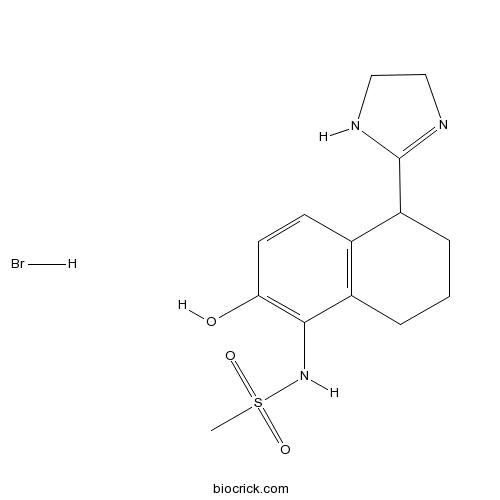
BCC6912
A 61603 hydrobromide
107756-30-9
-
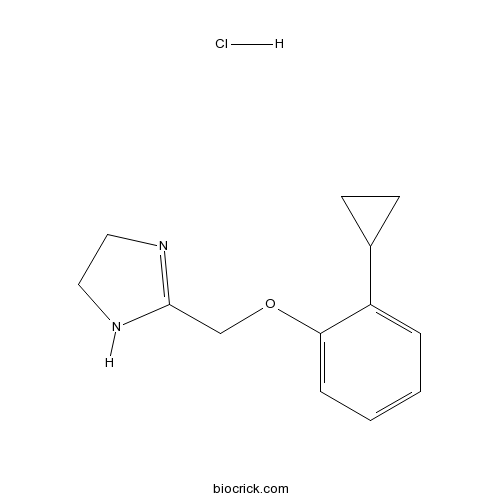
BCC6833
Cirazoline hydrochloride
Cirazoline hydrochloride (LD 3098 hydrochloride) is a potent competitive full α1A-adrenergic receptor (α1A-AR) agonist (Ki=120 nM) and only a partial agonist at α1B-AR (Ki= 960 nM) and α1D-AR (Ki=660 nM).
-
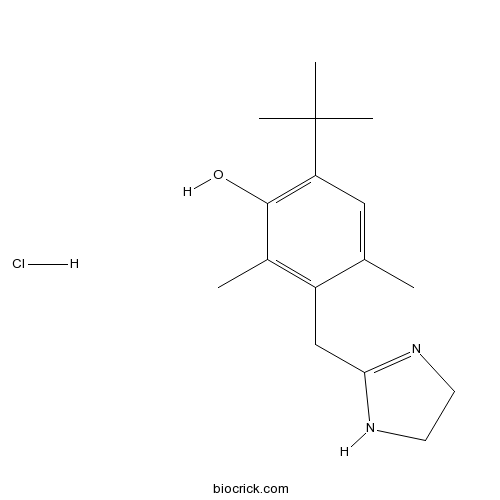
BCC4333
Oxymetazoline HCl
2315-02-8
-
BCC4335
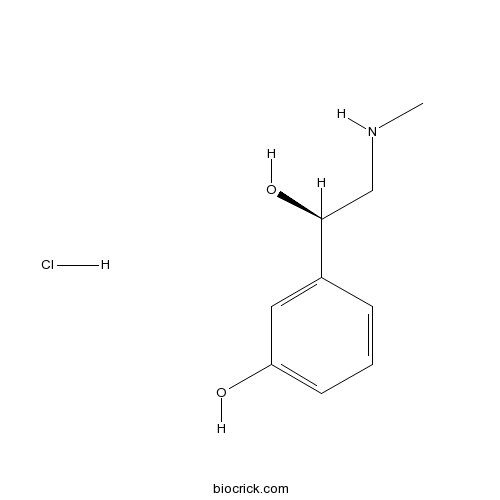
Phenylephrine HCl
(R)-(-)-Phenylephrine hydrochloride is a selective α1-adrenoceptor agonist with pKis of 5.86, 4.87 and 4.70 for α1D, α1B and α1A receptors respectively.
-
BCC2494
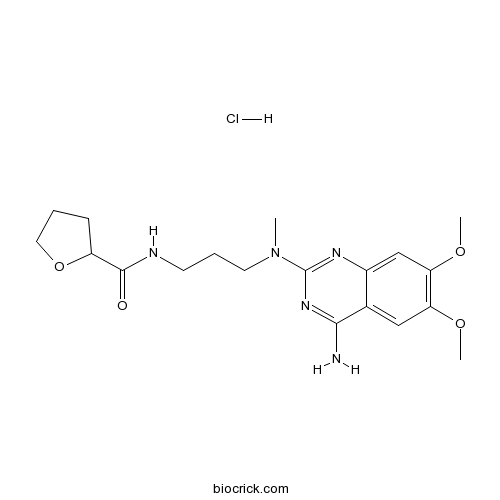
Alfuzosin HCl
Alfuzosin hydrochloride is an α1 adrenergic receptor antagonist used to treat benign prostatic hyperplasia (BPH).
-
BCC5063
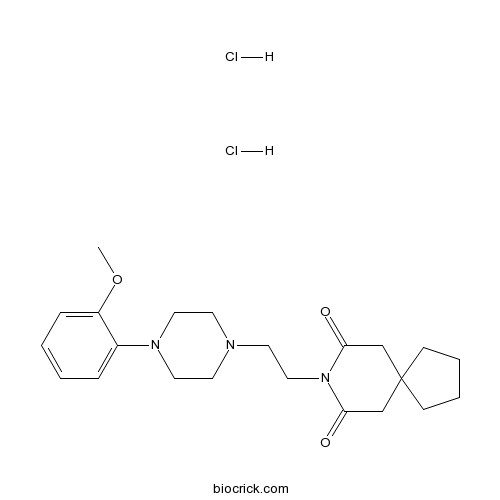
BMY 7378
5-HT<sub>1A</sub> partial agonist,BMY 7378 is a multi-targeted inhibitor of α2C-adrenoceptor and α1D-adrenoceptor with pKi of 6.54 and 8.2, respectively, and acts as a mixed agonist and antagonist for 5-HT1A receptor with pKi of 8.3.
-
BCC4324
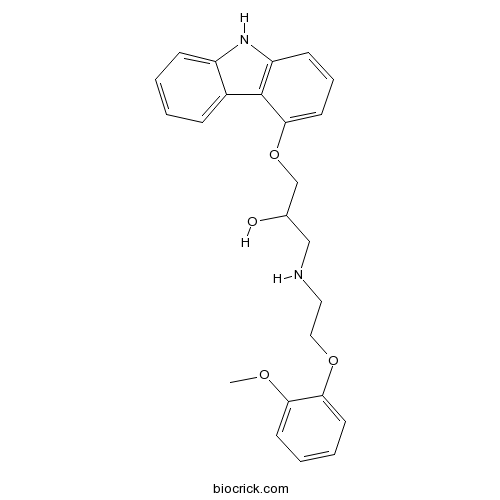
Carvedilol
Carvedilol (BM 14190) is a non-selective β/α-1 blocker. Carvedilol inhibits lipid peroxidation in a dose-dependent manner with an IC50 of 5 μM. Carvedilol is a multiple action antihypertensive agent with potential use in angina and congestive heart failure. Carvedilol is an autophagy inducer that inhibits the NLRP3 inflammasome.
-
BCC1257
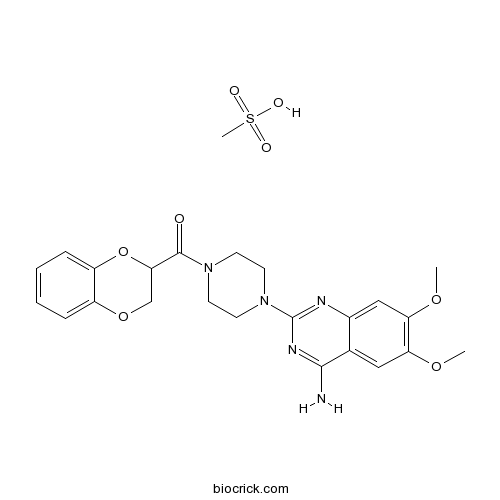
Doxazosin Mesylate
Doxazosin mesylate (UK 33274) is a quinazoline-derivative that selectively antagonizes postsynaptic α1-adrenergic receptors.
-
BCC6683
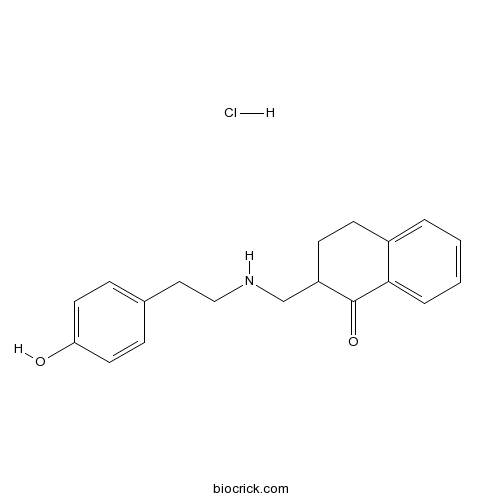
HEAT hydrochloride
30007-39-7
-
BCC6688
Ifenprodil hemitartrate
23210-56-2