Heart Failure Research
Heart failure, also known as congestive heart failure or CHF, is an inability of the heart to pump sufficient blood around the body.Heart failure typically occurs secondary to an existing pathology that alters cardiac function. Examples of syndromes that can precede heart failure include myocardial infarction, arrhythmia or infection. These can also cause dilated cardiomyopathy, a condition which accounts for approximately one third of all cases of heart failure. The pathogenesis of heart failure is cyclical and progressive; endogenous mechanisms, which are activated during heart failure in an attempt to counteract the symptoms, actually worsen cardiac function. Cardiac dysfunction, either systolic or diastolic, triggers a decrease in stroke volume and a resultant increase in cardiac output. In healthy individuals the body responds to decreases in cardiac output by initiating the renin-angiotensin-aldosterone system (RAAS) to promote fluid retention, and also by activating the sympathetic nervous system to cause peripheral vasoconstriction. Under normal circumstances this counteracts the imbalance in stroke volume, restoring cardiac output to normal levels. In patients with heart failure the increase in blood volume, together with the heightened peripheral resistance and elevated levels of circulating catecholamines, causes an increased load on the already weakened ventricles with each contraction, and the stroke volume does not return to normal levels. Repeated cycles of this process further weaken the ventricle walls, prompting ventricular hypertrophy and a decreased force of contraction.
Heart Failure Research Products Targets
- PI 3-kinase (22)
- Others (7)
- Mineralocorticoid Receptor (7)
- Angiotensin-Converting Enzyme (8)
- NO donors and precursors (9)
- nNOS (5)
- iNOS (11)
- eNOS (1)
- Angiotensin AT2 Receptor (3)
- Angiotensin AT1 Receptor (9)
- NKCC (2)
- Adrenergic α2 Receptor (33)
- Adrenergic α1 Receptor (22)
- Adrenergic β2 Receptor (6)
- Adrenergic β1 Receptor (7)
Products for Heart Failure Research - Page 5
- Cat.No. Product Name Information/Activity
-
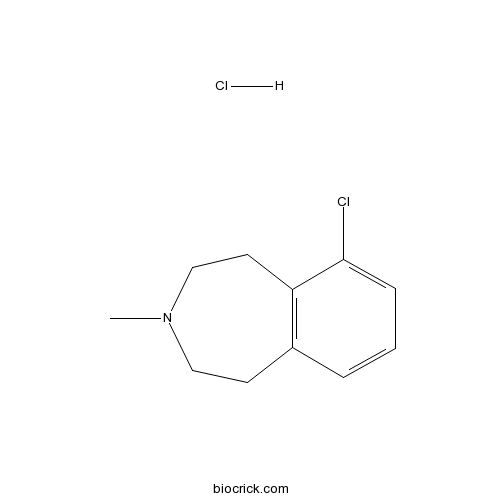
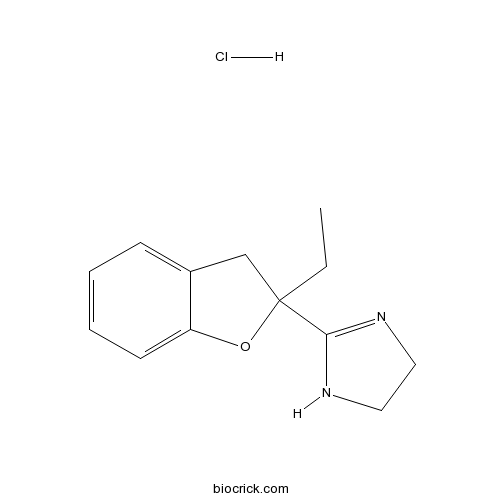
BCC6797
Efaroxan hydrochloride
89197-00-2
-
BCC6798
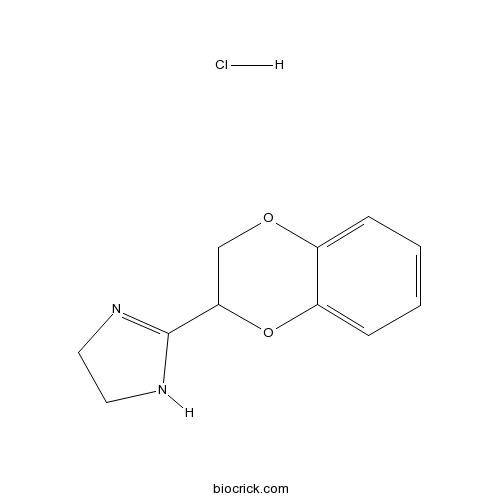
Idazoxan hydrochloride
Idazoxan hydrochloride (RX 781094 hydrochloride) is an α2-adrenoceptor antagonist and is also a imidazoline receptors (IRs) antagonist competitively antagonized the centrally induced hypotensive effect of imidazoline-like drugs (IMs). Idazoxan hydrochloride also improves motor symptoms in Parkinson’s disease, L-DOPA-induced dyskinesias, and experimental Parkinsonism.
-
BCC6875
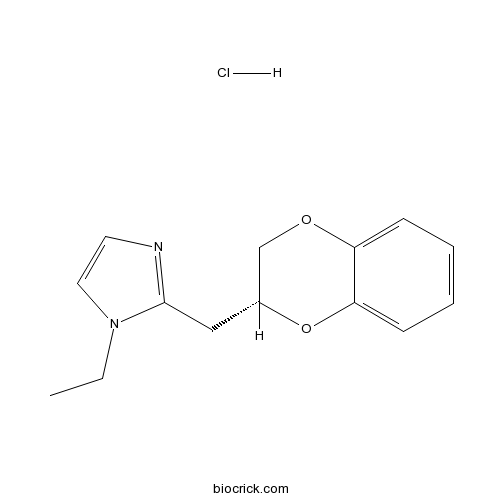
Imiloxan hydrochloride
81167-22-8
-
BCC7449
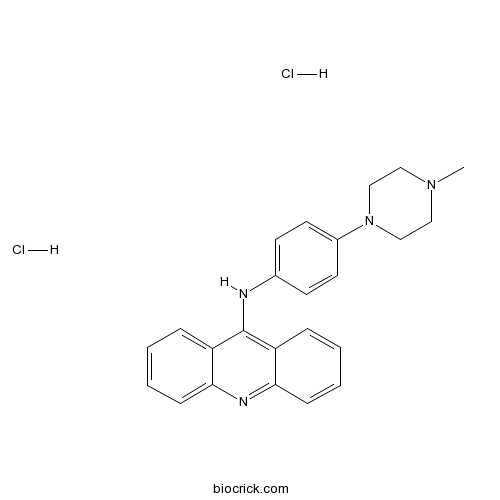
JP 1302 dihydrochloride
JP1302 dihydrochloride is a selective, high affinity antagonist of the alpha2C-adrenoceptor (α2C-adrenoceptor), with a Kb value (antagonist activity) of 16 nM and a Ki (binding affinity) value of 28 nM.
-
BCC4923
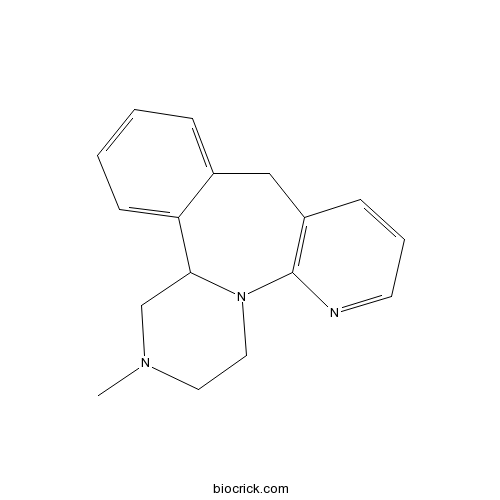
Mirtazapine
Mirtazapine is a 5-HT receptor inhibitor. Mirtazapine is a potent and orally active noradrenergic and specific serotonergic antidepressant (NaSSA) agent by blocking 5-HT2 and 5-HT3 receptors.
-
BCC6834
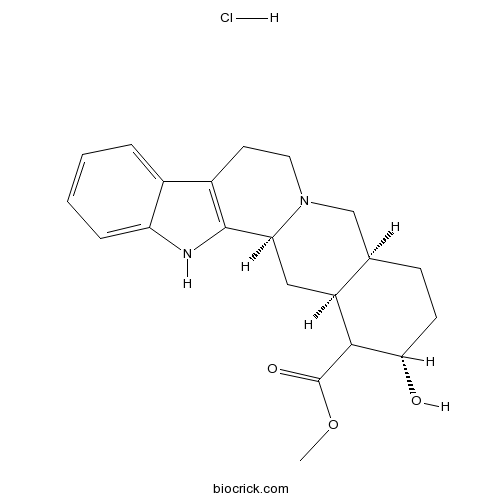
Rauwolscine hydrochloride
Rauwolscine hydrochloride is a potent and specific α2 adrenergic receptor antagonist with a Ki of 12 nM.
-
BCC6876
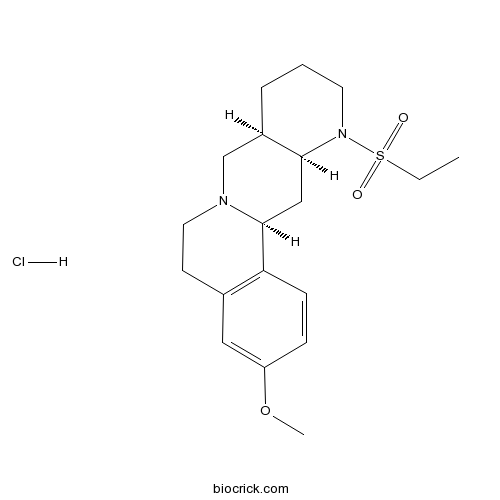
RS 79948 hydrochloride
186002-54-0
-
BCC7021
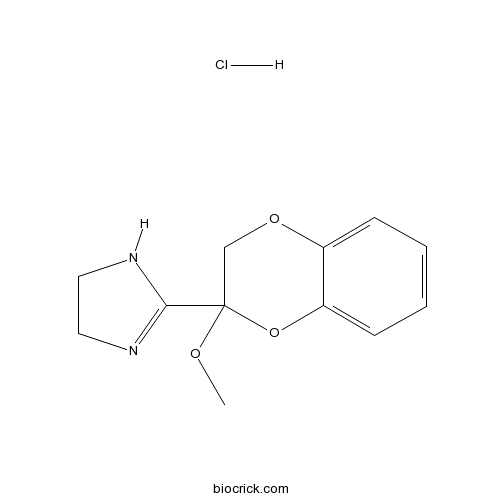
RX 821002 hydrochloride
109544-45-8
-
BCC6208
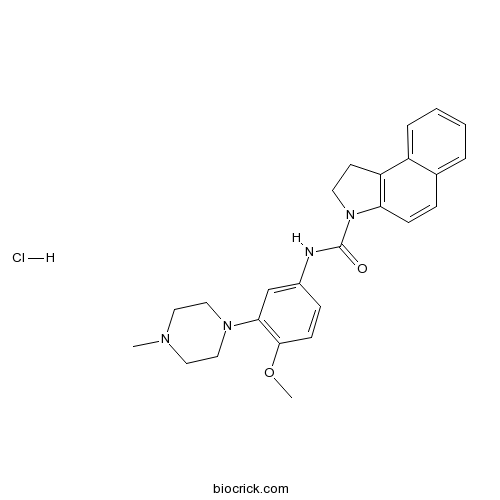
S 32212 hydrochloride
847871-78-7
-
BCC7795
SKF 86466 hydrochloride
86129-54-6