Memory, Learning and Cognition
Cognition is the term used to define the process of thoughts, including memory, awareness, reasoning and perception. Cognitive enhancement describes the improvement of the information processing systems of the mind and the extension of its main capacities, which can be undertaken simply by learning, especially during early development.
Memory, Learning and Cognition Products Targets
- Voltage-gated Calcium Channel (CaV) (38)
- Others (13)
- D4 Receptor (12)
- 5-HT7 Receptor (11)
- 5-HT6 Receptor (14)
- 5-ht5 Receptor (2)
- 5-HT4 Receptor (17)
- NOP Receptor (21)
- Mu-Opioid Receptors (15)
- Kappa Opioid Receptors (14)
- Glutamate (Metabotropic) Group III Receptor (26)
- Glutamate (Metabotropic) Group II Receptor (33)
- Glutamate (Metabotropic) Group I Receptor (54)
- AMPA Receptor (45)
- GABAA-ρ Receptor (8)
- GABAA Receptor (66)
- GPR55 (8)
- CB2 Receptor (6)
- CB1 Receptor (17)
- Nicotinic (α7) Receptor (25)
- Nicotinic (α4β2) Receptor (14)
- Protein Kinase C (29)
- Calmodulin-Dependent Kinase (8)
- D3 Receptor (12)
- NMDA Receptor (87)
- Kainate Receptor (22)
- D2 Receptor (14)
- D1 and D5 Receptor (16)
- Amyloid beta Peptide (28)
- Histamine H1 Receptor (17)
- M5 Receptor (2)
- M4 Receptor (3)
- M3 Receptor (4)
- M2 Receptor (5)
- M1 Receptor (8)
- Delta opioid receptor (16)
- Protein serine and threonine phosphatase (16)
- Histone Deacetylase (19)
- Phosphodiesterase (34)
Products for Memory, Learning and Cognition - Page 29
- Cat.No. Product Name Information/Activity
-
BCC1324
A-867744
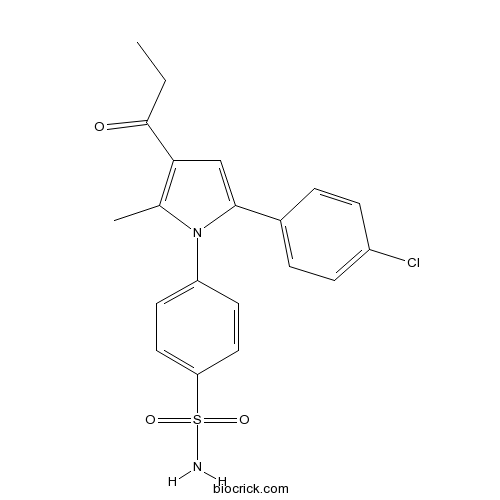
A-867744 is a highly potent and selective type II positive allosteric modulator (PAM) of the alpha7 nicotinic acetylcholine receptors (nAChR) with an EC50 of 1.0 μM.
-
BCC7788
CCMI
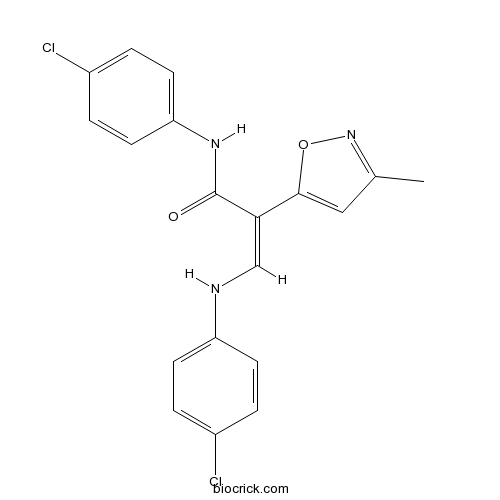
CCMI is a potent and selective α7 nAChR-positive allosteric modulator, does not bind to or activate α7 nAChRs via the orthosteric site, and causes significant positive modulation of agonist-induced currents at α7 nAChRs. CCMI has potential in CNS diseases with cognitive dysfunction.
-
BCC1251
Ivermectin
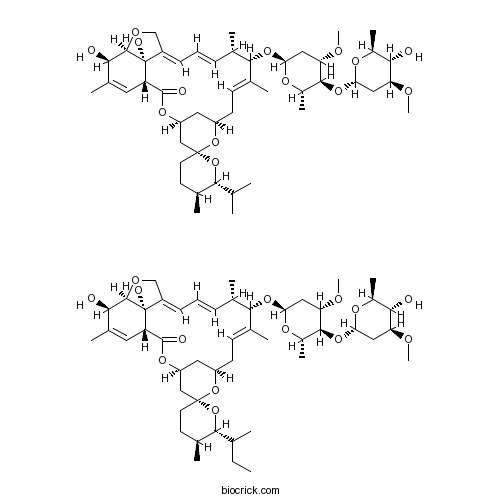
Ivermectin (MK-933) is a broad-spectrum anti-parasite medication used in humans most commonly to treat nematode infections such as onchocerciasis, as well as scabies and lice. Ivermectin (MK-933) is a specific inhibitor of Impα/β1-mediated nuclear import and has potent antiviral activity towards both HIV-1 and dengue virus. It is a positive allosteric effector of P2X4 and the α7 neuronal nicotinic acetylcholine receptor (nAChRs). Ivermectin also inhibits bovine herpesvirus1 (BoHV-1) replication and inhibits BoHV-1 DNA polymerase nuclear import.
-
BCC7535
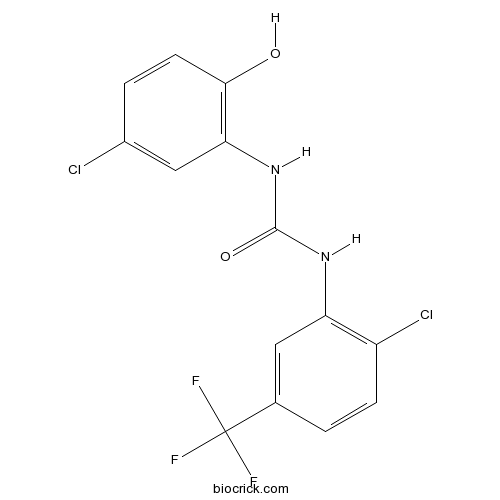
NS 1738
NS 1738 (NSC 213859) is a novel positive allosteric modulator of the α7 nAChR, with respect to positive modulation of α7 nAChR (EC50=3.4 μM in oocyte experiments).
-
BCC4581
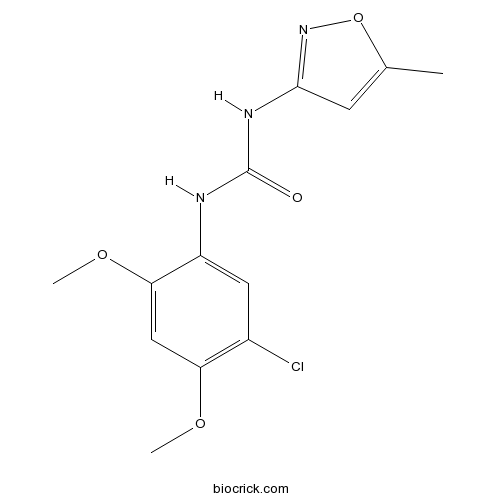
PNU-120596
PNU-120596 (NSC 216666 ) is a potent and selective positive allosteric α7 nAChR modulator with an EC50 of 0.2 μM.
-
BCC7896
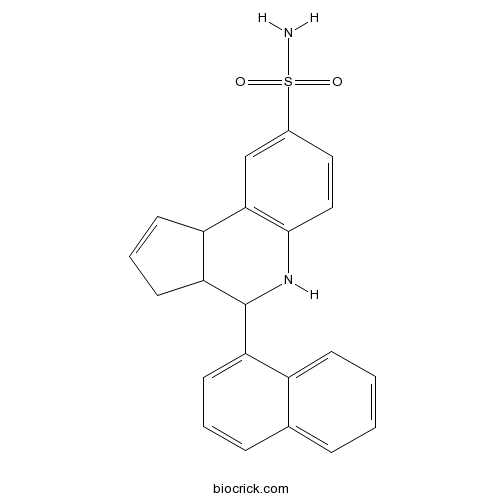
TQS
353483-92-8
-
BCC7026
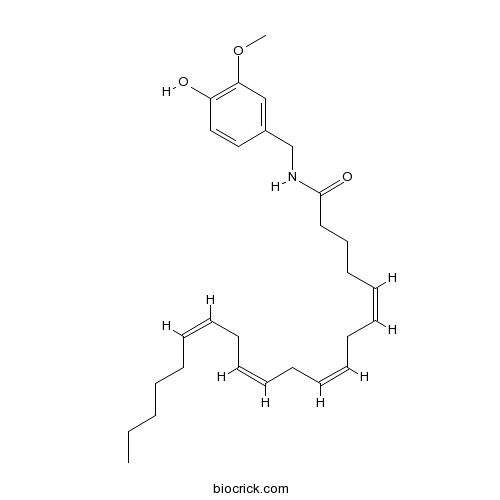
Arvanil
128007-31-8
-
BCC5756
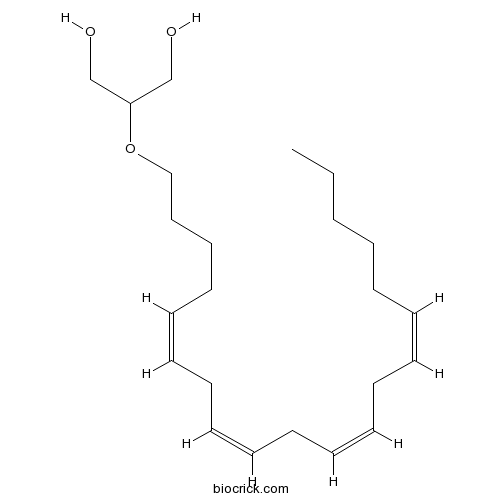
Noladin ether
222723-55-9
-
BCC6827
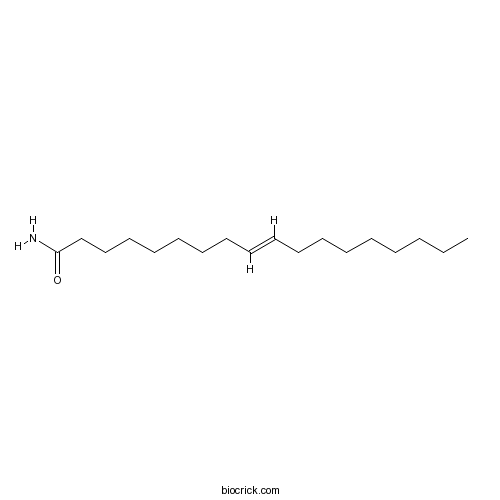
Oleamide
Oleamide is an endogenous fatty acid amide which can be synthesized de novo in the mammalian nervous system, and has been detected in human plasma.
-
BCC4412
AM251
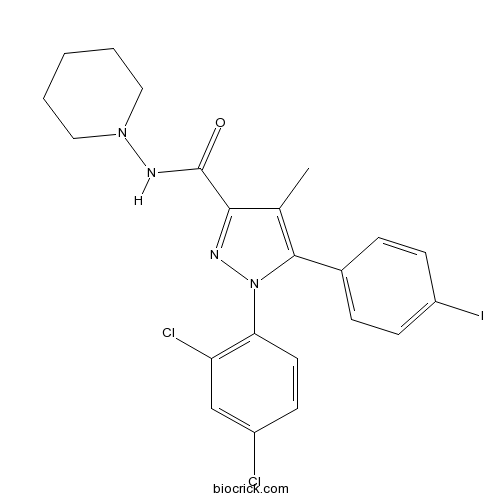
AM251 is a selective cannabinoid 1 (CB1) receptor antagonist with an IC50 of 8 nM, also acts as a potent GPR55 agonist with an EC50 of 39 nM.