Myocardial Infarction Research
Myocardial infarction (MI) - more commonly referred to as a heart attack - is an acute event caused by the interruption of blood supply to regions of the heart, leading to myocardial necrosis. Infarction of a substantial area of the myocardium can disrupt normal conductance of the heart, leading to cardiac arrest.In the majority of cases, an MI is immediately preceded by the presence of an occlusive thrombus within a coronary artery, blocking blood flow to the downstream tissue. The most common cause of an occlusive thrombus within a coronary artery is the rupture of an atherosclerotic plaque. However, the occlusion of a coronary artery may also result from coronary embolism. This can occur in patients following stent placement, angioplasty, and coronary artery bypass grafting.
Myocardial Infarction Research Products Targets
- Adenosine A2B Receptor (7)
- Adenosine A2A Receptor (11)
- Voltage-gated Sodium (NaV) Channel (30)
- Voltage-gated Potassium (KV) Channel (38)
- Voltage-gated Calcium Channel (CaV) (38)
- Cell Adhesion Molecule (21)
- Others (10)
- Cyclooxygenase (24)
- Epithelial Sodium Channel (3)
- STIM-Orai Channel (4)
- Ryanodine Receptor (6)
- Angiotensin-Converting Enzyme (8)
- IP3 Receptor (2)
- Adenosine A3 Receptor (8)
- Adenosine A1 Receptor (12)
- Acid-Sensing Ion Channel (3)
- Calcium-Activated Potassium (KCa) Channel (19)
- Inward Rectifier Potassium (Kir) Channel (21)
- NO donors and precursors (9)
- nNOS (5)
- iNOS (11)
- eNOS (1)
- Stem Cell Differentiation (54)
- Delta opioid receptor (16)
- Cathepsin (9)
- Adrenergic β3 Receptor (12)
- Adrenergic β2 Receptor (6)
- Adrenergic β1 Receptor (7)
- Prostanoid Receptor (24)
Products for Myocardial Infarction Research - Page 7
- Cat.No. Product Name Information/Activity
-
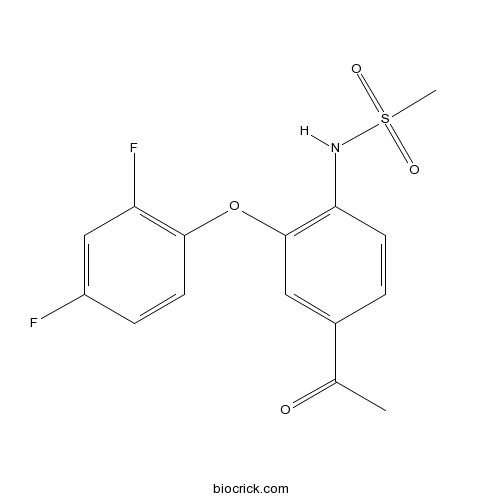
BCC6216
TC-I 15
916734-43-5
-
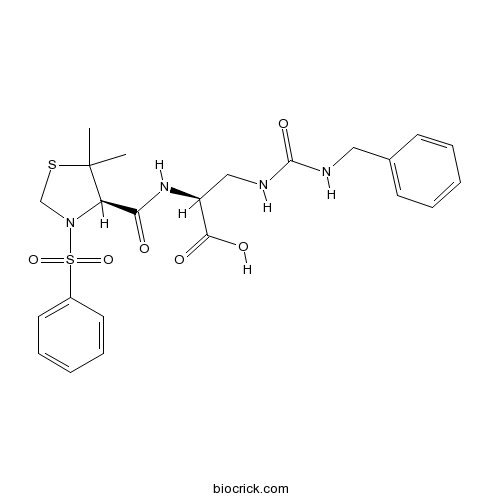
BCC6080
TCS 2314
TCS 2314 (compound 3) is orally active and selective very late antigen-4 (VLA-4, α4β1, CD49d/CD29) antagonist with an IC50 of 4.4 nM.
-
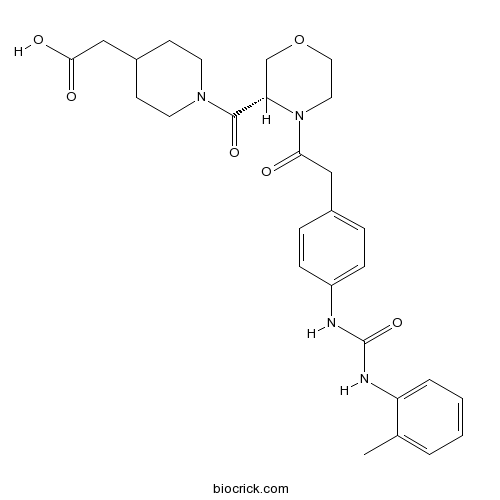
BCC2471
Thiolutin
Thiolutin (Acetopyrrothin) is a disulfide-containing antibiotic and anti-angiogenic compound produced by Streptomyces. Thiolutin inhibits the JAMM metalloproteases Csn5, Associated-molecule-with-the-SH3-Domain-of-STAM (AMSH) and Brcc36. Thiolutin is a potent and selective inhibitor of endothelial cell adhesion accompanied by rapid induction of Heat-shock protein beta-1 (Hsp27) phosphorylation.
-
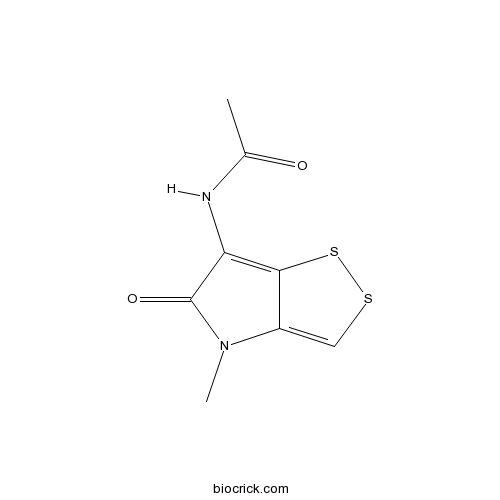
BCC5269
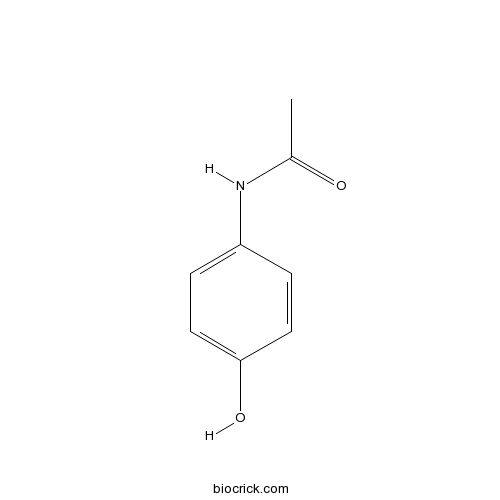
Acetaminophen
Acetaminophen (paracetamol) is a selective cyclooxygenase-2 (COX-2) inhibitor with an IC50 of 25.8 μM; is a widely used antipyretic and analgesic drug. Acetaminophen is a potent hepatic N-acetyltransferase 2 (NAT2) inhibitor.
-
BCC2097
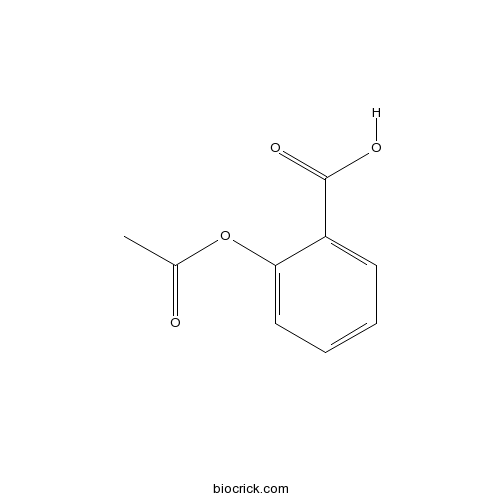
Aspirin (Acetylsalicylic acid)
Aspirin is a non-selective and irreversible inhibitor of COX-1 and COX-2 with IC50s of 5 and 210 μg/mL.
-
BCC1099
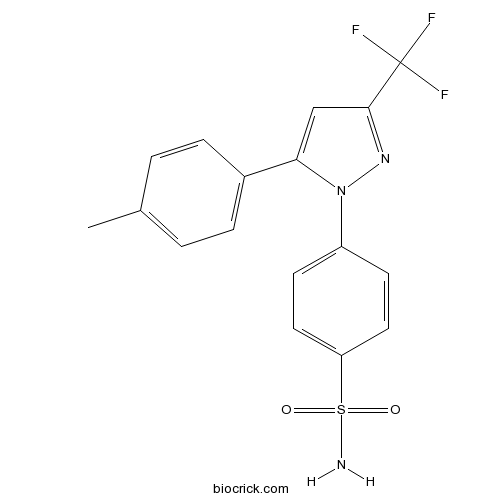
Celecoxib
Celecoxib is a selective COX-2 inhibitor with an IC50 of 40 nM.
-
BCC4439
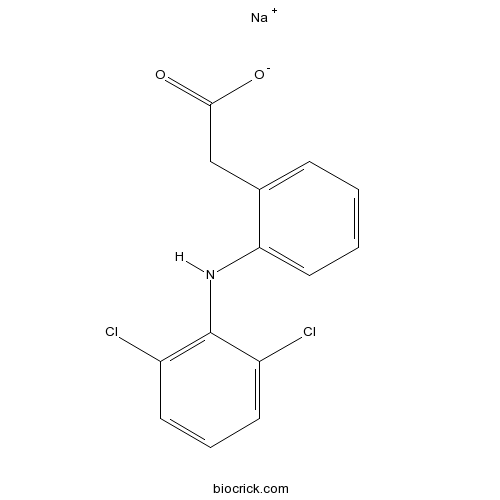
Diclofenac Sodium
Diclofenac Sodium (GP 45840) is a potent and nonselective anti-inflammatory agent, acts as a COX inhibitor, with IC50s of 4 and 1.3 nM for human COX-1 and COX-2 in CHO cells, and 5.1 and 0.84 μM for ovine COX-1 and COX-2, respectively. Diclofenac Sodium induces apoptosis of neural stem cells (NSCs) via the activation of the caspase cascade.
-
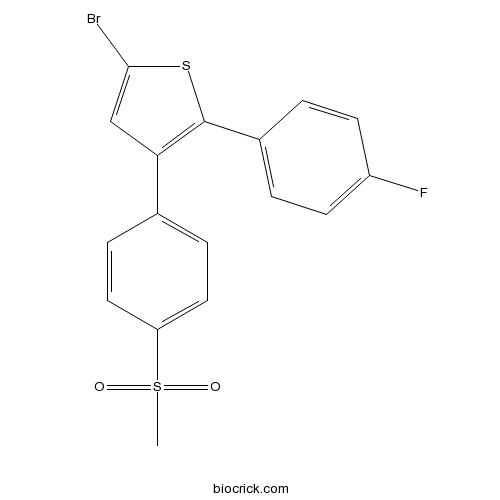
BCC7064
DuP 697
DuP-697 is a member of the vicinal diaryl heterocycles and a potent, irreversible, selective and orally active COX-2 inhibitor (IC50 of 10 nM and 800 nM for human COX-2 and COX-1, respectively). DuP-697 exerts antiproliferative (IC50 of 42.8 nM), antiangiogenic and apoptotic effects on HT29 colorectal cancer cells. DuP-697 inhibits prostaglandin synthesis and has anti-inflammatory, anticancer and antipyretic effects.
-
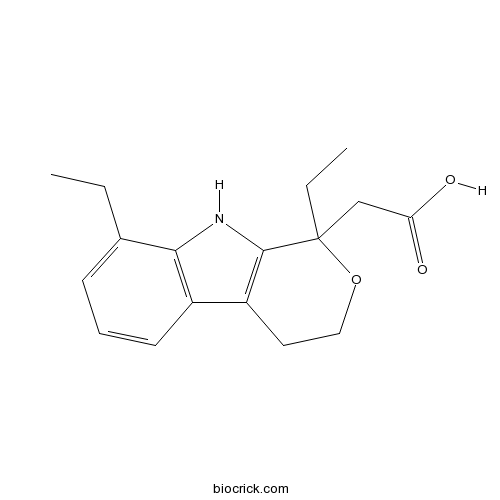
BCC4428
Etodolac
Etodolac (AY-24236) is a non-steroidal anti-inflammatory compound that is a non-selective inhibitor of COX (IC50=53.5 nM)
-
BCC1576
FK 3311
FK 3311 (COX-2 Inhibitor V) is a selective inhibitor of COX-2 with antiinflammatory agent.