Myocardial Infarction Research
Myocardial infarction (MI) - more commonly referred to as a heart attack - is an acute event caused by the interruption of blood supply to regions of the heart, leading to myocardial necrosis. Infarction of a substantial area of the myocardium can disrupt normal conductance of the heart, leading to cardiac arrest.In the majority of cases, an MI is immediately preceded by the presence of an occlusive thrombus within a coronary artery, blocking blood flow to the downstream tissue. The most common cause of an occlusive thrombus within a coronary artery is the rupture of an atherosclerotic plaque. However, the occlusion of a coronary artery may also result from coronary embolism. This can occur in patients following stent placement, angioplasty, and coronary artery bypass grafting.
Myocardial Infarction Research Products Targets
- Adenosine A2B Receptor (7)
- Adenosine A2A Receptor (11)
- Voltage-gated Sodium (NaV) Channel (30)
- Voltage-gated Potassium (KV) Channel (38)
- Voltage-gated Calcium Channel (CaV) (38)
- Cell Adhesion Molecule (21)
- Others (10)
- Cyclooxygenase (24)
- Epithelial Sodium Channel (3)
- STIM-Orai Channel (4)
- Ryanodine Receptor (6)
- Angiotensin-Converting Enzyme (8)
- IP3 Receptor (2)
- Adenosine A3 Receptor (8)
- Adenosine A1 Receptor (12)
- Acid-Sensing Ion Channel (3)
- Calcium-Activated Potassium (KCa) Channel (19)
- Inward Rectifier Potassium (Kir) Channel (21)
- NO donors and precursors (9)
- nNOS (5)
- iNOS (11)
- eNOS (1)
- Stem Cell Differentiation (54)
- Delta opioid receptor (16)
- Cathepsin (9)
- Adrenergic β3 Receptor (12)
- Adrenergic β2 Receptor (6)
- Adrenergic β1 Receptor (7)
- Prostanoid Receptor (24)
Products for Myocardial Infarction Research - Page 5
- Cat.No. Product Name Information/Activity
-
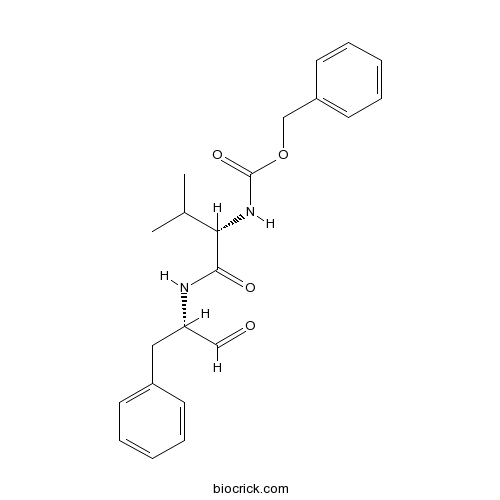
BCC2352
MDL 28170
MDL-28170 (Calpain Inhibitor III) is a potent, selective and membrane-permeable cysteine protease inhibitor of calpain that rapidly penetrates the blood-brain barrier following systemic administration. MDL-28170 also block γ-secretase.
-
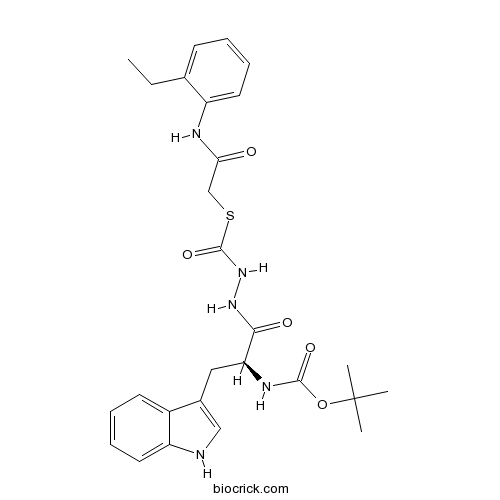
BCC2362
SID 26681509
SID 26681509 is a potent, reversible, competitive, and selective inhibitor of human cathepsin L with an IC50 of 56 nM. SID 26681509 inhibits in vitro propagation of malaria parasite Plasmodium falciparum and inhibits Leishmania major with IC50s of 15.4 μM and 12.5 μM, respectively. SID 26681509 shows no inhibitory activity against cathepsin G.
-
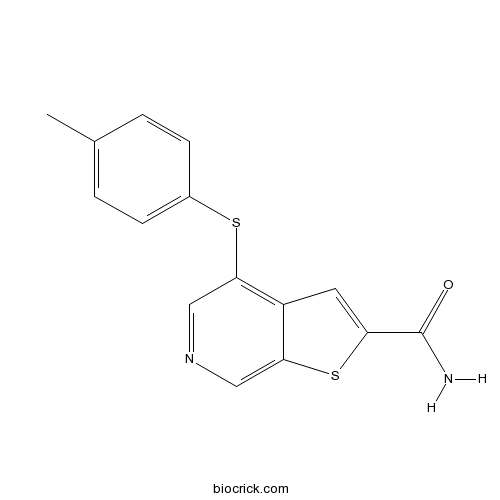
BCC3944
A 205804
A-205804 is an orally bioavailable, potent and selective lead inhibitor of E-selectin and ICAM-1 expression, with an IC50 of 20 nM and 25 nM for E-selectin and ICAM-1, respectively. A-205804 can be used in the research of chronic inflammatory diseases.
-
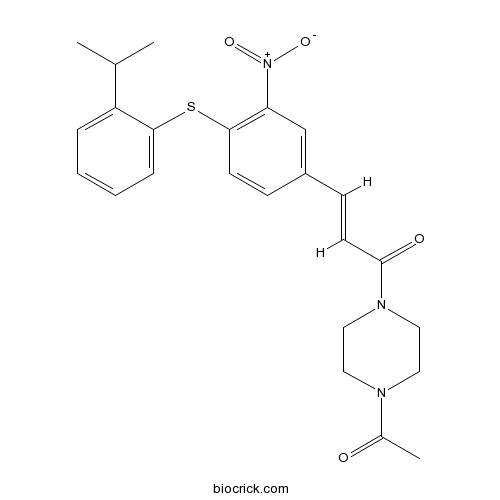
BCC3946
A 286982
Potent inhibitor of the LFA-1/ICAM-1 interaction
-
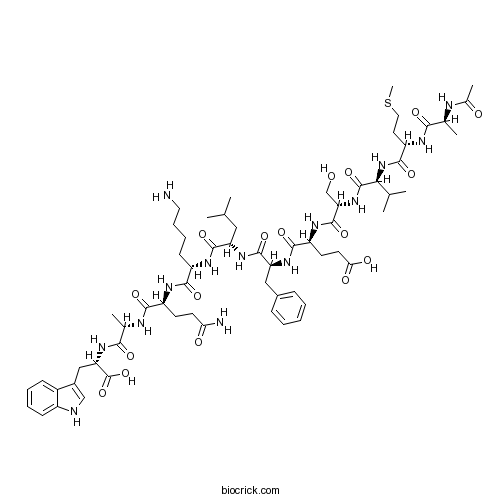
BCC5826
Ac2-12
256447-08-2
-
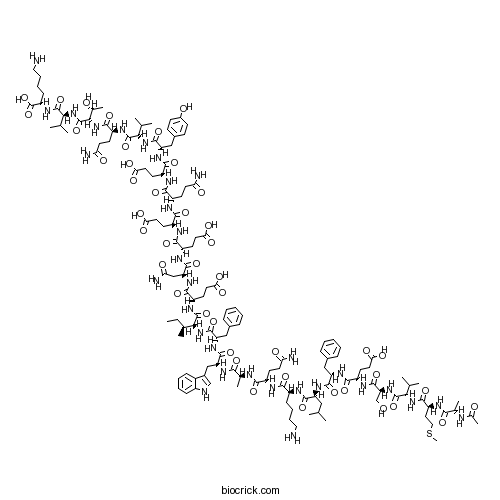
BCC5825
Ac2-26
Ac2-26, an active N-terminal peptide of annexin A1 (AnxA1), attenuates ischemia-reperfusion-induced acute lung injury. Ac2-26 also decreases AnxA1 protein expression, inhibits the activation of NF-κB and MAPK pathways in the injured lung tissue.
-
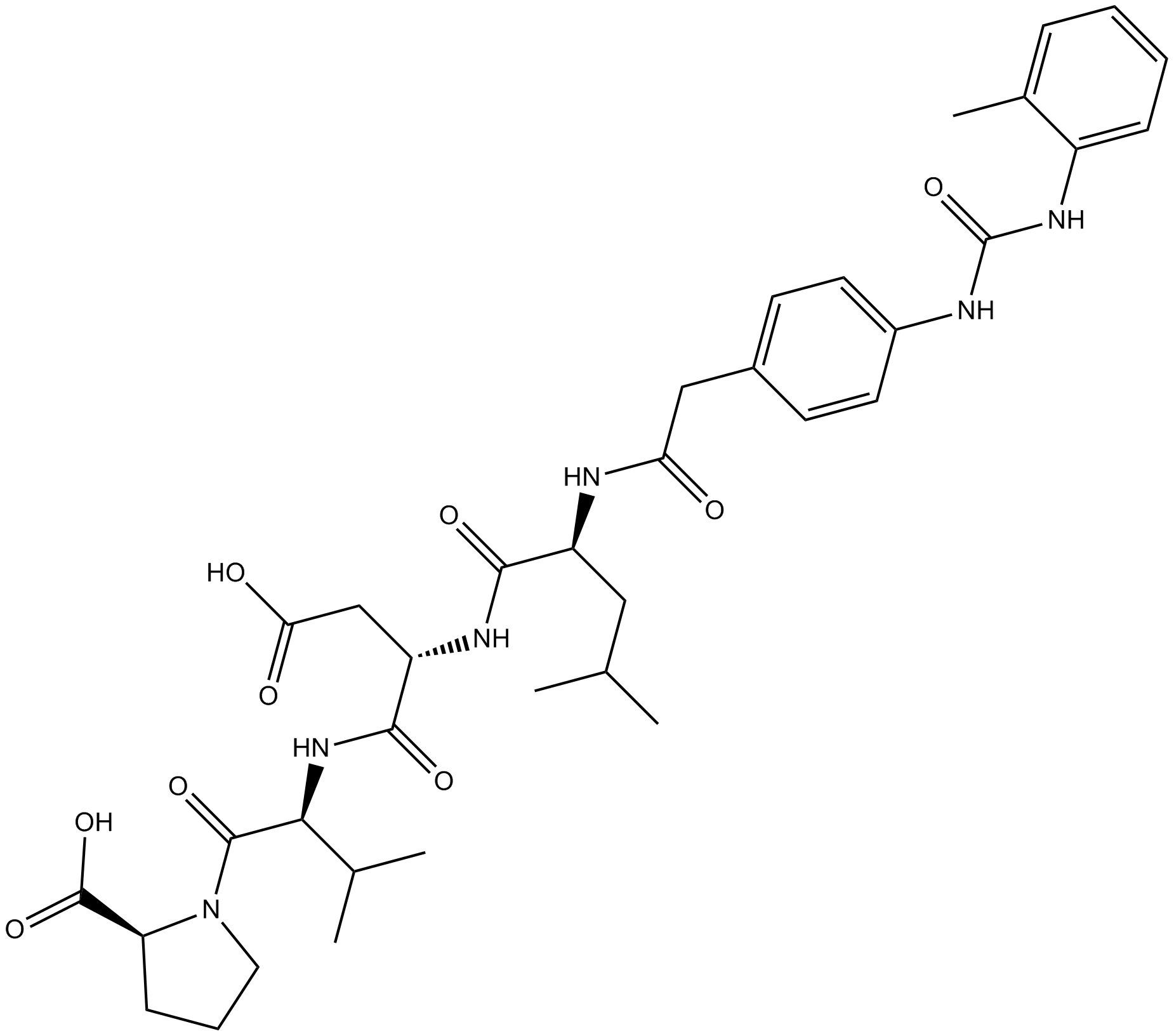
BCC3945
BIO 1211
Selective <span class='symbol'>α</span><sub>4</sub><span class='symbol'>β</span><sub>1</sub> (VLA-4) inhibitor
-
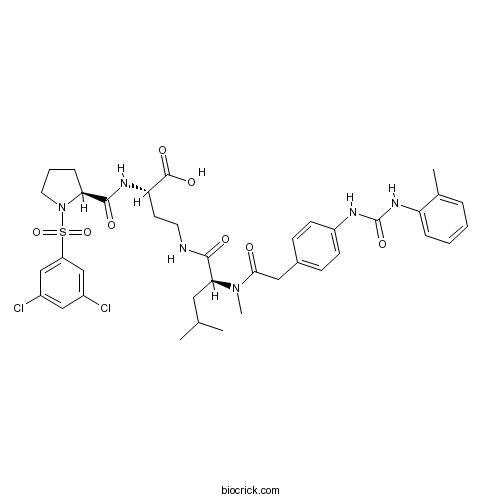
BCC8002
BIO 5192
327613-57-0
-
BCC3942
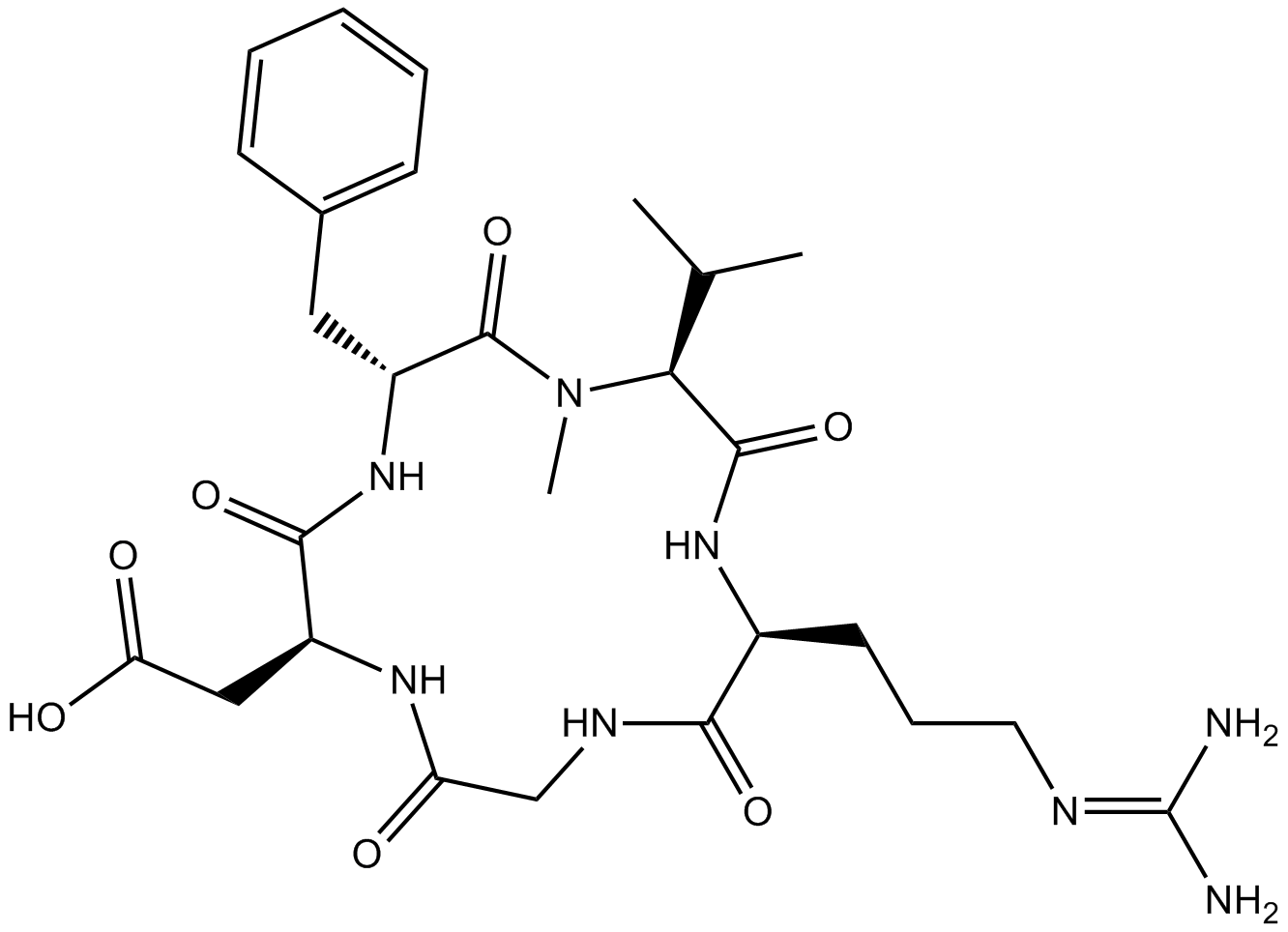
Cilengitide
Cilengitide, a cyclic RGD-containing peptide, is a potent and selective integrin inhibitor for αvβ3 and αvβ5 receptor, with IC50s of 4 and 79 nM, respectively.
-
BCC5988
Echistatin, α1 isoform
154303-05-6