Ischemia-Reperfusion Injury Research
Ischemia/Reperfusion (I/R) injury is defined as the cellular damage that results from a period of ischemia that is followed by the reestablishment of the blood supply to the infarcted tissue.Myocardial ischemia, also known as cardiac ischemia, is defined as the deprivation of oxygen and nutrients to the heart. This phenomenon occurs during a myocardial infarction, when an occlusive thrombus within a coronary artery prevents blood supply to the myocardium, but can also occur during cardiac surgery as a result of pharmacological intervention to temporarily stop the heart. Reperfusion restores blood supply to ischemic tissue, but this is paradoxically associated with further tissue damage.
Ischemia-Reperfusion Injury Research Products Targets
- Adenosine A2B Receptor (7)
- Adenosine A2A Receptor (11)
- Oxidative Phosphorylation (6)
- NHE (3)
- p53 (20)
- Inhibitor of Apoptosis (3)
- Caspase (9)
- Bcl-2 Family (13)
- Apoptosis Inducing (36)
- 14.3.3 Protein (1)
- Voltage-gated Sodium (NaV) Channel (30)
- Voltage-gated Potassium (KV) Channel (38)
- Others (7)
- Calcium-Sensing Receptor (4)
- Calcium Binding Protein Modulator (18)
- Epithelial Sodium Channel (3)
- Calpain (7)
- Adenosine A3 Receptor (8)
- Adenosine A1 Receptor (12)
- ASK1 (2)
- Acid-Sensing Ion Channel (3)
- Calcium-Activated Potassium (KCa) Channel (19)
- Calcium-Sensitive Protease Modulator (12)
- Inward Rectifier Potassium (Kir) Channel (21)
- NCX (5)
- Mitochondrial Permeability Transition Pore (3)
- Mitochondrial Calcium Uniporter (1)
- Ca2+-ATPase (7)
Products for Ischemia-Reperfusion Injury Research - Page 21
- Cat.No. Product Name Information/Activity
-
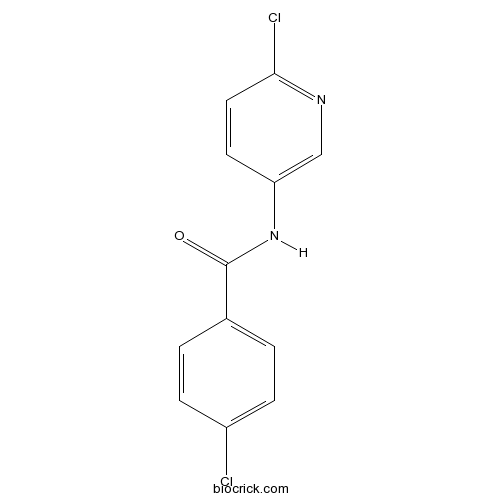
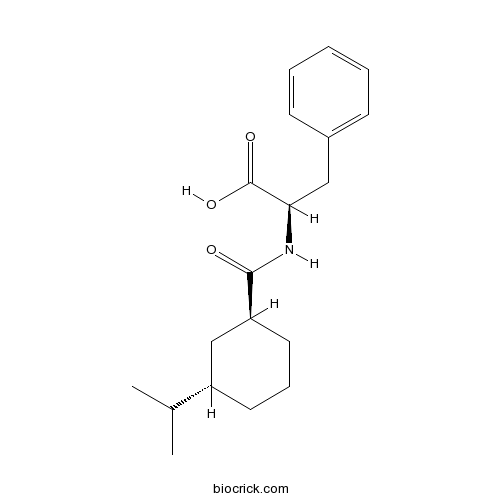
BCC5005
Nateglinide
Nateglinide, a D-phenylalanine derivative, is an orally active and short-acting insulinotropic agent and a DPP IV inhibitor. Nateglinide inhibits ATP-sensitive K+ channels in pancreatic β-cells. Nateglinide is used for the treatment of type 2 (non-insulin-dependent) diabetes mellitus[1][2].
-
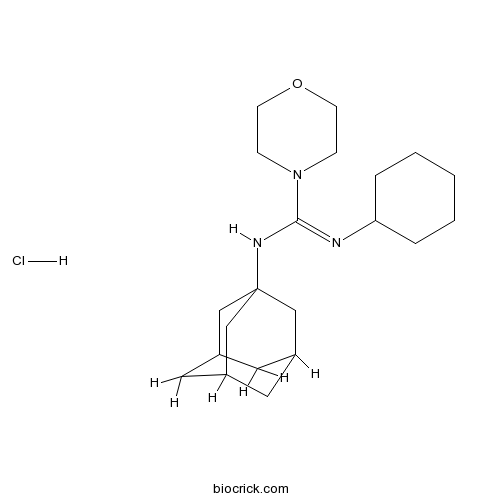
BCC7262
PNU 37883 hydrochloride
57568-80-6
-
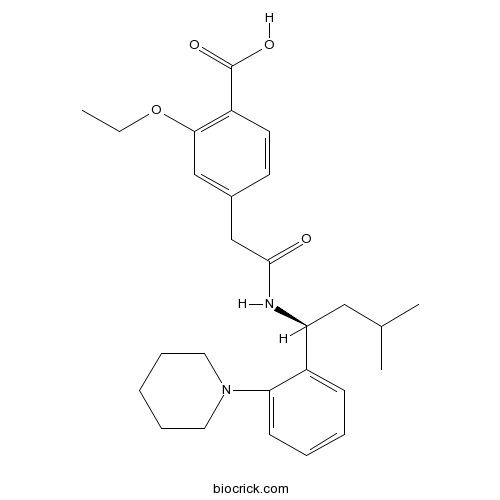
BCC2504
Repaglinide
Repaglinide is an insulin secretagogue for the treatment of type-2 diabetes mellitus.
-
BCC6849
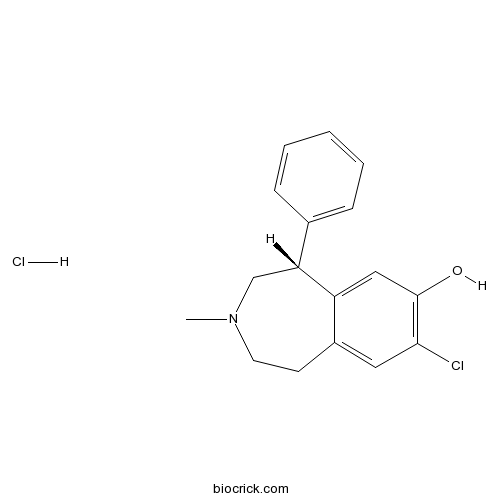
SCH 23390 hydrochloride
SCH-23390 hydrochloride (R-(+)-SCH-23390 hydrochloride) is a potent and selective dopamine D1-like receptor antagonist with Kis of 0.2 nM and 0.3 nM for the D1 and D5 receptor, respectively. SCH-23390 hydrochloride is a potent and high efficacy human 5-HT2C receptor agonist with a Ki of 9.3 nM. SCH-23390 hydrochloride also binds with high affinity to the 5-HT2 and 5-HT1C receptors. SCH-23390 hydrochloride inhibits G protein-coupled inwardly rectifying potassium (GIRK) channels with an IC50 of 268 nM.
-
BCC3866
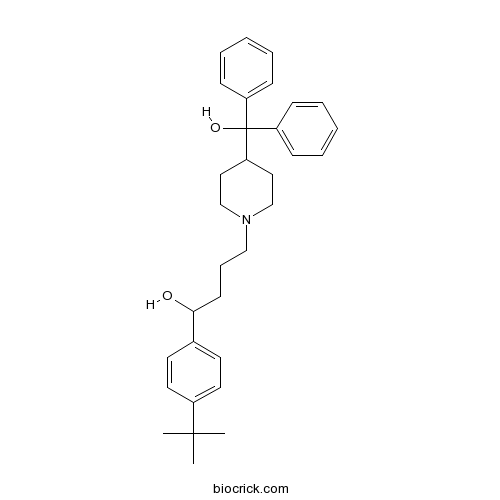
Terfenadine
Terfenadine ((±)-Terfenadine) is a potent open-channel blocker of hERG with an IC50 of 204 nM. Terfenadine, an H1 histamine receptor antagonist, acts as a potent apoptosis inducer in melanoma cells through modulation of Ca2+ homeostasis. Terfenadine induces ROS-dependent apoptosis, simultaneously activates Caspase-4, -2, -9.
-
BCC5740
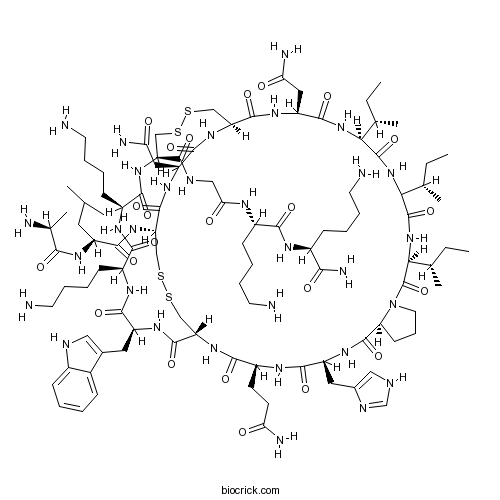
Tertiapin-Q
252198-49-5
-
BCC6126
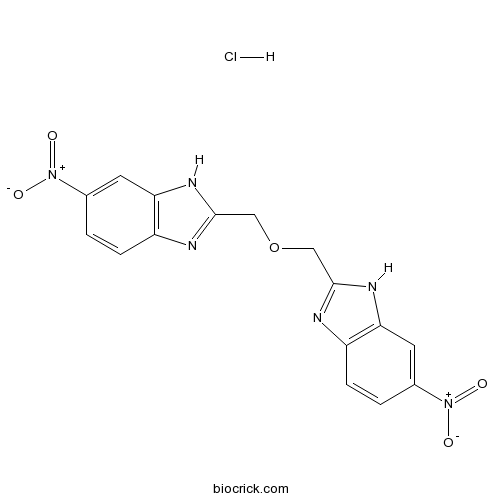
VU 591 hydrochloride
VU591 hydrochloride is a potent, selective renal outer medullary potassium channel (ROMK or Kir1.1) inhibitor, with an IC50 of 0.24 μM.
-
BCC4456
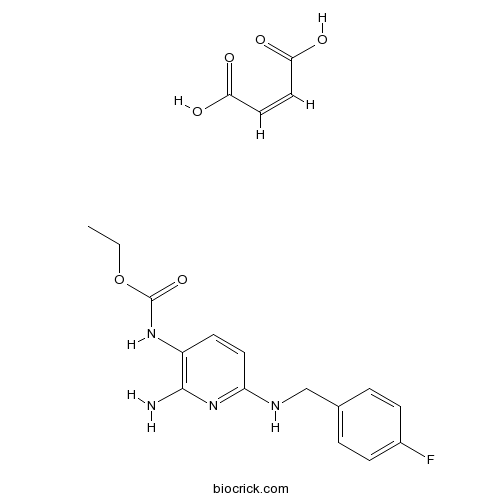
Flupirtine maleate
Flupirtine Maleate(D 9998) is a selective neuronal potassium channel opener that also has NMDA receptor antagonist properties.
-
BCC7911
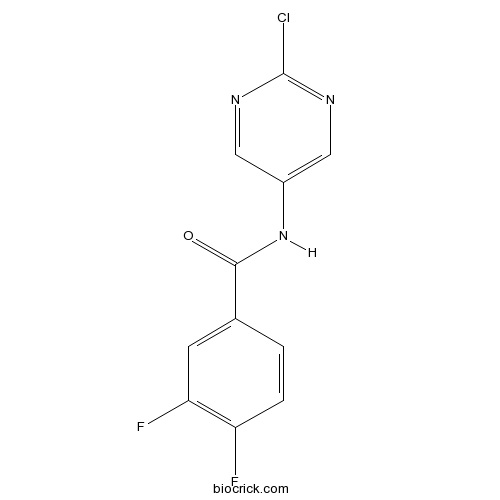
ICA 069673
ICA-069673 is a KCNQ2/Q3 potassium channel activator with an IC50 of 0.69 μM.
-
BCC6338
ICA 110381
ICA 110381 (Compound 16) is a KCNQ2/Q3 potassium channel opener for the treatment of epilepsy. ICA 110381 is a KCNQ2/Q3 agonist (EC50=0.38 μM) as well as KCNQ1 antagonist (IC50=15 μM).