Intracellular Signaling
Cell signaling (cell signalling in British English) is part of any communication process that governs basic activities of cells and coordinates all cell actions. The ability of cells to perceive and correctly respond to their microenvironment is the basis of development, tissue repair, and immunity, as well as normal tissue homeostasis. Errors in signaling interactions and cellular information processing are responsible for diseases such as cancer, autoimmunity, and diabetes. By understanding cell signaling, diseases may be treated more effectively and, theoretically, artificial tissues may be created.
Intracellular Signaling Products Targets
- Cdc25 Phosphatase (2)
- STAT (10)
- PI 3-kinase (22)
- JAK (10)
- PFKFB3 (3)
- Hexokinases (1)
- Protein Kinase G (3)
- NFKB and IKB (30)
- Others (3)
- Cyclooxygenase (24)
- IRAK (1)
- PORCN (4)
- beta-catenin (13)
- PPARγ (16)
- PPARδ (5)
- PPARα (7)
- Inositol Phosphatase (3)
- MYC (1)
- Sphingosine Kinase (2)
- RSK (4)
- Protein Kinase D (3)
- Polo-like Kinase (5)
- Pim Kinase (4)
- PERK (2)
- Phosphoinositide-dependent Kinase 1 (5)
- P21-activated Kinases (2)
- Myosin Light Chain Kinase (4)
- mTOR (14)
- Monopolar Spindle 1 Kinase (2)
- Mnk (2)
- MK2 (2)
- MEK (9)
- LIMK (3)
- Focal Adhesion Kinase (4)
- DNA-Dependent Protein Kinase (6)
- Diacylglycerol Kinase (2)
- Death-Associated Protein Kinase (1)
- Checkpoint Kinase (3)
- Casein Kinase 2 (3)
- Casein Kinase 1 (7)
- Bruton's Tyrosine Kinase (3)
- ATM and ATR Kinase (3)
- Akt (Protein Kinase B) (11)
- Adeonsine Kinase (2)
- Abl Kinase (9)
- Hsp90 (10)
- Hsp70 (4)
- Protein Kinase A (9)
- Protein Kinase C (29)
- Calmodulin-Dependent Kinase (8)
- LRRK2 (4)
- ERK (6)
- DYRK (3)
- Estrogen and Related Receptor (33)
- Tankyrase (5)
- ITK (2)
- ASK1 (2)
- Syk Kinase (4)
- Src Kinase (21)
- Raf Kinase (7)
- IαB Kinase (6)
- p38 MAPK (16)
- Janus N-terminal Kinase (12)
- Androgen Receptor (11)
- Glycogen Synthase Kinase 3 (20)
- AMPK (7)
- Rho-Kinases (9)
- AP-1 (2)
- SREBP (2)
- NUAK (2)
- Telomerase (3)
- Retinoid X Receptor (13)
- Retinoic Acid Receptor (22)
- Proteasome (5)
- Phospholipase (16)
- Lipase (4)
- G Protein (Small) (23)
- Hedgehog Signaling (15)
- DNA Topoisomerase (12)
- DNA, RNA and Protein Synthesis (46)
- Protein Tyrosine Phosphatases (5)
- Protein serine and threonine phosphatase (16)
- Histone Deacetylase (19)
- Aurora Kinase (9)
- Cyclin-Dependent Protein Kinase (21)
Products for Intracellular Signaling - Page 56
- Cat.No. Product Name Information/Activity
-
BCC8051
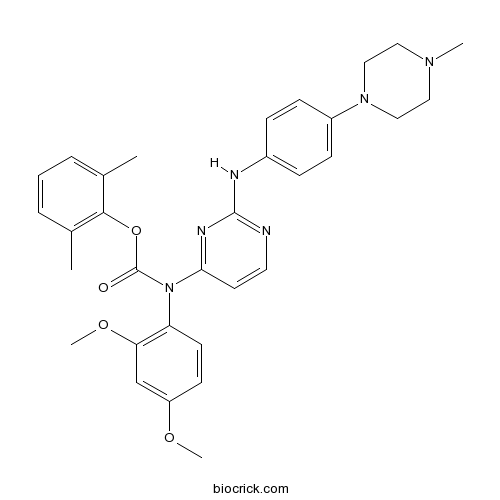
WH-4-023
WH-4-023 is a potent and selective dual Lck/Src inhibitor with IC50 of 2 nM/6 nM for Lck and Src kinase respectively; little inhibition on p38α and KDR.
-
BCC6232
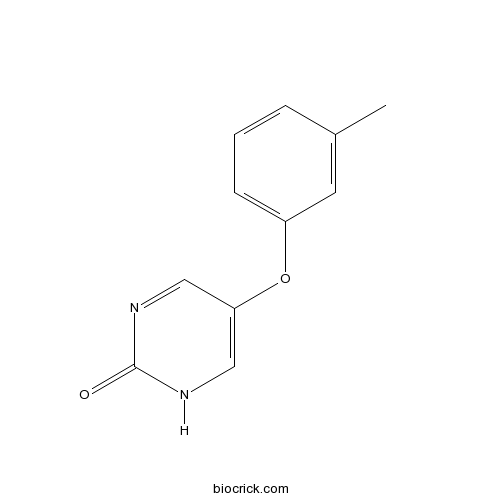
MLR 1023
Tolimidone is a potent and selective allosteric activator of Lyn kinase with an EC50 of 63 nM.
-
BCC5855
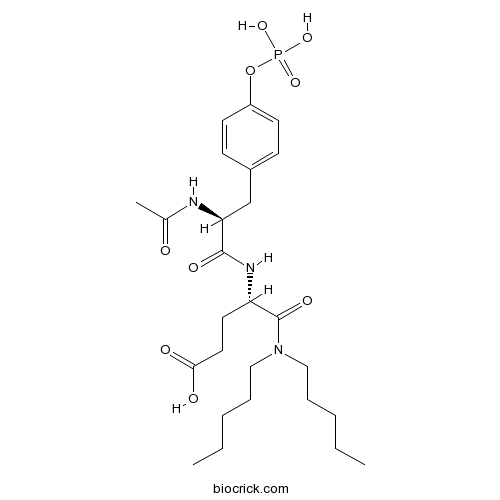
N-Acetyl-O-phosphono-Tyr-Glu Dipentylamide
190078-50-3
-
BCC5853
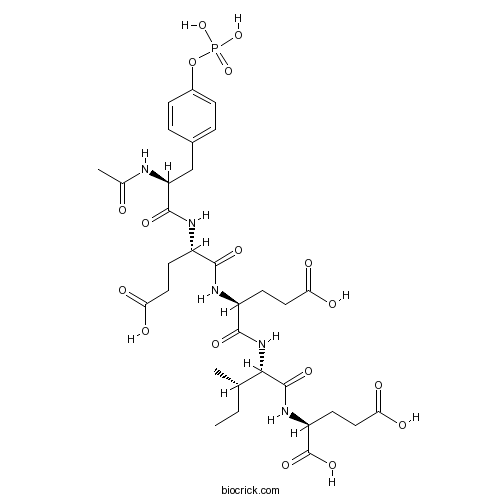
N-Acetyl-O-phosphono-Tyr-Glu-Glu-Ile-Glu
159439-02-8
-
BCC5914
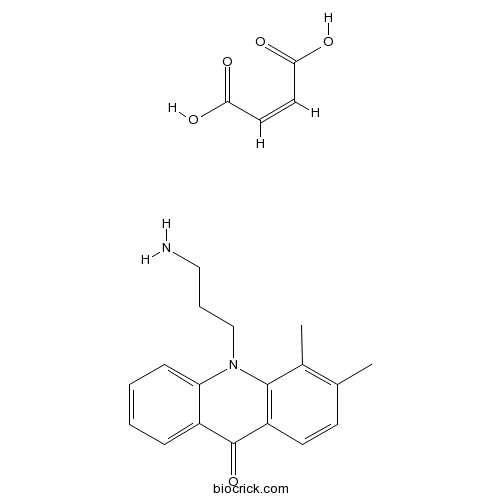
ER 27319 maleate
1204480-26-1
-
BCC3799
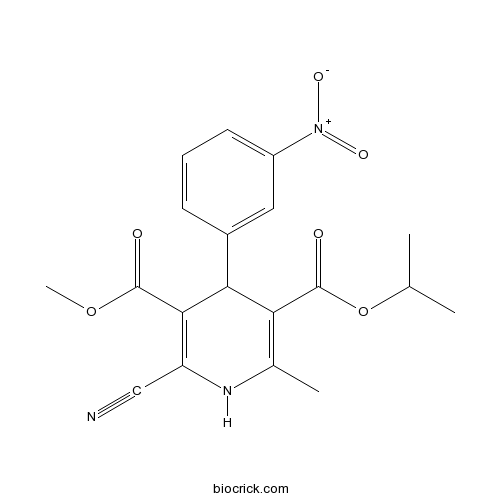
Nilvadipine
Nilvadipine is a potent calcium channel antagonist, and the IC50 value is around 0.1 nM.
-
BCC8085
c-JUN peptide
610273-01-3

-
BCC3607
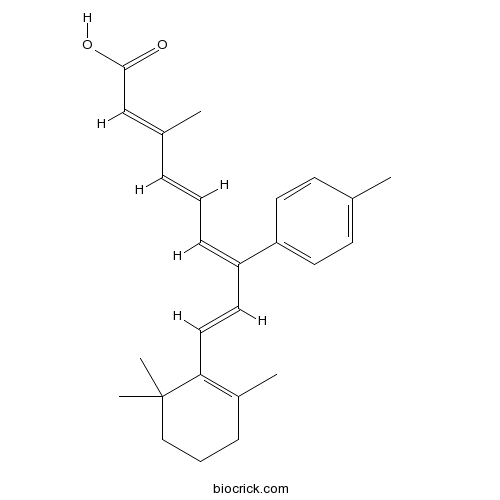
SR 11302
160162-42-5
-
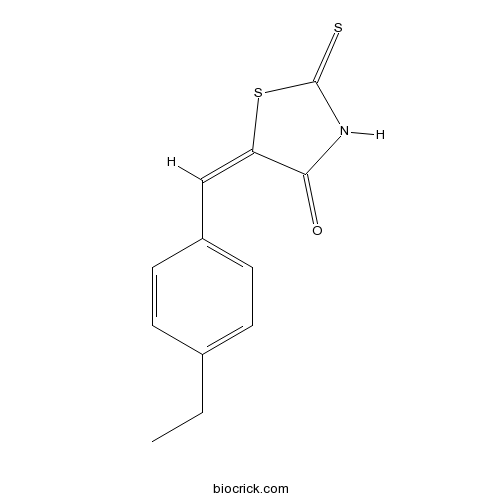
BCC1050
10058-F4
10058-F4 is a c-Myc inhibitor that prevents c-Myc-Max dimerization and transactivation of c-Myc target gene expression.
-
BCC7109
NSC 95397
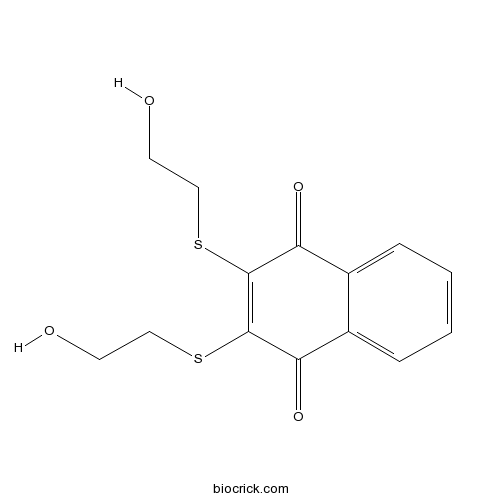
NSC 95397 is a potent, selective Cdc25 dual specificity phosphatase inhibitor (Ki=32 nM (Cdc25A), 96 nM (Cdc25B), 40 nM (Cdc25C); IC50=22.3 nM (human Cdc25A), 56.9 nM (human Cdc25C), 125 nM (Cdc25B)). NSC 95397 inhibits mitogen-activated protein kinase phosphatase-1 (MKP-1) and suppresses proliferation and induces apoptosis in colon cancer cells through MKP-1 and ERK1/2 pathway.