Intracellular Signaling
Cell signaling (cell signalling in British English) is part of any communication process that governs basic activities of cells and coordinates all cell actions. The ability of cells to perceive and correctly respond to their microenvironment is the basis of development, tissue repair, and immunity, as well as normal tissue homeostasis. Errors in signaling interactions and cellular information processing are responsible for diseases such as cancer, autoimmunity, and diabetes. By understanding cell signaling, diseases may be treated more effectively and, theoretically, artificial tissues may be created.
Intracellular Signaling Products Targets
- Cdc25 Phosphatase (2)
- STAT (10)
- PI 3-kinase (22)
- JAK (10)
- PFKFB3 (3)
- Hexokinases (1)
- Protein Kinase G (3)
- NFKB and IKB (30)
- Others (3)
- Cyclooxygenase (24)
- IRAK (1)
- PORCN (4)
- beta-catenin (13)
- PPARγ (16)
- PPARδ (5)
- PPARα (7)
- Inositol Phosphatase (3)
- MYC (1)
- Sphingosine Kinase (2)
- RSK (4)
- Protein Kinase D (3)
- Polo-like Kinase (5)
- Pim Kinase (4)
- PERK (2)
- Phosphoinositide-dependent Kinase 1 (5)
- P21-activated Kinases (2)
- Myosin Light Chain Kinase (4)
- mTOR (14)
- Monopolar Spindle 1 Kinase (2)
- Mnk (2)
- MK2 (2)
- MEK (9)
- LIMK (3)
- Focal Adhesion Kinase (4)
- DNA-Dependent Protein Kinase (6)
- Diacylglycerol Kinase (2)
- Death-Associated Protein Kinase (1)
- Checkpoint Kinase (3)
- Casein Kinase 2 (3)
- Casein Kinase 1 (7)
- Bruton's Tyrosine Kinase (3)
- ATM and ATR Kinase (3)
- Akt (Protein Kinase B) (11)
- Adeonsine Kinase (2)
- Abl Kinase (9)
- Hsp90 (10)
- Hsp70 (4)
- Protein Kinase A (9)
- Protein Kinase C (29)
- Calmodulin-Dependent Kinase (8)
- LRRK2 (4)
- ERK (6)
- DYRK (3)
- Estrogen and Related Receptor (33)
- Tankyrase (5)
- ITK (2)
- ASK1 (2)
- Syk Kinase (4)
- Src Kinase (21)
- Raf Kinase (7)
- IαB Kinase (6)
- p38 MAPK (16)
- Janus N-terminal Kinase (12)
- Androgen Receptor (11)
- Glycogen Synthase Kinase 3 (20)
- AMPK (7)
- Rho-Kinases (9)
- AP-1 (2)
- SREBP (2)
- NUAK (2)
- Telomerase (3)
- Retinoid X Receptor (13)
- Retinoic Acid Receptor (22)
- Proteasome (5)
- Phospholipase (16)
- Lipase (4)
- G Protein (Small) (23)
- Hedgehog Signaling (15)
- DNA Topoisomerase (12)
- DNA, RNA and Protein Synthesis (46)
- Protein Tyrosine Phosphatases (5)
- Protein serine and threonine phosphatase (16)
- Histone Deacetylase (19)
- Aurora Kinase (9)
- Cyclin-Dependent Protein Kinase (21)
Products for Intracellular Signaling - Page 51
- Cat.No. Product Name Information/Activity
-
BCC5811
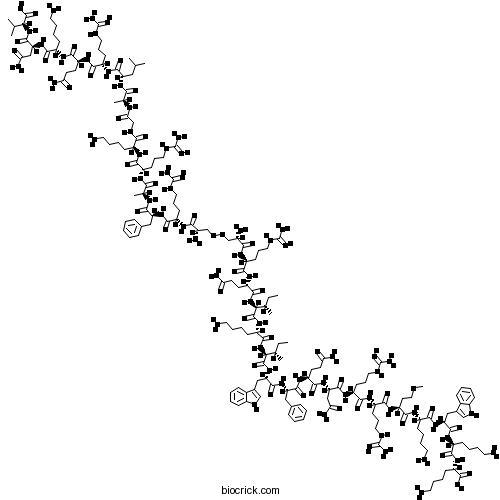
PKC β pseudosubstrate
172308-76-8
-
BCC7122
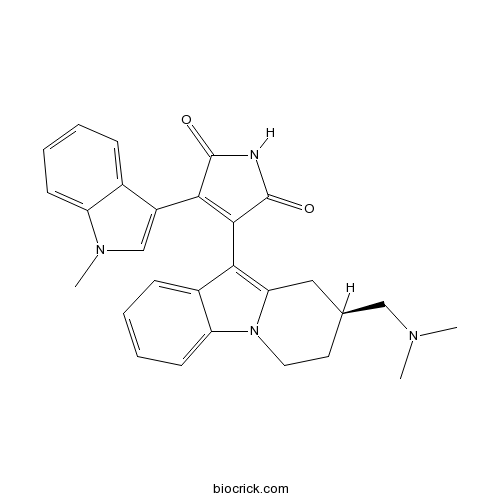
Ro 32-0432 hydrochloride
151342-35-7
-
BCC7127
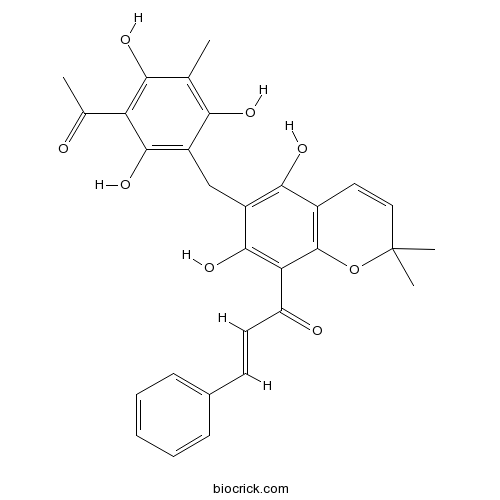
Rottlerin
Rottlerin, a natural product purified from Mallotus Philippinensis, is a specific PKC inhibitor, with IC50 values for PKCδ of 3-6 μM, PKCα,β,γ of 30-42 μM, PKCε,η,ζ of 80-100 μM. Rottlerin acts as a direct mitochondrial uncoupler, and stimulates autophagy by targeting a signaling cascade upstream of mTORC1. Rottlerin induces apoptosis via caspase 3 activation.
-
BCC6729
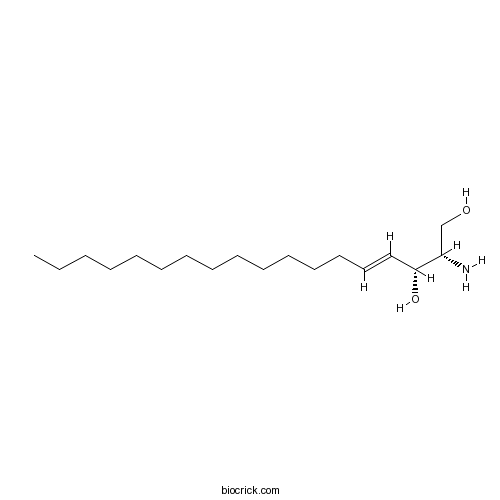
D-erythro-Sphingosine (synthetic)
D-erythro-Sphingosine (Erythrosphingosine) is a very potent activator of p32-kinase with an EC50 of 8 μM, and inhibits protein kinase C (PKC). D-erythro-Sphingosine (Erythrosphingosine) is also a PP2A activator.
-
BCC4003
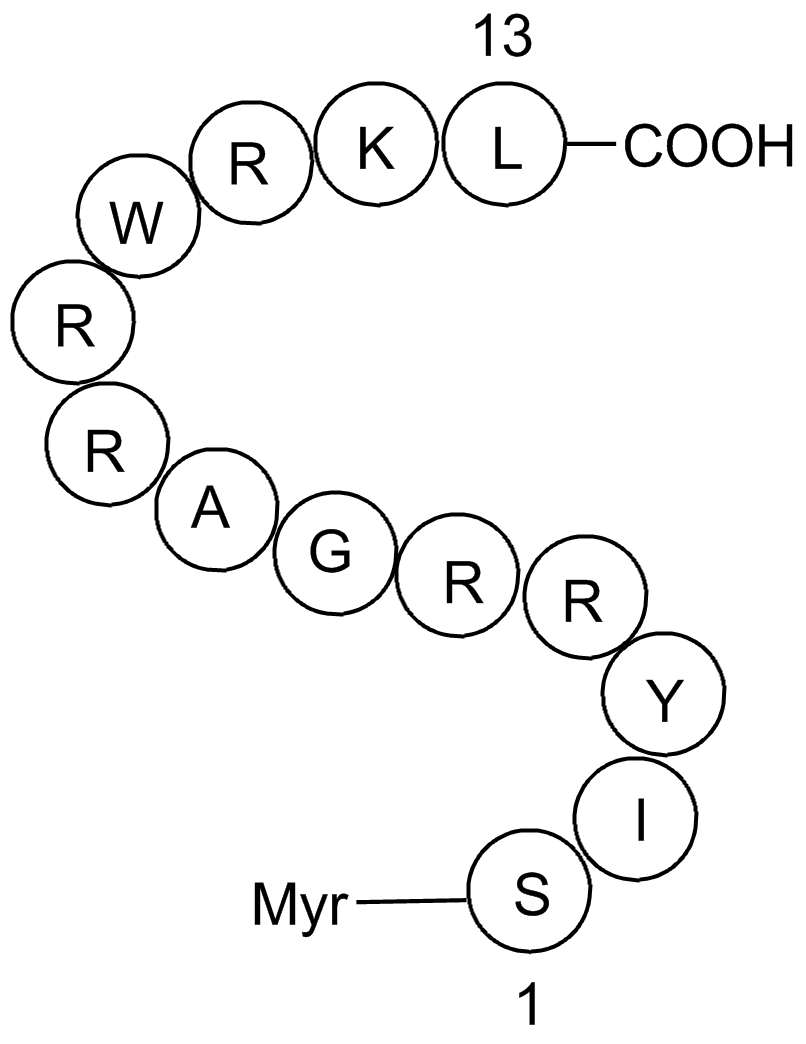
ZIP
Cell-permeable inhibitor of atypical PKC isozyme PKM<span class='symbol'>ζ</span>
-
BCC7343
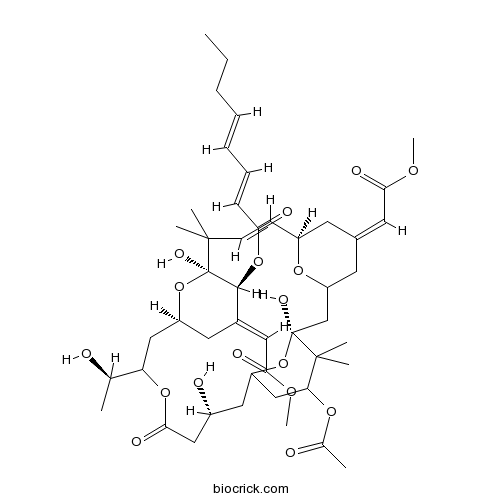
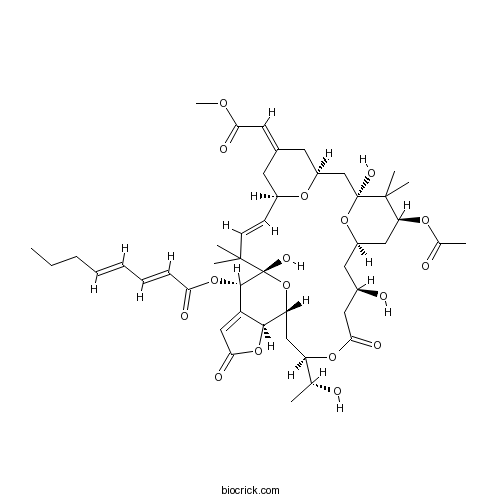
Bryostatin 1
Bryostatin 1 is a natural macrolide isolated from the bryozoan Bugula neritina and is a potent and central nervous system (CNS)-permeable PKC modulator. Bryostatin 1 binds to the isolated C1 domain of Munc13-1 and the full-length Munc13-1 protein with Kis of 8.07 nM and 0.45 nM, respectively. Bryostatin 1 has anti-cancer, anti-inflammatory, neuroprotective, anti-HIV-1 infection properties.
-
BCC5619
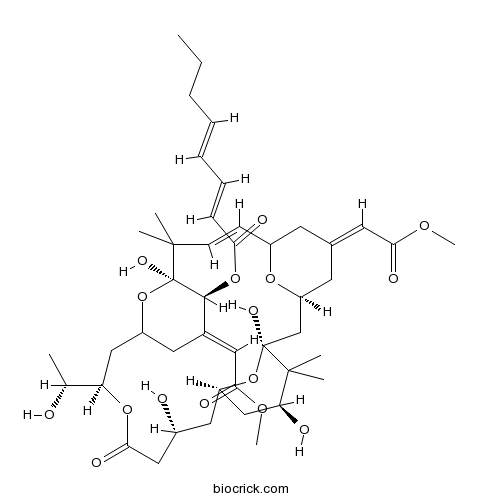
Bryostatin 2
87745-28-6
-
BCC5620
Bryostatin 3
143370-84-7
-
BCC7564
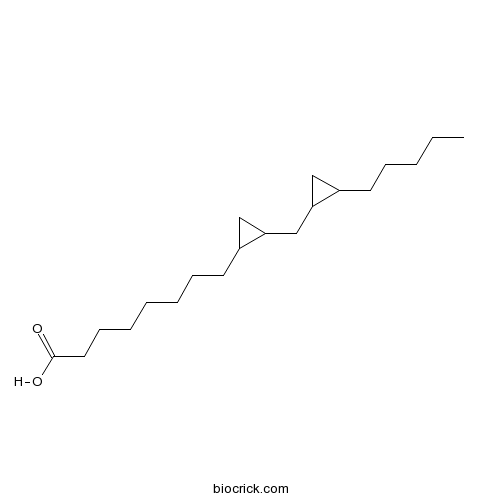
FR 236924
DCP-LA (FR236924), a linoleic acid derivative, selectively and directly activates PKCε.
-
BCN2961
Ingenol 3-Angelate
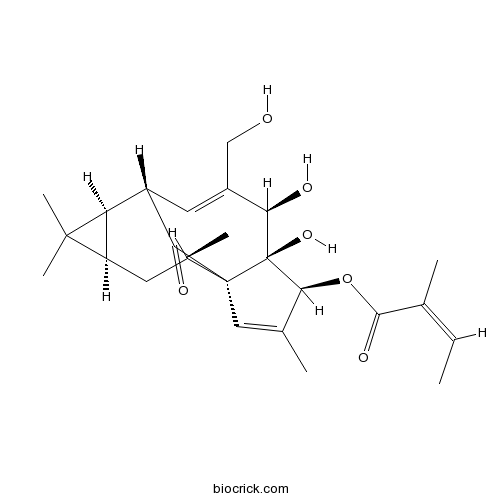
Ingenol Mebutate is an active ingredient in Euphorbia peplus, acts as a potent PKC modulator, with Kis of 0.3, 0.105, 0.162, 0.376, and 0.171 nM for PKC-α, PKC-β, PKC-γ, PKC-δ, and PKC-ε, respectively, and has antiinflammatory and antitumor activity.