Intracellular Signaling
Cell signaling (cell signalling in British English) is part of any communication process that governs basic activities of cells and coordinates all cell actions. The ability of cells to perceive and correctly respond to their microenvironment is the basis of development, tissue repair, and immunity, as well as normal tissue homeostasis. Errors in signaling interactions and cellular information processing are responsible for diseases such as cancer, autoimmunity, and diabetes. By understanding cell signaling, diseases may be treated more effectively and, theoretically, artificial tissues may be created.
Intracellular Signaling Products Targets
- Cdc25 Phosphatase (2)
- STAT (10)
- PI 3-kinase (22)
- JAK (10)
- PFKFB3 (3)
- Hexokinases (1)
- Protein Kinase G (3)
- NFKB and IKB (30)
- Others (3)
- Cyclooxygenase (24)
- IRAK (1)
- PORCN (4)
- beta-catenin (13)
- PPARγ (16)
- PPARδ (5)
- PPARα (7)
- Inositol Phosphatase (3)
- MYC (1)
- Sphingosine Kinase (2)
- RSK (4)
- Protein Kinase D (3)
- Polo-like Kinase (5)
- Pim Kinase (4)
- PERK (2)
- Phosphoinositide-dependent Kinase 1 (5)
- P21-activated Kinases (2)
- Myosin Light Chain Kinase (4)
- mTOR (14)
- Monopolar Spindle 1 Kinase (2)
- Mnk (2)
- MK2 (2)
- MEK (9)
- LIMK (3)
- Focal Adhesion Kinase (4)
- DNA-Dependent Protein Kinase (6)
- Diacylglycerol Kinase (2)
- Death-Associated Protein Kinase (1)
- Checkpoint Kinase (3)
- Casein Kinase 2 (3)
- Casein Kinase 1 (7)
- Bruton's Tyrosine Kinase (3)
- ATM and ATR Kinase (3)
- Akt (Protein Kinase B) (11)
- Adeonsine Kinase (2)
- Abl Kinase (9)
- Hsp90 (10)
- Hsp70 (4)
- Protein Kinase A (9)
- Protein Kinase C (29)
- Calmodulin-Dependent Kinase (8)
- LRRK2 (4)
- ERK (6)
- DYRK (3)
- Estrogen and Related Receptor (33)
- Tankyrase (5)
- ITK (2)
- ASK1 (2)
- Syk Kinase (4)
- Src Kinase (21)
- Raf Kinase (7)
- IαB Kinase (6)
- p38 MAPK (16)
- Janus N-terminal Kinase (12)
- Androgen Receptor (11)
- Glycogen Synthase Kinase 3 (20)
- AMPK (7)
- Rho-Kinases (9)
- AP-1 (2)
- SREBP (2)
- NUAK (2)
- Telomerase (3)
- Retinoid X Receptor (13)
- Retinoic Acid Receptor (22)
- Proteasome (5)
- Phospholipase (16)
- Lipase (4)
- G Protein (Small) (23)
- Hedgehog Signaling (15)
- DNA Topoisomerase (12)
- DNA, RNA and Protein Synthesis (46)
- Protein Tyrosine Phosphatases (5)
- Protein serine and threonine phosphatase (16)
- Histone Deacetylase (19)
- Aurora Kinase (9)
- Cyclin-Dependent Protein Kinase (21)
Products for Intracellular Signaling - Page 38
- Cat.No. Product Name Information/Activity
-
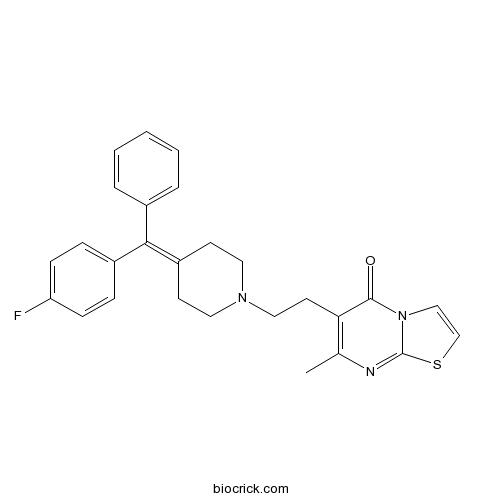
BCC7279
R 59-022
R 59-022 (DKGI-I) is a diacylglycerol kinase inhibitor (IC50=2.8 μM). R 59-022 is a 5-HTR antagonist, and activates protein kinase C (PKC). R 59-022 potentiates thrombin-induced diacylglycerol production in platelets and inhibits phosphatidic acid production in neutrophils.
-
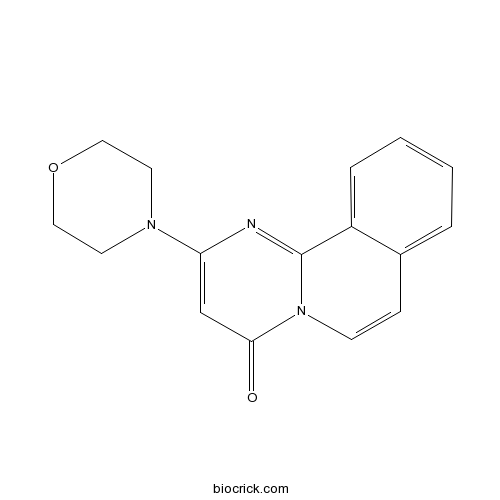
BCC7622
Compound 401
Compound 401 is a synthetic inhibitor of DNA-PK (IC50 = 0.28 μM) that also targets mTOR but not PI3K in vitro.
-
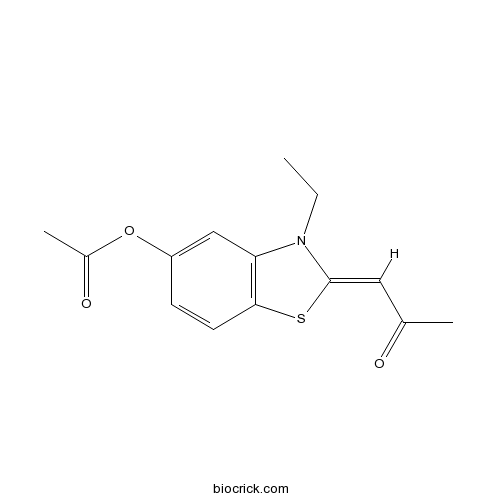
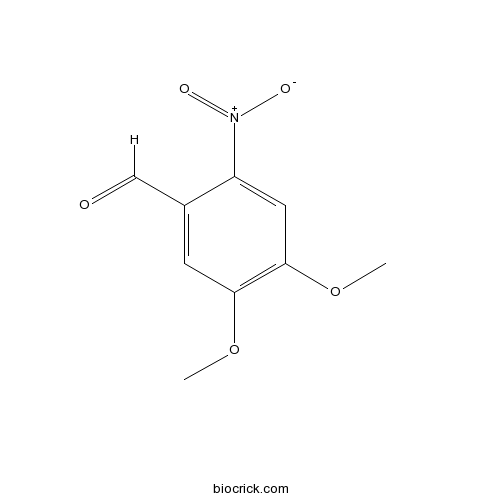
BCC7259
DMNB
20357-25-9
-
BCC1110
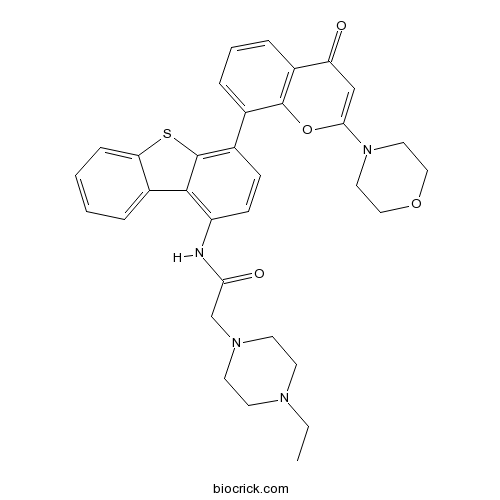
KU-0060648
KU-0060648 is a dual inhibitor of PI3K and DNA-PK with IC50s of 4 nM, 0.5 nM, 0.1 nM, 0.594 nM and 8.6 nM for PI3Kα, PI3Kβ, PI3Kγ, PI3Kδ and DNA-PK, respectively.
-
BCC3933
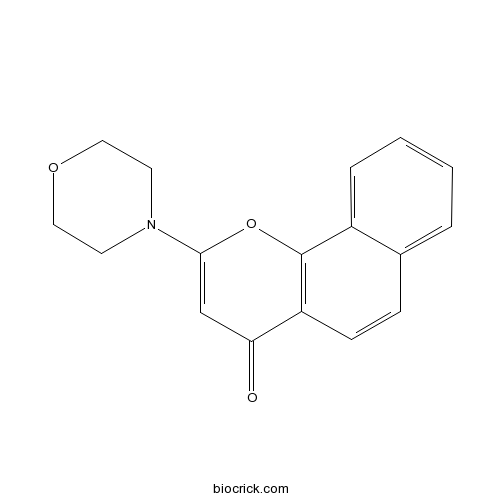
NU 7026
NU 7026 (LY293646) is a novel specific DNA-PK inhibitor with IC50 of 0.23 μM, also inhibits PI3K with IC50 of 13 μM.
-
BCC3679
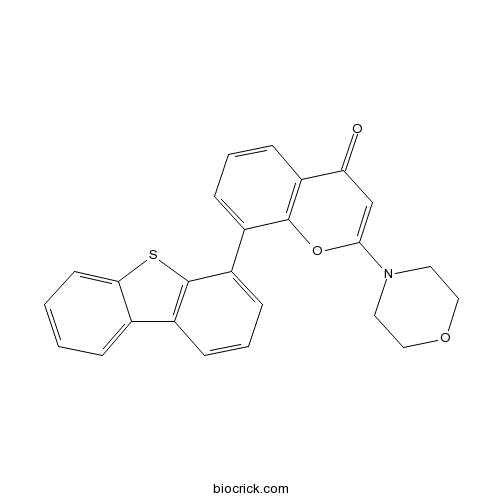
NU7441 (KU-57788)
KU-57788 is a potent and selective inhibitor of DNA-PK with an IC50 of 13 nM, with selectivity over a range of kinases including mTOR, PI 3-K, ATM and ATR.
-
BCC1860
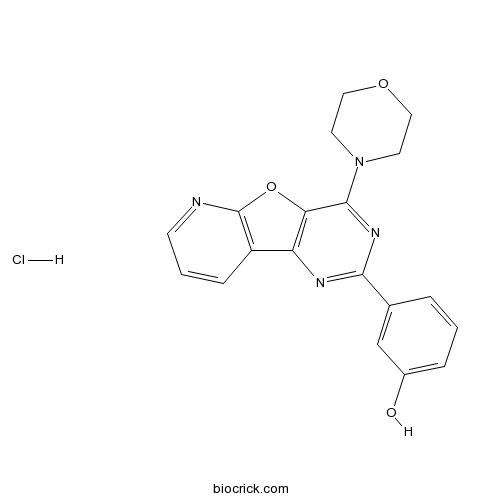
PI-103 Hydrochloride
PI-103 Hydrochloride is a dual PI3K and mTOR inhibitor with IC50s of 8 nM, 88 nM, 48 nM, 150 nM, 20 nM, and 83 nM for p110α, p110β, p110δ, p110γ, mTORC1, and mTORC2. PI-103 Hydrochloride also inhibits DNA-PK with an IC50 of 2 nM. PI-103 Hydrochloride induces autophagy.
-
BCN5494
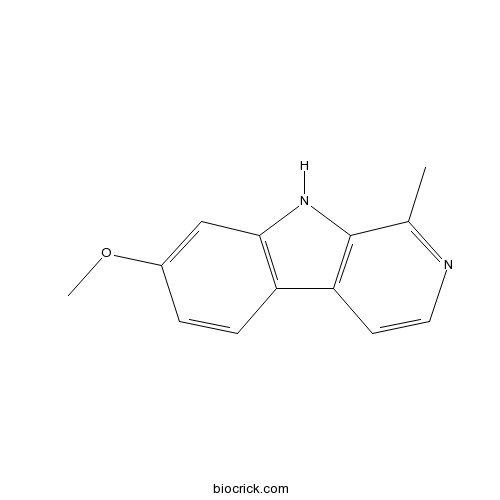
Harmine
Harmine is a natural dual-specificity tyrosine phosphorylation-regulated kinase (DYRK) inhibitor with anticancer and anti-inflammatory activities. Harmine has a high affinity of 5-HT2A serotonin receptor, with an Ki of 397 nM.
-
BCC6349
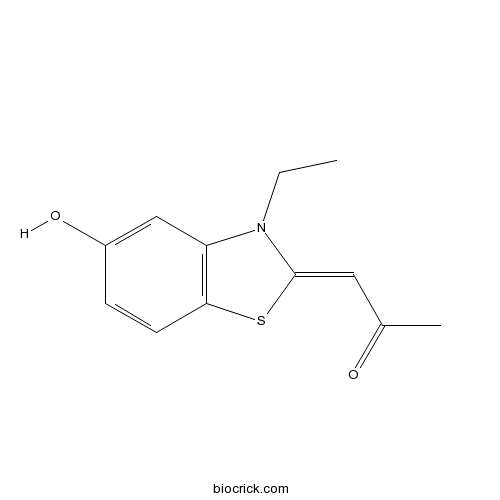
INDY
INDY is a potent and ATP-competitive Dyrk1A and Dyrk1B inhibitor with IC50s of 0.24 μM and 0.23 μM, respectively. INDY binds in the ATP pocket of the enzyme and has a Ki value of 0.18 μM for Dyrk1A. INDY sharply reduces the self-renewal capacity of normal and tumorigenic cells in primary Glioblastoma (GBM) cell lines and neural progenitor cells.
-
BCC6350
ProINDY
719277-30-2