Cancer Research
Cancer is a term used to define a group of diseases in which abnormal cells divide without control, are able to invade neighboring tissues/organs and metastasize. Cancer has been characterized by six hallmarks; self sufficiency in proliferative growth signals, insensitivity to growth inhibitors, evasion of apoptosis, limitless replicative potential, ability to develop blood vessels (angiogenesis), and tissue invasion and metastasis.
Cancer Research Products Areas
Products for Cancer Research - Page 63
- Cat.No. Product Name Information/Activity
-
BCC4861
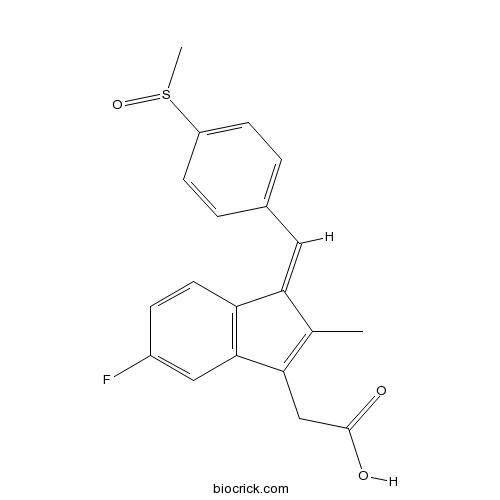
Sulindac
Sulindac (MK-231) is a non-steroidal antiinflammatory agent, acts as a COX-2 inhibitor, and inhibits overexpression of COX-2.
-
BCC7391
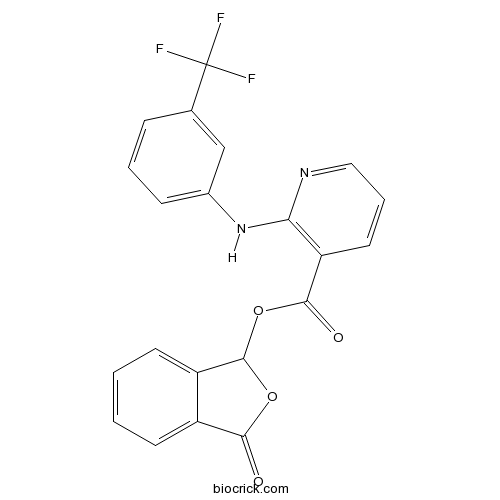
Talniflumate
66898-62-2
-
BCC7419
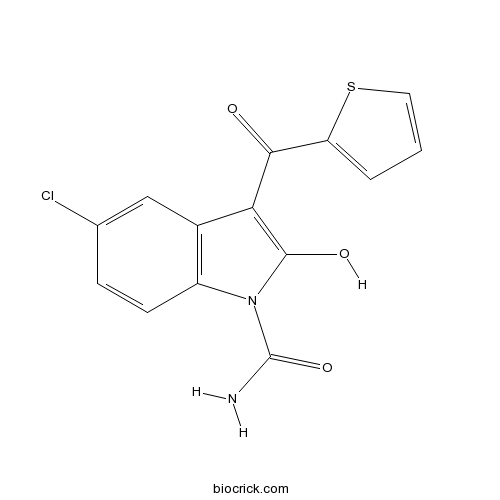
Tenidap
Tenidap, a non-steroidal anti-inflammatory drug, is a selective COX-1 inhibitor, with IC50 values of 0.03 µM and 1.2 µM for COX-1 and COX-2, respectively. Tenidap has anti-inflammatory and antirheumatic properties. Tenidap is also a specific SLC26A3 inhibitor.
-
BCC4441
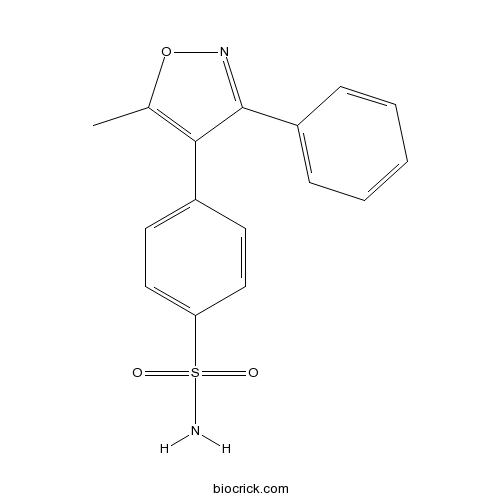
Valdecoxib
Valdecoxib is a highly potent and selective inhibitor of COX-2, with IC50s of 5 nM and 140 μM for COX-2 and COX-1, respeceively. Valdecoxib can be used in the research of arthritis and pain.
-
BCC5338
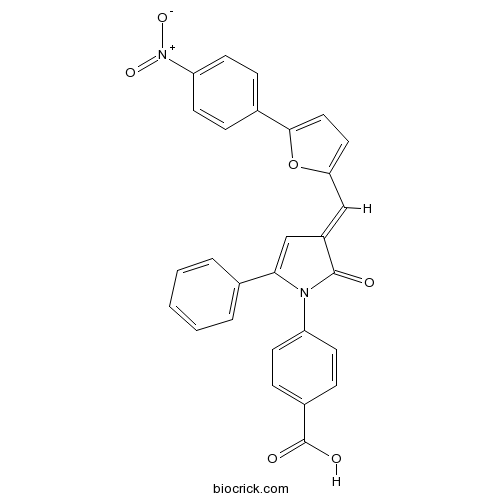
4E1RCat
4E1RCat is an inhibitor of cap-dependent translation, and inhibits eIF4E:eIF4GI interaction, with an IC50 an of ∼4 μM.
-
BCC5337
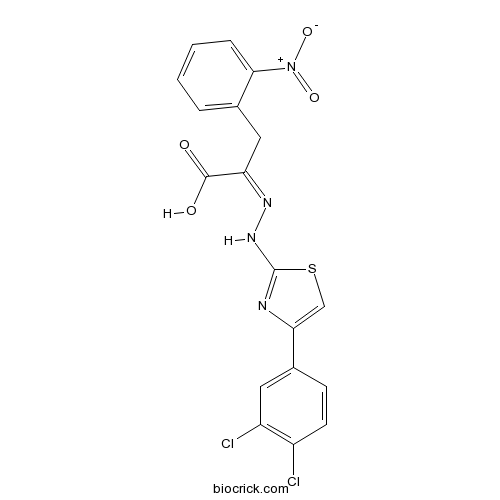
4EGI-1
4EGI-1 is an inhibitor of eIF4E/eIF4G interaction, with a Kd of 25 μM against eIF4E binding.
-
BCC3929
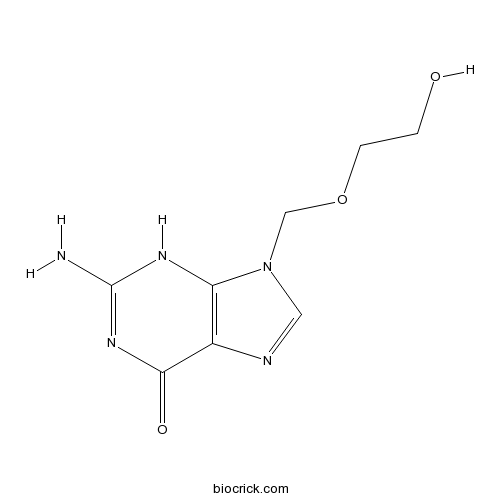
Acyclovir
Acyclovir (Aciclovir) is a guanosine analogue and an orally active antiviral agent. Acyclovir inhibits HSV-1 (IC50 of 0.85 μM), HSV-2 (IC50 of 0.86 μM) and varicella-zoster virus. Acyclovir can be phosphorylated by viral thymidine kinase (TK), and Acyclovir triphosphate interferes with viral DNA polymerization through competitive inhibition with guanosine triphosphate and obligatory chain termination. Acyclovir prevents bacterial infections during induction therapy for acute leukaemia.
-
BCC7007
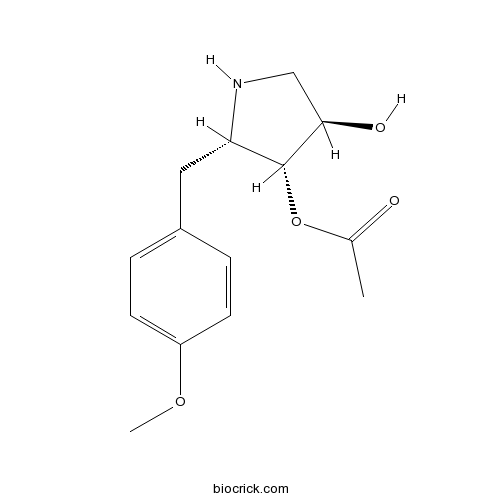
Anisomycin
Anisomycin is a potent protein synthesis inhibitor which interferes with protein and DNA synthesis by inhibiting peptidyl transferase or the 80S ribosome system. Anisomycin is a JNK activator, which increases phospho-JNK. Anisomycin is a bacterial antibiotic isolated from Streptomyces griseolus.
-
BCC1147
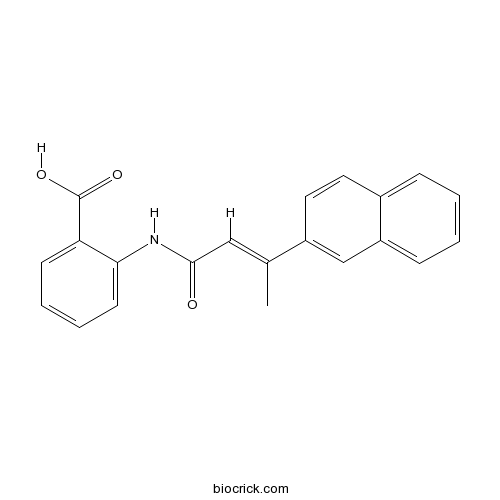
BIBR 1532
BIBR 1532 is a potent, selective and non-competitive telomerase inhibitor with IC50 of 100 nM in a cell-free assay.
-
BCN2168
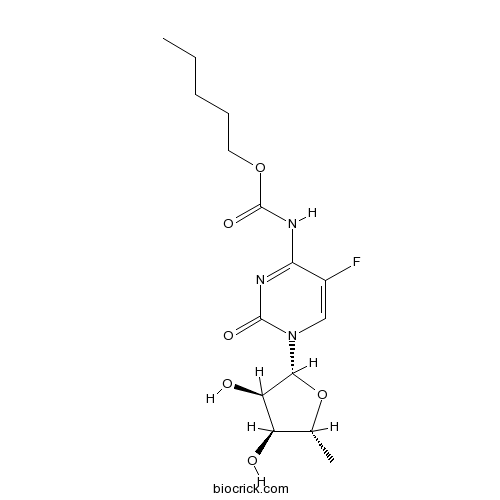
Capecitabine
Capecitabine is an oral prodrug that is converted to its active metabolite, 5-FU, by thymidine phosphorylase.