Cancer Research
Cancer is a term used to define a group of diseases in which abnormal cells divide without control, are able to invade neighboring tissues/organs and metastasize. Cancer has been characterized by six hallmarks; self sufficiency in proliferative growth signals, insensitivity to growth inhibitors, evasion of apoptosis, limitless replicative potential, ability to develop blood vessels (angiogenesis), and tissue invasion and metastasis.
Cancer Research Products Areas
Products for Cancer Research - Page 16
- Cat.No. Product Name Information/Activity
-
BCC4513
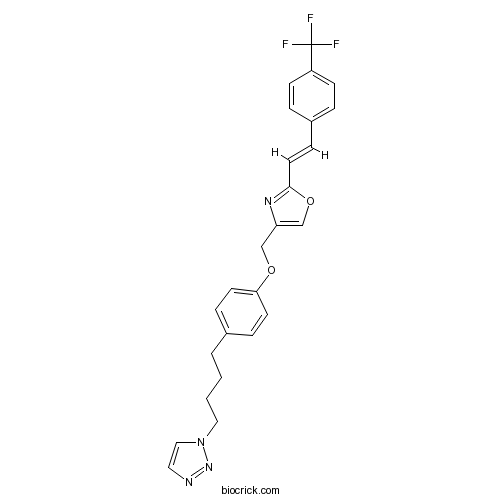
Mubritinib (TAK 165)
Mubritinib (TAK-165) is a potent and selective EGFR2/HER2 inhibitor with an IC50 of 6 nM.
-
BCC6703
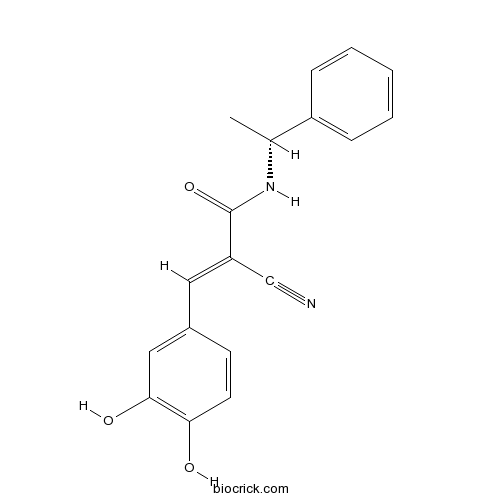
Tyrphostin B44, (-) enantiomer
133550-32-0
-
BCC6704
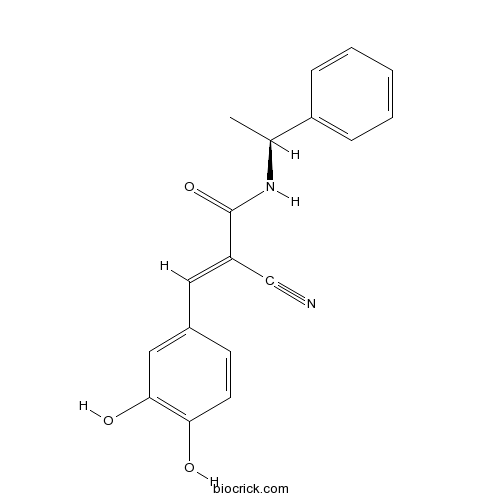
Tyrphostin B44, (+) enantiomer
133550-37-5
-
BCC2202
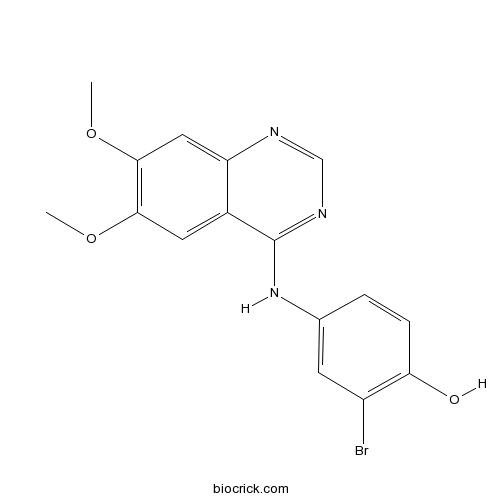
WHI-P154
WHI-P154 is a potent EGFR inhibitor, and also modestly blocks JAK3, with IC50s of 4 nM and 1.8 μM, respectively.
-
BCC2522
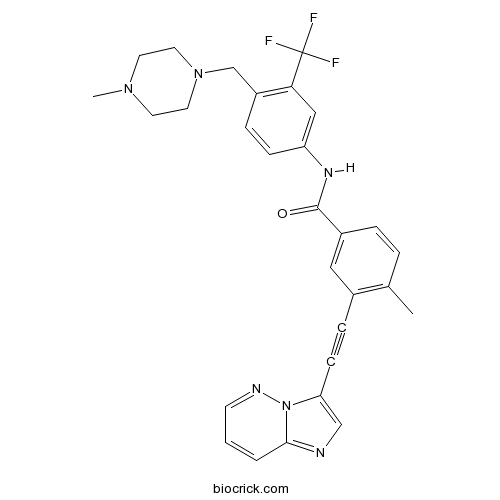
Ponatinib (AP24534)
Ponatinib (AP24534) is an orally active multi-targeted kinase inhibitor with IC50s of 0.37 nM, 1.1 nM, 1.5 nM, 2.2 nM, and 5.4 nM for Abl, PDGFRα, VEGFR2, FGFR1, and Src, respectively.
-
BCC7765
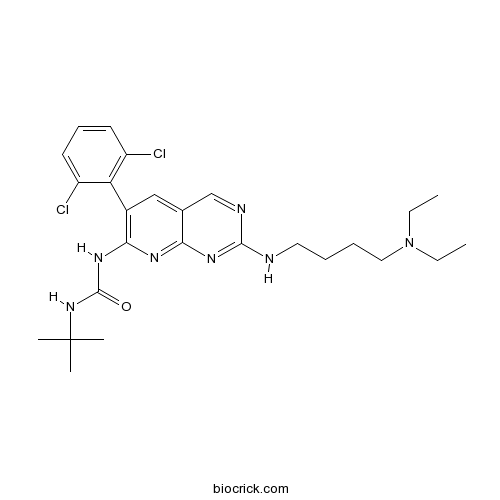
PD 161570
PD-161570 is a potent and ATP-competitive human FGF-1 receptor inhibitor with an IC50 of 39.9 nM and a Ki of 42 nM. PD-161570 also inhibits the PDGFR, EGFR and c-Src tyrosine kinases with IC50 values of 310 nM, 240 nM, and 44 nM, respectively. PD-161570 inhibits PDGF-stimulated autophosphorylation and FGF-1 receptor phosphorylation with IC50s of 450 nM and 622 nM, respectively.
-
BCC3662
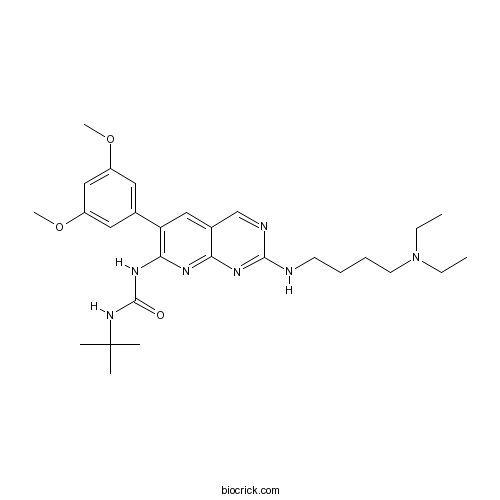
PD 173074
PD173074 is a potent FGFR1 inhibitor with an IC50 of 25 nM and also inhibits VEGFR2 with an IC50 of 100-200 nM, showing 1000-fold selectivity for FGFR1 over PDGFR and c-Src.
-
BCC1970
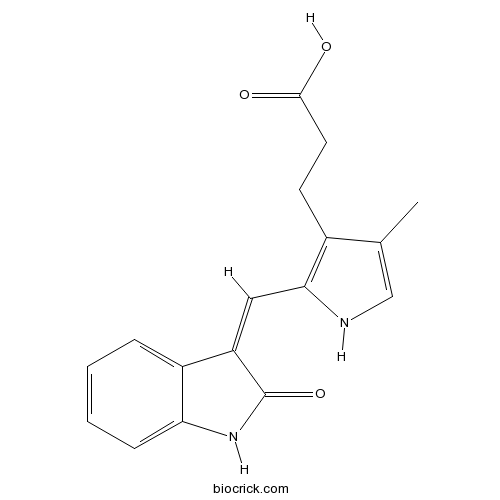
SU 5402
SU 5402 is a potent multi-targeted receptor tyrosine kinase inhibitor with IC50 of 20 nM, 30 nM, and 510 nM for VEGFR2, FGFR1, and PDGFRβ, respectively.
-
BCC2508
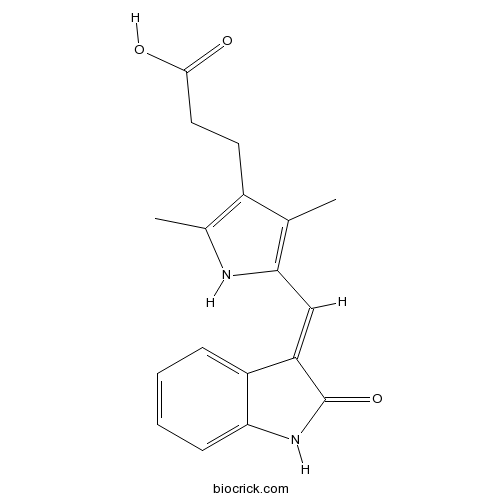
TSU-68 (SU6668,Orantinib)
Orantinib (SU6668; TSU-68) is a multi-targeted receptor tyrosine kinase inhibitor with Kis of 2.1 μM, 8 nM and 1.2 μM for Flt-1, PDGFRβ and FGFR1, respectively.
-
BCC2433
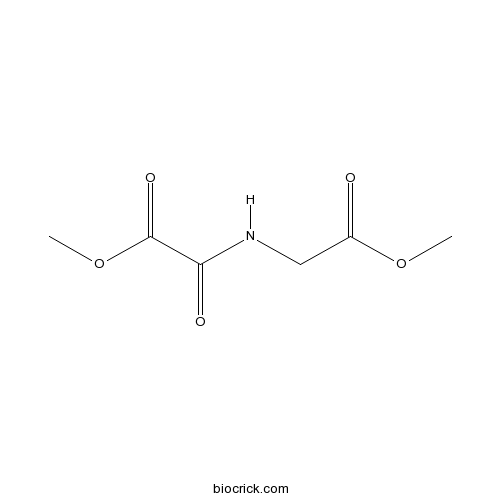
DMOG
DMOG (Dimethyloxallyl Glycine) is a cell permeable and competitive inhibitor of HIF-PH, which results in HIF-1α stabilisation and accmulation in vitro and in vivo. DMOG is an α-ketoglutarate analogue and inhibits α-KG-dependent hydroxylases. DMOG acts as a pro-angiogenic agent and plays a protective role in experimental model of colitis and diarrhoea via HIF-1related signal. DMOG induces cell autophagy.