Nociception
Nociception is the sensory process that provides the signals that lead to pain. This occurs through nociceptors, primary sensory neurons that are activated by stimuli that cause tissue damage. Stimuli can include tissue injury, extremes of heat and noxious chemicals. Unlike other sensory neurons that detect vision or taste, nociceptors are located all around the body, particularly under the skin, however, they are notably absent from the brain.
Nociception Products Targets
- Others (20)
- Nucleoside Transporter (5)
- Glycine Transporter (6)
- GABA (10)
- Cannabinoid Transporter (10)
- Acetylcholine Transporter (1)
- D4 Receptor (12)
- 5-HT7 Receptor (11)
- 5-HT6 Receptor (14)
- 5-ht5 Receptor (2)
- 5-HT4 Receptor (17)
- NK2 Receptor (7)
- NK1 Receptor (15)
- NOP Receptor (21)
- Mu-Opioid Receptors (15)
- Kappa Opioid Receptors (14)
- Glutamate (Metabotropic) Group III Receptor (26)
- Glutamate (Metabotropic) Group II Receptor (33)
- Glutamate (Metabotropic) Group I Receptor (54)
- AMPA Receptor (45)
- GABAA-ρ Receptor (8)
- GABAA Receptor (66)
- GPR55 (8)
- CB2 Receptor (6)
- CB1 Receptor (17)
- Voltage-gated Sodium (NaV) Channels (30)
- Voltage-gated Potassium (KV) Channels (38)
- Voltage-gated Calcium Channels (CaV) (38)
- Neurotensin Receptors (7)
- Glycine Receptors (6)
- Fatty Acid Amide Hydrolase (15)
- Cyclooxygenases (24)
- Bradykinin Receptors (12)
- D3 Receptor (12)
- NK3 Receptor (5)
- Vesicular Monoamine Transporter (4)
- NMDA Receptor (87)
- Kainate Receptor (22)
- D2 Receptor (14)
- D1 and D5 Receptor (16)
- Glutamate Transporter (18)
- Dopamine Transporter (20)
- Histamine H4 Receptor (12)
- Histamine H3 Receptor (22)
- Histamine H2 Receptor (10)
- Histamine H1 Receptor (17)
- Adrenergic Transporter (23)
- 5-HT Transporter (30)
- NO donors and precursors (9)
- nNOS (5)
- iNOS (11)
- eNOS (1)
- M5 Receptor (2)
- M4 Receptor (3)
- M3 Receptor (4)
- M2 Receptor (5)
- M1 Receptor (8)
- Delta opioid receptor (16)
- Adrenergic α2 Receptor (33)
- Adrenergic α1 Receptor (22)
- Adrenergic β3 Receptor (12)
- Adrenergic β2 Receptor (6)
- Adrenergic β1 Receptor (7)
Products for Nociception - Page 85
- Cat.No. Product Name Information/Activity
-
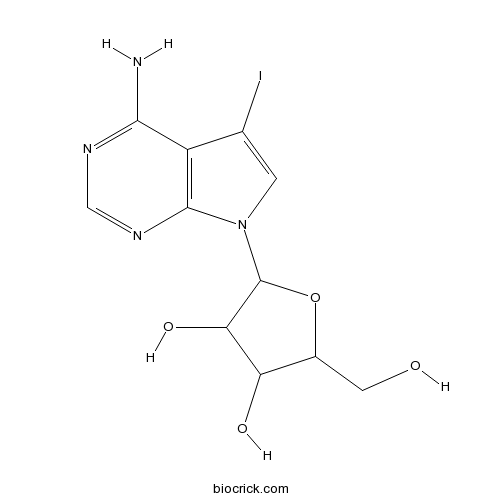
BCC1312
5-Iodotubercidin
5-Iodotubercidin (NSC 113939), an ATP mimetic, is a potent adenosine kinase inhibitor with an IC50 of 26 nM. 5-Iodotubercidin (NSC 113939) initiates glycogen synthesis in isolated hepatocytes by causing inactivation of phosphorylase and activation of glycogen synthase. 5-Iodotubercidin (NSC 113939) also inhibits CK1, insulin receptor tyrosine kinase, phosphorylase kinase, PKA, CK2, PKC and Haspin.
-
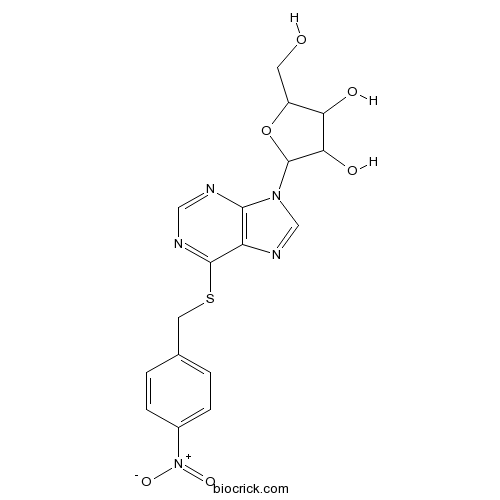
BCC7516
NBMPR
38048-32-7
-
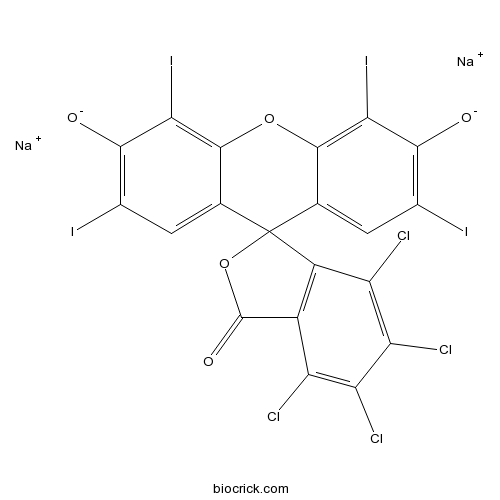
BCC8024
Rose Bengal
Potent VGlut and VMAT inhibitor; cell permeable
-
BCC7799
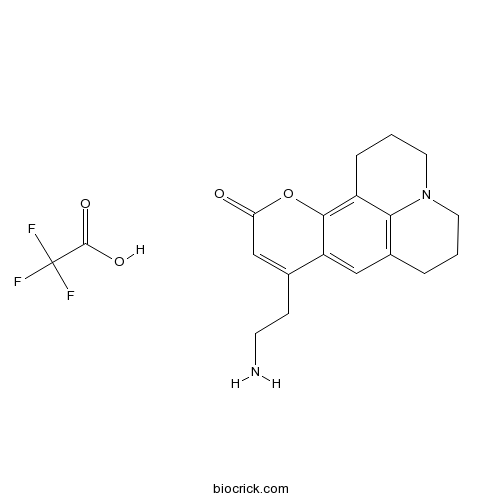
FFN 511
1004548-96-2
-
BCC6689
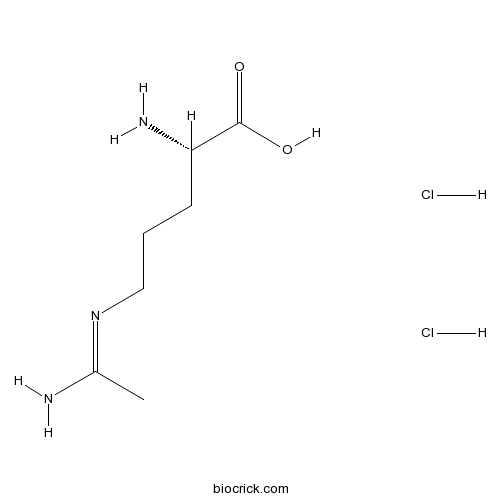
L-NIO dihydrochloride
L-NIO dihydrochloride is a potent, non-selective and NADPH-dependent nitric oxide synthase (NOS) inhibitor, with Kis of 1.7, 3.9, 3.9 μM for neuronal (nNOS), endothelial (eNOS), and inducible (iNOS), respectively. L-NIO dihydrochloride induces a consistentfocal ischemic infarctin rats.
-
BCC6795
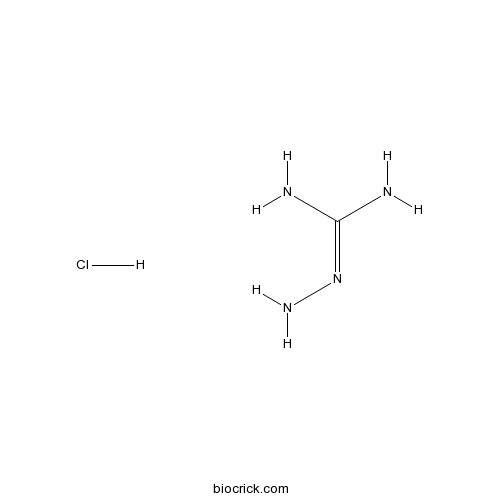
Aminoguanidine hydrochloride
Aminoguanidine hydrochloride is a diamine oxidase and NO synthase inhibitor, reduces levels of advanced glycation end products (AGEs) through interacting with 3-deoxyglucosone, is an investigational drug for the treatment of diabetic nephropathy.
-
BCC6823
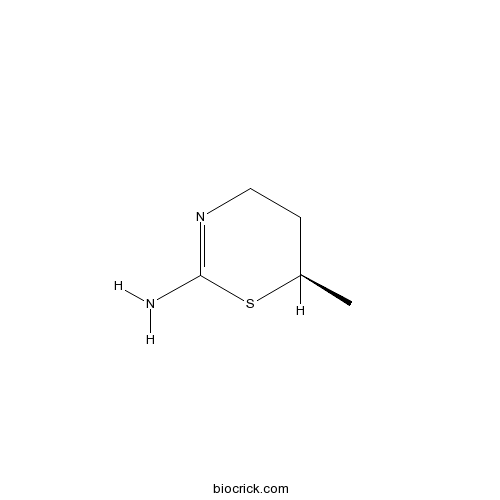
AMT hydrochloride
21463-31-0
-
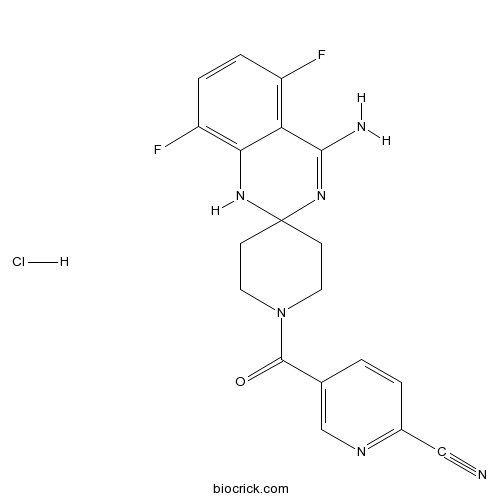
BCC6092
AR-C 102222
253771-21-0
-
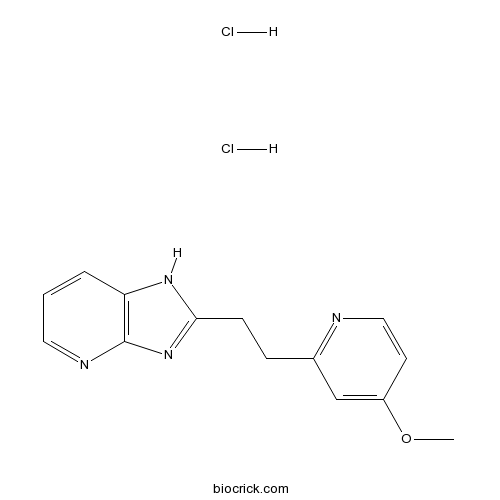
BCC7506
BYK 191023 dihydrochloride
Potent and selective inhibitor of iNOS
-
BCC6824
EIT hydrobromide
1071-37-0