Multiple Sclerosis
Multiple sclerosis (MS) is a chronic autoimmune, inflammatory disease of the central nervous system (CNS), which causes damage to myelin and axons, resulting in neurological symptoms such as partial loss of sight, paresthesias and ataxia.
Multiple Sclerosis Products Targets
- STAT (10)
- Voltage-gated Potassium (KV) Channel (38)
- Integrin Receptor (15)
- Others (29)
- Complement (2)
- Vitamin D Receptor (10)
- PORCN (4)
- beta-catenin (13)
- Casein Kinase 1 (7)
- AMPA Receptor (45)
- GPR55 (8)
- CB2 Receptor (6)
- CB1 Receptor (17)
- NMDA Receptor (87)
- Kainate Receptor (22)
- Chemokine CXC Receptor (9)
- Chemokine CC Receptor (13)
- TRPM (8)
- Tankyrase (5)
- ROS and Other Gaseous Donor (8)
- Nrf2 (5)
- ITK (2)
- ASK1 (2)
- Acid-Sensing Ion Channel (3)
- Calcium-Activated Potassium (KCa) Channel (19)
- Inward Rectifier Potassium (Kir) Channel (21)
- NCX (5)
- Retinoid X Receptor (13)
- Cytokine (15)
Products for Multiple Sclerosis - Page 31
- Cat.No. Product Name Information/Activity
-
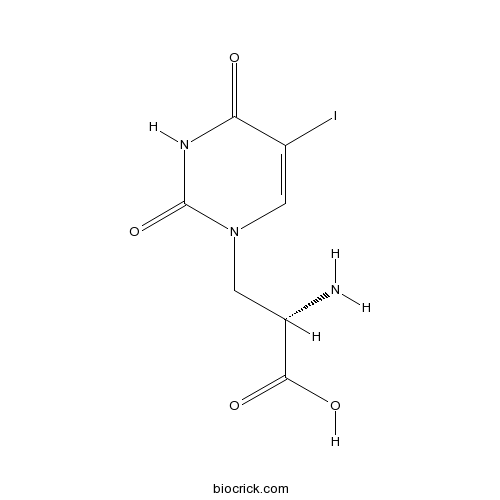
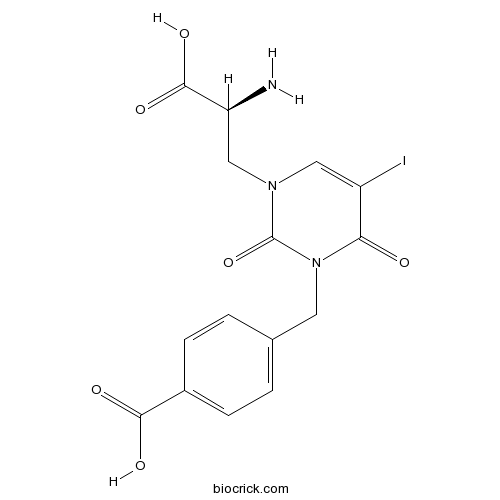
BCC6597
(S)-(-)-5-Iodowillardiine
140187-25-3
-
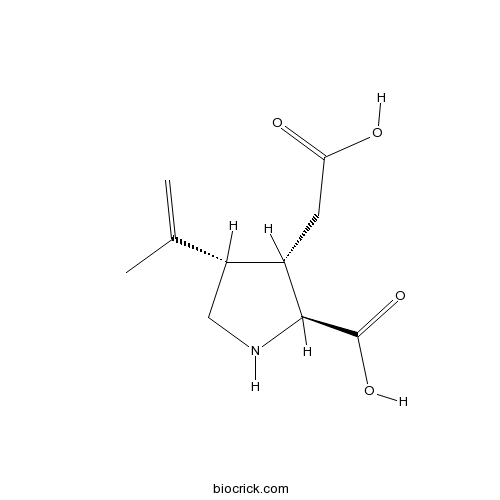
BCC6572
Kainic acid
Kainic acid is a potent agonist at excitatory amino acid receptor subtypes in the CNS.
-
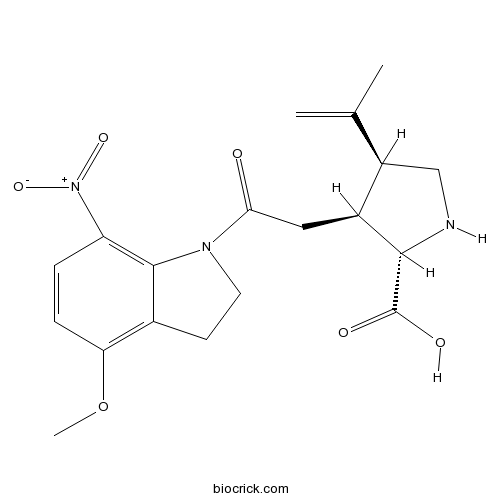
BCC7297
MNI caged kainic acid
1315378-75-6
-
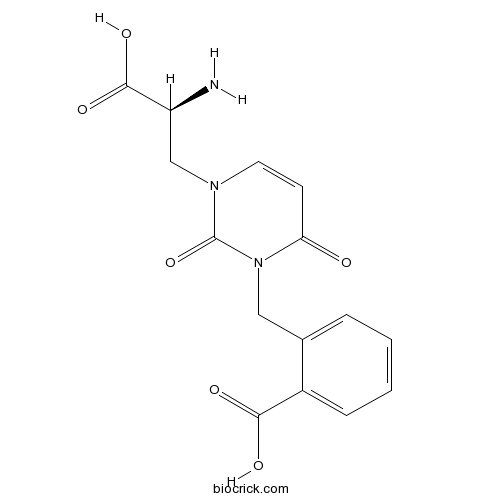
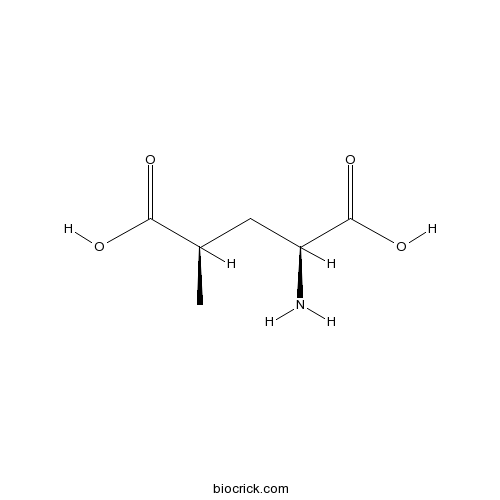
BCC6840
SYM 2081
SYM 2081 is a high-affinity ligand and potent, selective agonist of kainate receptors, inhibits [3H]-kainate binding with an IC50 of 35 nM, almost 3000- and 200-fold selectivity for kainate receptors over AMPA and NMDA receptors respectively.
-
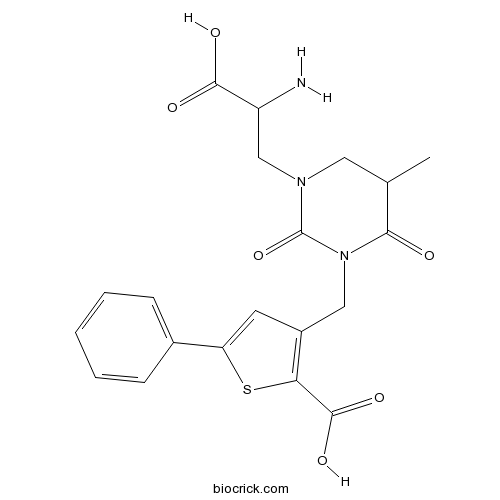
BCC7462
ACET
936095-50-0
-
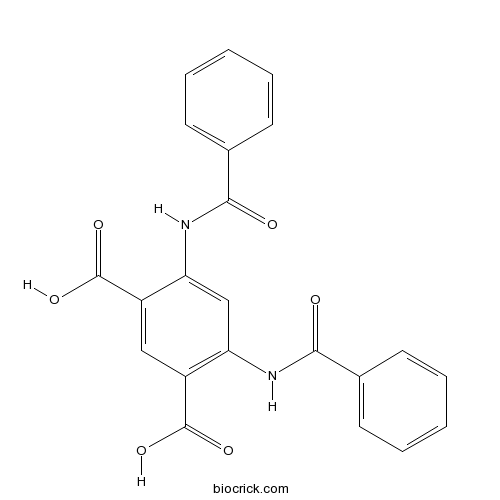
BCC7275
NS 3763
70553-45-6
-
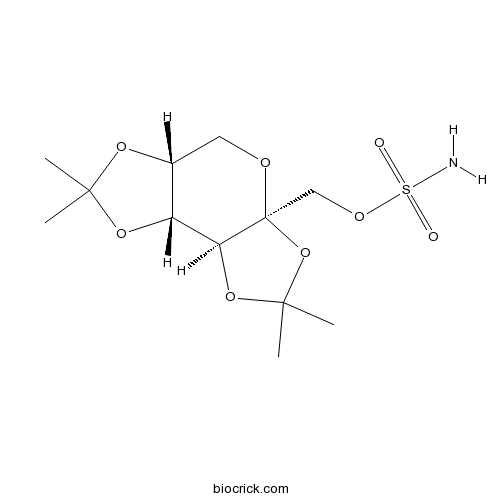
BCC2314
Topiramate
Topiramate (McN 4853) is a broad-spectrum antiepileptic agent. Topiramate is a GluR5 receptor antagonist. Topiramate produces its antiepileptic effects through enhancement of GABAergic activity, inhibition of kainate/AMPA receptors, inhibition of voltage-sensitive sodium and calcium channels, increases in potassium conductance, and inhibition of carbonic anhydrase.
-
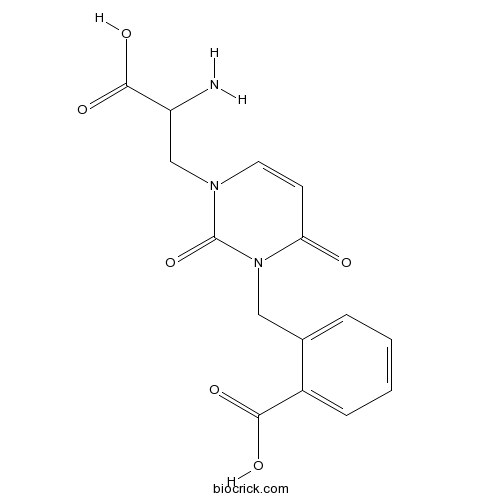
BCC7255
UBP 296
745055-86-1
-
BCC7172
UBP 301
569371-10-4
-
BCC7256
UBP 302
UBP 302 is a potent and selective GLUK5-subunit containing kainate receptor antagonist (apparent Kd=402 nM), and displays very little affinity on GluK2 (GluR6) kainate receptors. Anxiolytic effects.