Neuroscience Research
Neuroscience is the study of the nervous system - one of the major mammalian systems responsible for sustaining life. The central nervous system (CNS) and peripheral nervous system (PNS) work in concert to coordinate basic functions such as moving and breathing, as well as 'higher order' functions including thought, speech and emotion.
Neuroscience Research Products Areas
- Stress and Anxiety Research (392)
- Nociception (957)
- Neurotransmission (892)
- Neuropeptides (43)
- Neural Development (795)
- Memory, Learning and Cognition (746)
- Blood-Brain Barrier (119)
- Stroke Research (665)
- Sleep Research (267)
- Schizophrenia Research (709)
- Parkinson's Disease Research (752)
- Huntington's Disease Research (465)
- Epilepsy Research (560)
- Depression Research (631)
- Alzheimer's Disease Research (399)
- Addiction Research (509)
- Multiple Sclerosis (419)
Products for Neuroscience Research - Page 131
- Cat.No. Product Name Information/Activity
-
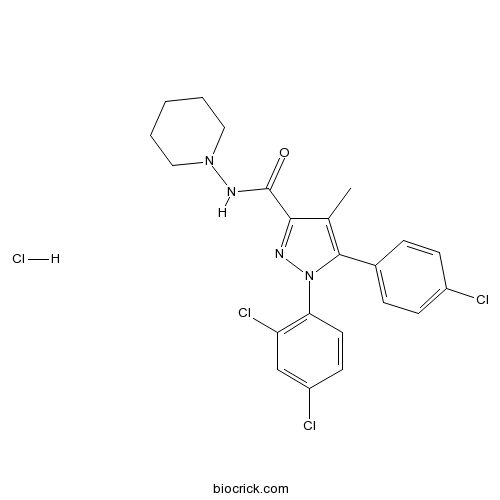
BCC1898
Rimonabant hydrochloride
Rimonabant hHydrochloride (SR 141716A Hydrochloride) is a highly potent and selective central cannabinoid receptor (CB1) antagonist with an Ki of 1.8 nM. Rimonabant hHydrochloride (SR 141716A Hydrochloride) also inhibits Mycobacterial membrane protein Large 3 (MMPL3).
-
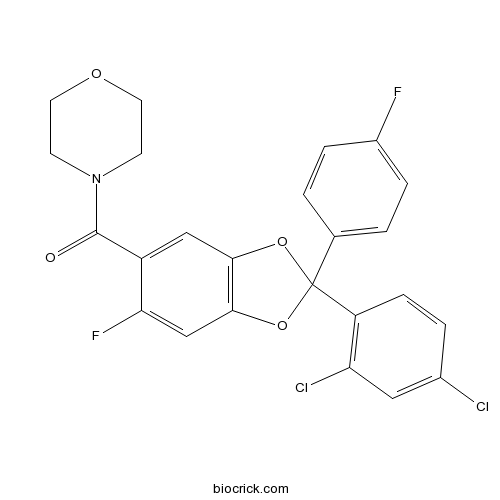
BCC6144
TC-C 14G
656804-72-7
-
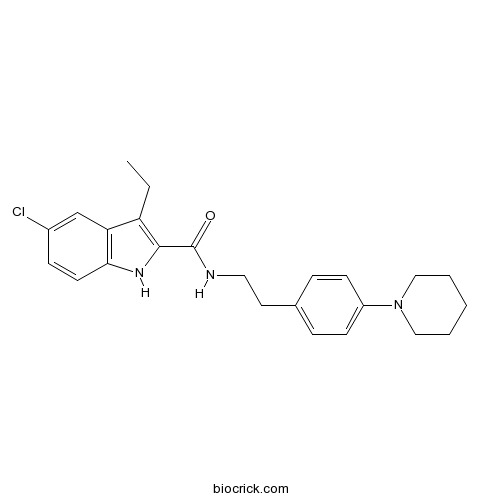
BCC4411
Org 27569
Org 27569 is a potent CB1 receptor allosteric modulator, which increases agonist binding, yet blocks agonist-induced CB1 signaling.
-
BCC7401
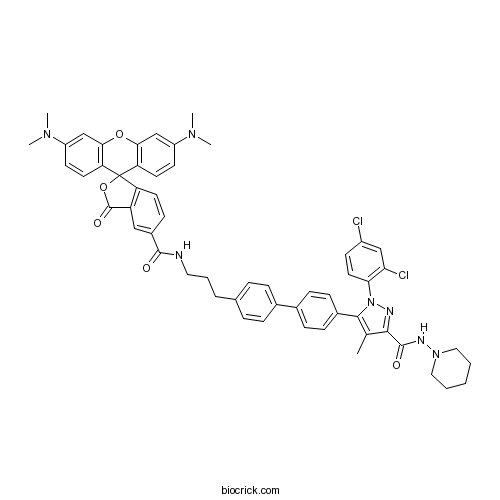
Tocrifluor T1117
1186195-59-4
-
BCC5971
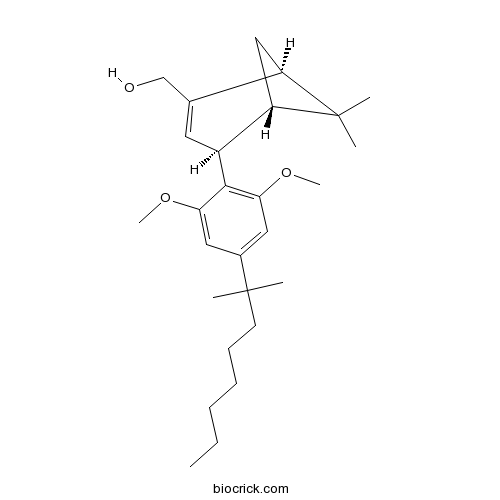
HU 308
Potent and selective CB<sub>2</sub> agonist
-
BCC5744
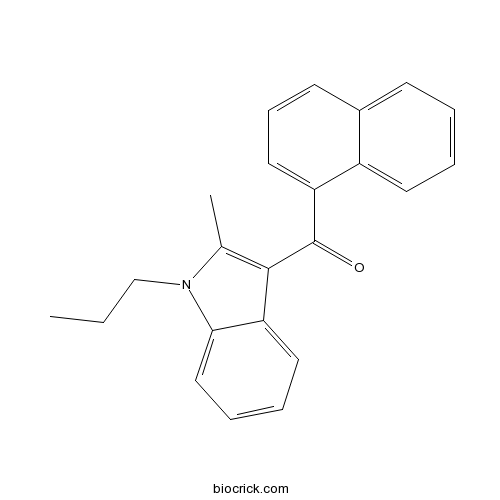
JWH 015
155471-08-2
-
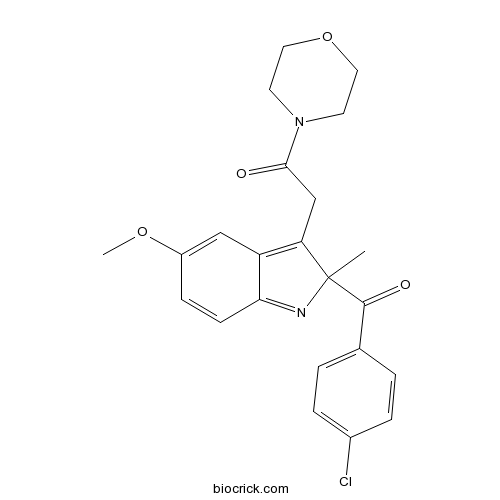
BCC1353
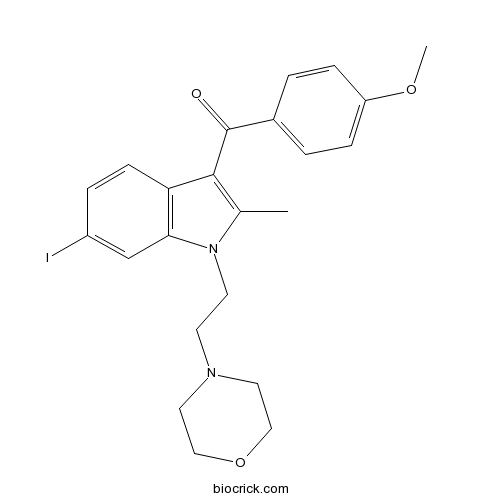
AM630
6-Iodopravadoline (AM630) is a selective CB2 antagonist with Ki of 31.2 nM, and displays 165-fold selectivity over CB1 receptors.
-
BCC6282
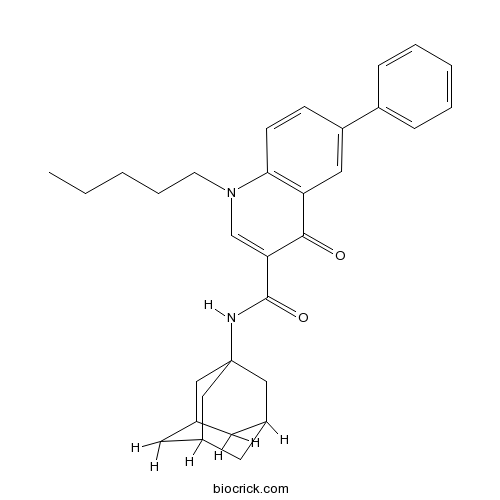
COR 170
1048039-15-1
-
BCC7380
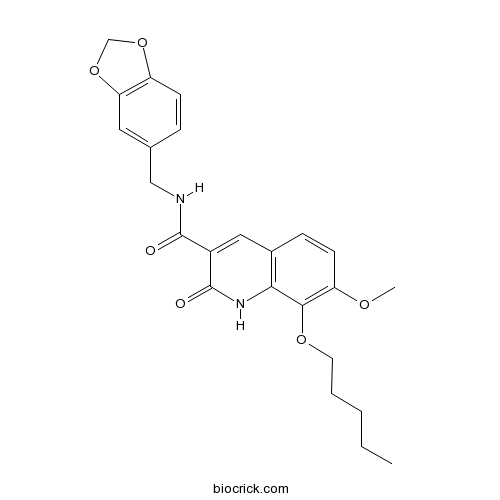
JTE 907
282089-49-0
-
BCC4410
BML-190
Potent, selective CB<sub>2</sub> ligand,BML-190 is a selective cannabinoid CB2 receptor inverse agonist with Ki of 435 nM, with 50-fold selectivity over CB1 receptor.