Thrombosis and Hemostasis Research
Thrombosis is a crucial hemostatic process for maintaining blood volume (hemostasis) following injury, yet aberrant thrombosis can trigger pathological conditions including myocardial infarction and stroke. Therefore the initiation of thrombosis is tightly controlled under physiological conditions.
Thrombosis and Hemostasis Research Products Targets
- PI 3-kinase (22)
- Cell Adhesion Molecule (21)
- Others (7)
- Cyclooxygenase (24)
- PPARγ (16)
- PPARδ (5)
- PPARα (7)
- NK2 Receptor (7)
- NK1 Receptor (15)
- NK3 Receptor (5)
- Chemokine CXC Receptor (9)
- Chemokine CC Receptor (13)
- NO donors and precursors (9)
- nNOS (5)
- iNOS (11)
- eNOS (1)
- Purinergic (P2Y) Receptor (31)
- Protease-Activated Receptor (23)
- Phospholipase (16)
- Prostanoid Receptor (24)
- Phosphodiesterase (34)
Products for Thrombosis and Hemostasis Research - Page 22
- Cat.No. Product Name Information/Activity
-
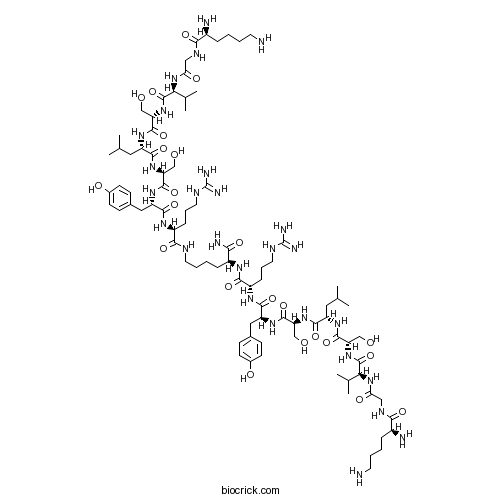
BCC6366
CTCE 9908
1030384-98-5
-
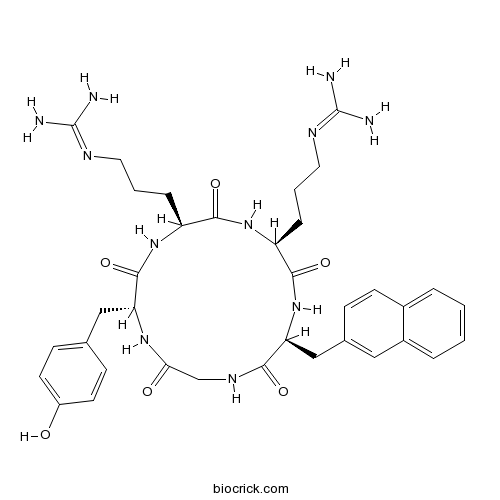
BCC7917
FC 131
606968-52-9
-
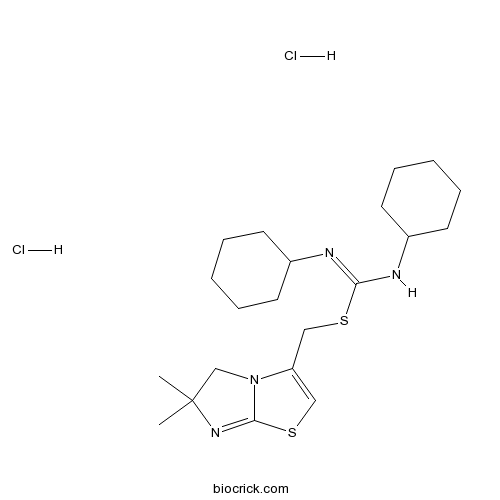
BCC6234
IT1t dihydrochloride
IT1t dihydrochloride is a potent CXCR4 antagonist; inhibits CXCL12/CXCR4 interaction with an IC50 of 2.1 nM.
-
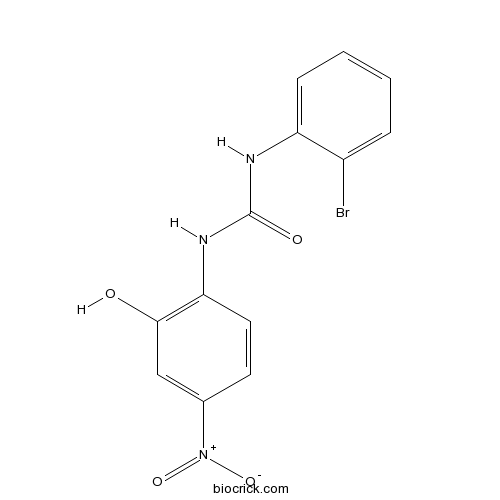
BCC8077
SB 225002
SB225002, a potent, selective and non-peptide CXCR2 antagonist, inhibits 125I-IL-8 binding to CXCR2 with an IC50 of 22 nM.
-
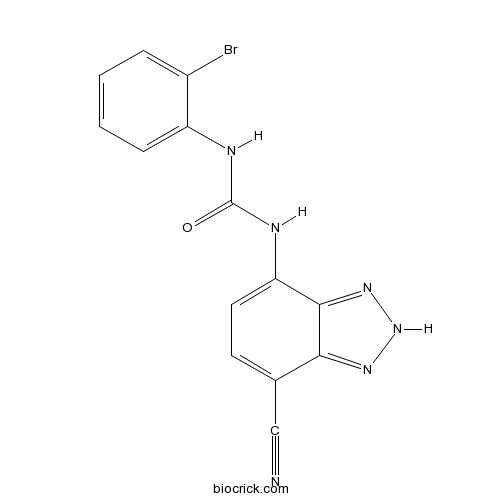
BCC5936
SB 265610
SB-265610 is a selective, competitive, nonpeptide and allosteric CXCR2 antagonist. SB-265610 blocks rat cytokine-induced neutrophil chemoattractant-1 (CINC-1)-induced calcium mobilization and neutrophil chemotaxis with IC50s of 3.7 nM and 70 nM, respectively.
-
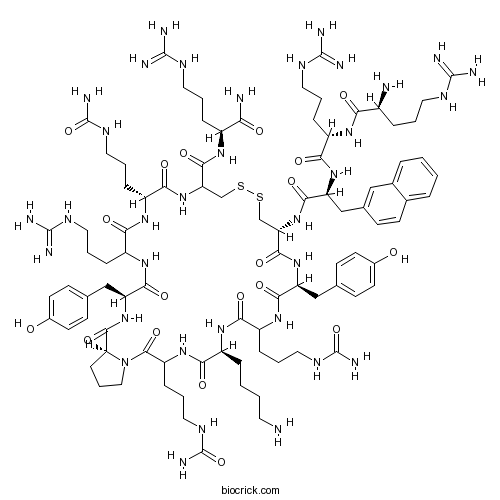
BCC7910
TC 14012
368874-34-4
-
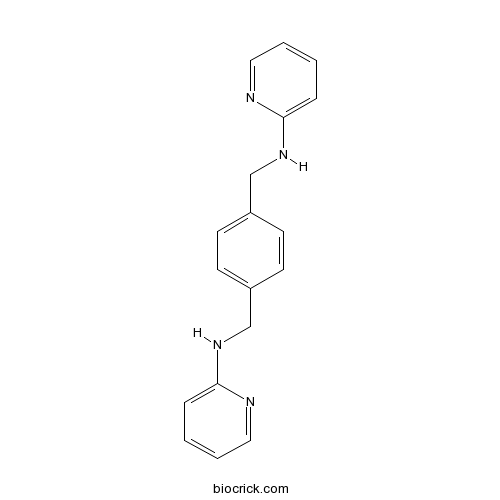
BCC4448
WZ811
WZ811 is an orally active, highly potent competitive antagonist of CXCR4. WZ811 efficiently inhibits CXCR4/SDF-1 (or CXCL12)-mediated modulation of cAMP levels (EC50=1.2 nM) and SDF-1 induced Matrigel invasion in cells (EC50=5.2 nM).
-
BCC6689
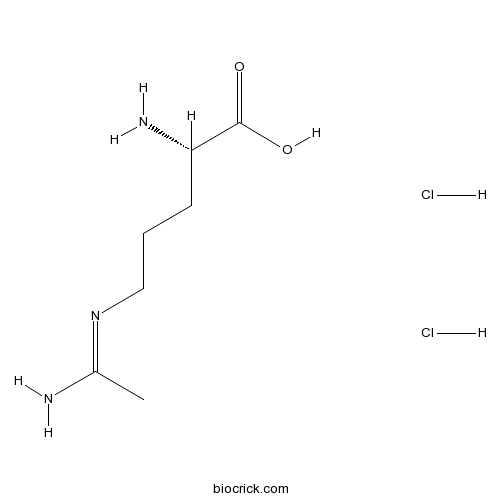
L-NIO dihydrochloride
L-NIO dihydrochloride is a potent, non-selective and NADPH-dependent nitric oxide synthase (NOS) inhibitor, with Kis of 1.7, 3.9, 3.9 μM for neuronal (nNOS), endothelial (eNOS), and inducible (iNOS), respectively. L-NIO dihydrochloride induces a consistentfocal ischemic infarctin rats.
-
BCC6795
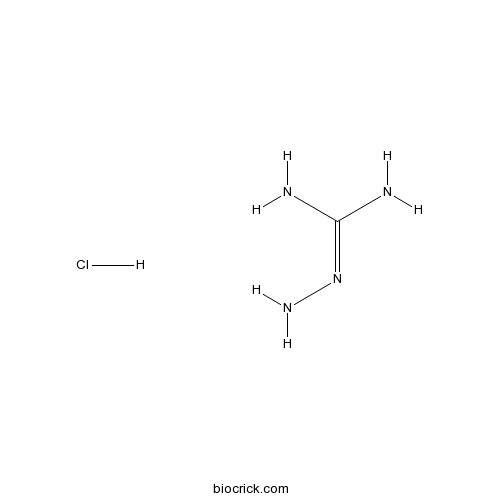
Aminoguanidine hydrochloride
Aminoguanidine hydrochloride is a diamine oxidase and NO synthase inhibitor, reduces levels of advanced glycation end products (AGEs) through interacting with 3-deoxyglucosone, is an investigational drug for the treatment of diabetic nephropathy.
-
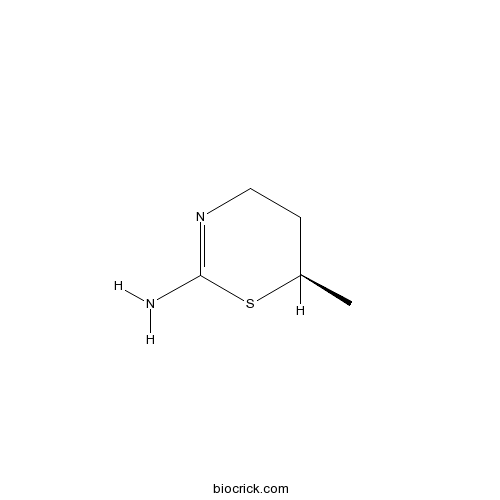
BCC6823
AMT hydrochloride
21463-31-0