Myocardial Infarction Research
Myocardial infarction (MI) - more commonly referred to as a heart attack - is an acute event caused by the interruption of blood supply to regions of the heart, leading to myocardial necrosis. Infarction of a substantial area of the myocardium can disrupt normal conductance of the heart, leading to cardiac arrest.In the majority of cases, an MI is immediately preceded by the presence of an occlusive thrombus within a coronary artery, blocking blood flow to the downstream tissue. The most common cause of an occlusive thrombus within a coronary artery is the rupture of an atherosclerotic plaque. However, the occlusion of a coronary artery may also result from coronary embolism. This can occur in patients following stent placement, angioplasty, and coronary artery bypass grafting.
Myocardial Infarction Research Products Targets
- Adenosine A2B Receptor (7)
- Adenosine A2A Receptor (11)
- Voltage-gated Sodium (NaV) Channel (30)
- Voltage-gated Potassium (KV) Channel (38)
- Voltage-gated Calcium Channel (CaV) (38)
- Cell Adhesion Molecule (21)
- Others (10)
- Cyclooxygenase (24)
- Epithelial Sodium Channel (3)
- STIM-Orai Channel (4)
- Ryanodine Receptor (6)
- Angiotensin-Converting Enzyme (8)
- IP3 Receptor (2)
- Adenosine A3 Receptor (8)
- Adenosine A1 Receptor (12)
- Acid-Sensing Ion Channel (3)
- Calcium-Activated Potassium (KCa) Channel (19)
- Inward Rectifier Potassium (Kir) Channel (21)
- NO donors and precursors (9)
- nNOS (5)
- iNOS (11)
- eNOS (1)
- Stem Cell Differentiation (54)
- Delta opioid receptor (16)
- Cathepsin (9)
- Adrenergic β3 Receptor (12)
- Adrenergic β2 Receptor (6)
- Adrenergic β1 Receptor (7)
- Prostanoid Receptor (24)
Products for Myocardial Infarction Research - Page 32
- Cat.No. Product Name Information/Activity
-
BCC7235
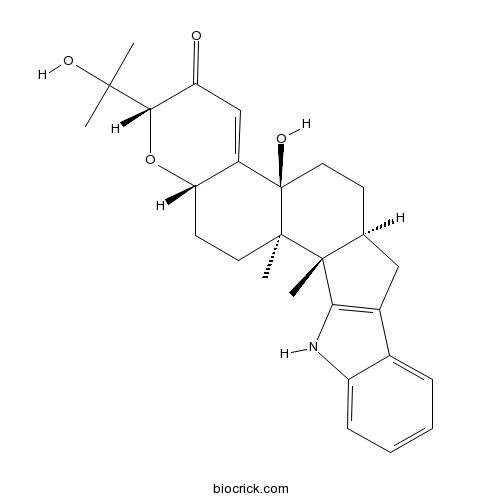
Paxilline
Paxilline is an indole alkaloid mycotoxin from Penicillium paxilli, acts as a potent BK channels inhibitor by an almost exclusively closed-channel block mechanism. Paxilline also inhibits the sarco/endoplasmic reticulum Ca2+ ATPase (SERCA) with IC50s between 5 μM and 50 μM for differing isoforms. Paxilline possesses significant anticonvulsant activity.
-
BCC1122
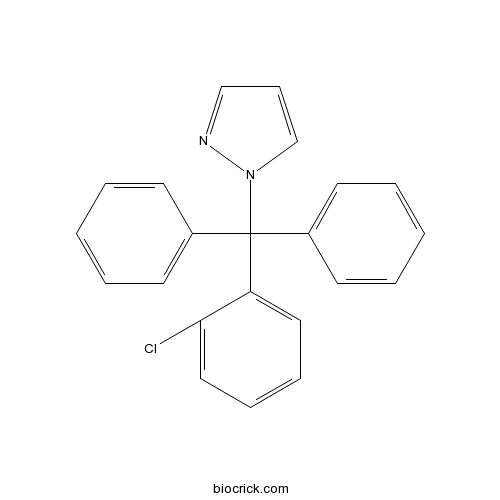
TRAM-34
TRAM-34 is a highly selective blocker of intermediate-conductance calcium-activated K+ channel (IKCa1) (Kd=20 nM).
-
BCC8038
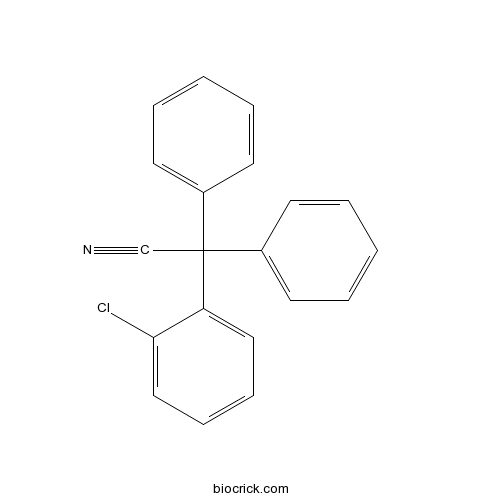
TRAM 39
Potent K<sub>Ca</sub>3.1 blocker
-
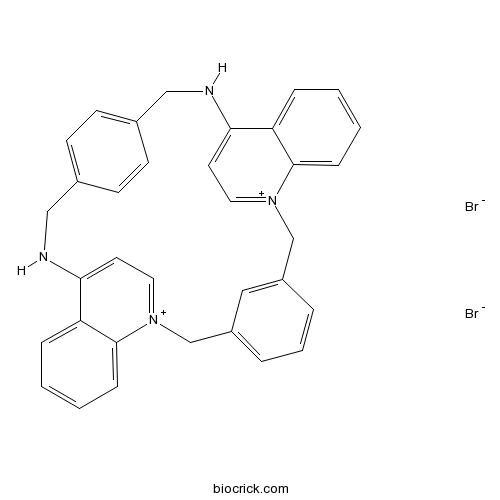
BCC7016
UCL 1684
199934-16-2
-
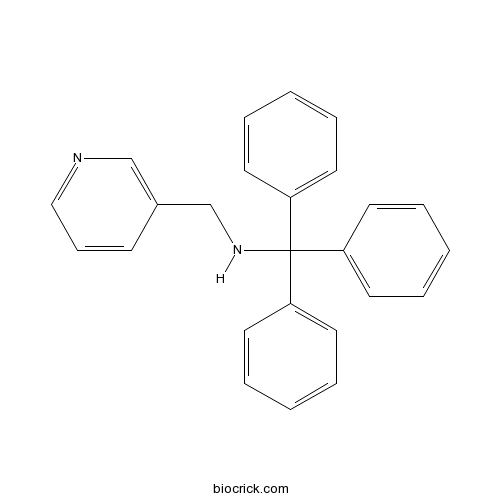
BCC7446
UCL 2077
UCL 2077 is a selective slow-afterhyperpolarization (sAHP) channel blocker (IC50 = 500 nM in hippocampal neurons in culture), having minimal effects on Ca2+ channels, action potentials, input resistance and the medium after hyperpolarization. UCL 2077 is also a subtype-selective blocker of the epilepsy associated KCNQ channels.
-
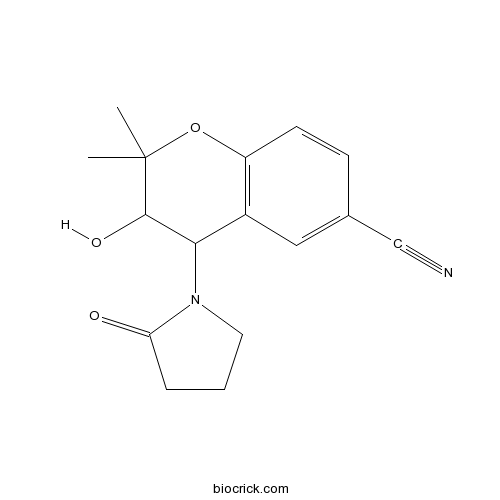
BCC7038
Cromakalim
94470-67-4
-
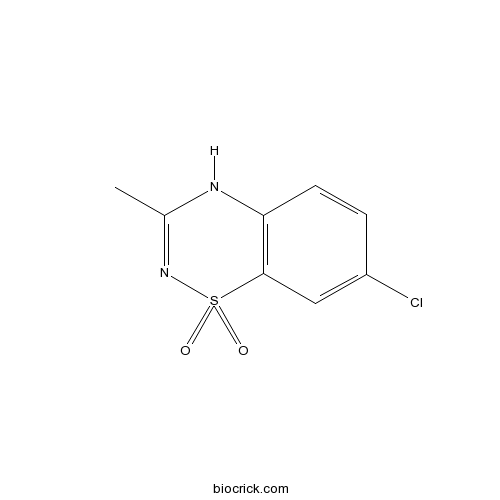
BCC6868
Diazoxide
Diazoxide (Sch-6783) is an ATP-sensitive potassium channel activator, has the potential for hyperinsulinism treatment.
-
BCC7039
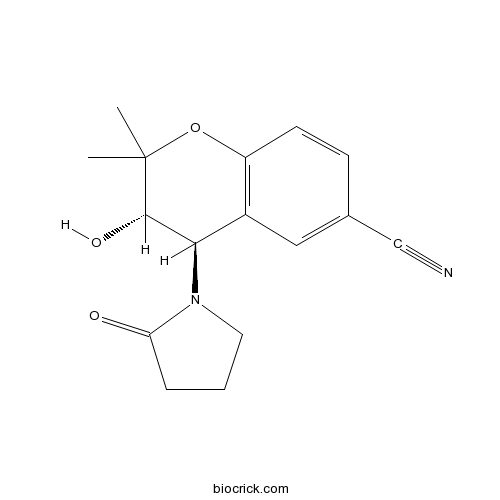
Levcromakalim
Levcromakalim ((-)-Cromakalim) is an ATP-sensitive K+ channel (KATP) activator.
-
BCC4297
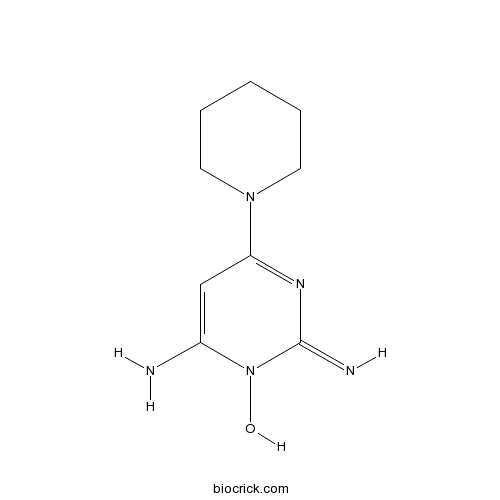
Minoxidil
Minoxidil (U10858) is an ATP-sensitive potassium (KATP) channel opener, a potent oral antihypertensive agent and a peripheral vasodilator that promotes vasodilation also affects hair growth. Minoxidil is also a potent inhibitor of soybean lipoxygenaseare with an IC50 of 20 μM.
-
BCC7027
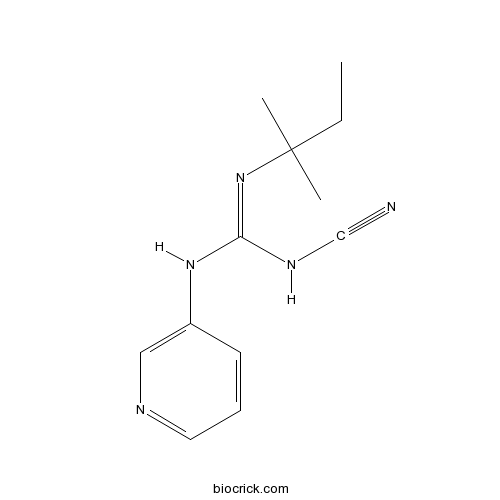
P1075
P-1075 is a potent activator of sulfonylurea receptor 2-associated ATP-sensitive potassium channels (SUR2-KIR6), with an EC50 value of 45 nM for SUR2B-KIR6 channel activation. P-1075 also P1075 opens mitochondrial K(ATP) channels and generates reactive oxygen species resulting in cardioprotection of rabbit hearts.