Cancer Research
Cancer is a term used to define a group of diseases in which abnormal cells divide without control, are able to invade neighboring tissues/organs and metastasize. Cancer has been characterized by six hallmarks; self sufficiency in proliferative growth signals, insensitivity to growth inhibitors, evasion of apoptosis, limitless replicative potential, ability to develop blood vessels (angiogenesis), and tissue invasion and metastasis.
Cancer Research Products Areas
Products for Cancer Research - Page 88
- Cat.No. Product Name Information/Activity
-
BCC6287
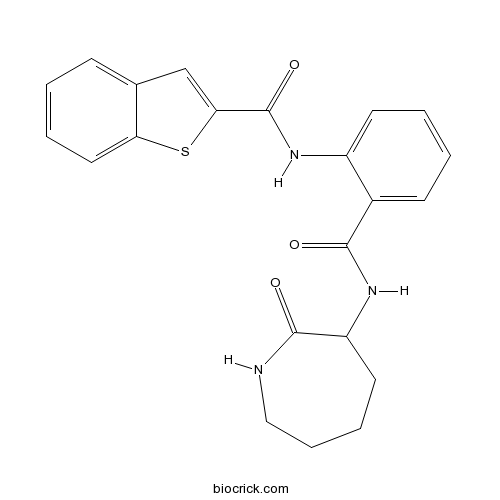
ANA 12
ANA-12 is a potent and selective TrkB antagonist with IC50s of 45.6 nM and 41.1 μM for the high and low affinity sites, respectively.
-
BCC6357
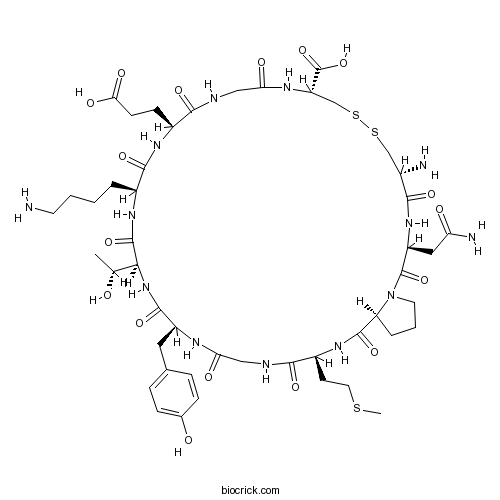
Cyclotraxin B
1203586-72-4
-
BCC3668
GNF-5837
GNF-5837 is a potent, selective, and orally bioavailable pan-tropomyosin receptor kinase (TRK) inhibitor which display antiproliferative effects in cellular Ba/F3 assays ( IC50 values of 7 nM, 9 nM and 11 nM for cells containing the fusion proteins Tel-TrkC, Tel-TrkB and Tel-TrkA, respectively) .
-
BCC5093
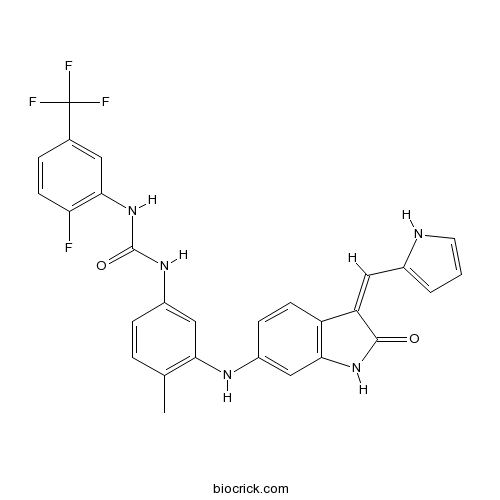
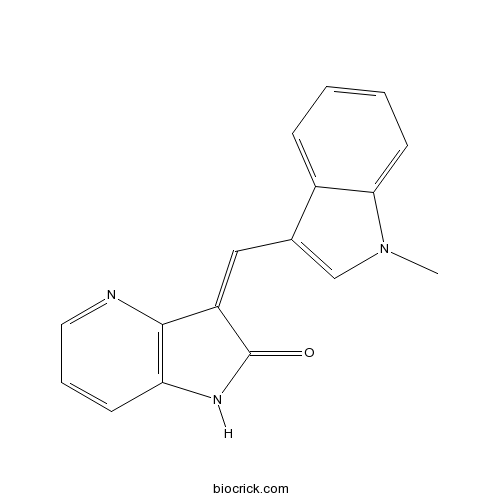
GW441756
GW 441756 is a specific Tropomyosin-related kinase A (TrkA) inhibitor with an IC50 value of 2 nM; little activity to c-Raf1 and CDK2.
-
BCC5872
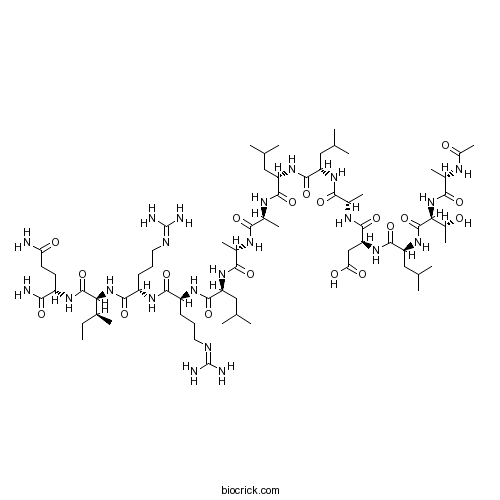
NTR 368
197230-90-3
-
BCC7307
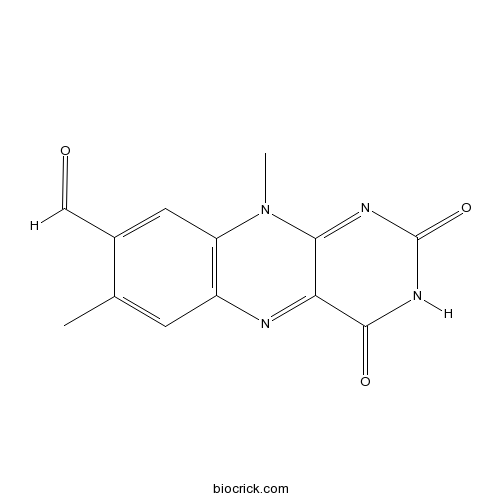
Ro 08-2750
Ro 08-2750 is a non-peptide and reversible nerve growth factor (NGF) inhibitor which binds to NGF, and with an IC50 of ~ 1 µM. Ro 08-2750 inhibits NGF binding to p75NTR selectively over TRKA. Ro 08-2750 is a selective MSI RNA-binding activity inhibitor, with an IC50 of 2.7 μM.
-
BCC2338
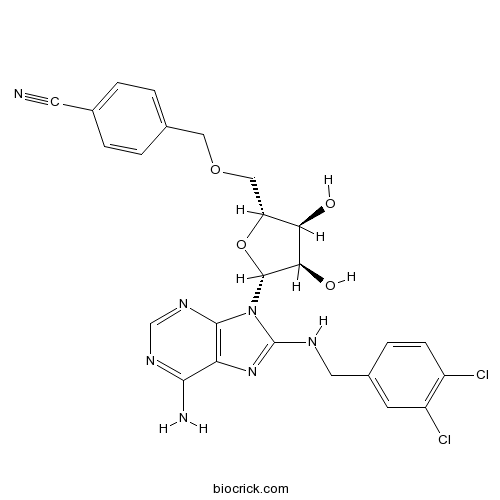
VER 155008
VER-155008 is an inhibitor of Hsp70, with IC50s of 0.5 μM, 2.6 μM, and 2.6 μM for Hsp70, Hsc70 and Grp7, respectively, and with a Kd of 0.3 μM for Hsp70.
-
BCC6241
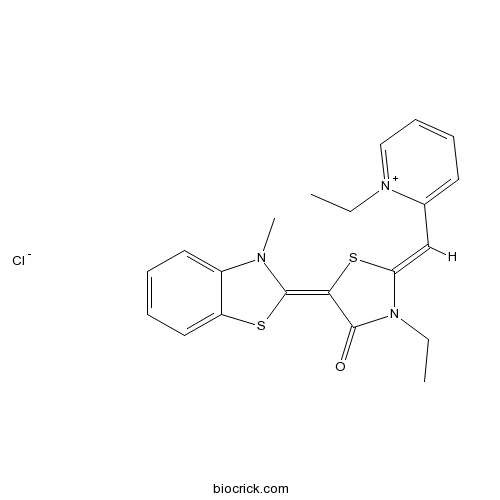
MKT 077
MKT-077 is a rhodacyanine dye and also a heat shock protein 70 (Hsp70) inhibitor which exhibits significant antitumor activity.
-
BCC7968
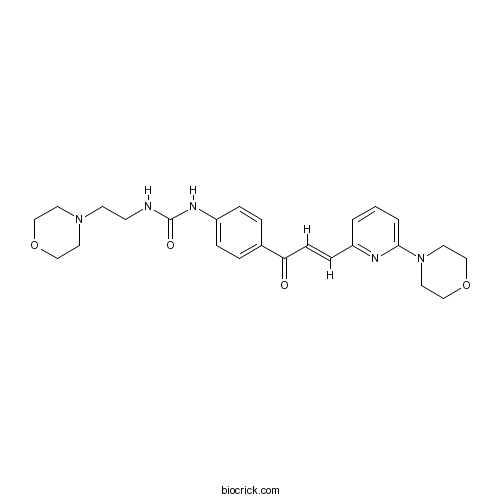
TRC 051384
TRC051384 is a heat shock protein 70 (HSP70) inducer.
-
BCC2121
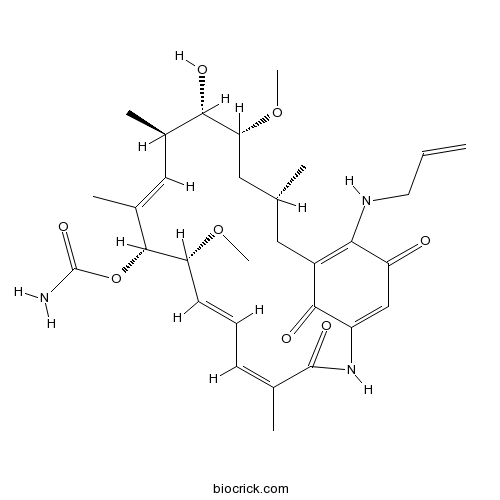
17-AAG (KOS953)
Tanespimycin (17-AAG) is a potent HSP90 inhibitor with an IC50 of 5 nM, having a 100-fold higher binding affinity for tumour cell derived HSP90 than normal cell derived HSP90. Tanespimycin (17-AAG) depletes cellular STK38/NDR1 and reduces STK38 kinase activity. Tanespimycin (17-AAG) also downregulates the stk38 gene expression.