Cancer Research
Cancer is a term used to define a group of diseases in which abnormal cells divide without control, are able to invade neighboring tissues/organs and metastasize. Cancer has been characterized by six hallmarks; self sufficiency in proliferative growth signals, insensitivity to growth inhibitors, evasion of apoptosis, limitless replicative potential, ability to develop blood vessels (angiogenesis), and tissue invasion and metastasis.
Cancer Research Products Areas
Products for Cancer Research - Page 84
- Cat.No. Product Name Information/Activity
-
BCC6056
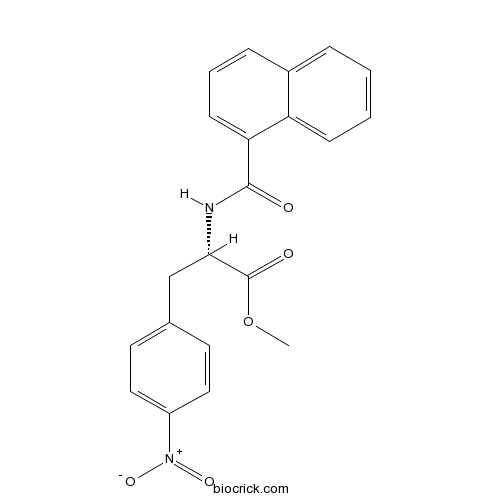
SB 328437
247580-43-4
-
BCC6057
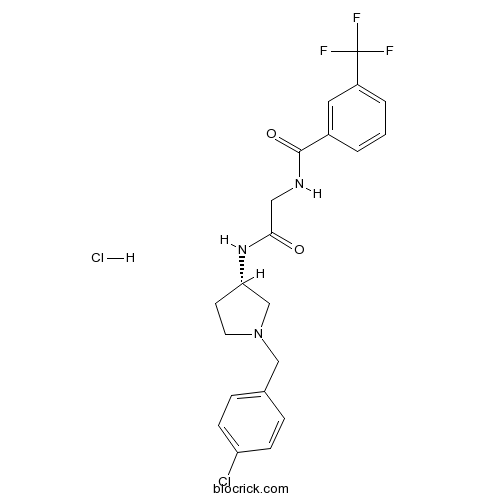
Teijin compound 1
CCR2 antagonist 4 hydrochloride (Teijin compound 1 hydrochloride) is a potent and specific CCR2 antagonist, with IC50s of 180 nM for CCR2b. CCR2 antagonist 4 hydrochloride potently inhibits MCP-1-induced chemotaxis with an IC50 of 24 nM.
-
BCC4447
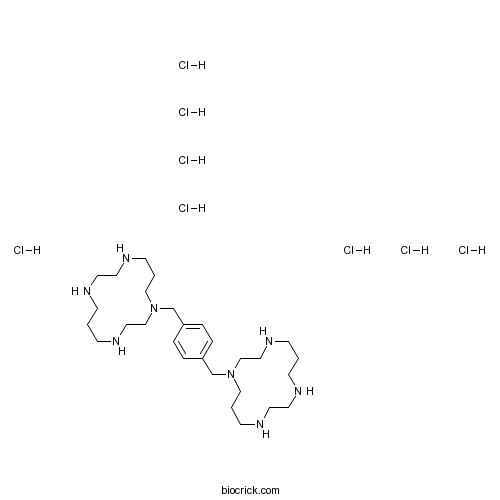
Plerixafor 8HCl (AMD3100 8HCl)
Plerixafor octahydrochloride (AMD3100 octahydrochloride) is a selective CXCR4 antagonist with an IC50 of 44 nM.
-
BCC5182
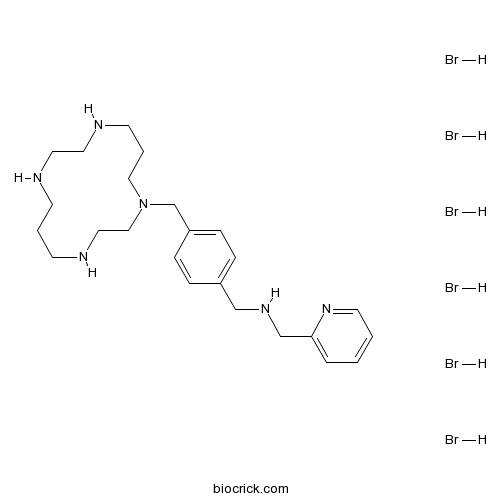
AMD 3465 hexahydrobromide
AMD 3465 hexahydrobromide (GENZ-644494 hexahydrobromide) is a potent antagonist of CXCR4, inhibits binding of 12G5 mAb and CXCL12AF647 to CXCR4, with IC50s of 0.75 nM and 18 nM in SupT1 cells; AMD 3465 also potently inhibits the replication of X4 HIV strains (IC50: 1-10 nM), but has no effect on CCR5-using (R5) viruses.
-
BCC7917
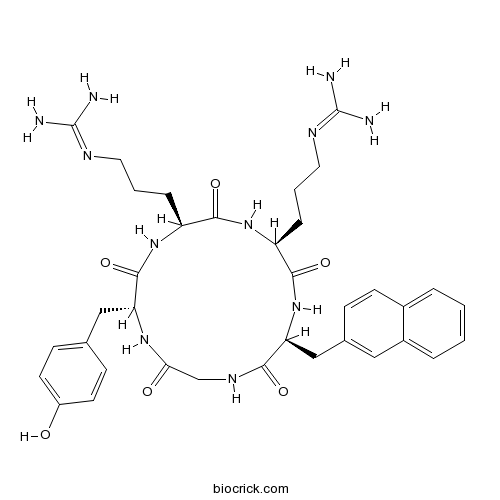
FC 131
606968-52-9
-
BCC6234
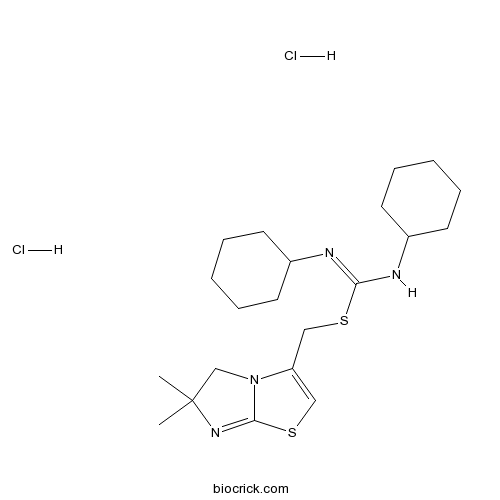
IT1t dihydrochloride
IT1t dihydrochloride is a potent CXCR4 antagonist; inhibits CXCL12/CXCR4 interaction with an IC50 of 2.1 nM.
-
BCC8077
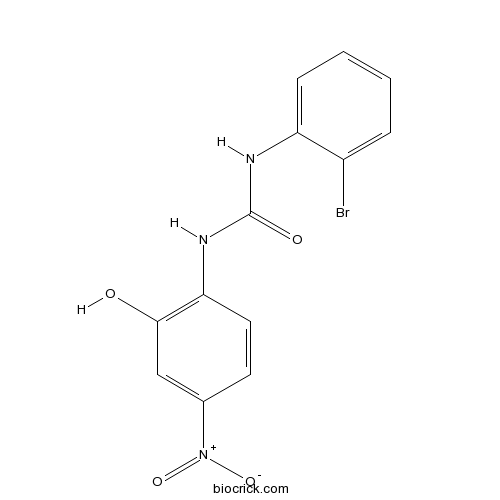
SB 225002
SB225002, a potent, selective and non-peptide CXCR2 antagonist, inhibits 125I-IL-8 binding to CXCR2 with an IC50 of 22 nM.
-
BCC5936
SB 265610
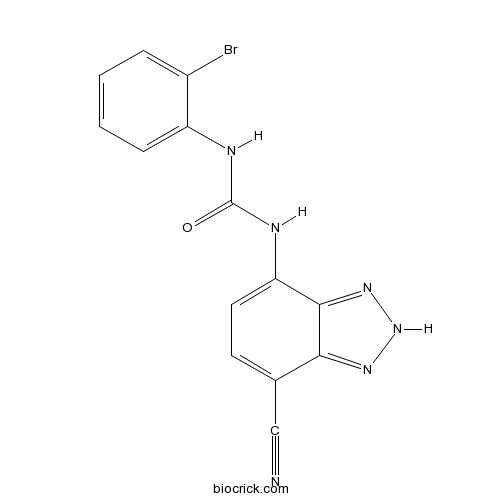
SB-265610 is a selective, competitive, nonpeptide and allosteric CXCR2 antagonist. SB-265610 blocks rat cytokine-induced neutrophil chemoattractant-1 (CINC-1)-induced calcium mobilization and neutrophil chemotaxis with IC50s of 3.7 nM and 70 nM, respectively.
-
BCC7910
TC 14012
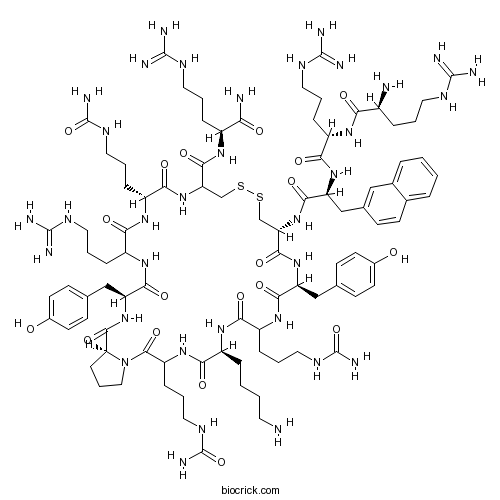
368874-34-4
-
BCC4448
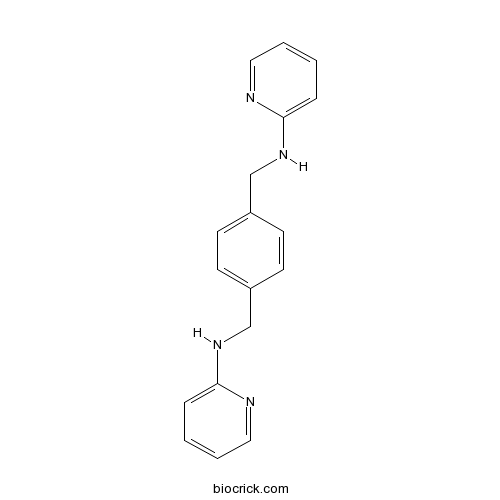
WZ811
WZ811 is an orally active, highly potent competitive antagonist of CXCR4. WZ811 efficiently inhibits CXCR4/SDF-1 (or CXCL12)-mediated modulation of cAMP levels (EC50=1.2 nM) and SDF-1 induced Matrigel invasion in cells (EC50=5.2 nM).