Cancer Research
Cancer is a term used to define a group of diseases in which abnormal cells divide without control, are able to invade neighboring tissues/organs and metastasize. Cancer has been characterized by six hallmarks; self sufficiency in proliferative growth signals, insensitivity to growth inhibitors, evasion of apoptosis, limitless replicative potential, ability to develop blood vessels (angiogenesis), and tissue invasion and metastasis.
Cancer Research Products Areas
Products for Cancer Research - Page 27
- Cat.No. Product Name Information/Activity
-
BCC7004
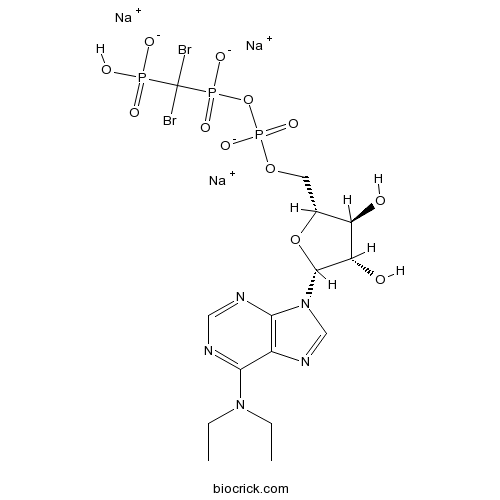
ARL 67156 trisodium salt
ARL67156 trisodium salt is an inhibitor of ecto-ATPase. ARL 67156 is a weak competitive inhibitor of NTPDase1 (CD39), NTPDase3 and NPP1, with Kis of 11, 18 and 12 μM, respectively.
-
BCC7454
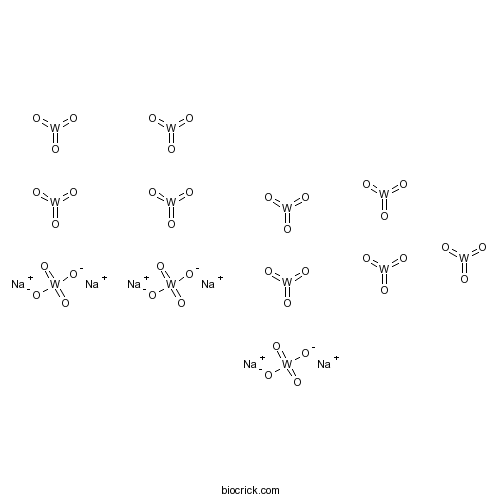
POM 1
Sodium metatungstate (POM-1) is a potent ecto-nucleoside triphosphate diphosphohydrolase (NTPDase) inhibitor, with Ki values of 2.58 μM, 3.26 μM, and 28.8 μM for NTPDase 1, NTPDase 3 and NTPDase 2 respectively. Sodium metatungstate (POM-1) inhibits ATP breakdown but also blocks central synaptic transmission, an action independent of NTPDase inhibition.
-
BCC7417
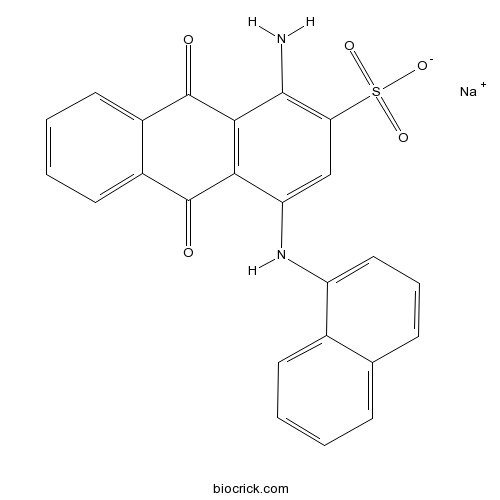
PSB 06126
1052089-16-3
-
BCC7416
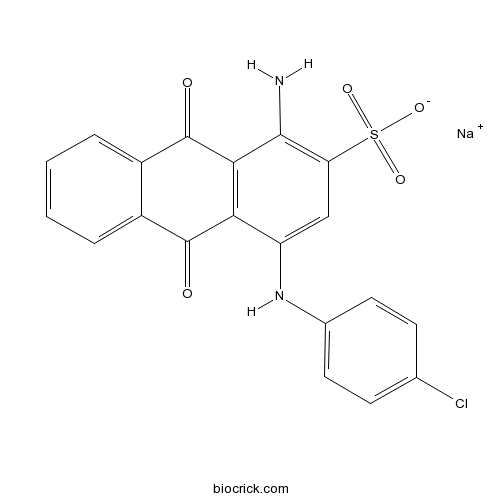
PSB 069
78510-31-3
-
BCC5160
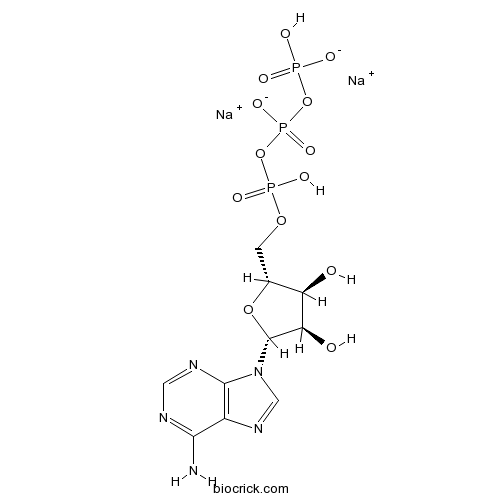
ATP disodium salt
ATP disodium salt is a phosphate-group donor for substrate activation in metabolic reactions and the coenzyme for a large number of kinases.
-
BCC7855
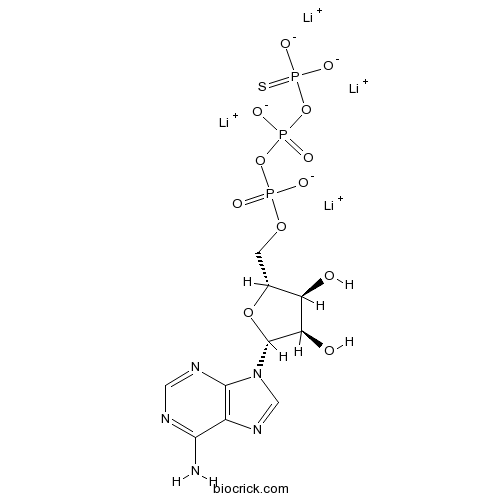
ATPγS tetralithium salt
93839-89-5
-
BCC7643
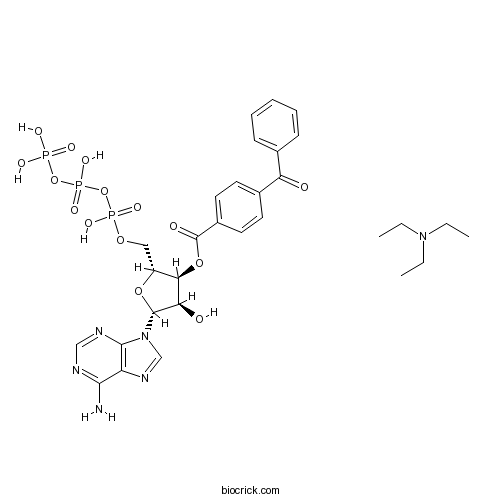
BzATP triethylammonium salt
112898-15-4
-
BCC7603
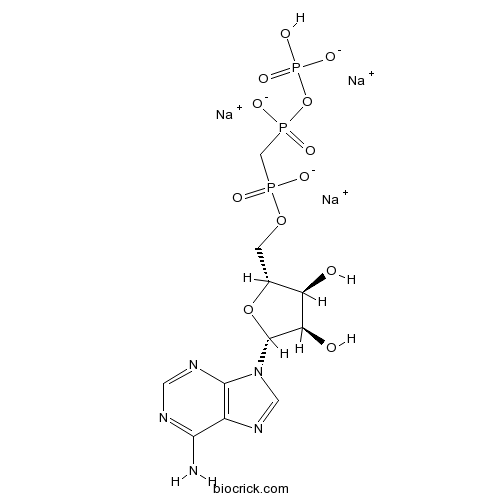
alpha,beta-Methyleneadenosine 5'-triphosphate trisodium salt
α,β-Methylene ATP trisodium, a phosphonic analog of ATP, is a P2X3 and P2X7 receptor ligand.
-
BCC6918
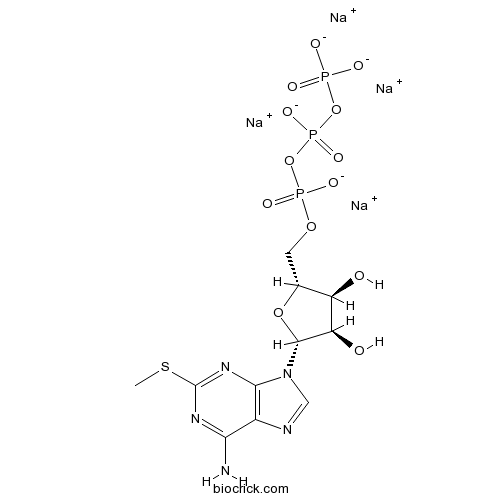
2-Methylthioadenosine triphosphate tetrasodium salt
100020-57-3
-
BCC1317
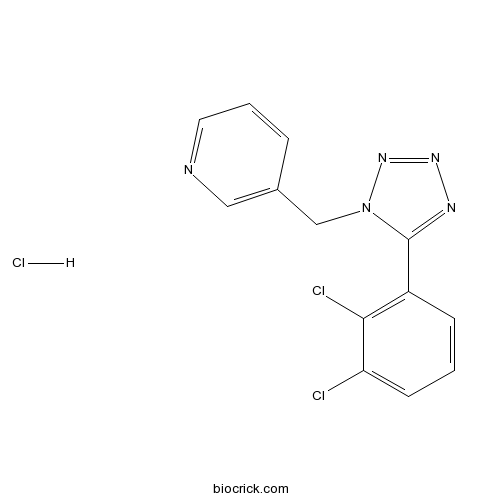
A 438079 hydrochloride
A 438079 (hydrochloride) is a potent, and selective P2X7 receptor antagonist with pIC50 of 6.9.