Stroke Research
Stroke is classified as both a neurological and a cardiovascular disease, as it is a disruption in blood supply to the brain which causes the neurological abnormalities. There are two types of stroke; ischemic and hemorrhagic.
Stroke Research Products Targets
- Adenosine A2B Receptor (7)
- Adenosine A2A Receptor (11)
- Caspase (9)
- Voltage-gated Sodium (NaV) Channel (30)
- Voltage-gated Potassium (KV) Channel (38)
- Voltage-gated Calcium Channel (CaV) (38)
- Lipoxygenase (8)
- Others (20)
- Cyclooxygenase (24)
- Epithelial Sodium Channel (3)
- STIM-Orai Channel (4)
- Ryanodine Receptor (6)
- Natriuretic Peptide Receptor (4)
- 5-HT7 Receptor (11)
- 5-HT6 Receptor (14)
- 5-ht5 Receptor (2)
- 5-HT4 Receptor (17)
- Glutamate (Metabotropic) Group III Receptor (26)
- Glutamate (Metabotropic) Group II Receptor (33)
- Glutamate (Metabotropic) Group I Receptor (54)
- AMPA Receptor (45)
- GABAA-ρ Receptor (8)
- GABAA Receptor (66)
- NMDA Receptor (87)
- Kainate Receptor (22)
- IP3 Receptor (2)
- Glutamate Transporter (18)
- Adenosine A3 Receptor (8)
- Adenosine A1 Receptor (12)
- Acid-Sensing Ion Channel (3)
- Calcium-Activated Potassium (KCa) Channel (19)
- Calcium-Sensitive Protease Modulator (12)
- Inward Rectifier Potassium (Kir) Channel (21)
- NO donors and precursors (9)
- nNOS (5)
- iNOS (11)
- eNOS (1)
- Prostanoid Receptor (24)
Products for Stroke Research - Page 64
- Cat.No. Product Name Information/Activity
-
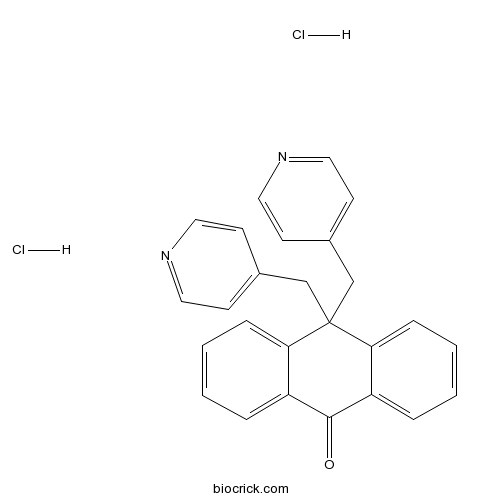
BCC7232
XE 991 dihydrochloride
XE 991 dihydrochloride, a Kv7 (KCNQ) channels blocker, potently inhibits Kv7.1 (KCNQ1), Kv7.2 (KCNQ2), Kv7.2 + Kv7.3 (KCNQ3) channel, and M-current with IC50s of 0.75 µM, 0.71 µM, 0.6 μM, and 0.98 µM, respectively.
-
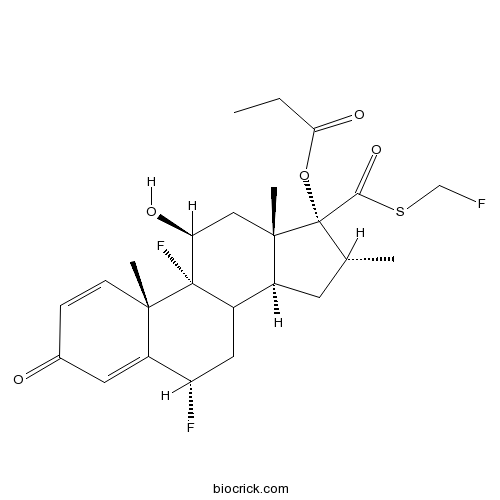
BCC4907
Fluticasone propionate
Fluticasone propionate is a high affinity, selective GR (glucocorticoid receptor) agonist which is derived from fluticasone used to treat asthma and allergic rhinitis.
-
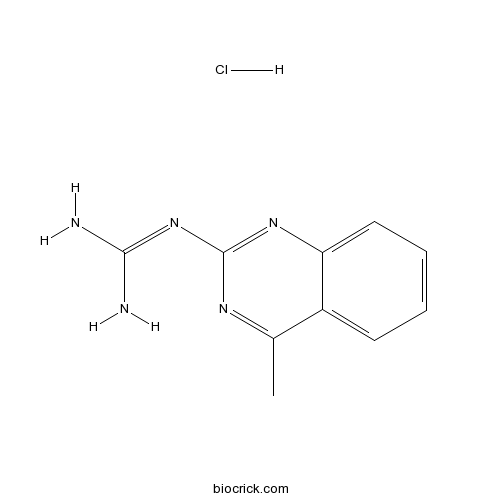
BCC6351
GMQ hydrochloride
5361-15-9
-
BCC6054
Neuropeptide SF (mouse, rat)
230960-31-3

-
BCC6294
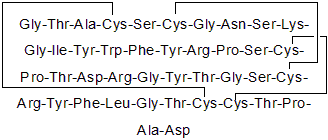
APETx2
713544-47-9
-
BCC1451
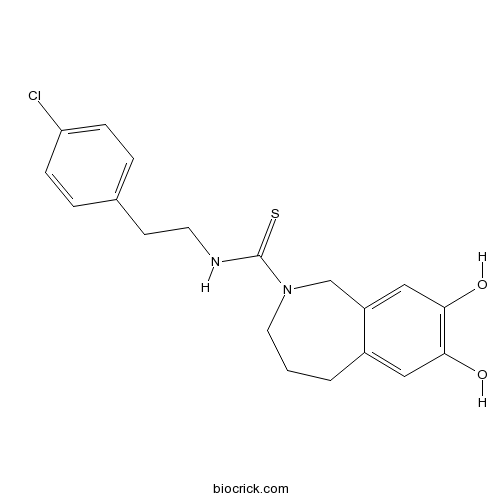
Capsazepine
Capsazepine is a synthetic analogue of the sensory neurone excitotoxin, and an antagonist of TRPV1 receptor with an IC50 of 562 nM.
-
BCC7674
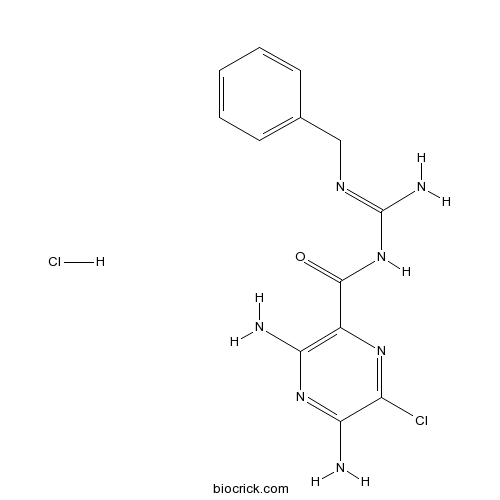
Benzamil
Benzamil hydrochloride (Benzylamiloride hydrochloride), an Amiloride analogue, is a Na+/Ca2+ exchanger (NCX) inhibitor (IC50~100 nM). Benzamil hydrochloride also is a non-selective Deg/epithelial sodium channels (ENaC) blocker, and can potentiate myogenic vasoconstriction. Benzamil hydrochloride inhibits TRPP3-mediated Ca2+-activated currents, with an IC50 of 1.1 μM.
-
BCC7673
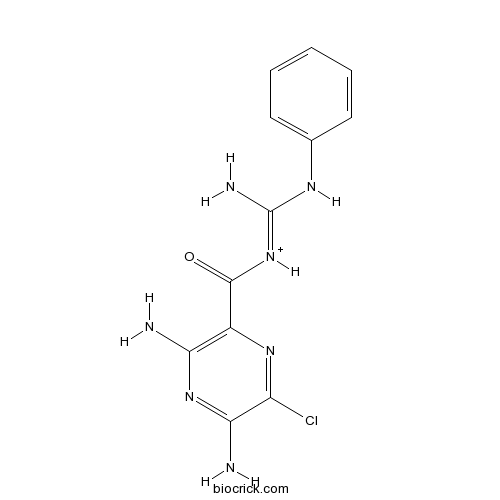
Phenamil
1161-94-0
-
BCC7515
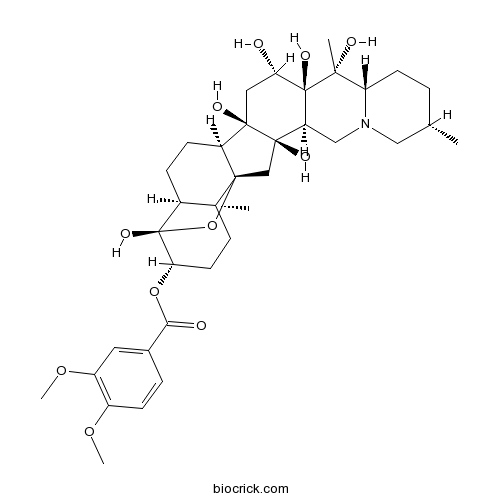
Veratridine
Veratridine (3-Veratroylveracevine), a alkaloid derived from plants in the family Liliaceae, is a sodium channel agonist. Veratridine inhibits the peak current of Nav1.7, with an IC50 of 18.39 µM.
-
BCC5075
A-803467
A 803467 is a selective Nav1.8 sodium channel blocker with an IC50 of 8 nM; over 100-fold more selective vs. human Nav1.2, 1.3, 1.5 and 1.7.