Schizophrenia Research
Schizophrenia is a chronic, debilitating mental disorder affecting 1-2% of the global population. Symptoms are split into two types; 'positive' symptoms, including delusions and hallucinations, and 'negative' symptoms, including anhedonia and lack of motivation. Studies suggest that genetics, early environment, neurobiology, psychological and social processes are important contributory factors; some recreational and prescription drugs appear to cause or worsen symptoms. Several neurobiological alterations in brain structure, physiology and neurochemistry have been documented, along with an ever-increasing list of susceptibility genes.
Schizophrenia Research Products Targets
- Others (13)
- Sigma2 Receptor (4)
- Sigma1 Receptor (16)
- D4 Receptor (12)
- 5-HT7 Receptor (11)
- 5-HT6 Receptor (14)
- 5-ht5 Receptor (2)
- 5-HT4 Receptor (17)
- Glutamate (Metabotropic) Group III Receptor (26)
- Glutamate (Metabotropic) Group II Receptor (33)
- Glutamate (Metabotropic) Group I Receptor (54)
- AMPA Receptor (45)
- GABAA-ρ Receptor (8)
- GABAA Receptor (66)
- GPR55 (8)
- CB2 Receptor (6)
- CB1 Receptor (17)
- Nicotinic (α7) Receptor (25)
- Nicotinic (α4β2) Receptor (14)
- D3 Receptor (12)
- NK3 Receptor (5)
- Carboxypeptidase (1)
- NMDA Receptor (87)
- Kainate Receptor (22)
- D2 Receptor (14)
- D1 and D5 Receptor (16)
- Trace Amine 1 Receptor (2)
- Glutamate Transporter (18)
- Histamine H3 Receptor (22)
- Neurotensin Receptor (7)
- Monoamine Oxidase (10)
- iNOS (11)
- M5 Receptor (2)
- M4 Receptor (3)
- M3 Receptor (4)
- M2 Receptor (5)
- M1 Receptor (8)
- Adrenergic α2 Receptor (33)
- Adrenergic α1 Receptor (22)
- Adrenergic β3 Receptor (12)
- Adrenergic β2 Receptor (6)
- Adrenergic β1 Receptor (7)
- Protein serine and threonine phosphatase (16)
- Protein Arginine Methyltransferase (2)
- Phosphodiesterase (34)
Products for Schizophrenia Research - Page 52
- Cat.No. Product Name Information/Activity
-
BCC5051
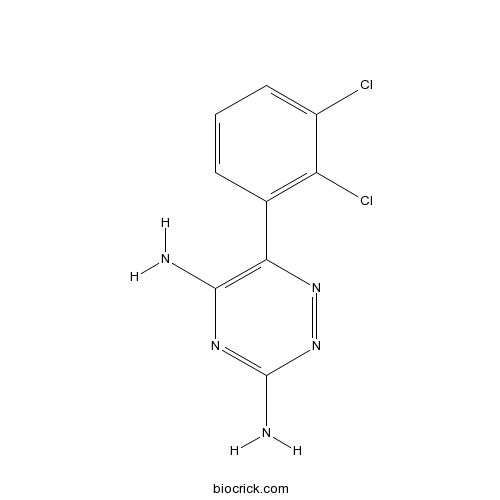
Lamotrigine
Lamotrigine(BW430C) is a novel anticonvulsant drug for inhibition of 5-HT and sodium channel Target: Sodium Channel Lamotrigine stabilises presynaptic neuronal membranes by blockade of voltage-dependent sodium channels, thus preventing the release of excitatory neurotransmitters, particularly glutamate and aspartate [1].
-
BCC7086
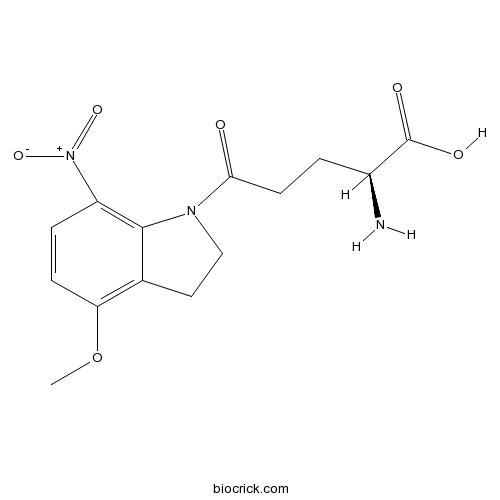
MNI-caged-L-glutamate
295325-62-1
-
BCC7453
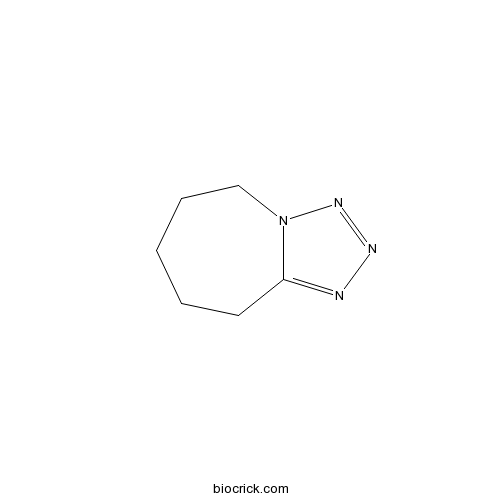
Pentylenetetrazole
54-95-5
-
BCC6731
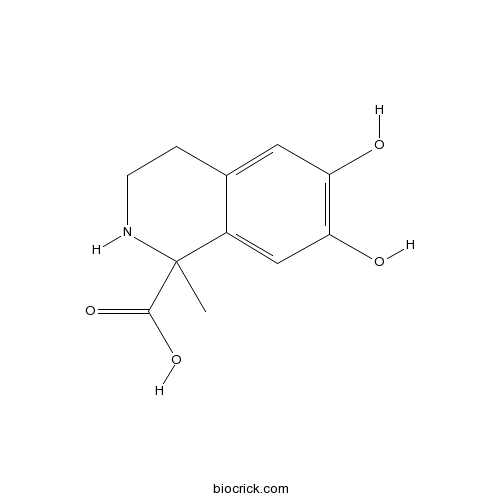
Salsolinol-1-carboxylic acid
57256-34-5
-
BCC6632
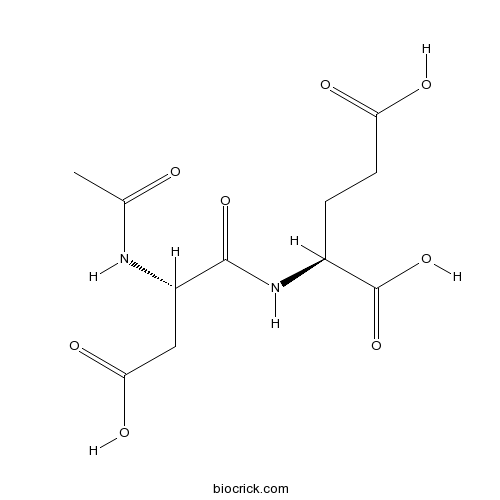
Spaglumic acid
Spaglumic Acid is a neuropeptide found in millimolar concentrations in brain.
-
BCN2571
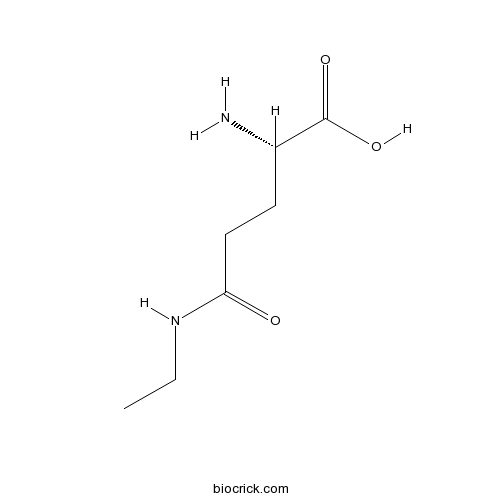
L-Theanine
L-Theanine (L-Glutamic Acid γ-ethyl amide)is a non-protein amino acid contained in green tea leaves, which blocks the binding of L-glutamic acid to glutamate receptors in the brain, and with neuroprotective and anti-oxidative activities. L-Theanine causes anti-stress effects via the inhibition of cortical neuron excitation by oral intake.
-
BCC2512
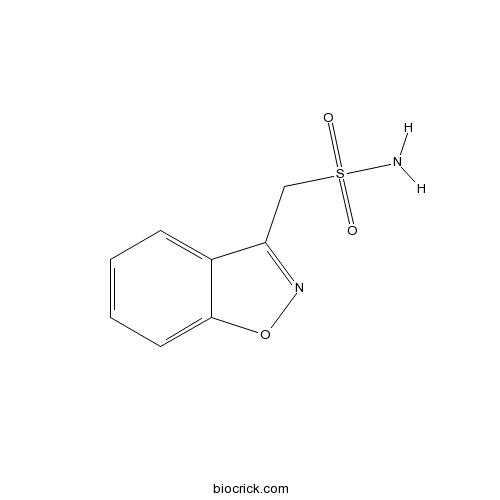
Zonisamide
Zonisamide is a 1,2 benzisoxazole derivative and the first agent of this chemical class to be developed as an antiepileptic drug.
-
BCC6566
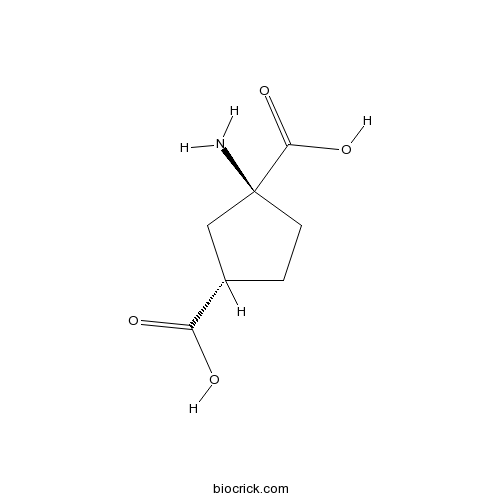
cis-ACPD
477331-06-9
-
BCC2894
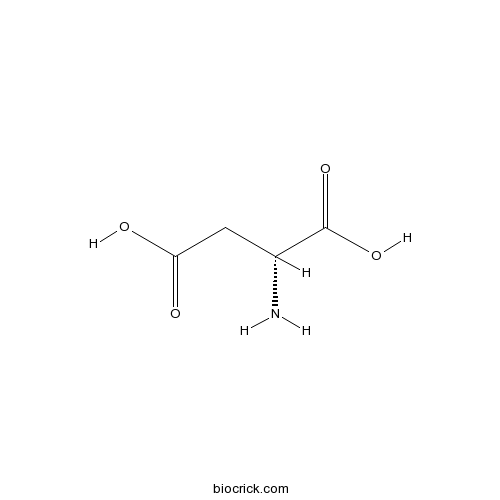
H-D-Asp-OH
(-)-Aspartic acid is an endogenous NMDA receptor agonist.
-
BCC2881
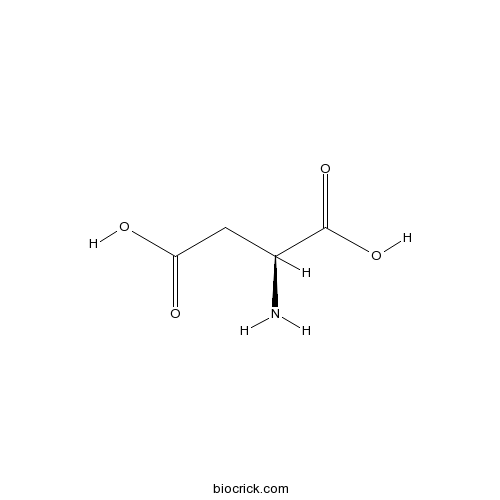
H-Asp-OH
L-Aspartic acid is is an amino acid, shown to be a suitable prodrug for colon-specific drug deliverly.