Neuroscience Research
Neuroscience is the study of the nervous system - one of the major mammalian systems responsible for sustaining life. The central nervous system (CNS) and peripheral nervous system (PNS) work in concert to coordinate basic functions such as moving and breathing, as well as 'higher order' functions including thought, speech and emotion.
Neuroscience Research Products Areas
- Stress and Anxiety Research (392)
- Nociception (957)
- Neurotransmission (892)
- Neuropeptides (43)
- Neural Development (795)
- Memory, Learning and Cognition (746)
- Blood-Brain Barrier (119)
- Stroke Research (665)
- Sleep Research (267)
- Schizophrenia Research (709)
- Parkinson's Disease Research (752)
- Huntington's Disease Research (465)
- Epilepsy Research (560)
- Depression Research (631)
- Alzheimer's Disease Research (399)
- Addiction Research (509)
- Multiple Sclerosis (419)
Products for Neuroscience Research - Page 6
- Cat.No. Product Name Information/Activity
-
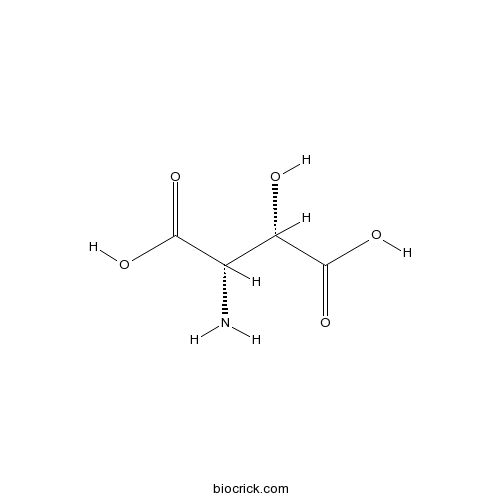
BCC6565
L-(-)-threo-3-Hydroxyaspartic acid
7298-99-9
-
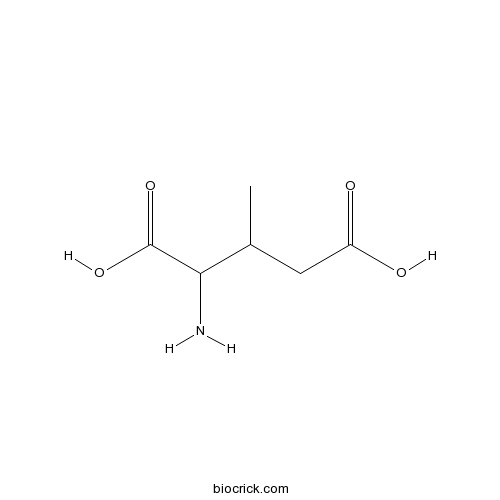
BCC6804
(±)-threo-3-Methylglutamic acid
63088-04-0
-
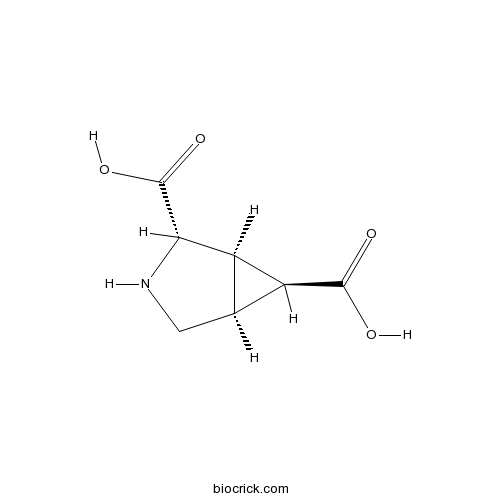
BCC6873
MPDC
MPDC is a potent and competitive inhibitor of the Na+-dependent high-affinity glutamate transporter in forebrain synaptosomes.
-
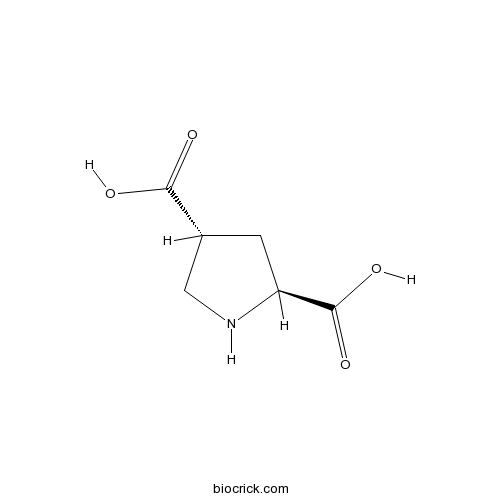
BCC6595
L-trans-2,4-PDC
64769-66-0
-
BCC6840
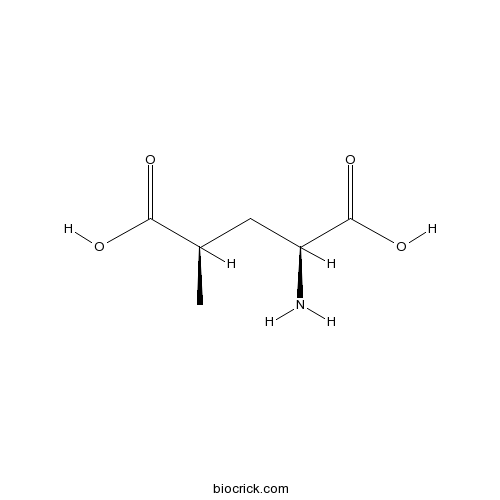
SYM 2081
SYM 2081 is a high-affinity ligand and potent, selective agonist of kainate receptors, inhibits [3H]-kainate binding with an IC50 of 35 nM, almost 3000- and 200-fold selectivity for kainate receptors over AMPA and NMDA receptors respectively.
-
BCC5735
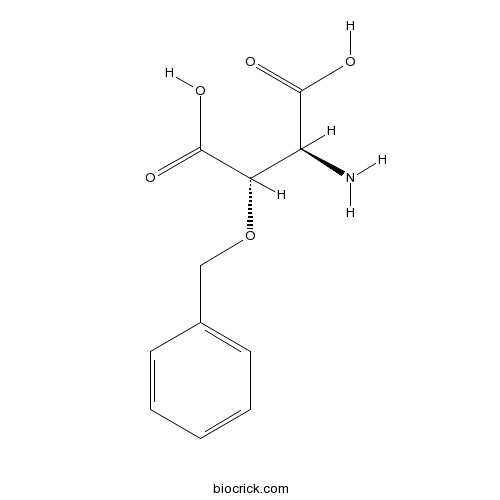
DL-TBOA
DL-TBOA is a potent non-transportable inhibitor of excitatory amino acid transporters with IC50s of 70 μM, 6 μM and 6 μM for excitatory amino acid transporter-1 (EAAT1), EAAT2 and EAAT3, respectively. DL-TBOA inhibits the uptake of [14C]glutamate in COS-1 cells expressing the human EAAT1 and EAAT2 with Ki valuesof 42 μM and 5.7 μM, respectively. DL-TBOA blocks EAAT4 and EAAT5 in a competitive manner with Ki values of 4.4 μM and 3.2 μM, respectively.
-
BCC5919
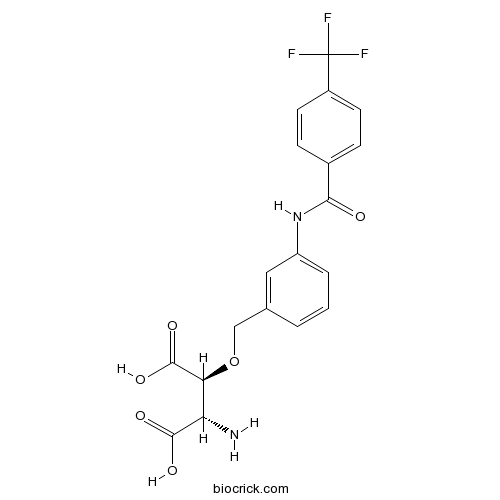
TFB-TBOA
480439-73-4
-
BCC7692
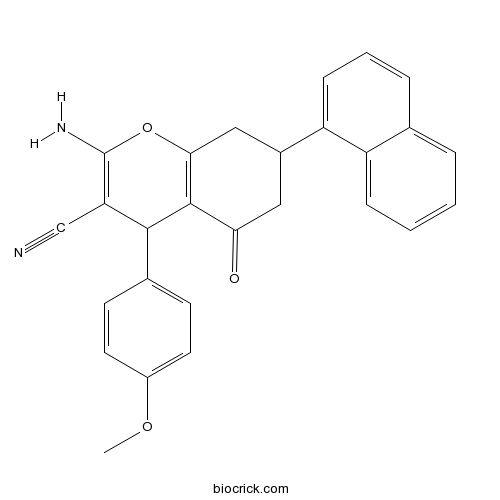
UCPH 101
UCPH-101 is an excitatory amino acid transporter subtype 1 (EAAT1) inhibitor with an IC50 of 0.66 μM.
-
BCC7442
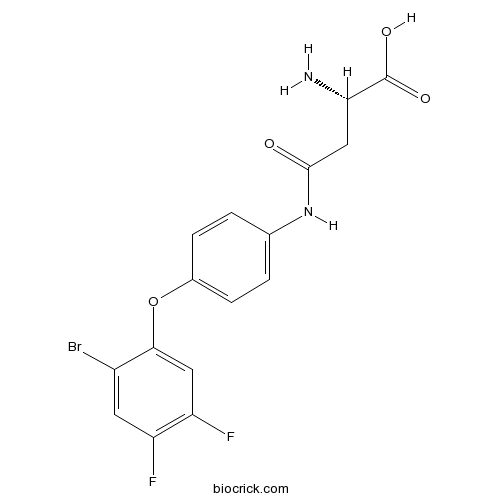
WAY 213613
WAY-213613 is a potent, selective nonsubstrate reuptake inhibitor of GLT-1/EAAT2 with IC50 of 85 nM EAAT2. It displays 59- and 44-fold selectivity over EAAT1 and EAAT3 (IC50s are 5 and 3.8 μM, respectively). WAY-213613 shows no activity at ionotropic and metabotropic glutamate receptors. It is a potential tool for the elucidation of EAAT2 function.
-
BCC5896
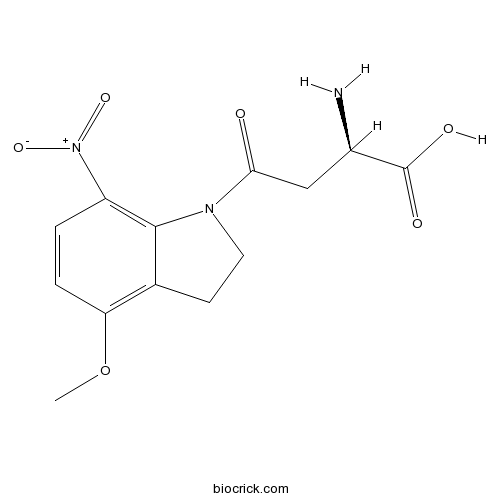
MNI-caged-D-aspartate
845555-94-4