Immunology Research
Immunology is a branch of science that studies all aspects of the immune system, ranging from normal physiological functioning through to malfunctions which can lead to immunological diseases. Disorders that result from aberrant activation of the immune system are termed autoimmune diseases.
Immunology Research Products Areas
Products for Immunology Research - Page 58
- Cat.No. Product Name Information/Activity
-
BCC6047
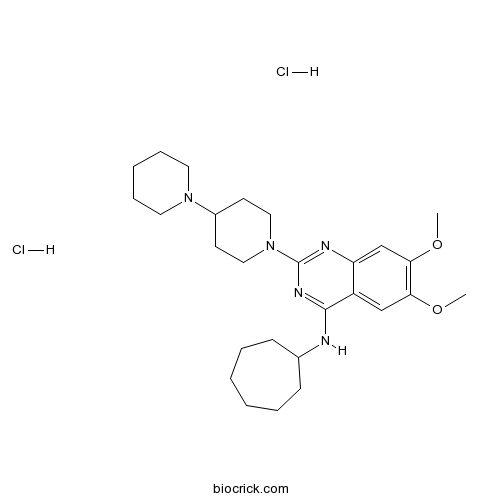
C 021 dihydrochloride
Potent CCR4 antagonist
-
BCC1646
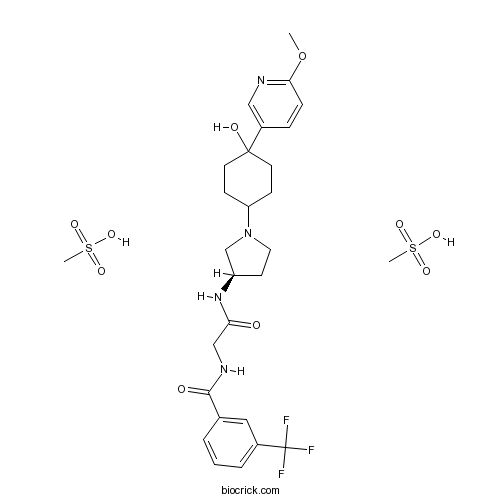
INCB 3284 dimesylate
INCB 3284 dimesylate is a potent, selective and orally bioavailable human CCR2 antagonist, inhibiting monocyte chemoattractant protein-1 binding to hCCR2, with an IC50 of 3.7 nM. INCB 3284 dimesylate can be used in the research of acute liver failure.
-
BCC7422
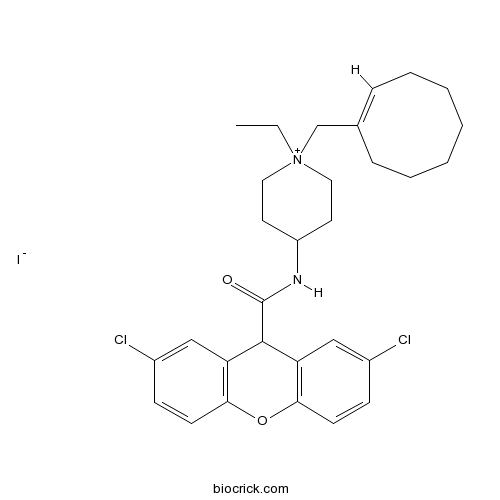
J 113863
J-113863 is a potent and selective CCR1 (CD18) antagonist with IC50 values of 0.9 nM and 5.8 nM for human and mouse CCR1 receptors, respectively. J-113863 is also a potent antagonist of the human CCR3 (IC50 of 0.58 nM) , but a weak antagonist of the mouse CCR3 (IC50 of 460 nM). J-113863 is inactive against CCR2, CCR4 and CCR5, as well as the LTB4 or TNF-α receptors. Anti-inflammatory effect.
-
BCC7260
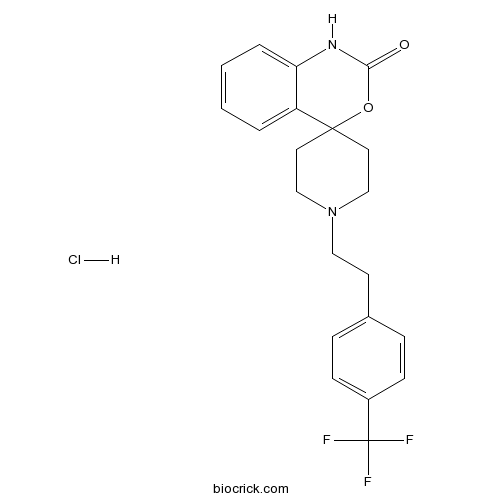
RS 102895 hydrochloride
RS102895 hydrochloride is a potent CCR2 antagonist, with an IC50 of 360 nM, and shows no effect on CCR1.
-
BCC1910
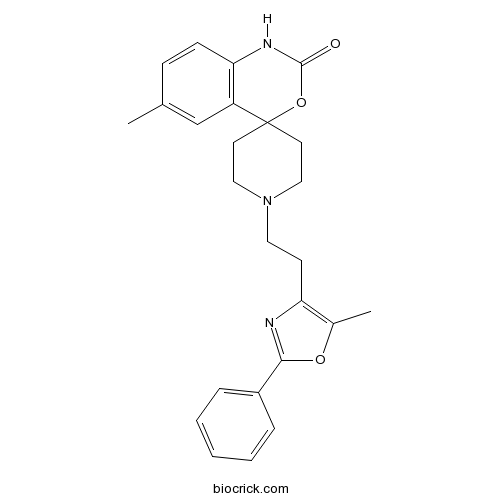
RS 504393
RS 504393 is a selective CCR2 chemokine receptor antagonist (IC50 values are 89 nM and > 100 μM for inhibition of human recombinant CCR2 and CCR1 receptors respectively).
-
BCC6129
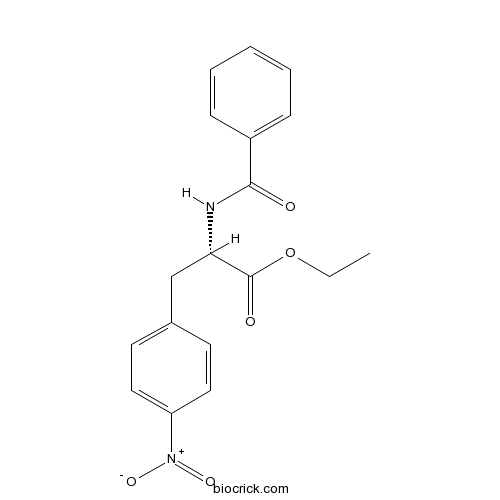
SB 297006
SB297006 is a CCR3 antagonist, which significantly inhibits proliferation and neurosphere formation in CCL11-treated neural progenitor cells.
-
BCC6056
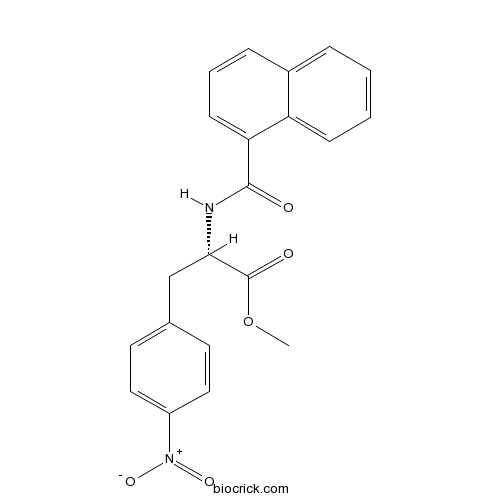
SB 328437
247580-43-4
-
BCC6057
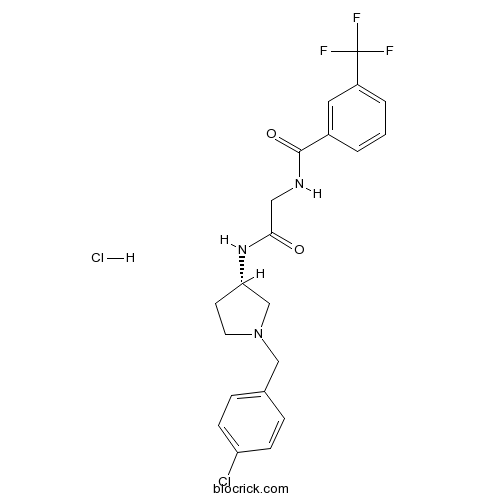
Teijin compound 1
CCR2 antagonist 4 hydrochloride (Teijin compound 1 hydrochloride) is a potent and specific CCR2 antagonist, with IC50s of 180 nM for CCR2b. CCR2 antagonist 4 hydrochloride potently inhibits MCP-1-induced chemotaxis with an IC50 of 24 nM.
-
BCC4447
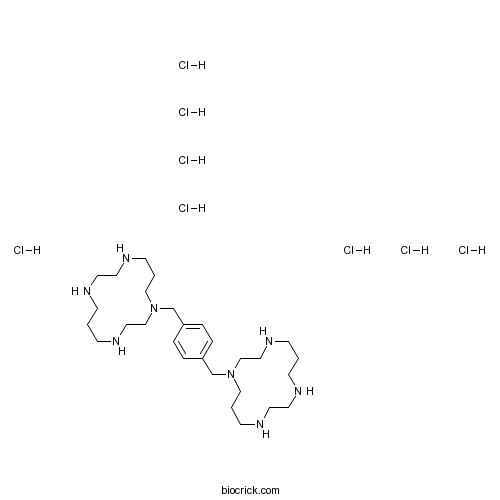
Plerixafor 8HCl (AMD3100 8HCl)
Plerixafor octahydrochloride (AMD3100 octahydrochloride) is a selective CXCR4 antagonist with an IC50 of 44 nM.
-
BCC5182
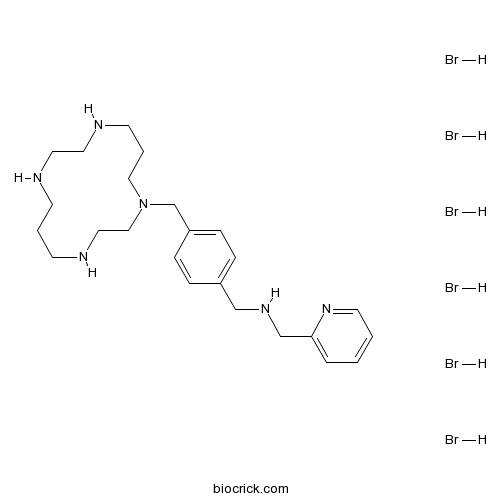
AMD 3465 hexahydrobromide
AMD 3465 hexahydrobromide (GENZ-644494 hexahydrobromide) is a potent antagonist of CXCR4, inhibits binding of 12G5 mAb and CXCL12AF647 to CXCR4, with IC50s of 0.75 nM and 18 nM in SupT1 cells; AMD 3465 also potently inhibits the replication of X4 HIV strains (IC50: 1-10 nM), but has no effect on CCR5-using (R5) viruses.