
Products for Phenols
-
BCN3931
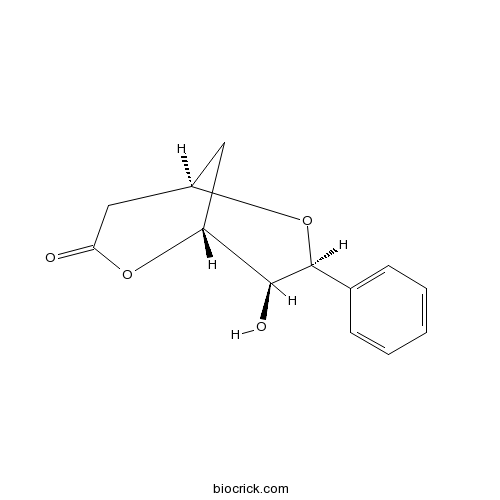
9-Deoxygoniopypyrone
Botanical source: The herbs of Goniothalamus yunnanensis
(CAS NO.:
136685-37-5)
-
BCN7859
Gallic aldehyde
Botanical source: The whole plants of Geum japonicum.
(CAS NO.:
13677-79-7)

-
BCN3956
Goniodiol diacetate
Botanical source: The herbs of Goniothalamus yunnanensis
(CAS NO.:
136778-40-0)

-
BCN3338
1-Dehydro-10-gingerdione
Botanical source: The rhizomes of Zingber officinale Rosc.
(CAS NO.:
136826-50-1)

-
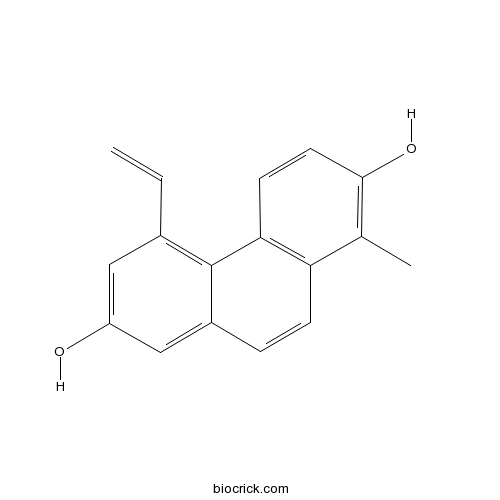
BCN2927
Dehydroeffusol
Dehydroeffusol is a phenanthrene from medicinal herb Juncus effuses. Dehydroeffusol inhibits gastric cancer cell growth and tumorigenicity by selectively inducing tumor-suppressive endoplasmic reticulum stress and a moderate apoptosis. It shows very low toxicity.
(CAS NO.:
137319-34-7)
-
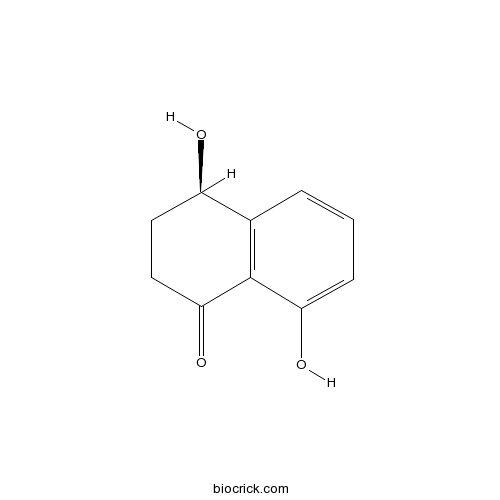
BCN7193
Regiolone
Botanical source: The leaves of Juglans regia.
(CAS NO.:
137494-04-3)
-
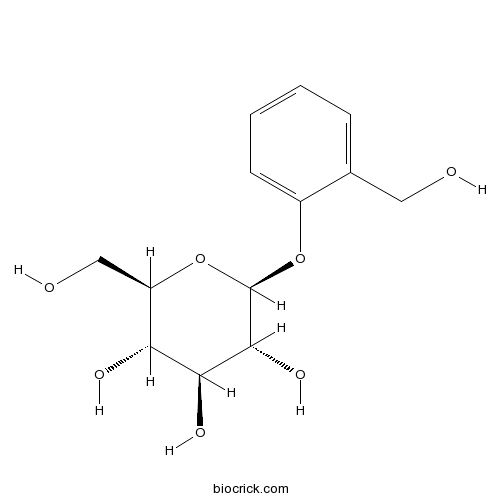
BCN6298
D-(-)-Salicin
Salicin is a natural COX inhibitor.
(CAS NO.:
138-52-3)
-
BCN7049
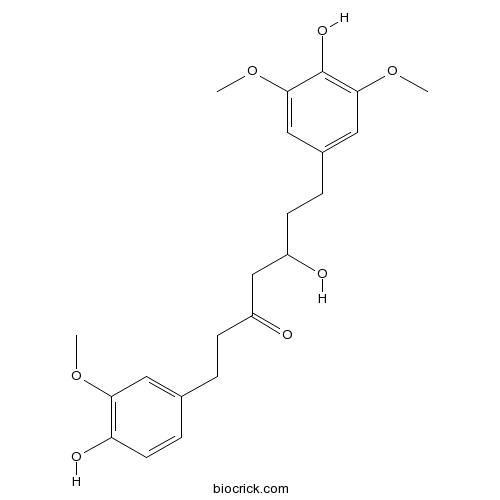
5'-Methoxyhexahydrocurcumin
Botanical source: The rhizomes of Curcuma longa L.
(CAS NO.:
138870-96-9)
-
BCN6214
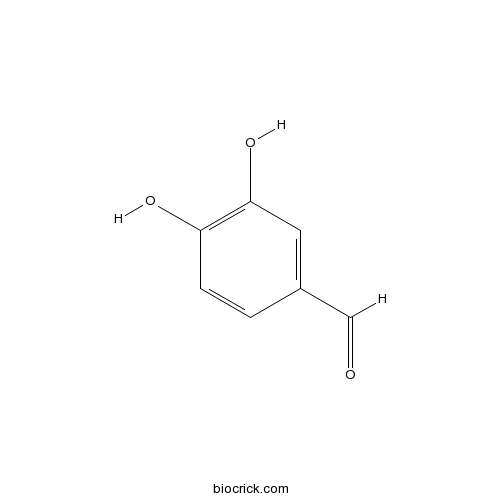
3,4-Dihydroxybenzaldehyde
Protocatechualdehyde (Catechaldehyde), a natural polyphenol compound isolated from the roots of radix Salviae Miltiorrhizae, is associated with a wide variety of biological activities and has been widely used in medicine as an antioxidant, anti-aging, an antibacterial and anti-inflammatory agent.
(CAS NO.:
139-85-5)
-
BCN4709
Tristin
Botanical source: The herbs of Bulbophyllum odoratissimum
(CAS NO.:
139101-67-0)

-
BCN7182
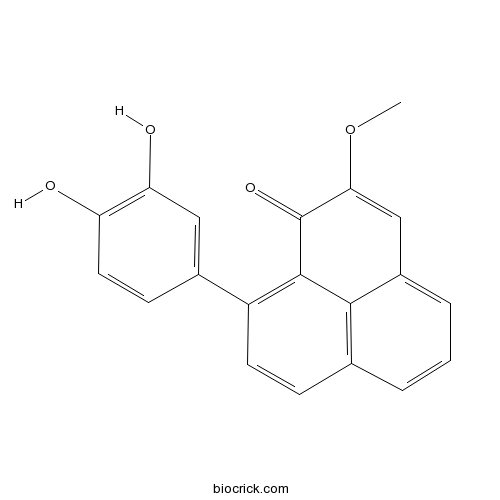
3,4-Dihydroxy-2-O-methylanigorufone
Botanical source: The rhizomes of Musa acuminata var.
(CAS NO.:
1392307-42-4)
-
BCN7192
Musellarin B
Botanical source: The aerial parts of Musella lasiocarpa.
(CAS NO.:
1392476-32-2)

-
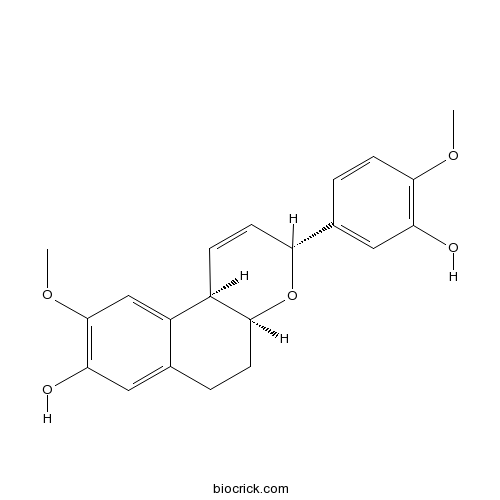
BCN7004
Musellarin C
Botanical source: The aerial parts of Musella lasiocarpa.
(CAS NO.:
1392476-33-3)
-
BCN7858
6-O-apiosyl-5-O-Methylvisammioside
6”-O-Apiosyl-5-O-Methylvisammioside is one of the components of the traditional Chinese medicine <b>Kang-Jing</b>.
(CAS NO.:
139446-82-5)

-
BCN6208
Cannabidiol
Botanical source: The herbs of Cannabis sativa
(CAS NO.:
13956-29-1)

-
BCN6207
Epicannabidiol hydrate
Botanical source: The herbs of Cannabis sativa
(CAS NO.:
139561-95-8)

-
BCN2643
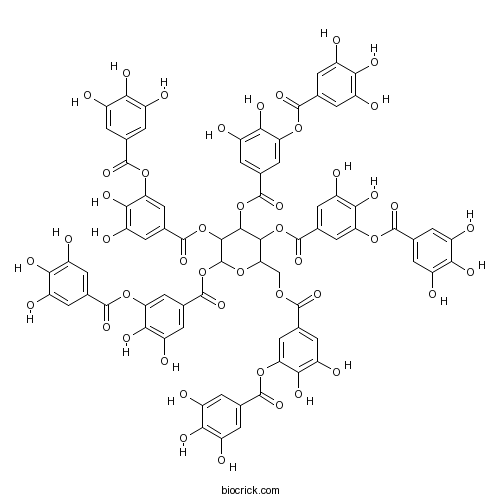
Tannic acid
Tannic acid is a novel hERG channel blocker with IC50 of 3.4 μM.
(CAS NO.:
1401-55-4)
-
BCN7857
Monnieriside G
Botanical source: The fruits of Cnidium monnieri.
(CAS NO.:
1401799-34-5)

-
BCN3541
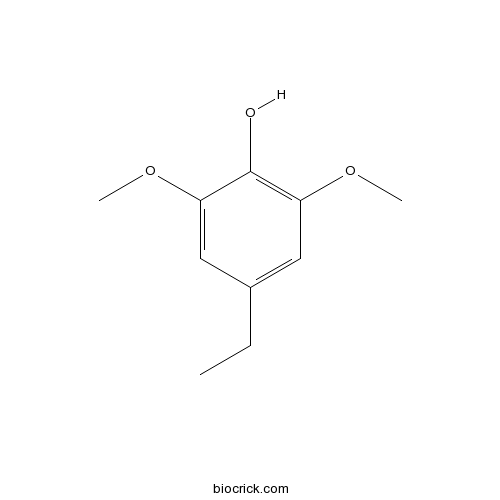
4-Ethylsyringol
Botanical source: The heartwood of Pinus yunnanensis
(CAS NO.:
14059-92-8)
-
BCN3720
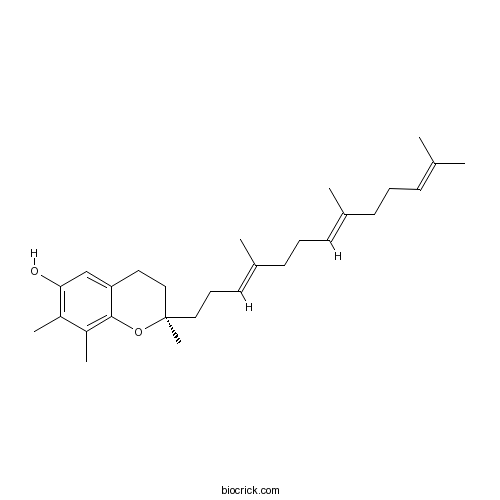
Gama-Tocotrienol
Botanical source: The stem bark of Garcinia virgata
(CAS NO.:
14101-61-2)
-
BCN3752
Pelandjauic acid
Botanical source: The Scutellinia ascoboloides
(CAS NO.:
141545-69-9)

-
BCN7626
Albatrelin A
Botanical source: The fruiting bodies of Albatrellus ovinus.
(CAS NO.:
1417805-15-2)

-
BCN7591
Albatrelin C
Botanical source: The fruiting bodies of Albatrellus ovinus.
(CAS NO.:
1417805-17-4)

-
BCN6905
4-Hydroxyphenylacetonitrile
Botanical source: The leaves of Moringa oleifera lam., moringaceae.
(CAS NO.:
14191-95-8)

-
BCN1571
Methyl 4-Hydroxyphenylacetate
Botanical source: The herbs of Fusarium oxysporum
(CAS NO.:
14199-15-6)


BioCrick BioTech
88# Keyuan road,Hi-Tech Zone
Chengdu, Sichuan 610042, PRC
Email: info@biocrick.com
Tel:86-28-8543-3893


88# Keyuan road,Hi-Tech Zone
Chengdu, Sichuan 610042, PRC
Email: info@biocrick.com
Tel:86-28-8543-3893
Follow us:
BioCrick is one of the biggest natural products manufacturers in Asia
Our products can be used as reference standards,inhibitors in pharmacological research
Our MISSION is to provide Best-in-class High-purity natural compounds to researchers all around the world

© 2007-2026 BioCrick BioTech. All rights reserved. sitemap