Respiratory System Research
The respiratory system consists of the lungs, airways, diaphragm, trachea (windpipe) and pharynx (throat) and its primary function is the exchange of oxygen and carbon dioxide- breathing in and out. Between 6 and 10 liters of air are brought in and out of the lungs and 0.3 liters of oxygen are transferred from the alveoli to the blood per minute.
Respiratory System Research Products Areas
Products for Respiratory System Research - Page 19
- Cat.No. Product Name Information/Activity
-
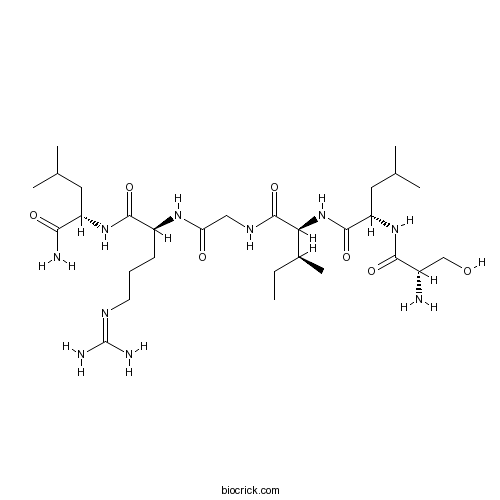
BCC3947
SLIGRL-NH2
Protease-Activated Receptor-2 Activating Peptide is an agonist of Protease-Activated Receptor-2 (PAR-2).
-
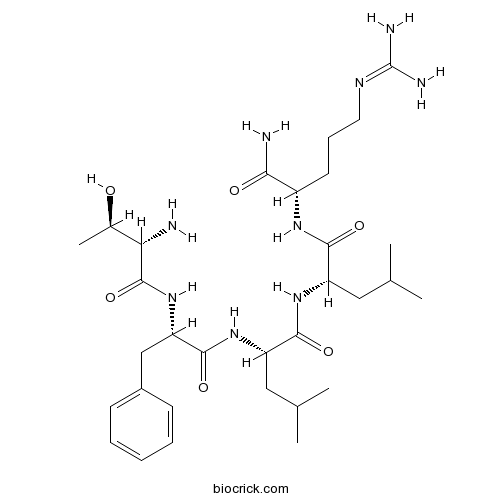
BCC3948
TFLLR-NH2
TFLLR-NH2 is a selective PAR1 agonist with an EC50 of 1.9 μM.
-
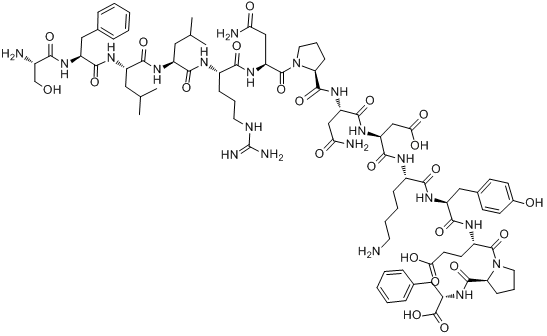
BCC3950
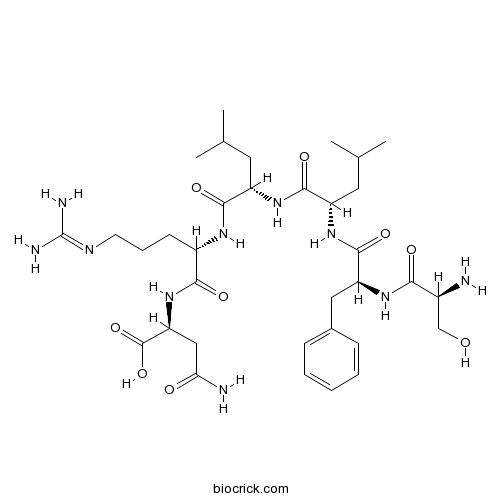
Thrombin Receptor Agonist Peptide
Sfllrnpndkyepf is a synthetic thrombin receptor agonist peptide.
-
BCC3957
TRAP-6
TRAP-6 (PAR-1 agonist peptide) is a protease-activated receptor 1 (PAR1) agonist.
-
BCC3953
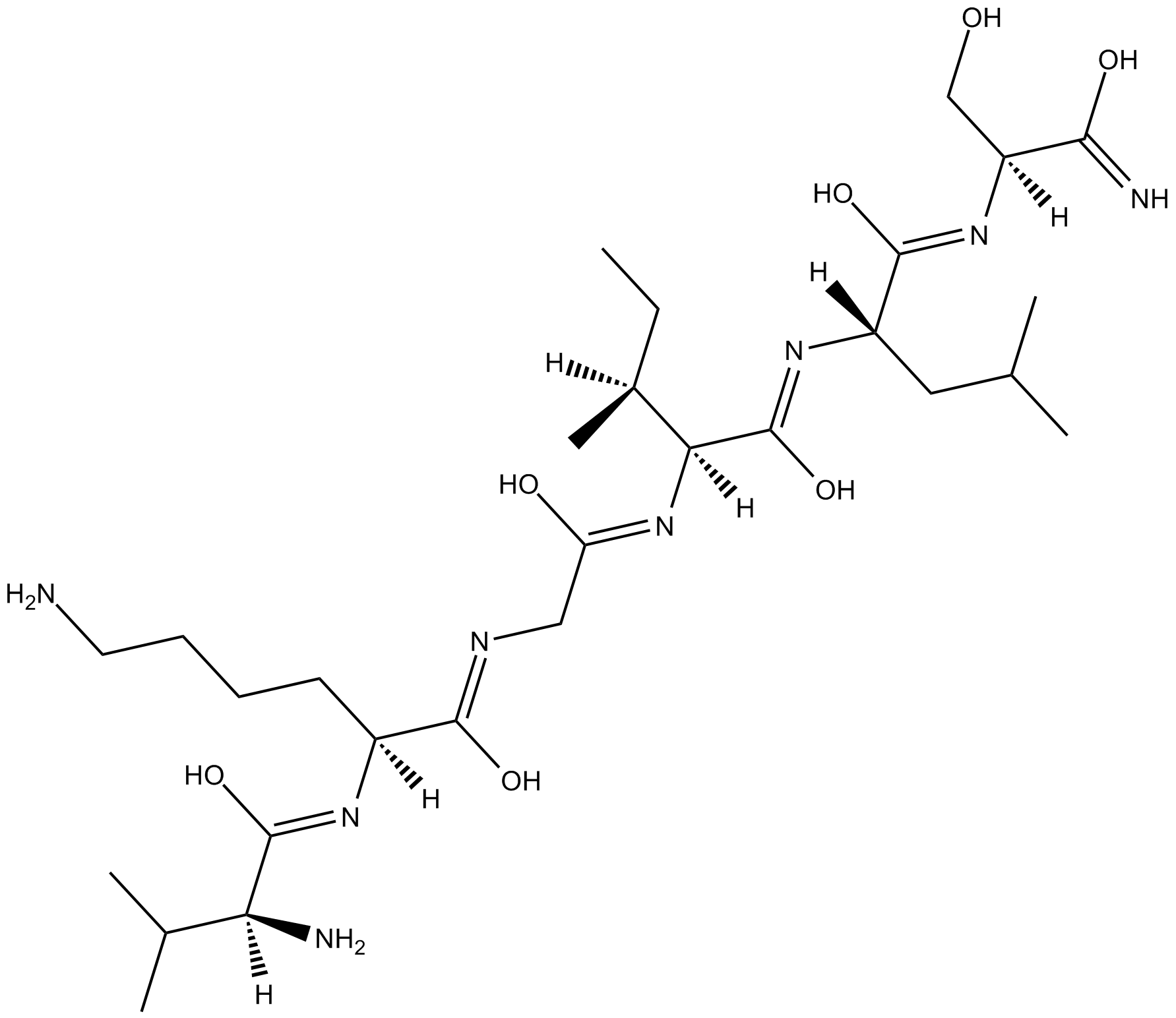
VKGILS-NH2
Control peptide for SLIGKV-NH<sub>2</sub>
-
BCC7734
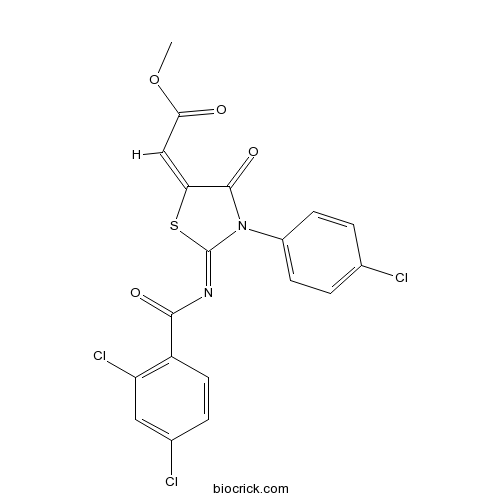
FR 171113
173904-50-2
-
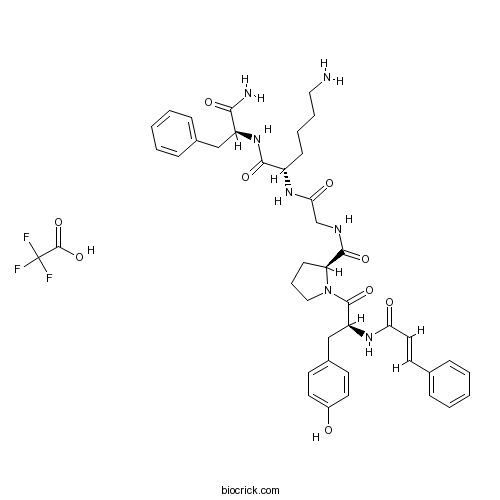
BCC6279
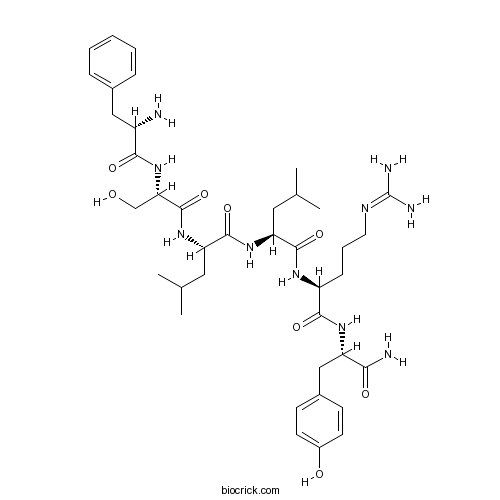
FSLLRY-NH2
245329-02-6
-
BCC7433
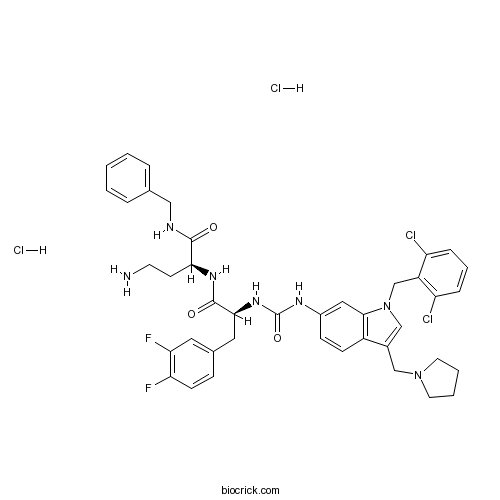
RWJ 56110
252889-88-6
-
BCC7125
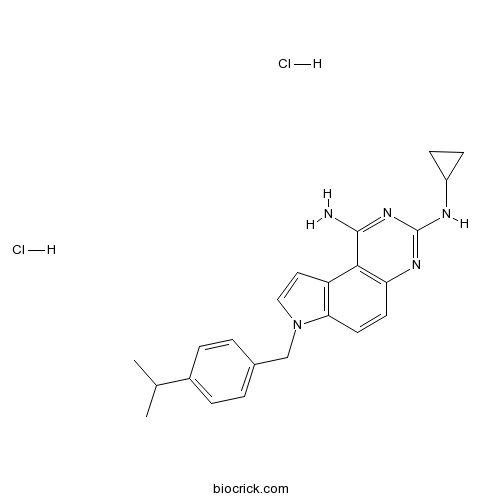
SCH 79797 dihydrochloride
SCH79797 dihydrochloride is a highly potent, selective nonpeptide protease activated receptor 1 (PAR1) antagonist. SCH79797 dihydrochloride inhibits binding of a high-affinity thrombin receptor-activating peptide to PAR1 with an IC50 of 70 nM and a Ki of 35 nM. SCH79797 dihydrochloride inhibits thrombin-induced platelet aggregation with an IC50 of 3 μM. SCH79797 dihydrochloride has antiproliferative and pro-apoptotic effects, and limits myocardial ischemia/reperfusion injury in rat hearts. SCH79797 dihydrochloride also potently prevents PAR1 activation in vascular smooth muscle cells, endothelial cells, and astrocytes.
-
BCC5770
tcY-NH2
327177-34-4