Protein Kinase C
Protein kinase C (PKC) refers to a family of serine/threonine protein kinases grouped by their activation mechanism. Conventional PKCs (cPKC α -, β I- , β II- and γ -) are activated by phosphatidylserine in a calcium dependent manner and can bind diacylglycerol.
Products for Protein Kinase C - Page 2
- Cat.No. Product Name Information/Activity
-
BCC5836
[Ala113]-MBP (104-118)
99026-78-5
![[Ala113]-MBP (104-118) chemical structure](/media/images/struct/BCC5836.png)
-
BCC6718
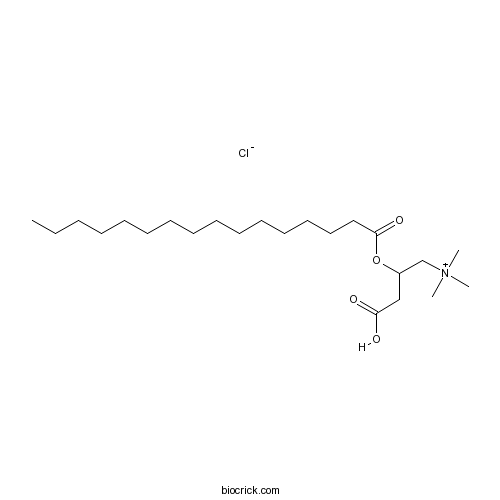
(±)-Palmitoylcarnitine chloride
Palmitoylcarnitine chloride is a fatty acid-derived mitochondrial substrate, and selectively decreases cell survival in colorectal and prostate cancer cells by affecting on pro-inflammatory pathways, Ca2+ influx, and DHT-like effects.
-
BCC5350
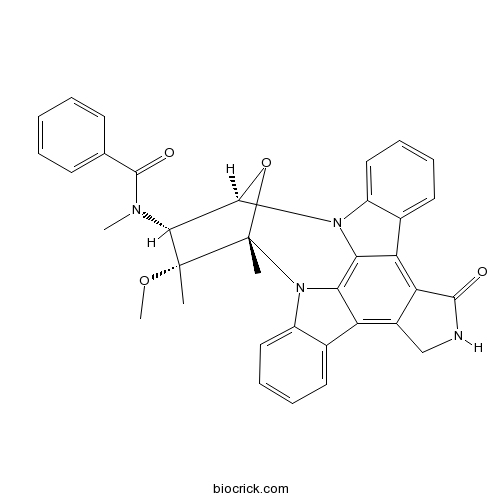
Midostaurin (PKC412)
Midostaurin (PKC412; CGP 41251) is a multi-targeted protein kinase inhibitor which inhibits PKCα/β/γ, Syk, Flk-1, Akt, PKA, c-Kit, c-Fgr, c-Src, FLT3, PDFRβ and VEGFR1/2 with IC50 ranging from 22-500 nM.
-
BCC5811
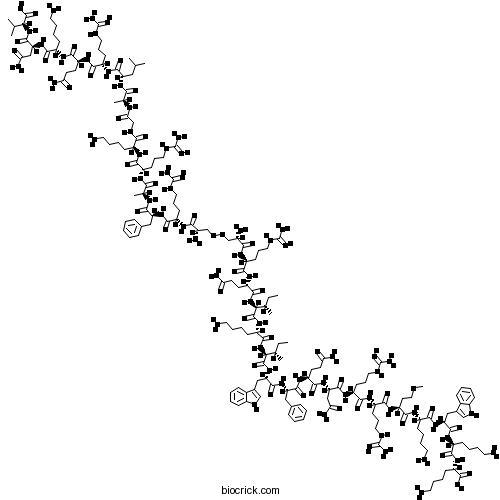
PKC β pseudosubstrate
172308-76-8
-
BCC7122
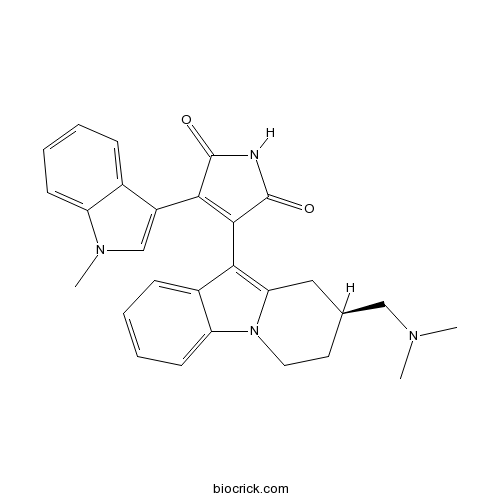
Ro 32-0432 hydrochloride
151342-35-7
-
BCC7127
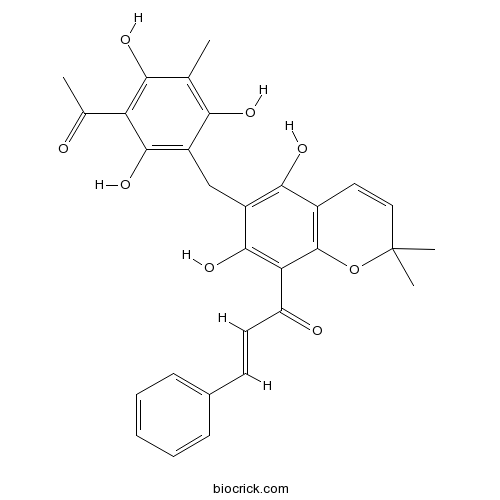
Rottlerin
Rottlerin, a natural product purified from Mallotus Philippinensis, is a specific PKC inhibitor, with IC50 values for PKCδ of 3-6 μM, PKCα,β,γ of 30-42 μM, PKCε,η,ζ of 80-100 μM. Rottlerin acts as a direct mitochondrial uncoupler, and stimulates autophagy by targeting a signaling cascade upstream of mTORC1. Rottlerin induces apoptosis via caspase 3 activation.
-
BCC6729
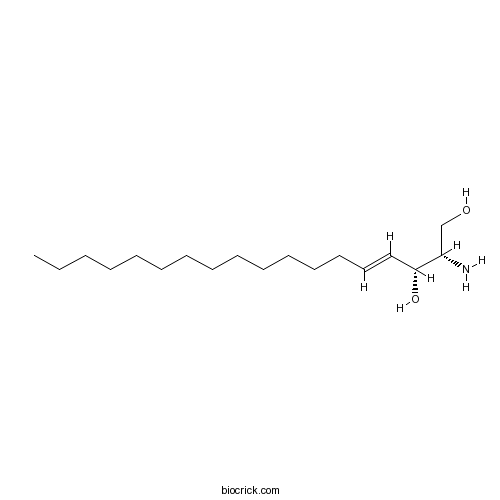
D-erythro-Sphingosine (synthetic)
D-erythro-Sphingosine (Erythrosphingosine) is a very potent activator of p32-kinase with an EC50 of 8 μM, and inhibits protein kinase C (PKC). D-erythro-Sphingosine (Erythrosphingosine) is also a PP2A activator.
-
BCC2443
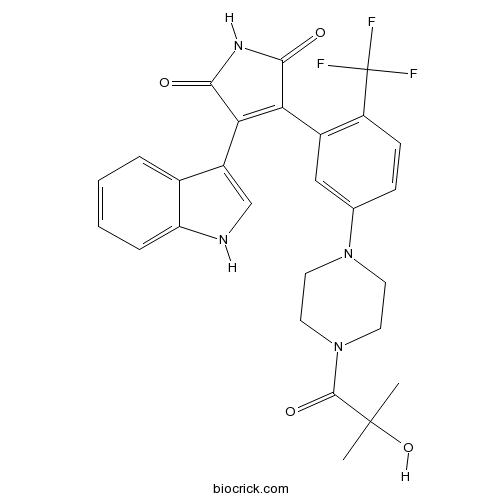
TCS 21311
TCS 21311 (NIBR3049) is a potent, highly selective JAK3 inhibitor with an IC50 of 8 nM, it displays >100-fold selectivity over JAK1, JAK2 and TYK2. TCS 21311 (NIBR3049) inhibits PKCα, PKCθ, and GSK3β with IC50s of 13, 68, and 3 nM, respectively.
-
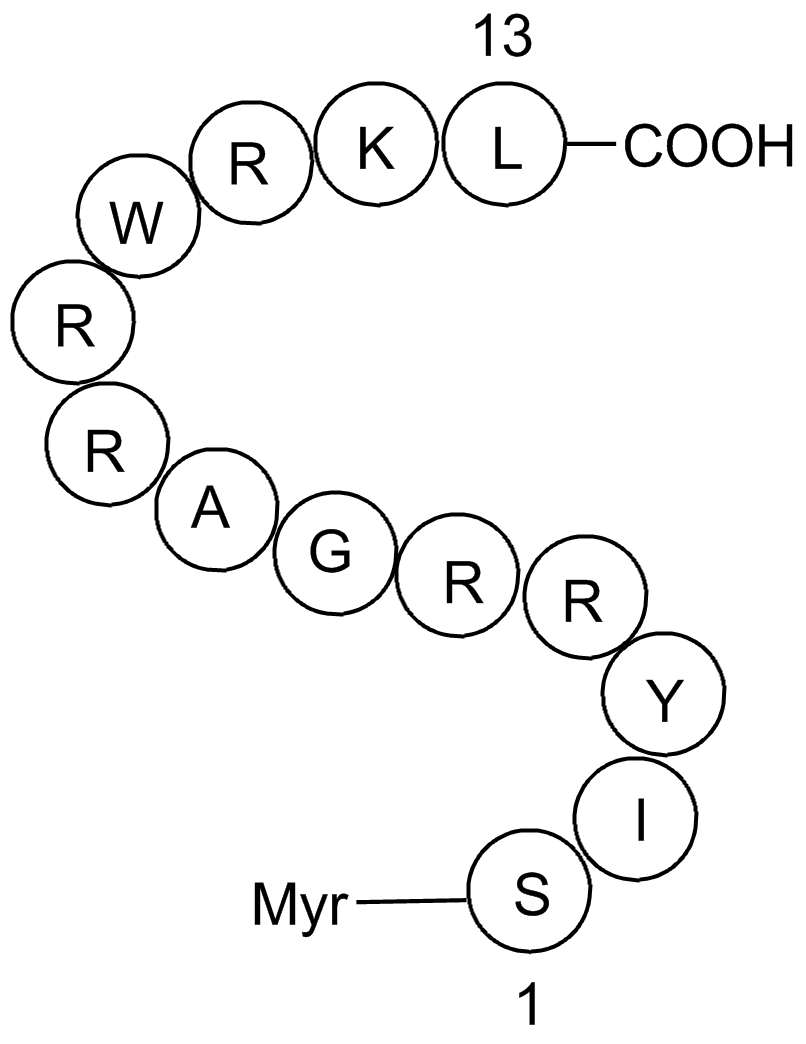
BCC4003
ZIP
Cell-permeable inhibitor of atypical PKC isozyme PKM<span class='symbol'>ζ</span>
-
BCC7343
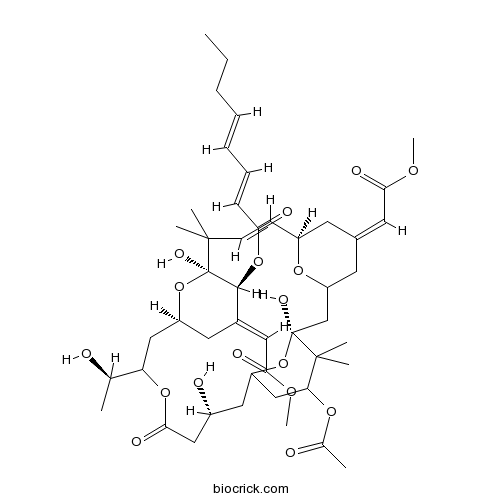
Bryostatin 1
Bryostatin 1 is a natural macrolide isolated from the bryozoan Bugula neritina and is a potent and central nervous system (CNS)-permeable PKC modulator. Bryostatin 1 binds to the isolated C1 domain of Munc13-1 and the full-length Munc13-1 protein with Kis of 8.07 nM and 0.45 nM, respectively. Bryostatin 1 has anti-cancer, anti-inflammatory, neuroprotective, anti-HIV-1 infection properties.