Pain and Inflammation Research
Although separate conditions, pain and inflammation are nearly always associated with each other. Pain is defined by the International Association for the Study of Pain (IASP) as 'an unpleasant sensory and emotional experience associated with actual or potential tissue damage, or described in terms of such damage'. Inflammation is the tissue's immunologic response to injury, characterized by mobilization of white blood cells and antibodies, swelling, and fluid accumulation.
Pain and Inflammation Research Products Areas
Products for Pain and Inflammation Research - Page 100
- Cat.No. Product Name Information/Activity
-
BCC6047
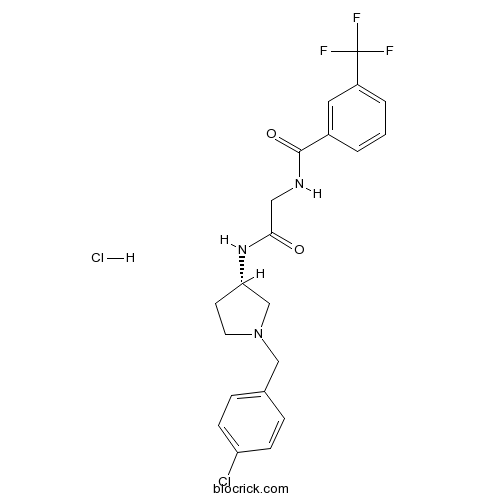
C 021 dihydrochloride
Potent CCR4 antagonist
-
BCC5909
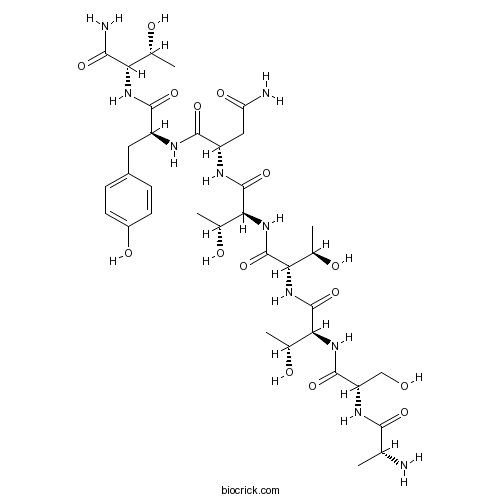
DAPTA
DAPTA is a synthetic peptide, functions as a viral entry inhibitor by targeting selectively CCR5, and shows potent anti-HIV activities.
-
BCC1646
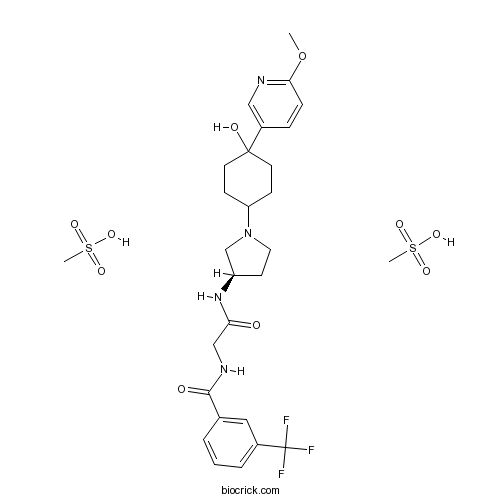
INCB 3284 dimesylate
INCB 3284 dimesylate is a potent, selective and orally bioavailable human CCR2 antagonist, inhibiting monocyte chemoattractant protein-1 binding to hCCR2, with an IC50 of 3.7 nM. INCB 3284 dimesylate can be used in the research of acute liver failure.
-
BCC7422
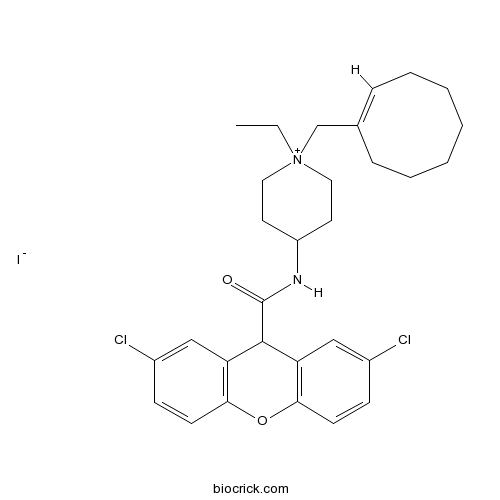
J 113863
J-113863 is a potent and selective CCR1 (CD18) antagonist with IC50 values of 0.9 nM and 5.8 nM for human and mouse CCR1 receptors, respectively. J-113863 is also a potent antagonist of the human CCR3 (IC50 of 0.58 nM) , but a weak antagonist of the mouse CCR3 (IC50 of 460 nM). J-113863 is inactive against CCR2, CCR4 and CCR5, as well as the LTB4 or TNF-α receptors. Anti-inflammatory effect.
-
BCC3675
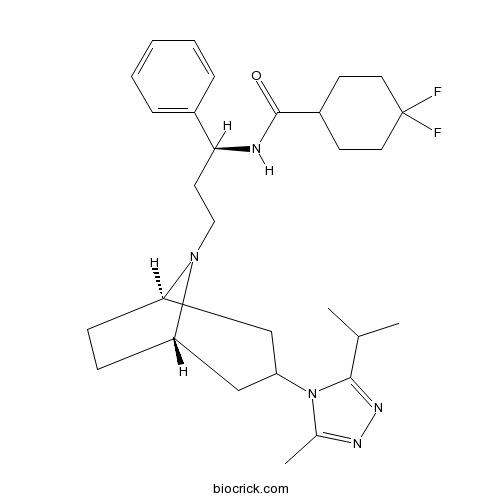
Maraviroc
Maraviroc (UK-427857) is a selective CCR5 antagonist with activity against human HIV.
-
BCC7260
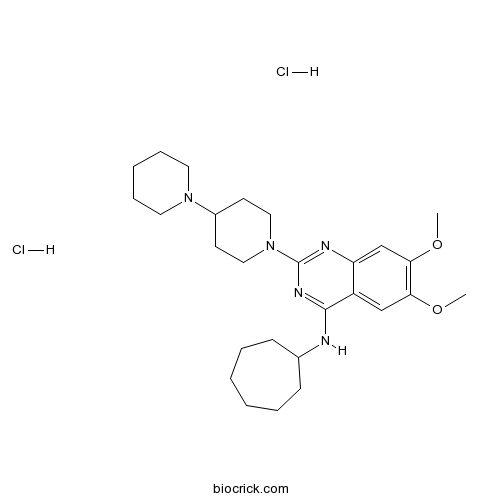
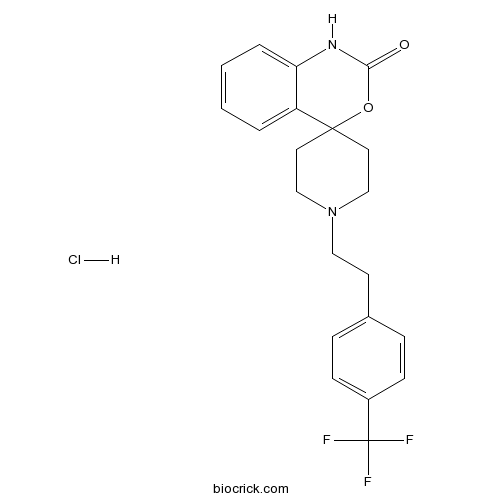
RS 102895 hydrochloride
RS102895 hydrochloride is a potent CCR2 antagonist, with an IC50 of 360 nM, and shows no effect on CCR1.
-
BCC1910
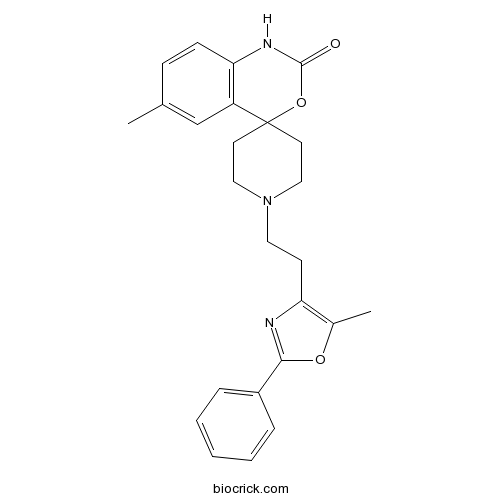
RS 504393
RS 504393 is a selective CCR2 chemokine receptor antagonist (IC50 values are 89 nM and > 100 μM for inhibition of human recombinant CCR2 and CCR1 receptors respectively).
-
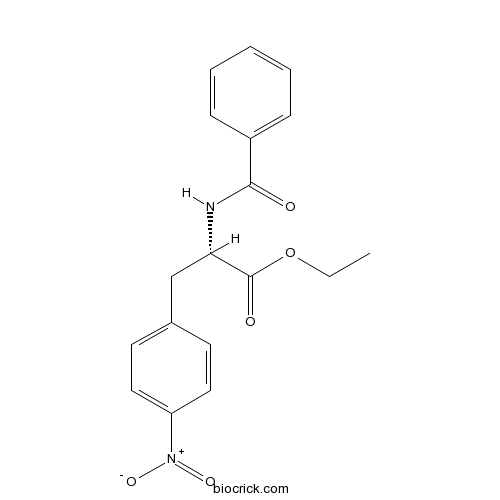
BCC6129
SB 297006
SB297006 is a CCR3 antagonist, which significantly inhibits proliferation and neurosphere formation in CCL11-treated neural progenitor cells.
-
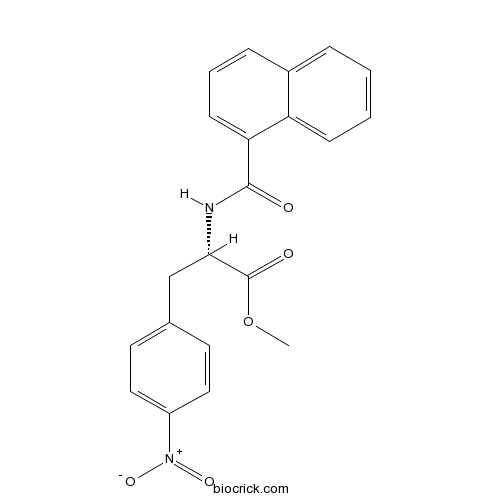
BCC6056
SB 328437
247580-43-4
-
BCC6057
Teijin compound 1
CCR2 antagonist 4 hydrochloride (Teijin compound 1 hydrochloride) is a potent and specific CCR2 antagonist, with IC50s of 180 nM for CCR2b. CCR2 antagonist 4 hydrochloride potently inhibits MCP-1-induced chemotaxis with an IC50 of 24 nM.