Stem Cell Signaling
Various stem cell signaling pathways influence stem cell generation, self-renewal and differentiation. In vivo, the microenvironment responsible for maintaining stem cells in pluripotent form and enabling their self-renewal is called the stem-cell niche.
Products for Stem Cell Signaling - Page 3
- Cat.No. Product Name Information/Activity
-
BCC5081
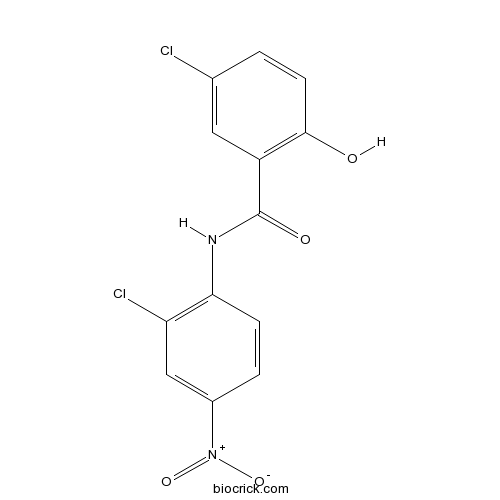
Niclosamide
Niclosamide (BAY2353) is an orally bioavailable chlorinated salicylanilide, with anthelmintic and potential antineoplastic activity. Niclosamide (BAY2353) inhibits STAT3 with IC50 of 0.25 μM in HeLa cells and inhibits DNA replication in a cell-free assay.
-
BCC2241
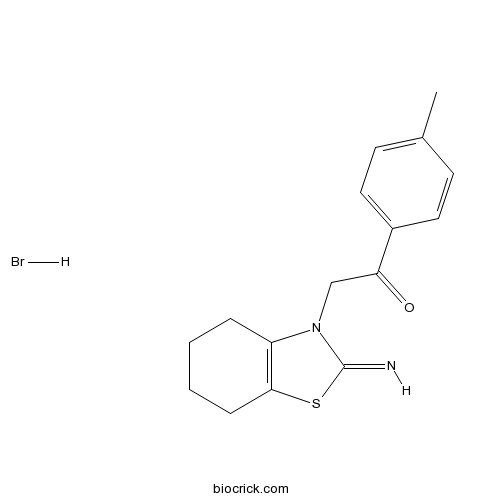
Pifithrin-α (PFTα)
Pifithrin-α hydrobromide is a p53 inhibitor which blocks its transcriptional activity and prevents cells from apoptosis. Pifithrin-α hydrobromide is also an aryl hydrocarbon receptor (AhR) agonist.
-
BCC7316
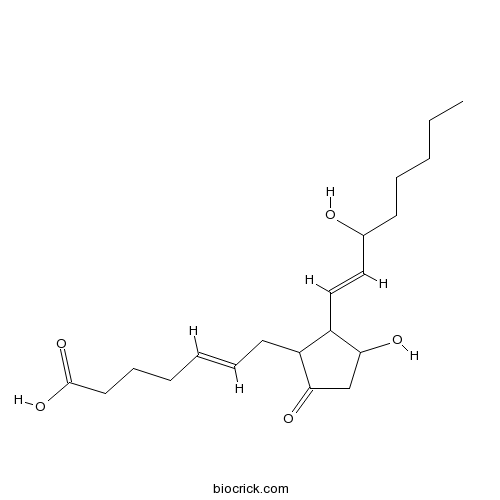
Prostaglandin E2
Prostaglandin E2 is a hormone-like substance that participate in a wide range of body functions such as the contraction and relaxation of smooth muscle, the dilation and constriction of blood vessels, control of blood pressure, and modulation of inflammation.
-
BCC7648
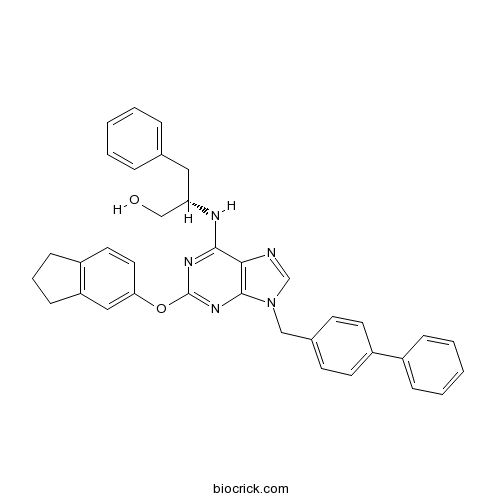
QS 11
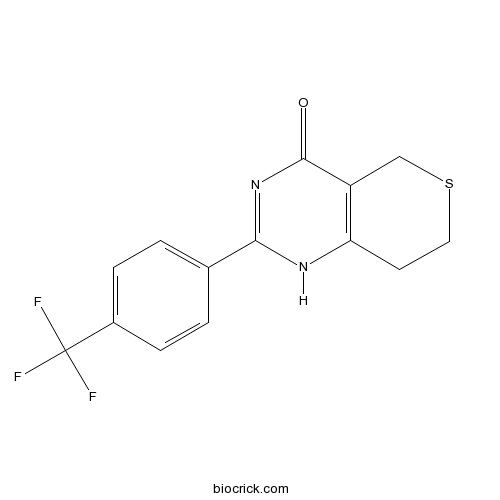
ARFGAP1 inhibitor; modulates Wnt signaling pathway,QS11 is a GTPase activating protein of ADP-ribosylation factor 1 (ARFGAP1) inhibitor.
-
BCC4302
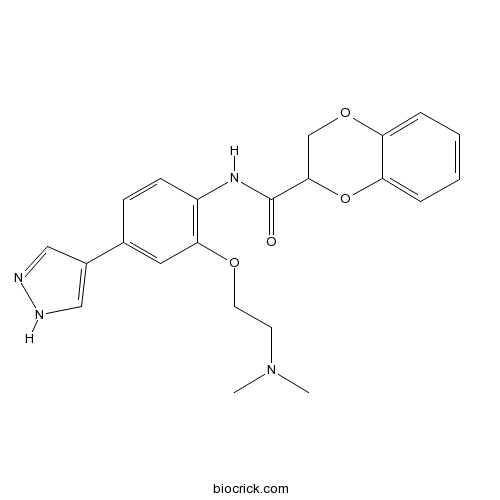
SR-3677
SR-3677 is a potent and selective ROCK-II inhibitor with an IC50 of ~3 nM.
-
BCC2455
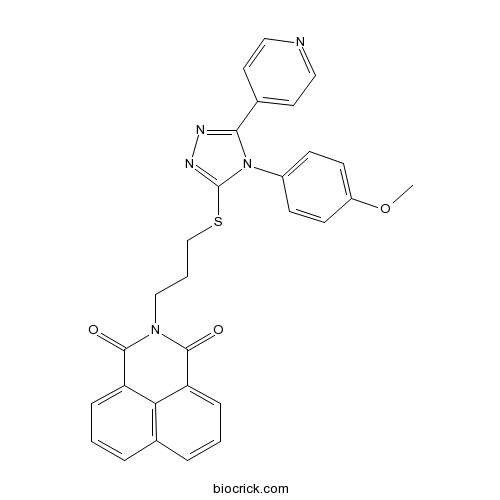
WIKI4
WIKI4 is a potent tankyrase inhibitor with an IC50 of 26 nM for TNKS2. WIKI4 potently inhibits Wnt/β-catenin signaling and that its half-maximal response dose is 75 nM. WIKI4 mediates its effects on Wnt/β-catenin signaling by inhibiting the enzymatic activity of TNKS2. WIKI4 is cytotoxic to SCLC cells with an IC50 value of 0.02 μM.
-
BCC1120
XAV-939
XAV-939 is a potent tankyrase inhibitor that targets Wnt/β-catenin signaling. XAV-939 stabilizes axin by inhibiting tankyrase 1 and tankyrase 2 (IC50s of 5 and 2 nM, respectively), thereby stimulating β-catenin degradation. XAV939 binds tightly to the catalytic (PARP) domains of TNKS1 and TNKS2 (Kds of 99 and 93 nM, respectively).