Autophagy
Autophagy is a process by which a cell breaks down macromolecules in response to starvation or stress signals. While it is closely linked with apoptosis, autophagy is primarily characterized as a catabolic mechanism by which cellular energy homeostasis is maintained.
Products for Autophagy
- Cat.No. Product Name Information/Activity
-
BCC3914
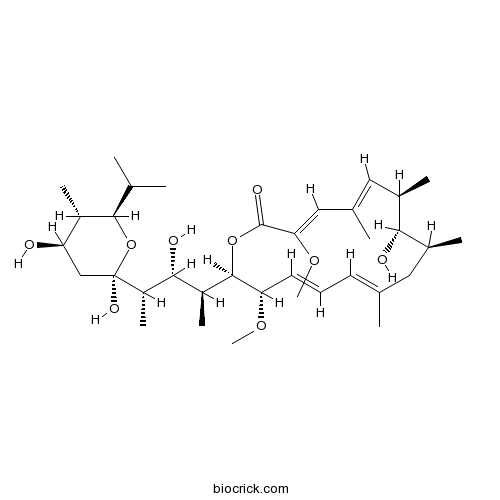
Bafilomycin A1
Bafilomycin A1, a macrolide antibiotic isolated from the Streptomyces species, is a specific inhibitor of vacuolar-type H+ ATPase (V-ATPase). Bafilomycin A1 inhibits autophagy and induces apoptosis.
-
BCC3918
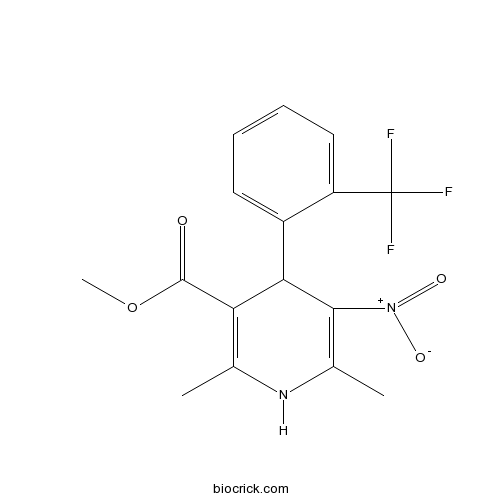
(±)-Bay K 8644
Ca<sup>2+</sup> channel activator (L-type); aids generation of iPSCs from MEFs
-
BCC3919
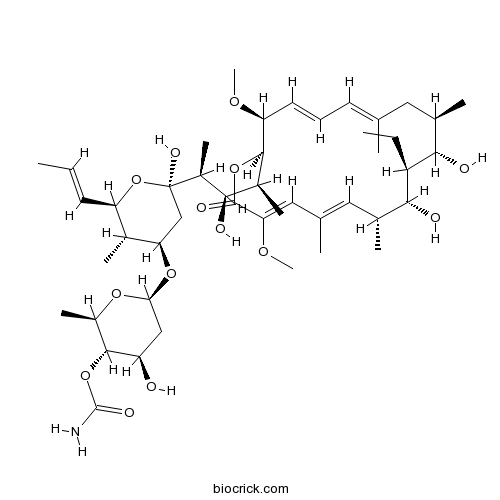
Concanamycin A
Concanamycin A (Antibiotic X 4357B) is a macrolide antibiotic and a specific vacuolar type H+-ATPase (V-ATPase) inhibitor.
-
BCC3916
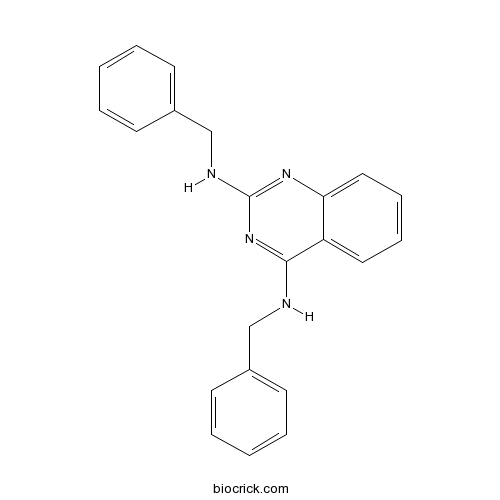
DBeQ
DBeQ is a selective, potent, reversible, and ATP-competitive p97 inhibitor, with an IC50 value of 1.5 μM and 1.6 μM for p97(wt) and p97(C522A), respectively; DBeQ also inhibits Vps4 with an IC50 of 11.5 μM.
-
BCC1127
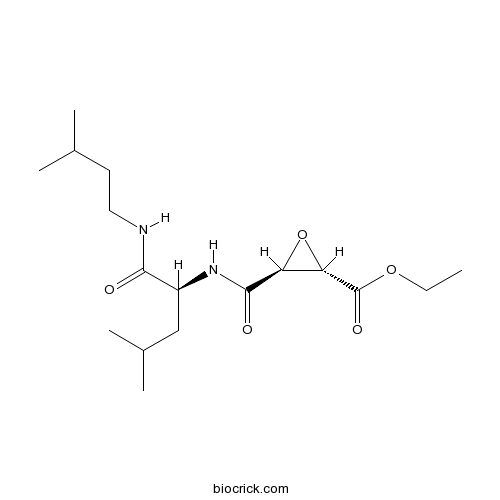
E 64d
Aloxistatin (E64d) is a cell-permeable and irreversible broad-spectrum cysteine protease inhibitor.
-
BCC4500
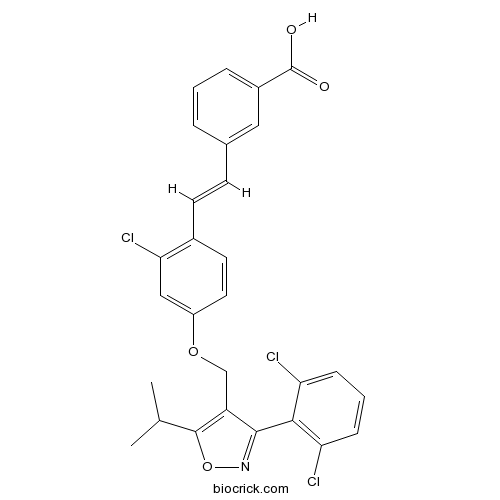
GW4064
GW 4064 is a potent FXR agonist with an EC50 of 65 nM.
-
BCC5560
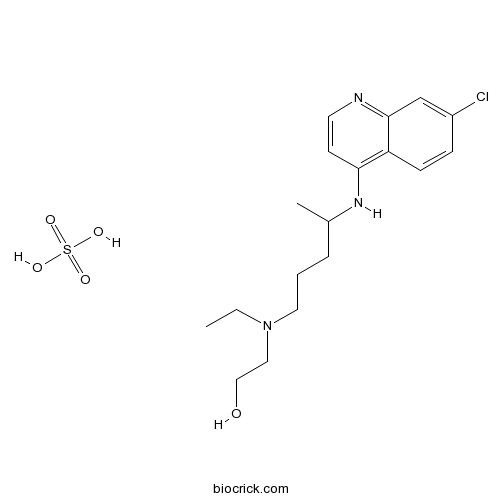
Hydroxychloroquine Sulfate
Hydroxychloroquine sulfate (HCQ sulfate) is a synthetic antimalarial drug which can also inhibit Toll-like receptor 7/9 (TLR7/9) signaling.
-
BCC3714
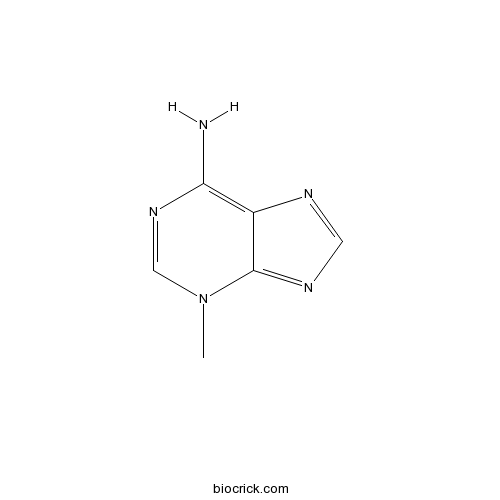
3-Methyladenine
3-Methyladenine is a PI3K inhibitor. 3-Methyladenine is a widely used inhibitor of autophagy via its inhibitory effect on class III PI3K.
-
BCC5604
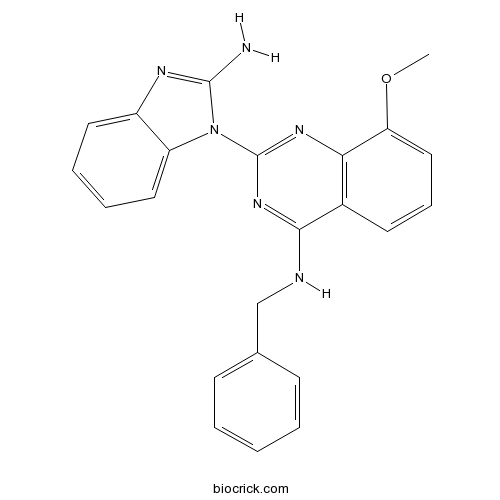
ML 240
ML240 is a potent p97 inhibitor, inhibiting p97 ATPase with IC50 value of 100 nM.
-
BCC3826
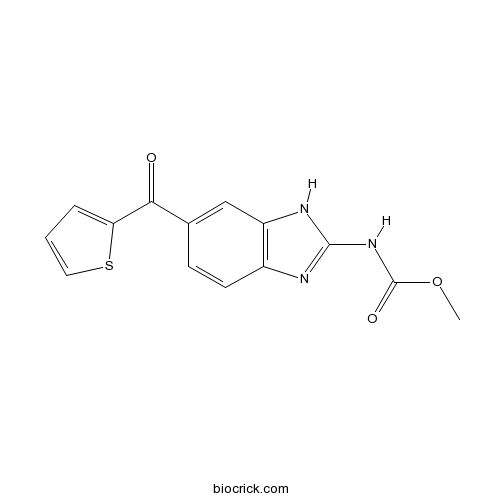
Nocodazole
Nocodazole is a rapidly-reversible inhibitor of microtubule. Nocodazole binds to β-tubulin and disrupts microtubule assembly/disassembly dynamics, which prevents mitosis and induces apoptosis in tumor cells. Nocodazole inhibits Bcr-Abl, and activates CRISPR/Cas9.