Calcium-Activated Potassium (KCa) Channel
Calcium (Ca2+) -activated potassium channels (KCa) are a group of 6/7-TM ion channels that selectively transport K+ ions across biological membranes. They are broadly classified into three subtypes: SK, IK and BK channels (small, intermediate and big conductance).
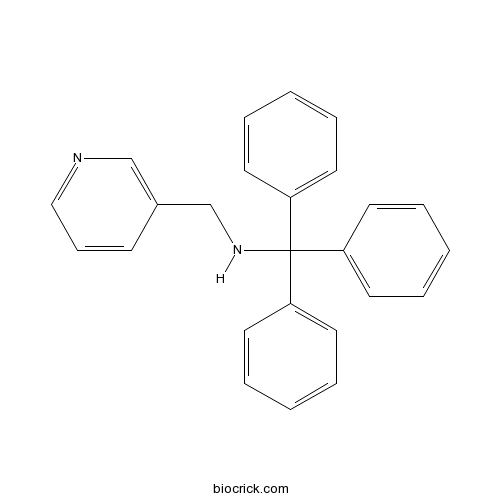
Products for Calcium-Activated Potassium (KCa) Channel - Page 2
- Cat.No. Product Name Information/Activity
-
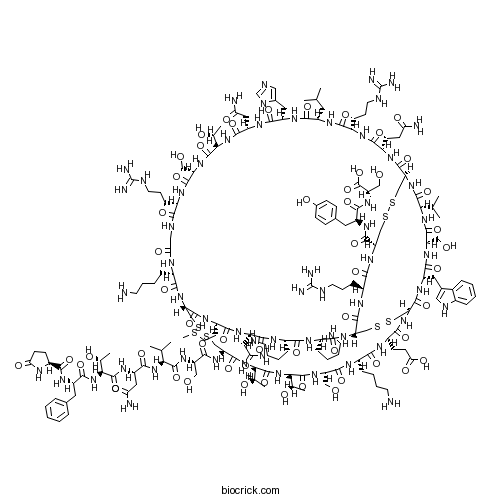
BCC6933
Charybdotoxin
95751-30-7
-
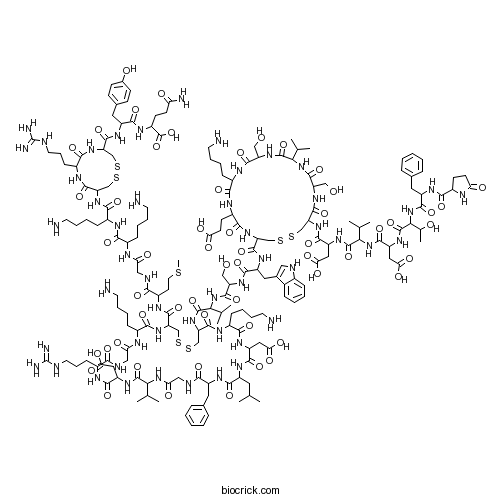
BCC6932
Iberiotoxin
129203-60-7
-
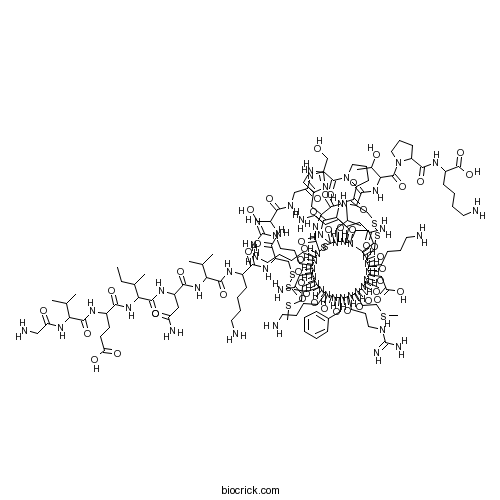
BCC7710
Kaliotoxin
145199-73-1
-
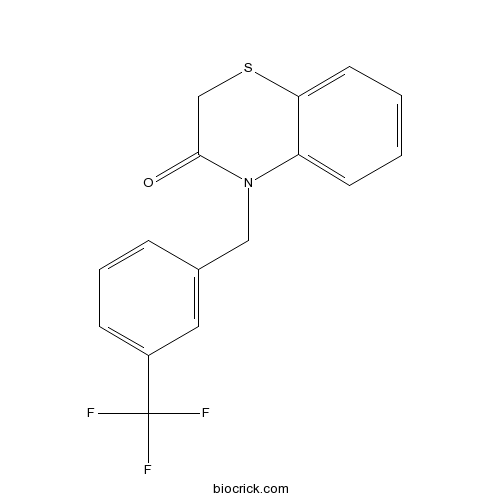
BCC6307
NS 6180
NS6180 is a novel potent and selective KCa3.1 channel inhibitor(IC50= 9 nM) prevents T-cell activation and inflammation.
-
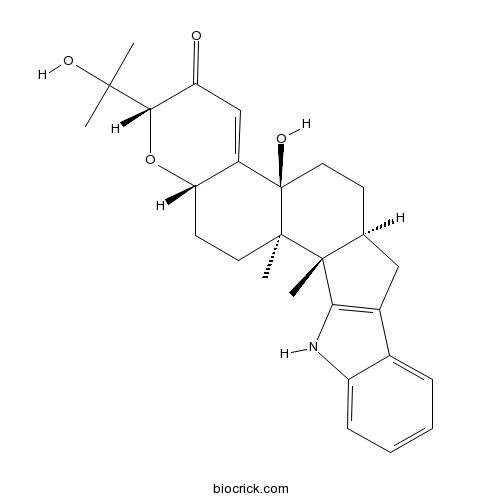
BCC7235
Paxilline
Paxilline is an indole alkaloid mycotoxin from Penicillium paxilli, acts as a potent BK channels inhibitor by an almost exclusively closed-channel block mechanism. Paxilline also inhibits the sarco/endoplasmic reticulum Ca2+ ATPase (SERCA) with IC50s between 5 μM and 50 μM for differing isoforms. Paxilline possesses significant anticonvulsant activity.
-
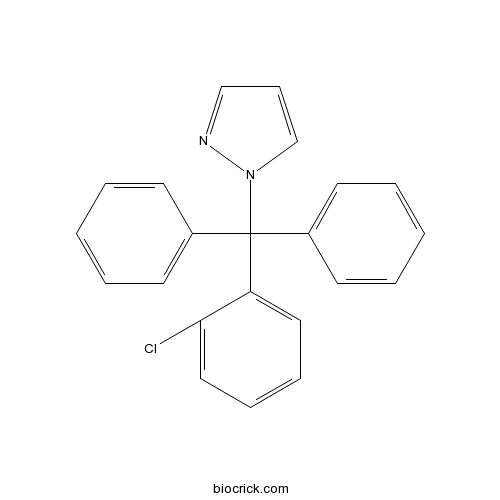
BCC1122
TRAM-34
TRAM-34 is a highly selective blocker of intermediate-conductance calcium-activated K+ channel (IKCa1) (Kd=20 nM).
-
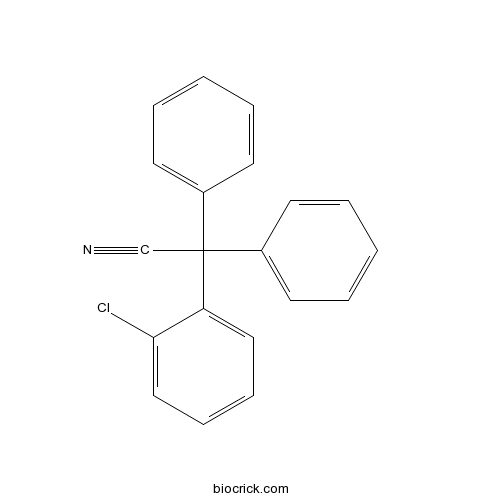
BCC8038
TRAM 39
Potent K<sub>Ca</sub>3.1 blocker
-
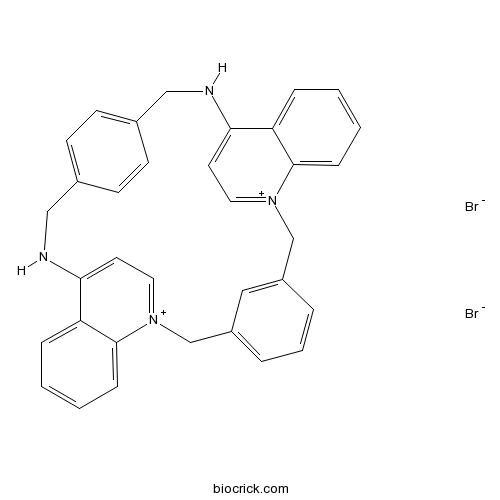
BCC7016
UCL 1684
199934-16-2
-
BCC7446
UCL 2077
UCL 2077 is a selective slow-afterhyperpolarization (sAHP) channel blocker (IC50 = 500 nM in hippocampal neurons in culture), having minimal effects on Ca2+ channels, action potentials, input resistance and the medium after hyperpolarization. UCL 2077 is also a subtype-selective blocker of the epilepsy associated KCNQ channels.