Epigenetics in Cancer
Dysregulation of epigenetic modifications has been shown to result in oncogenesis and cancer progression. Unlike genetic mutations, epigenetic alterations are considered to be reversible, and thus make a promising therapeutic target.
Epigenetics in Cancer Products Targets
- 14.3.3 Protein (1)
- RNA Polymerase (5)
- Protein Tyrosine Phosphatases (5)
- Protein serine and threonine phosphatase (16)
- Protein Arginine Methyltransferase (2)
- MBT Domain (1)
- Lysine Methyltransferase (10)
- Histone Demethylase (9)
- Histone Deacetylase (19)
- Histone Acetyltransferase (4)
- DNA Methyltransferase (9)
- Bromodomain (12)
- Aurora Kinase (9)
- Poly(ADP-Ribose) Polymerase (12)
Products for Epigenetics in Cancer - Page 12
- Cat.No. Product Name Information/Activity
-
BCC2470
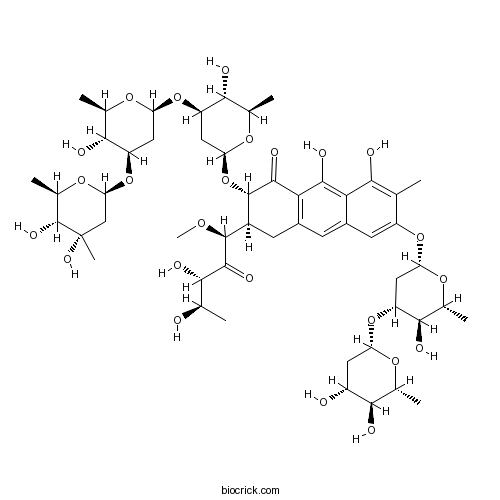
Mithramycin A
Plicamycin is a selective specificity protein 1 (Sp1) inhibitor. Plicamycin inhibits the growth of various cancers by decreasing Sp1 protein.
-
BCC2471
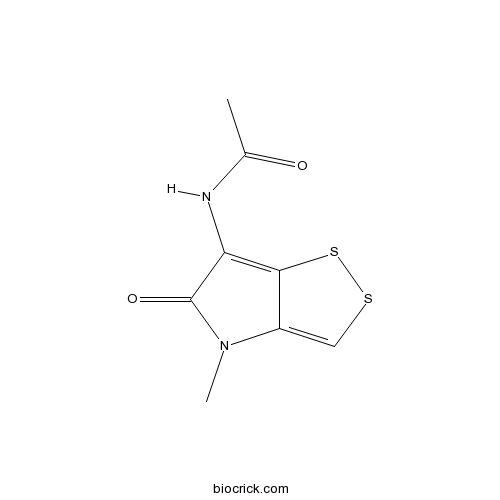
Thiolutin
Thiolutin (Acetopyrrothin) is a disulfide-containing antibiotic and anti-angiogenic compound produced by Streptomyces. Thiolutin inhibits the JAMM metalloproteases Csn5, Associated-molecule-with-the-SH3-Domain-of-STAM (AMSH) and Brcc36. Thiolutin is a potent and selective inhibitor of endothelial cell adhesion accompanied by rapid induction of Heat-shock protein beta-1 (Hsp27) phosphorylation.
-
BCN5984
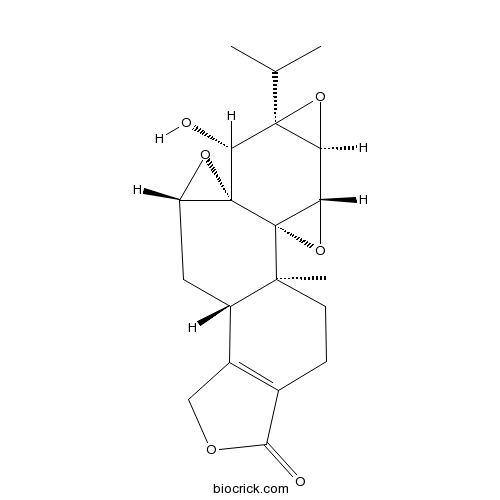
Triptolide
Triptolide is a diterpenoid triepoxide extracted from the root of Tripterygium wilfordii with immunosuppressive, anti-inflammatory and antiproliferative effects. Triptolide is a NF-κB activation inhibitor.