Purinergic (P2X) Receptor
P2X receptors are members of the ligand-gated ion channel family that open in response to extracellular ATP. Each receptor is made up of a trimer of subunits (P2X1-7) all of which share the common structure of two transmembrane domains.
Products for Purinergic (P2X) Receptor
- Cat.No. Product Name Information/Activity
-
BCC5160
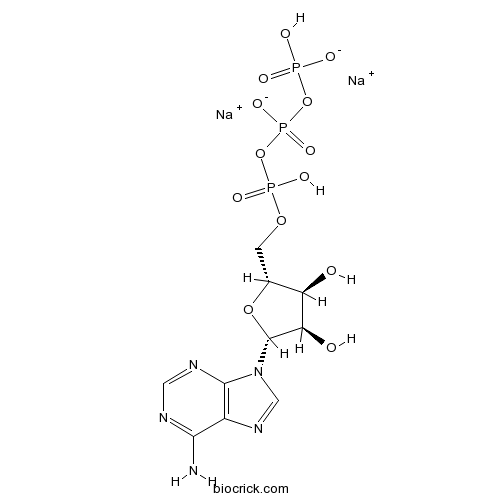
ATP disodium salt
ATP disodium salt is a phosphate-group donor for substrate activation in metabolic reactions and the coenzyme for a large number of kinases.
-
BCC7855
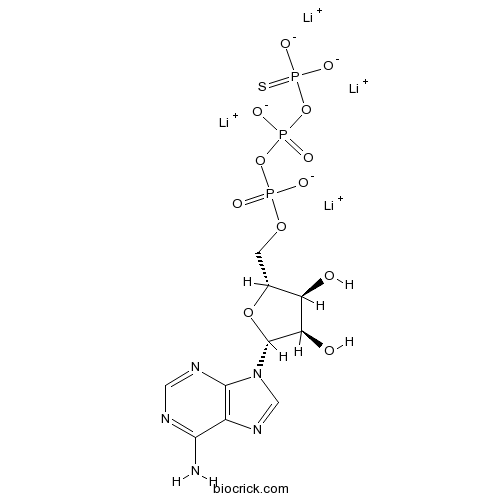
ATPγS tetralithium salt
93839-89-5
-
BCC7643
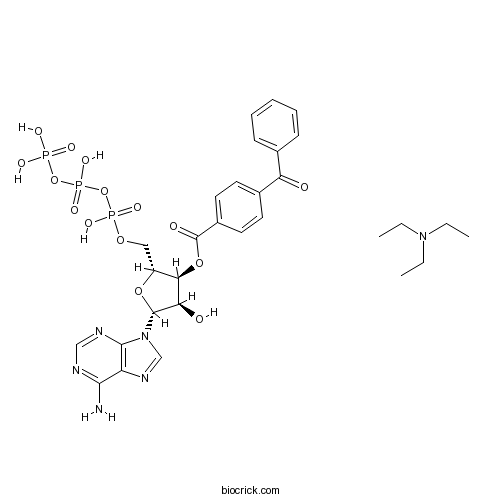
BzATP triethylammonium salt
112898-15-4
-
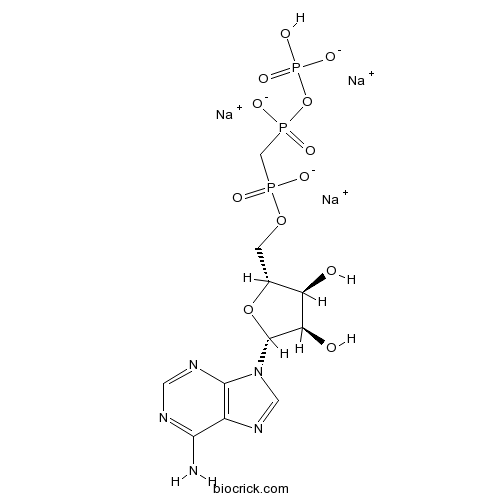
BCC7603
alpha,beta-Methyleneadenosine 5'-triphosphate trisodium salt
α,β-Methylene ATP trisodium, a phosphonic analog of ATP, is a P2X3 and P2X7 receptor ligand.
-
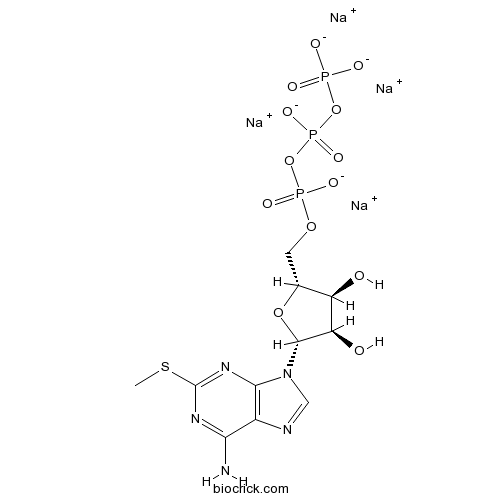
BCC6918
2-Methylthioadenosine triphosphate tetrasodium salt
100020-57-3
-
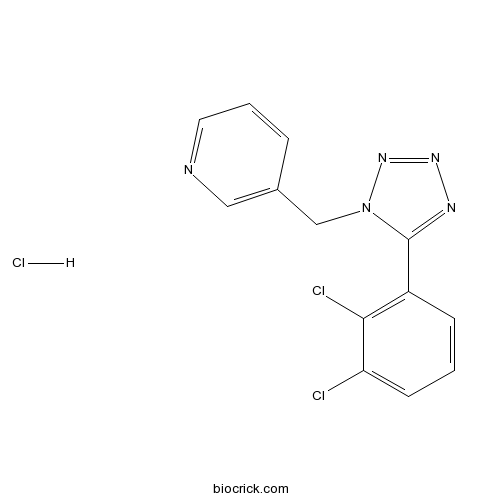
BCC1317
A 438079 hydrochloride
A 438079 (hydrochloride) is a potent, and selective P2X7 receptor antagonist with pIC50 of 6.9.
-
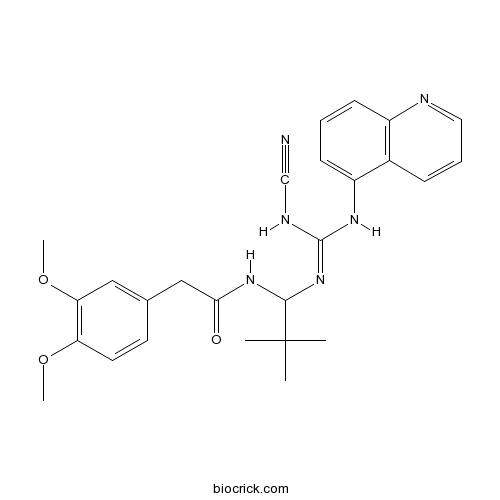
BCC1322
A-740003
A-740003 is a potent, selective and competitive P2X7 receptor antagonist with IC50 values are 18 and 40 nM for rat and human P2X7 receptors, respectively.
-
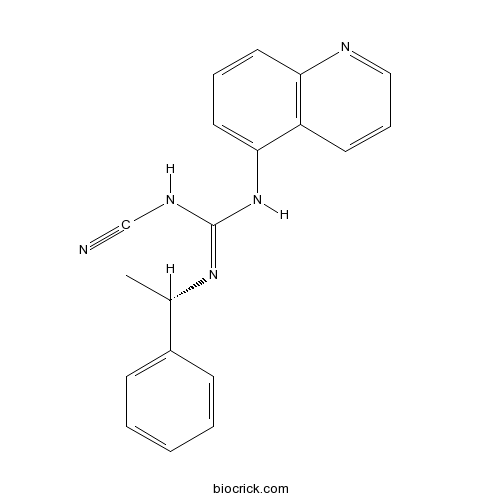
BCC6198
A 804598
A-804598 is a CNS penetrant, competitive and selective P2X7 receptor antagonist with IC50s of 9 nM, 10 nM and 11 nM for mouse, rat and human P2X7 receptors, respectively.
-
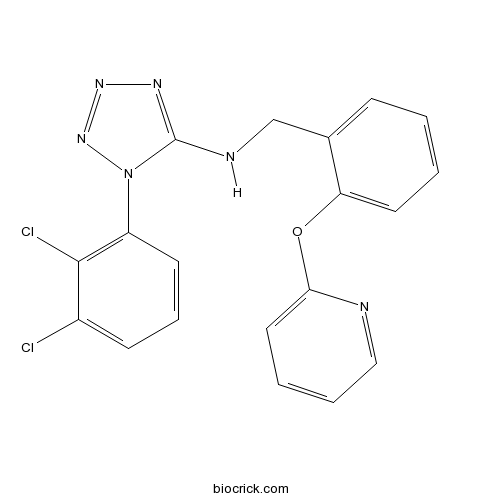
BCC4290
A 839977
A 839977 is a P2X7 selective antagonist; it blocks BzATP-evoked calcium influx at recombinant human, rat and mouse P2X7 receptors (IC50 values are 20 nM, 42 nM and 150 nM respectively) and reduces inflammatory and neuropathic pain in animal models; the antihyperalgesic effects of P2X7 receptor blockade are mediated by blocking the release of IL-1beta.
-
BCC6005
AZ 10606120 dihydrochloride
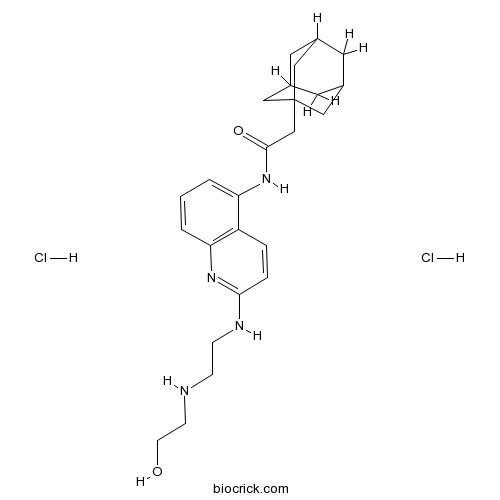
AZ10606120 dihydrochloride is a selective, high affinity antagonist for P2X7 receptor (P2X7R) at human and rat with an IC50 of ~10 nM. AZ10606120 dihydrochloride is little or no effect at other P2XR subtypes. AZ10606120 dihydrochloride has anti-depressant effects and reduces tumour growth.