Apoptosis Inducing
Apoptosis inducers exhibit pro-apoptotic effects through a variety of mechanisms, including DNA cross-linking, inhibition of antiapoptotic proteins and activation of caspases. These inducers may target a specific cellular process in order to induce antitumor or antineoplastic effects.
Products for Apoptosis Inducing - Page 4
- Cat.No. Product Name Information/Activity
-
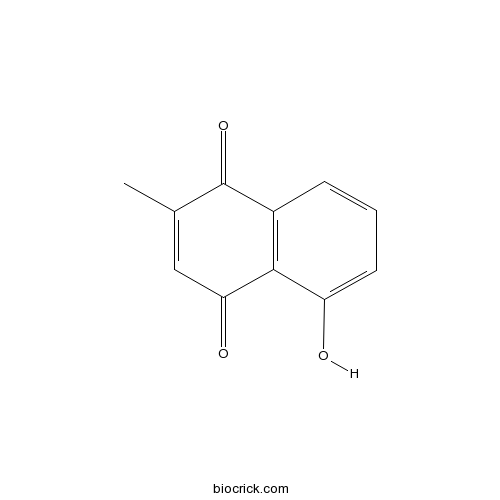
BCN2586
Plumbagin
Plumbagin (2-Methyljuglone) is a naphthoquinone isolated from Plumbago zeylanica L, exhibits anticancer and antiproliferative activities.
-
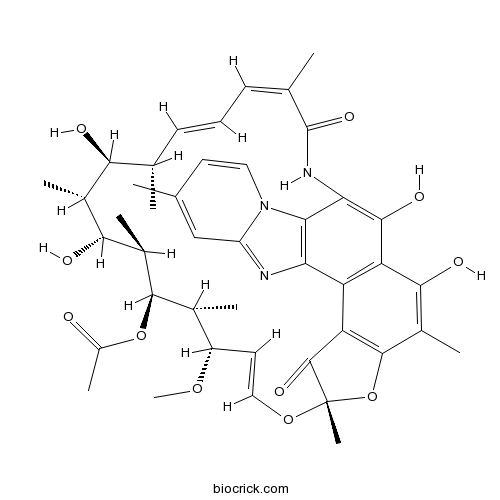
BCC3848
Rifaximin (Xifaxan)
Rifaximin(Xifaxan) is an orally administered, semi-synthetic, nonsystemic antibiotic derived from rifamycin SV with antibacterial activity.
-
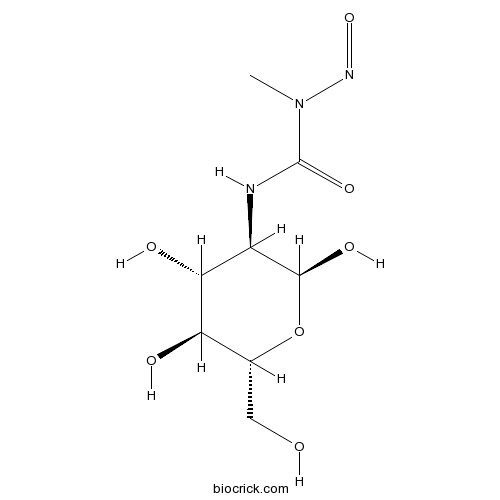
BCN3834
Streptozotocin
Streptozocin is a potent DNA-methylating antibiotic. Streptozotocin causes methylation of liver and kidney and pancreatic DNA, but no methylation in brain DNA.
-
BCC4386
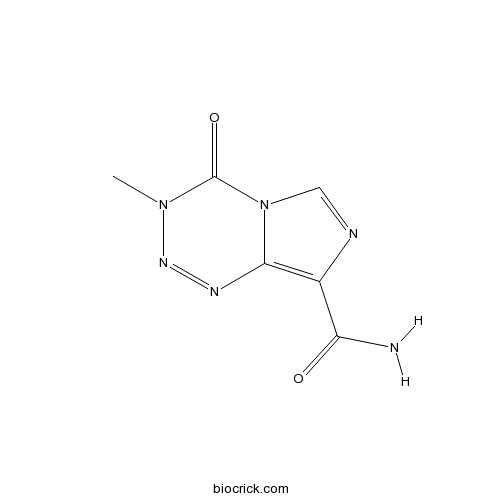
Temozolomide
Temozolomide (NSC 362856) is an oral active DNA alkylating agent that crosses the blood-brain barrier. Temozolomide is also a proautophagic and proapoptotic agent. Temozolomide is effective against tumor cells that are characterized by low levels of O6-alkylguanine DNA alkyltransferase (OGAT) and a functional mismatch repair system. Temozolomide has antitumor and antiangiogenic effects.
-
BCC2005
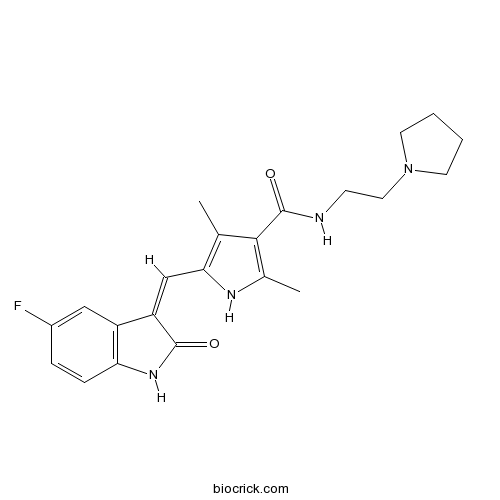
Toceranib
Toceranib phosphate (SU11654 phosphate) is an orally active receptor tyrosine kinase (RTK) inhibitor, and it potently inhibits PDGFR, VEGFR, and Kit with Kis of 5 and 6 nM for PDGFRβ and Flk-1/KDR, respectively. Toceranib phosphate (SU11654 phosphate) has antitumor and antiangiogenic activity, and used in the treatment of canine mast cell tumors.
-
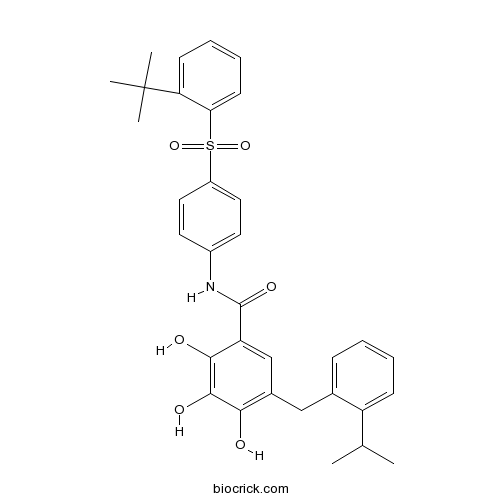
BCC2257
TW-37
TW-37 is a potent Bcl-2 inhibitor with Ki values of 260, 290 and 1110 nM for Mcl-1, Bcl-2 and Bcl-xL, respectively.